
Mysterious Metal Mass Discovered Beneath Moon’s South Pole
Hidden deep beneath the moon’s south pole, a colossal metallic anomaly is rewriting lunar history and igniting a high-stakes race for space dominance.


A peculiar discovery at the moon’s south pole has astronomers buzzing with intrigue. Hidden within the vast Aitken Basin, a colossal impact crater, lies an enormous metallic object that’s challenging our understanding of the moon’s history. This enigmatic find, coupled with the region’s unique conditions, is fueling scientific curiosity and intensifying international interest in lunar exploration.
In 2011, NASA’s Gravity Recovery and Interior Laboratory (GRAIL) mission sent two spacecraft to meticulously map the moon’s gravitational field. Gravity acts like a cosmic X-ray, revealing the density and composition of celestial bodies. Dense materials like uranium or gold exert stronger gravitational pulls than lighter ones, and variations in crust thickness also influence gravity. The GRAIL data painted a detailed picture of the moon’s interior, much like an MRI scan for a planet.
In 2019, researchers at Baylor University in Texas analyzed this data and stumbled upon a startling anomaly in the South Pole-Aitken Basin. This crater, spanning 1,600 miles in diameter and plunging over five miles deep, is the largest known impact crater in our solar system, formed billions of years ago by a city-sized asteroid’s collision. Beneath its rugged floor, the team detected a massive metallic blob-five times larger than Hawaii’s Big Island-distorting the moon’s gravitational field.
This metallic mass is too immense to have formed naturally during the moon’s creation, leading scientists to hypothesize that it’s the remnant of the asteroid that carved out the basin. Likely rich in metals, this ancient core became entombed beneath the lunar surface, creating a gravitational signature unlike anything else on the moon.
The South Pole-Aitken Basin is already a region of fascination. Its craters, among the moon’s oldest and largest, are shrouded in perpetual darkness due to the moon’s axial tilt. Sunlight skims the surface at shallow angles, leaving some craters untouched by light for billions of years. These “cold traps” harbor another secret: water ice. NASA’s 2009 mission, which deliberately crashed a probe into the Cabeus crater, confirmed that about 5% of the ejected material was water, hinting at substantial ice reserves locked in these shadowy depths.
Asteroids, often carrying water as ice, have bombarded the moon for eons. Most water from these impacts vaporizes or evaporates under the sun’s heat, but in the sunless craters of the south pole, tiny fractions of water can persist as ice. These icy reservoirs could be critical for future lunar colonies, providing water for drinking, oxygen for breathing, and hydrogen for fuel.
The moon’s south pole is also a hotspot in a burgeoning space race. NASA’s Artemis 3 mission, slated for 2027, aims to return humans to the moon for the first time since 1972, with plans to establish a permanent research base. Meanwhile, China’s Chang’e 7 mission, set for 2026, will probe the same region’s ice deposits to assess its potential for a lunar colony by 2030. Both nations are eyeing the south pole’s unique resources-particularly water ice and helium-3, a rare isotope abundant on the moon and prized for its potential in fusion energy.
Helium-3 could power future fusion reactors, offering a clean, near-limitless energy source. With an estimated value of $3 to $5 billion per ton, the moon’s helium-3 reserves could be worth trillions, making the south pole a strategic prize. The region’s “peaks of eternal light,” which receive sunlight for 90% of the time, offer ideal sites for solar power, while nearby craters provide ice for life support. This combination makes the south pole the only lunar region currently viable for a self-sustaining colony.
However, the race for lunar dominance raises concerns. The 1967 Outer Space Treaty declares celestial bodies the shared heritage of humanity, prohibiting ownership. Yet, as nations vie for prime lunar real estate, tensions could escalate, echoing territorial disputes on Earth. NASA’s administrator, Bill Nelson, has warned of China’s ambitions, suggesting the moon could become a contested frontier.
The moon’s south pole, with its ancient craters, hidden ice, and mysterious metal mass, is more than a scientific curiosity-it’s a gateway to humanity’s future in space. As nations race to stake their claim, the silent elegance of our nearest neighbor may soon become a stage for both discovery and rivalry.
About the Creator
KWAO LEARNER WINFRED
History is my passion. Ever since I was a child, I've been fascinated by the stories of the past. I eagerly soaked up tales of ancient civilizations, heroic adventures.
https://waynefredlearner47.wixsite.com/my-site-3
Keep reading
More stories from KWAO LEARNER WINFRED and writers in Earth and other communities.
Dr. Umar Johnson Returns: A Passionate Voice for Pan-Africanism and Social Justice
In a vibrant and thought-provoking conversation, Dr. Umar Johnson, the outspoken Pan-African scholar and activist, made a triumphant return to the podcast scene, broadcasting from his birthplace of Philadelphia. Known for his unapologetic advocacy for Black empowerment and unity, Dr. Johnson shared his insights on a range of pressing issues, from historical reflections to contemporary controversies, all while emphasizing the importance of cultural pride and self-determination.
By KWAO LEARNER WINFRED8 months ago in Interview
BRICS Wargames: Why They Matter — And Why India Chose to Sit Out
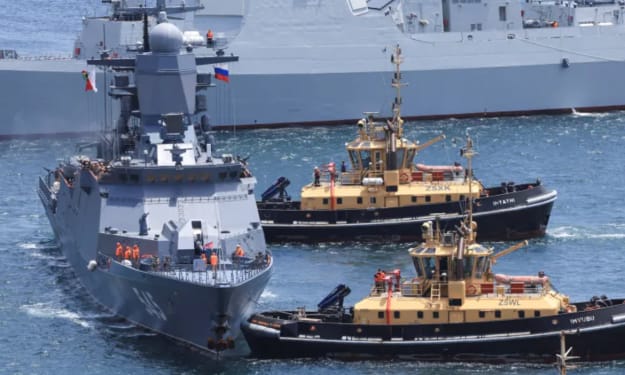
BRICS — the economic and political bloc comprising Brazil, Russia, India, China, and South Africa — has long been seen as a counterweight to Western-dominated global institutions. Over the years, it has expanded its influence in finance, trade, and diplomacy. Yet, in recent times, BRICS has begun exploring another domain that grabs headlines and sparks speculation: military cooperation, including large-scale wargames. These exercises are designed to simulate joint operations, test interoperability, and send a signal of strength. For members like Russia and China, wargames serve as both a show of force and a tool to deepen military collaboration within the bloc. However, India’s decision to opt out of recent BRICS wargames has raised questions: why does this matter, and why is India taking a different path from its BRICS partners? The Rise of BRICS Military Exercises Historically, BRICS has been portrayed as primarily economic, focused on initiatives like the New Development Bank (NDB) and trade agreements aimed at reducing Western dominance. But recent years have seen an evolution. Military drills among BRICS members are increasingly prominent, especially in the context of global tension and regional conflicts. These wargames are about more than just tactical drills. They serve multiple purposes: Strategic signaling: By conducting joint exercises, BRICS countries demonstrate unity and military capability to the rest of the world. Operational readiness: Countries test their ability to coordinate in complex scenarios, from humanitarian missions to potential combat operations. Diplomatic leverage: The exercises send subtle messages to other global powers, indicating that BRICS members can collaborate beyond economic forums. For nations like Russia, recently facing sanctions and international scrutiny, these exercises are particularly important. They showcase the ability to maintain partnerships and project power despite global isolation. For China, it is a way to cement strategic influence in Asia and beyond. Why BRICS Wargames Matter Globally The significance of these exercises extends beyond the bloc itself. Analysts note several key implications: Challenge to NATO and U.S. influence: BRICS wargames signal that alternative power centers exist outside Western-led military alliances. Regional security dynamics: Countries bordering BRICS members, particularly in South Asia, Africa, and Latin America, must monitor these developments carefully. Economic-military linkages: Military coordination among major emerging economies could shape security considerations in trade corridors, energy supply routes, and resource-rich regions. In essence, BRICS wargames are not just about soldiers and tanks, but about the broader geopolitical landscape: signaling, strategy, and shaping perceptions of influence. India’s Calculated Decision to Opt Out While Russia, China, Brazil, and South Africa have shown interest in participating actively, India has strategically chosen to abstain from the most recent wargames. This decision may appear surprising, given India’s economic and political stake in BRICS, but several factors explain it. Geopolitical balancing: India maintains complex relations with both China and Russia. While it has defense and historical ties with Russia, its relationship with China has grown tense due to border disputes and regional competition. Joining a wargame with China could be politically and militarily sensitive. Alignment with Western partnerships: India has strengthened ties with Western-led coalitions, including the Quad (U.S., Japan, Australia, India). Participating in BRICS military drills could conflict with these alliances, potentially sending mixed signals. Strategic autonomy: India has long emphasized a policy of strategic autonomy — making decisions based on national interest rather than bloc pressure. Opting out allows India to maintain flexibility in foreign policy and avoid entanglement in exercises that may not align with its regional objectives. Domestic perception: Indian public opinion and political narratives favor cautious engagement with China and Russia on military matters. Skipping the wargames minimizes domestic criticism of appearing too closely aligned with either of the more assertive BRICS powers. What India Gains by Sitting Out Choosing not to participate does not mean India is disengaged from BRICS. Economically and diplomatically, it remains a key player in the bloc. By skipping the wargames, India can: Maintain regional credibility in South Asia while avoiding the perception of aligning militarily with China. Signal strategic independence, reinforcing its image as a nation that prioritizes national security over bloc politics. Focus on bilateral and multilateral exercises elsewhere, such as those with the U.S., Japan, and Australia, which are more aligned with India’s current security priorities. In short, opting out allows India to navigate the delicate balance between its BRICS commitments and broader global strategic interests. Implications for BRICS and Global Security India’s abstention also reflects broader trends within BRICS: the bloc is not monolithic. While economic cooperation is often strong, military integration faces political and strategic limits. Differing national interests, historical rivalries, and regional tensions prevent uniform alignment. For global observers, this is crucial. It shows that while BRICS wargames are important, they are not necessarily indicative of a fully unified military bloc. The exercises are as much about optics as operations, and India’s absence underscores the challenges of aligning countries with divergent security priorities. Conclusion BRICS wargames matter because they are a window into the bloc’s evolving strategic ambitions. They signal power, test cooperation, and demonstrate emerging global influence. Yet India’s decision to opt out highlights that even within this growing coalition, national interests remain paramount. For India, the choice reflects a calculated approach: engage where it benefits national interest, avoid where risks outweigh gains, and maintain strategic flexibility. For the rest of the world, it is a reminder that BRICS, while increasingly important, is not a military monolith. Ultimately, BRICS wargames are as much about geopolitics and signaling as they are about military maneuvers — and India’s careful stance illustrates how emerging powers navigate this complex global chessboard.Start writing...
By Muhammad Hassan6 days ago in Earth
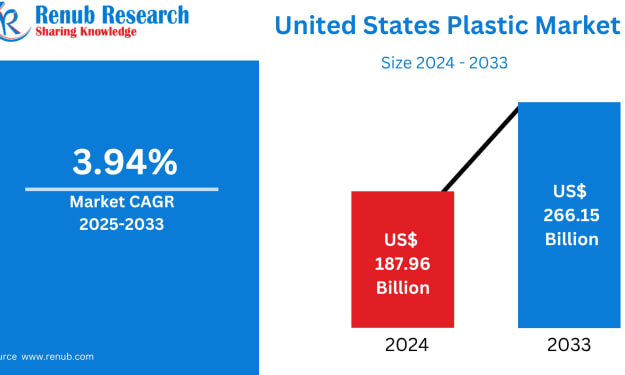
United States Plastic Market Size and Forecast 2025–2033
United States Plastic Market: Size and Forecast 2025–2033 The United States plastic market is projected to expand significantly, growing from US$ 187.96 billion in 2024 to US$ 266.15 billion by 2033, reflecting a steady Compound Annual Growth Rate (CAGR) of 3.94% during 2025–2033. This sustained growth is being fueled by rising demand across packaging, automotive, construction, healthcare, and consumer goods industries, alongside rapid innovations in recycling technologies and sustainable polymer development.
By Aaina Oberoi7 days ago in Earth


Comments (1)
This discovery about the moon's south pole is really fascinating. It makes you wonder what else is hidden beneath the lunar surface. The idea that this metallic blob could be from the asteroid that formed the basin is mind-blowing. How did it get there exactly? And what does it mean for our understanding of the moon's formation? Can't wait to hear more.