
Darkening oceans are shrinking vital marine habitats
A World Slowly Losing Its Light


Imagine standing by the shore, watching sunlight sparkle across the waves, the ocean glowing with life and clarity. Now imagine that light fading slowly, the water turning murkier each year, until the vibrant underwater world becomes a shadow of what it once was. This is not a distant possibility; it is already happening. Across the globe, the oceans are gradually darkening—and as they do, vital marine habitats are shrinking. In reality, what appears to be a subtle color shift in the water is a sign of deep ecological distress that threatens the sea's foundation. The ability of sunlight to penetrate seawater, particularly in the upper layers known as the euphotic zone, has decreased, resulting in oceans becoming darker. This zone is where photosynthesis happens—the fundamental process that supports nearly all marine life. When less light reaches these depths, fewer photosynthetic organisms like phytoplankton and seagrass can survive. This is a direct blow to the entire food web—from tiny zooplankton to massive whales, coral reefs to the fish that feed over a billion people worldwide—not just a loss of plant life. This growing darkness in our oceans is largely driven by human activity. Agricultural runoff, carrying excess fertilizers and pesticides, finds its way into rivers and eventually into the sea. Algal blooms, or explosive growths of algae caused by these nutrients, reduce water clarity and block sunlight. Some blooms are toxic, causing hypoxic "dead zones" where oxygen levels are too low to support most organisms and resulting in the death of marine life. Meanwhile, climate change is accelerating the problem. As polar ice melts, it releases vast amounts of freshwater into the ocean. This freshwater is not only less dense than seawater, which disrupts ocean mixing, but it also carries organic particles and sediments that further reduce water transparency. Melting permafrost and glacier-fed rivers deliver dark-colored organic matter that stains coastal waters, adding to the decline in light penetration.
Soil erosion is exacerbated on land by rapid coastal development and deforestation. When forests and wetlands are cleared, rainfall washes more sediment into rivers, which is then deposited into the ocean. These fine particles cloud the water and settle onto coral reefs and seagrass beds, choking them out and destroying the habitats they provide. Even microplastics and other pollutants are altering the ocean's optical qualities, scattering light and introducing chemicals that affect marine species’ health and reproduction.
The consequences are far-reaching and devastating. Coral reefs, already threatened by bleaching and ocean acidification, rely heavily on sunlight to survive. Light is necessary for the symbiotic algae that live inside corals to carry out photosynthesis; without it, corals lose their color, become weaker, and eventually die. Coral reefs are home to roughly a quarter of all marine species. Their collapse would mean a catastrophic loss of biodiversity.
Seagrass meadows and kelp forests, some of the most productive and important coastal ecosystems, are also vanishing in darker waters. These underwater plant communities provide nursery grounds for fish, stabilize sediment, and absorb carbon dioxide. Their disappearance has cascading effects on both human communities and marine environments. Phytoplankton, although microscopic, are no less crucial. They are the foundation of the oceanic food chain and generate approximately half of Earth's oxygen. Reduced light means fewer phytoplankton, which results in less oxygen production and fewer resources for the species that rely on them—ultimately affecting fisheries, marine mammals, and even migratory birds.
As habitats shrink and biodiversity declines, the impact reaches far beyond the water. Fisheries around the world are seeing reduced yields. Many coastal communities depend entirely on the ocean for food, jobs, and cultural identity. When these ecosystems falter, so do the people who live alongside them. Darkening waters also threaten tourism industries, particularly in tropical regions where clear water and coral reefs attract millions of visitors each year.
Despite the bleak outlook, this is not an irreversible process. Change is still possible—if we act swiftly and decisively. Reducing agricultural runoff through better land management and eco-friendly farming techniques can significantly decrease nutrient pollution. Restoring coastal ecosystems like mangroves and wetlands will help filter sediments and protect shorelines from erosion.
To tackle the root cause, we must confront climate change. Drastically cutting greenhouse gas emissions is essential to slow ice melt, reduce sea-level rise, and stabilize ocean temperatures. Efforts to reduce plastic waste, improve wastewater treatment, and monitor industrial discharges can also limit the flow of pollutants into marine environments.
Advanced satellite technology and underwater sensors now allow scientists to track changes in ocean clarity and light levels with increasing precision. By combining science with policy, and global cooperation with local action, we can protect what remains—and begin to restore what’s been lost.
The ocean’s light is more than just a physical phenomenon. It is a representation of life, connection, and equilibrium. Its fading signals more than environmental change—it reflects the cost of neglecting nature's limits. But just as darkness has spread slowly and quietly, so too can restoration begin, with awareness, commitment, and the collective will to preserve the living heart of our blue planet.
Let us not wait until our oceans fall completely silent and dim. Let us act while there is still light left to save.
About the Creator
Istiak
Writer of the dark and the disturbing. I craft horror, crime, and psychological tales that linger long after the last line. Enter if you dare.
A Star Rises in the Concrete Jungle
New York City never sleeps. Every day, millions of people chase their dreams amid its chaos, neon lights, and insatiable ambition. Some sprint in suits, others wait tables, mop floors, or drive Ubers through midnight traffic. Among them was Ayan Rashid — a quiet, brown-skinned boy with deep eyes and deeper hunger. He was seven years old when he moved to the city, clutching his father's hand tightly. The bright skyline dazzled him at first, but it didn’t take long to realize — in this land of opportunity, opportunity doesn’t come free. Chapter One: The Accent and the Alienation He was known as "the curry kid" at school, the one with the "odd accent" and "strange food." Kids mocked his lunchbox, giggled when he mispronounced words, and whispered “go back to your country” under their breath. Ayan didn’t cry. He listened. He was taken in. And then, slowly, he transformed that pain into purpose. Every day, he sat alone in the library while others played. His mother, working long hours at a nail salon, left him a wrinkled dollar under his pillow for lunch. He rarely used it. Hunger became his companion — not just for food, but for dignity. He was taught early: "Carve your own space if no one gives you any." Chapter Two: High School — Between Survival and Scholarship By the time Ayan reached high school, he had conquered English, but was still wrestling with poverty. His father delivered food; Ayan worked part-time at a Chinatown convenience store after school and cleaned shelves in the campus library. Weekends were spent working hard rather than playing video games or sports. He wasn’t the loudest. He wasn't the most cool guy. But he was always the sharpest in the room. One teacher once told him, “Your resilience is your superpower.” Like a prayer, he remembered those words. Chapter Three: College — Breaking Down, Rising Again Ayan obtained a MIT scholarship through unrelenting effort. There, reality hit again. His roommate came from Silicon Valley, had three Apple devices, a Tesla, and a startup idea already funded. Ayan arrived with a secondhand laptop and two changes of clothes. Then came the night someone stole his laptop. In three days, the final project is due. No money to replace it. His eyes were burning from lack of sleep as he sat in the cold computer lab of the dorm, sipping the remaining cafeteria coffee. When a classmate said, “Why don’t you just take a break?” he smiled and replied, “Because my break... would break me.” He didn’t stop. Fourth Chapter: One Idea, One Success In his final year, Ayan developed an app — an interactive language and culture-learning game for immigrant kids like him. Simple. Honest. Powerful. He knew the pain of being voiceless; he wanted others to have one. That app won “Best Social Impact Innovation” in a national startup competition. The pitch brought investors to tears. He secured $1.2 million in seed funding within a month. He cried that night. Not out of pride but rather to let go. because in that one moment, years of shame were swallowed, meals were skipped, insults were ignored, and sleepless nights were endured. Today, Who Is Ayan? Today, Ayan Rashid is the CEO of an EdTech company impacting children in over 26 countries. His TED Talk, titled "Born on the Edge, Built for the Center," has received a lot of attention. However, the way he tells his story remains the same: > "The funding wasn't what won me the first time. It was believing in myself long before anyone else did.”
By Istiak 8 months ago in Motivation
How Much Do You Need in an ISA for a Passive Income That Beats the State Pension?
For many people in the UK, the State Pension is expected to form the backbone of retirement income. But with rising living costs and growing uncertainty about the future, more savers are asking a crucial question: Can I build a passive income that beats the State Pension — and how much would I need in an ISA to do it?
By Aarif Lashari4 days ago in Earth
Tiny Lion Cubs Struggle To Keep Up With Mom
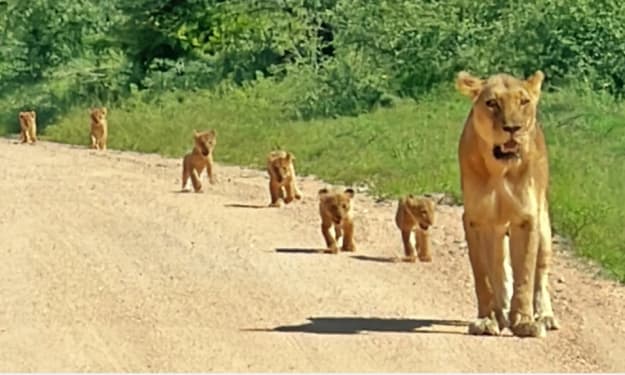
In the heart of the African savannah, life is a constant lesson for young animals. Few scenes are as endearing — or as heartwarming — as tiny lion cubs trying to keep pace with their mother. These little bundles of fur face a world full of challenges, from learning to hunt to avoiding dangers, all while depending on the guidance and protection of their experienced mom. Watching cubs wobble and tumble as they attempt to keep up with their mother reminds us that growing up, even in the wild, is a journey full of struggle, determination, and adorable missteps. The Early Days of Lion Cubs Lion cubs are born blind and helpless, usually in litters of two to six. For the first few weeks, they rely entirely on their mother for warmth, food, and safety. Even after opening their eyes and beginning to explore, the cubs are far from independent. The first months are crucial. Cubs learn social cues, hunting basics, and survival skills simply by watching their mother and the pride. But as anyone who has observed them knows, there’s often a huge gap between observation and action. Tiny cubs often struggle to match their mother’s pace, especially when she moves through long stretches of savannah or leads the family on patrols. A Mother’s Role in the Wild For a lioness, raising cubs is a full-time commitment. She hunts, defends her territory, and teaches her young, all while staying alert to predators such as hyenas, leopards, and even rival lions. The cubs, meanwhile, attempt to mimic her every move — often with clumsy yet charming results. A mother lion’s patience is remarkable; she frequently slows down, nudges them along, or stops to ensure no cub is left behind. These moments, while stressful for the tiny cubs, are vital learning opportunities. Struggling to Keep Up: Why It’s So Hard There are several reasons why tiny lion cubs have trouble keeping pace with their mother: Short Legs, Big Steps: Lion cubs’ legs are tiny and their coordination is limited, making it difficult to cover the same distance as an adult lioness. Curiosity: Cubs are naturally curious. A single butterfly or rustling bush can distract them, leaving mom to pause repeatedly. Energy Levels: Young lions tire quickly. Even with frequent naps, the cubs’ stamina is far lower than their mother’s. Learning Through Play: Play is not just fun; it teaches hunting, balance, and social skills. Running off to pounce on a sibling or chase an insect is all part of their education. Despite these challenges, the cubs’ determination to keep up demonstrates their resilience and growing understanding of the wild world. Lessons in Teamwork and Survival Every cub struggling to keep up is also learning crucial survival skills. The journey across the savannah is more than a test of speed — it’s a lesson in: Coordination: Cubs learn how to move efficiently across different terrains. Patience: They begin to understand the rhythms of adult life and the pace required for survival. Social Skills: Staying with the group teaches cubs how to interact with siblings and the pride, which is essential for their future roles. Observation: By following their mother, cubs study hunting techniques, territorial behavior, and predator awareness. Even the moments when cubs stumble or lag behind are essential for their development. These experiences prepare them for independence, which comes sooner than many might expect. The Cutest Moments in the Wild Anyone who has watched tiny lion cubs knows that their struggles are often irresistibly cute. Video clips from wildlife reserves frequently show cubs toddling along, tumbling over each other, or getting distracted mid-step. Observers often comment that these little stumbles reveal personality, determination, and playfulness, making them one of nature’s most heartwarming spectacles. While their mother is serious and focused, the cubs inject a sense of humor and lightness into life on the savannah. Why This Matters The struggles of lion cubs aren’t just adorable — they’re vital for understanding wildlife behavior. Conservationists and animal behaviorists use these moments to study growth patterns, social structures, and survival strategies in lion populations. These observations also highlight the importance of preserving natural habitats. Cubs must learn in a safe environment to survive; habitat loss, poaching, and climate change make these early struggles even more dangerous. Protecting the African savannah ensures that future generations of lions can experience the same lessons and playful tumbles. The Road to Independence Within a year, these tiny cubs will be more agile, faster, and more confident. By the time they reach two to three years old, males may begin to leave the pride, while females often stay and become caretakers themselves. Every misstep, tumble, and lagging moment is part of the journey toward strength, coordination, and independence. Watching them now gives us a glimpse of the challenges they will overcome, and the survival skills they will carry for life. A Celebration of Motherhood Ultimately, these scenes remind us of the incredible bond between mother and cubs. Her patience, vigilance, and teaching are the foundations of their future. The cubs’ struggles highlight the trials of growing up, while their determination showcases the resilience and beauty of wildlife. For those observing, it’s a powerful lesson in care, guidance, and perseverance, not just in lions but in the natural world as a whole. Final Thoughts Watching tiny lion cubs try to keep up with their mother is both entertaining and enlightening. It’s a story of growth, struggle, and resilience — a reminder that even the fiercest creatures start small, learning step by step. These little lions capture hearts while teaching life lessons: patience, determination, teamwork, and the importance of guidance. As they tumble and waddle across the savannah, they show us that growth is a process, one adorable misstep at a time. For wildlife enthusiasts, animal lovers, and anyone enchanted by nature, these tiny cubs are proof that even in the wild, love, care, and persistence are universal truths.
By Aarif Lashari4 days ago in Earth
📢 Raise Your Voice Thread: 01/22/2026
Our “Raise Your Voice Threads” are hosted most alternating Thursdays at 12PM ET to offer creators more avenues to uncover exceptional stories on Vocal. As we are continuously searching for fresh creators and inspiring stories, this thread provides an opportunity to exchange and discuss the stories that have moved and motivated us on Vocal.
By Raise Your Voice by Vocalabout 18 hours ago in Resources


Comments
There are no comments for this story
Be the first to respond and start the conversation.