
The Enchantment of Korčula: A Tale of "Little Dubrovnik
"Little Dubrovnik"
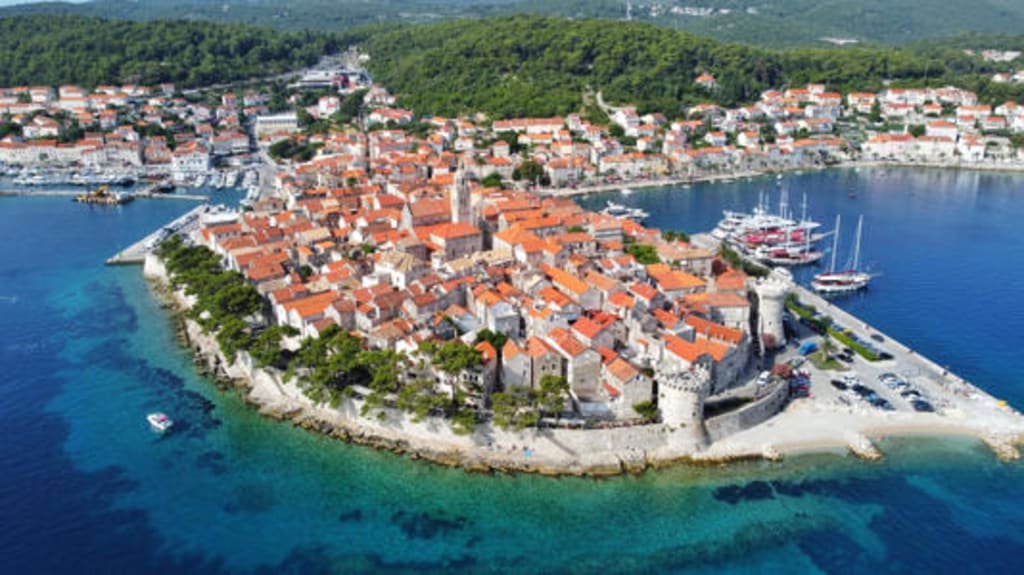
The Adriatic Sea shimmered under the golden embrace of the setting sun as Luka Maras leaned against the weathered stone wall of Korčula’s old town. The island, often called "Little Dubrovnik" for its medieval charm, was alive with the hum of evening—laughter from waterfront cafés, the distant strum of a klapa choir, and the rhythmic lapping of waves against the ancient harbor.
After years of wandering, Luka had returned to his birthplace, first to Zagreb for university, then to Paris, where he worked as a historian. But no grand European city had ever held his heart the way Korčula did. Its terracotta rooftops, labyrinthine alleys, and the proud silhouette of St. Mark’s Cathedral called him back like a siren’s song.
And then there was her.
Elena Petrov had been his childhood friend, his first love, and the one who got away. She had stayed on the island, taking over her family’s small olive grove and turning it into a thriving business. He wondered if time had softened the old wounds between them as he watched her from across the square, her dark curls catching the last light of day, and her hands gesturing animatedly as she spoke to a group of tourists. Marco Polo's Mythology Korula's disputed connection to Marco Polo was its claim to fame. Some swore the great explorer was born here, and the locals played into the legend with pride. Luka had spent his youth listening to tales of Polo’s adventures, dreaming of distant lands. However, Elena had always restrained him. "When paradise is right here, why chase the horizon?" she had once teased him.
Now, as he wandered through the narrow streets, he passed Marco Polo’s alleged house, its stone façade worn smooth by centuries of curious hands. A tour guide regaled visitors with embellished stories of the explorer’s voyages, and Luka smirked. History was never as neat as legends made it seem.
A Fatal Reunion That evening, Luka found himself at Konoba Mate, a tucked-away tavern known for its peka—a slow-cooked feast of lamb and vegetables under a bell-like lid. The scent of rosemary and sea salt filled the air.
And then, Elena walked in.
Their eyes met, and for a moment, the years melted away. She hesitated, then smiled.
"So, the wanderer returns," she said, sliding into the chair across from him.
They talked—first cautiously, then with the easy rhythm of old friends. She told him of the island’s changes: the new wineries, the artists who had settled in the hills, the stubborn fishermen who still sailed at dawn. He told her of dusty archives and lonely cities.
"Why did you really come back?" she finally asked.
Luka exhaled. "I think I was looking for something I lost."
The Untold Story of Moreska's Sword Dance The island's well-known Moreska dance, a dramatic sword fight reenacting the Christian-Moor conflict, was performed in the square the following night. Luka and Elena watched as dancers clashed blades to the beat of drums, their footwork precise, their faces fierce.
"You know," Elena murmured, "they say the dance isn’t just about history. It’s about choices—loyalty, love, sacrifice."
Luka thought of his own choices—leaving, staying away, always wondering.
The Decision and the Storm A sudden summer storm rolled in that night, the kind that turned the Adriatic into a roaring beast. Luka found Elena at the harbor, securing her family’s fishing boat. The rain lashed at them as they worked, laughing at the absurdity of it.
Later, soaked and breathless, they took shelter in her stone cottage. The air was filled with the scent of figs and oak wood as a fire started to burn. She said softly, "Stay." Not a plea, not a demand—just an offering.
Luka also realized for the first time in a long time exactly where he belonged. Epilogue: The Island’s Embrace
Months later, Luka stood on the walls of Korčula’s old town, watching the sunrise paint the sea in hues of gold and rose. Below, Elena waved at him from the market square, a basket of fresh olives in her arms.
Korčula had always been called "Little Dubrovnik," but to him, it was something far greater—it was home. And this time, he wasn’t leaving.
About the Creator
Keep reading
More stories from parves mosharaf and writers in Earth and other communities.
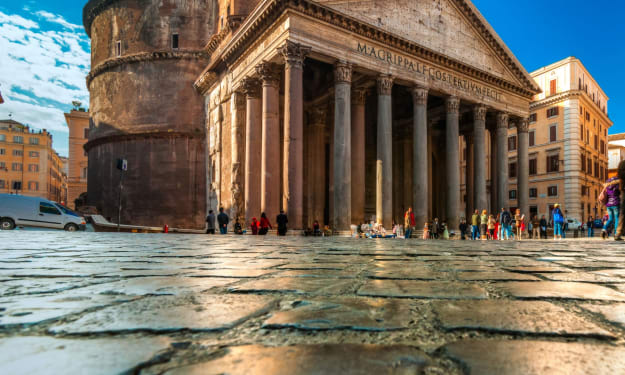
From Rome to Vienna: The 10 Best Monuments to Visit in Europe Once in Your Life
Europe is a treasure trove of history, art, and architectural marvels. The continent is home to some of the most breathtaking structures in the world, ranging from grand Baroque palaces to ancient Roman ruins. If you’re planning the ultimate European adventure, here are the 10 must-see landmarks that deserve a spot on your bucket list.
By parves mosharaf8 months ago in Earth
Earth Is Not Our Property
There was a time when the Earth did not need us. Rivers carved their own paths without permission. Forests rose and fell like quiet empires. Ice learned the language of patience. The planet breathed in rhythms older than memory, older than names. Then we arrived—curious, clever, afraid of silence—and decided everything needed a fence.
By LUNA EDITHa day ago in Earth
Global Plastic Market Size and Forecast 2025–2033: Innovation, Sustainability, and the Future of a $894 Billion Industry
Introduction: A Market That Touches Every Industry The global plastics industry remains one of the most influential pillars of modern manufacturing, supporting everything from food packaging and construction to healthcare, automotive, and electronics. Despite growing environmental scrutiny, plastics continue to evolve, adapt, and expand—driven by technological innovation, economic growth in emerging markets, and the urgent shift toward recyclable and biodegradable materials.
By Janine Root about 16 hours ago in Earth



Comments
There are no comments for this story
Be the first to respond and start the conversation.