Science
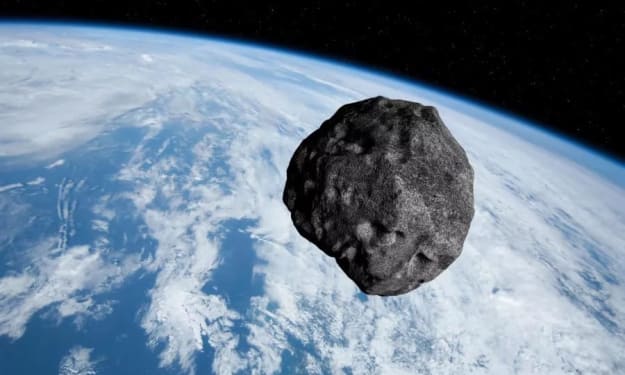
NASA Tracking Bus-Sized Asteroid Nearing Earth
NASA Tracking Bus-Sized Asteroid Nearing Earth NASA is closely monitoring a bus sized asteroid as it approaches Earth raising curiosity and concern among scientists and the general public. The asteroid, which has been designated with an official name by space agencies is expected to pass by our planet at a relatively close distance. While there is no immediate danger of impact the event serves as a reminder of the continuous movement of celestial bodies and the importance of tracking near Earth objects (NEOs). Asteroids frequently pass by Earth and NASA along with other space agencies keeps a close watch on their trajectories. This particular asteroid is estimated to be roughly the size of a city bus making it large enough to be noticed but not significant enough to cause catastrophic damage even if it were to enter Earth’s atmosphere. However its proximity to Earth has prompted detailed analysis and observations. The asteroid’s trajectory has been carefully calculated using advanced telescopic observations and tracking systems. NASA's Planetary Defense Coordination Office (PDCO) and other global space monitoring agencies utilize sophisticated tracking technologies including ground based telescopes and radar systems to predict the paths of such objects with high accuracy. By analyzing its speed direction and potential gravitational influences from other celestial bodies scientists can determine how close it will get to Earth and whether there is any possibility of future encounters.
By Adnan Rasheed11 months ago in Earth
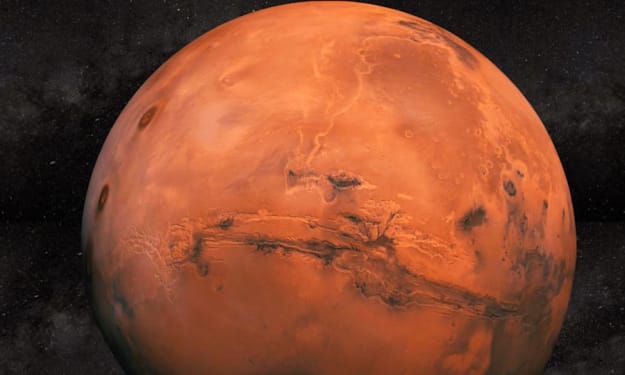
What happened to all the water on Mars?
What happened to all the water on Mars? Mars our neighboring planet has long fascinated scientists with its potential for past habitability. Evidence overwhelmingly suggests that Mars was once home to abundant water flowing through massive river valleys carving flood channels and depositing minerals that only form in liquid water. The planet's surface bears undeniable marks of a time when lakes rivers and even possible oceans covered it. Yet today Mars is a cold arid desert with only traces of water locked in its polar ice caps and underground. The mystery of what happened to all that water remains a subject of ongoing debate. One of the most widely accepted theories is that Mars lost its water due to atmospheric stripping. Unlike Earth which has a strong magnetic field protecting its atmosphere Mars lost its global magnetic field billions of years ago. This left its atmosphere vulnerable to solar winds charged particles from the Sun that gradually eroded the planet’s once thicker atmosphere. With a thinner atmosphere water on the surface could no longer remain stable and over time it either sublimated into space or retreated underground in frozen form. However some researchers argue that not all of Mars' water was lost to space. A significant portion may still be trapped beneath the surface. Recent studies suggest that underground reservoirs of frozen water exist particularly near the planet’s poles. Scientists have detected large amounts of ice beneath the surface using radar instruments on orbiters like the Mars Reconnaissance Orbiter. If this ice were to melt it could potentially support microbial life or be utilized by future human explorers.
By Adnan Rasheed11 months ago in Earth
Why don't all birds fly?
Why don't all birds fly? Birds are often associated with flight but not all birds are capable of flying. While flight is a defining characteristic of most bird species some have evolved in ways that make flying unnecessary or even impossible. This phenomenon is due to a combination of evolutionary adaptations environmental factors and biological limitations. One of the primary reasons some birds do not fly is due to their evolutionary history. Over millions of years certain bird species have adapted to life on the ground where flight is not essential for their survival. These birds have developed other means of mobility such as running or swimming that better suit their needs. Evolutionary pressures such as the absence of natural predators availability of food on the ground or the need for specialized foraging methods have led to the loss of flight in some species. The structure of a bird’s body plays a crucial role in its ability to fly. Flight requires lightweight bones strong wing muscles and aerodynamic feathers. However flightless birds often have heavier denser bones that make them less suited for flight. Their wings are typically smaller relative to their body size reducing their ability to generate enough lift. In contrast they may have strong legs which allow them to run quickly or swim effectively. For example ostriches the largest flightless birds have powerful legs that enable them to run at high speeds to escape predators. Another reason why some birds do not fly is their habitat and lifestyle. Birds that live in environments where flight is not necessary tend to lose this ability over time. For instance birds that inhabit islands with few or no natural predators have no need to fly to escape danger. Instead they conserve energy by staying on the ground. The dodo an extinct flightless bird that lived on the island of Mauritius is a famous example. With no natural predators the dodo gradually lost its ability to fly. However when humans arrived on the island and introduced new predators the dodo was unable to adapt quickly enough and became extinct.
By Adnan Rasheed11 months ago in Earth
Earth Could Have Billions More People Than We Ever Realized.
Earth Could Have Billions More People Than We Ever Realized. For decades global population estimates have been the foundation of policymaking, infrastructure planning and resource allocation. However a new study suggests that we may have vastly underestimated the world’s rural population by as much as 84 percent in some cases. If true, this revelation could mean that Earth's actual population is billions higher than previously thought. A research team led by environmental engineer Josias Láng Ritter from Aalto University has provided the first concrete evidence that a significant portion of the rural population is missing from global datasets. Their study published in New Scientist highlights a striking discrepancy in population data particularly in less developed rural areas where data collection has historically been inconsistent and inaccurate.
By Adnan Rasheed11 months ago in Earth
The ‘Space Laser’ Wars Have Begun—And America Wants to Be First to Develop the High-Powered Weapons
The ‘Space Laser’ Wars Have Begun—And America Wants to Be First to Develop the High-Powered Weapons The concept of space based laser weapons has long been a staple of science fiction but it is now rapidly becoming a reality. As technological advancements accelerate major global powers particularly the United States are investing heavily in the development of high powered laser systems designed for space warfare. The emergence of these weapons marks the beginning of a new era of military competition one that extends beyond the Earth’s surface and into the vastness of space. The United States recognizing the strategic advantages of space based lasers has committed substantial resources to research and development in this field. The Pentagon and other defense agencies are exploring the potential of laser weapons to enhance national security neutralize threats and establish dominance in space. Unlike traditional kinetic weapons which rely on projectiles or missiles lasers offer near instantaneous response times precision targeting and the ability to disable enemy satellites and other space assets without generating debris. This makes them an attractive option for modern warfare particularly as nations become increasingly reliant on satellite networks for communication navigation surveillance and military operations. One of the key motivations behind the U.S. push for space-based laser technology is the growing threat posed by adversarial nations particularly China and Russia. Both countries have been actively developing their own space weaponry including anti satellite (ASAT) missiles and electronic warfare capabilities. In recent years China has demonstrated its ability to destroy satellites using ground based missiles while Russia has been accused of testing space based weapons capable of targeting American and allied assets. These developments have raised concerns in Washington about the vulnerability of U.S space infrastructure and the need to counter potential threats with advanced defensive and offensive measures.
By Adnan Rasheed11 months ago in Earth
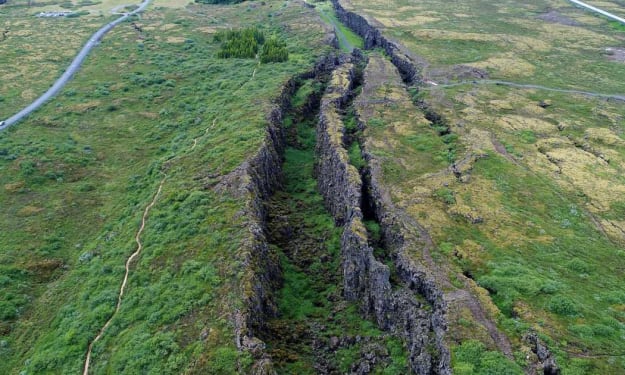
Unseen Anomalies Are Shaping Our Understanding of Earth’s Tectonic Plates
Unseen Anomalies Are Shaping Our Understanding of Earth’s Tectonic Plates. For decades scientists have relied on the traditional model of plate tectonics to explain Earth's geological activity. This model developed in the mid 20th century describes how the planet’s rigid outer shell is divided into massive plates that move and interact causing earthquakes volcanic eruptions and the formation of mountains. However recent discoveries of unseen anomalies beneath the Earth's surface are challenging our conventional understanding of these processes. These unexpected findings suggest that the planet’s interior is far more complex than previously thought opening new avenues for research and potentially reshaping our understanding of how Earth’s tectonic system operates. One of the most intriguing discoveries comes from deep sea exploration and seismic imaging technology which have revealed previously undetected structures beneath the Earth’s crust. Scientists have found massive mysterious blobs of dense material lurking at the boundary between the Earth’s mantle and core. These structures known as Large Low Shear Velocity Provinces (LLSVPs) were first detected through seismic wave studies. Unlike the solid mantle these regions slow down seismic waves indicating that they may be composed of a different material than the surrounding rock. Some researchers believe these anomalies could be remnants of ancient tectonic plates that were subducted and sank deep into the planet over millions of years while others suggest they could be chemically distinct regions that have existed since Earth's formation. Another anomaly altering our perception of plate tectonics is the discovery of hidden fragmented plates. Traditionally scientists have categorized Earth's tectonic activity based on the interactions of large plates such as the Pacific North American and Eurasian plates. However recent research using advanced satellite technology and GPS data has revealed microplates smaller previously overlooked tectonic fragments that move independently. One such example is the Capricorn Plate in the Indian Ocean which was once considered part of a larger structure but is now recognized as a separate entity. The recognition of these microplates has significant implications as they may influence seismic activity in ways previously unaccounted for potentially leading to a reassessment of earthquake risk in various regions. The role of deep mantle plumes another unseen anomaly is also reshaping how scientists view tectonic movement. Mantle plumes are upwellings of hot rock that rise from deep within the mantle and can create volcanic hotspots such as those responsible for the Hawaiian Islands. Traditionally mantle plumes were thought to be relatively stationary acting independently of plate movements. However new studies suggest that these plumes may interact more dynamically with the overlying tectonic plates than previously believed. This interaction could explain irregular volcanic activity in regions far from plate boundaries challenging the conventional understanding that most volcanic activity is strictly tied to subduction zones and rift boundaries. Additionally recent studies of the Earth's lithosphere the rigid outer layer that includes the crust and upper mantle have revealed that it is not as uniform as once thought. The lithosphere varies in thickness and strength which can significantly influence tectonic movement. For example regions where the lithosphere is unusually thin or weak may experience unique forms of deformation such as the slow creeping motion seen in the Basin and Range Province in North America. This observation suggests that the traditional rigid plate model may need to be revised to incorporate a more fluid and dynamic understanding of how different parts of the lithosphere behave under stress.
By Adnan Rasheed11 months ago in Earth
Organic agriculture in the global south and Africa
Implementation rates of sustainable and organic agriculture Sustainable agriculture has evolved into one of the key approaches for facilitating environmental conservation by ensuring mutual coexistence between human beings and the ecosystem. Regardless, the global south is lagging in terms of implementing agricultural methodologies that are aligned with the principles of sustainability. Particularly, the concept of organic agriculture is underutilized despite the fact that it fits with the second Sustainable Development Goal of the UN (SDG – 2): no hunger by 2030. Research has determined that the uptake of organic agriculture is still low in the global south due to reasons such as the rudimentary technology and affordability.
By zecainah nyachae11 months ago in Earth
Our Universe Has Scars, and They Might Unlock Time Travel
guess what the universe can get actual scars just like when you fall off a bike well here's why before the Big Bang the universe was extremely hot dense and full of energy and it seemed like everything was going well until that all changed about 13.8 billion years ago then the universe exploded after the blast it expanded incredibly quickly our human brain can't even perceive how fast that expansion was sometime later the universe started cooling down as it did giant terrifying scars cutting through SpaceTime appeared all over the place and if we study these scars well we can even get insight into time travel these days we call these scars cosmic strings they're like stretch marks that appear when the skin expands too quickly or we could also compare them to cracks that form in the ice when it freezes these strings are likely very thin about the size of a proton a positively charged subatomic particle yes subatomic means smaller than an atom the strings are also extremely dense and can stretch for light years now imagine these Cosmic scars floating through space not interacting much with their surroundings when two cosmic strings pass each other they could warp SpaceTime in such a way that it creates a time machine if you were to travel along a certain path around these strings you would end up returning to your starting point at an earlier time which is traveling back in time now let's admit it this idea sounds like something from science fiction but it's supported by Cosmic string theory and the math behind it seems to work unfortunately no one has observed cosmic strings yet so for now it's still a theory in 1991 one physicist proposed an idea for how cosmic strings could enable time travel if two two infinite cosmic strings pass each other in parallel they would warp space time creating a Time Loop this Loop would allow someone to travel back in time even better this idea doesn't contradict Einstein's theory of general relativity which suggests that large objects can bend space and time these bends in space time could allow a shortcut through time his now well-known concept of closed time Loops also helps explain how wormholes might work so a wormhole is basically a theoretical tunnel connecting one place in space to another some people believe that by using such tunnels we could create shortcuts for incredibly long Journeys through the universe which would allow us to visit other star systems and galaxies so let's say you manag to create a wormhole and even accelerate one of its ends to near the speed of light and then you send it back to where it came from well at that moment those two ends are not synced anymore one is in the past while the other is in the future and if you somehow manage to walk between them you'd be time traveling you could do something similar by placing one end of the Wormhole near a powerful gravitational field like a black hole and keeping the other side near a weaker gravitational force this way according to the theory of relativity time would pass more slowly nearer to the strong gravity side and it would allow a part or another chunk of Mass to remain in the past relative to the other side of the Wormhole at the same time if you decided to create a wormhole you'd have to keep in mind that they are super dangerous they might collapse all of a sudden they're likely to be highly radioactive or you could come into contact with toxic exotic matter inside but let's get back to the math behind the cosmic string time machine idea admittedly it is solid but it doesn't mean such a Time machine is possible yet to use this way of time travel we'd need to reach near light speed and it might be impossible according to Einstein's relativity the faster an object travels the more energy it needs to continue speeding up in other words we don't yet have the technology or energy sources to accelerate a spacecraft to these speeds the idea of two infinite cosmic strings is also questionable because we can't create something something that's infinitely long so while this time travel model is mathematically sound the infinite nature of the strings would make this exact model impractical at the same time some scientists still believe that cosmic strings are a better possibility than most other models like wormholes in any case before we can start considering time travel we need to discover cosmic strings luckily there's a group of astronomers working to detect low frequency gravitational Waves by measuring signals from a type of star called a pulsar now pulsars send out regular pulses of radio waves and by measuring small changes in the timing of these pulses scientists can detect subtle shifts in space time those changes are caused by gravitational waves which are ripples in SpaceTime now so far we've only detected gravitational waves coming from black holes but in 2020 there was one strange signal that didn't look like it came from black holes it could be coming from cosmic strings and here we need to mention String Theory according to it the universe is made up of more than just the four dimensions of SpaceTime there are additional Dimensions that are hidden from us plus the basic building blocks of the universe aren't particles but tiny vibrating strings these strings can vibrate at different frequencies to create different fundamental particles these strings from String Theory could have stretched out during the early universe and become the very cosmic strings we've discussed in the coming years we might get more information about them from a space-based gravitational wave telescope called Lisa it's supposed to launch in 2035 but if the signals picked up in 2020 really came from cosmic strings it could mean a huge breakthrough in physics in this case String Theory would become the right framework for understanding the universe it would completely change the way we think about the building blocks of our reality on the other hand even if the signals don't turn out to be from cosmic strings this discovery would still be important it would give scientists more information on what Cosmic string signals might look like in the future and while we're not yet at the point of time travel the discovery of cosmic strings could take us one step closer to understanding the mysteries of the universe and maybe even the possibility of traveling through time now time travel is a popular theme in science fiction but in fact moving forward in time happens naturally right now you are traveling into the future at a steady rate of 1 second per second however scientists have discovered that this rate can change depending on speed and gravity Einstein's special theory of relativity explains that time slows down as an object moves faster the closer you get to the speed of light the more slowly time passes for you compared to someone who isn't moving at all the general theory of relativity adds another Factor Gravity the stronger the gravitational pull the more slowly time moves near massive objects such as the surface of a neutron star black hole or even Earth time runs more slowly than it does far away from these space objects if someone were to stay near the edge of a black hole where gravity is incredibly strong only a few hours might pass for them while thousands of years would go by for people on Earth if they returned they would have effectively traveled into the future this is a real and scientifically proven effect a real life example of time travel though on a tiny scale can be witnessed in space missions for example this Cosmonaut spent a total of 748 days aboard the space station Mir during three separate missions because was moving at high speeds relative to Earth it experienced time dilation as a result he aged hunds of a second less than had he stayed on the ground now this difference may seem tiny but it shows that time moves differently depending on speed and location but while traveling to the future is scientifically possible traveling to the past is much more complicated and controversial and leads to logical paradoxes imagine you throw a billiard ball into a time machine it travels to the past and collides with its earlier self this prevents the ball from ever entering the time machine in the first place a contradiction.
By Riya singh11 months ago in Earth
How Will Our Universe End? Big Crunch Theory
we've all heard about the big bang and I am really sad that the series has ended well here of course I'm talking about the Big Bang that actually started everything again most people have heard of that but what do you know about the Big Crunch and now I'm not talking about some random candy bar while most scientists believe that our universe began with a massive burst of energy opinions remain divided about how everything will one day come to an end there's a range of theories such as the big fries and the big rip but the one that's considered to be the most likely scenario is the Big Crunch so what is the Big Crunch but the Big Crunch Theory has its roots in Einstein's theory of general relativity everything in life follows an ebb and flow when one event occurs the reverse is likely to occur after hitting the extreme if the Big Bang causes the expansion of the universe then eventually the opposite will become true once the universe has reached its largest size and as determined by the amount of energy that's present it will begin to be collapsed in on itself and in the end form a massive black hole that contains all matter due to the conditions that are present in the singularity of the size everything will be squashed down to a miniscule size which is why it's called the Big Crunch so probably not great news for all those of you who are a class or for bacon and tend to live billions of years well here's the good news while the math suggests that the Big Crunch is possible and even probable there's a problem for those who dedicate their careers to understanding questions like this we don't yet fully comprehending everything in a universe and there are a couple of unknowns that will affect our ultimate fate first the universe's expansion appears to be the interplay of two factors density and outward momentum density has a direct correlation to the amount of gravity that is present so the denser the universe is the more gravitational forces that take place this on its own would mean that everything will eventually gravitate towards everything else and the final Big Crunch becomes an inevitability although there's no friction in space the effect of gravity would be more than enough to counteract the initial outward momentum caused by the Big Bang and all matter what essentially returned to where come from the problem with this though is that observations of the universe have shown that things aren't behaving as simply as we would expect the outer reaches appear to be expanding at a faster rate than those closer to us and galaxies are actually moving further apart from each other scientists don't know why this is happening but they have given a name to this unknown entity dark energy this extra element in the expansion of the universe means that there are two potential outcomes it will either continue to expand forever and objects will be so far apart from each other that everything will freeze were we could still faced a Big Crunch the determining factor is how much dark energy are actually there if there is enough which some scientists believe could be the case then everything will continue to expand if there isn't enough though then the forces of gravity will once more eventually over comment and bring everything back together again some believe the seeming prevalence of dark energy could well signal the beginning of the Big Crunch however in a report released in 2015 it was suggested that the current increased rates of expansion is the last gasp of the expanding universe and that within tens of billions of years the contraction will begin so how would the Big Crunch happen if we assume that there isn't enough dark energy and that the Big Crunch does take place then it won't be as spectacular as the Big Bang was the universe will begin to contract evenly because matter is more or less distributed consistently it would be a slow process for what begin to gradually pick up in speed as galaxies got closer to one another and the forces of gravity have more of an effect in about a hundred billion years from now as things reach and climax temperatures would significantly increase in this will result in stars exploding and in vaporizing and all objects will be broken down into their constituent atoms which themselves will begin to break apart in the final stages as all matter from the universe compacts into a small space things will become extremely chaotic so much so that some predictions suggest as space-time will become so warped that it would shatter into droplets meaning all concepts of time distance and a direction would become meaningless of course no living organism would have been able to survive to this point in we would have all been doomed a long time before this so with our lack of full understanding of the process taking place in the universe it's impossible to know for sure how everything will end one of the scenario is the Big Crunch which will see every piece of the matter returning to where it originated in and all that will remain to be an unimaginably large black hole what happens at that point really is anyone's guess and it could potentially see the birth of a new universe it's also possible that this has all happened a number of times already and we're alive in just another in a long line of cyclical expansions and contractions again only those of you who's planning to be alive for billions of years will really have to worry about this.
By Riya singh11 months ago in Earth