
The ‘Space Laser’ Wars Have Begun—And America Wants to Be First to Develop the High-Powered Weapons
High power Weapon

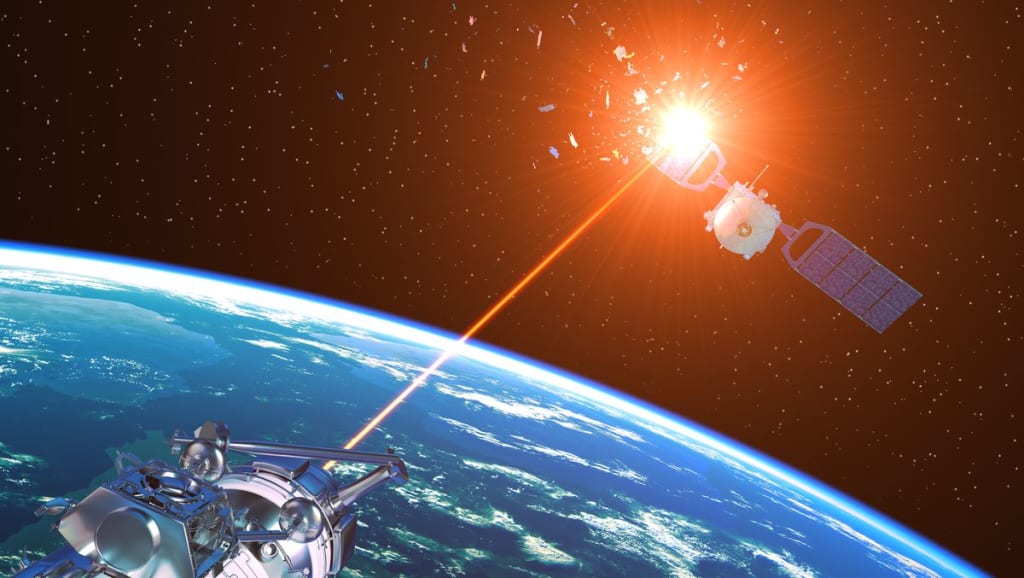
The ‘Space Laser’ Wars Have Begun—And America Wants to Be First to Develop the High-Powered Weapons
The concept of space based laser weapons has long been a staple of science fiction but it is now rapidly becoming a reality. As technological advancements accelerate major global powers particularly the United States are investing heavily in the development of high powered laser systems designed for space warfare. The emergence of these weapons marks the beginning of a new era of military competition one that extends beyond the Earth’s surface and into the vastness of space. The United States recognizing the strategic advantages of space based lasers has committed substantial resources to research and development in this field. The Pentagon and other defense agencies are exploring the potential of laser weapons to enhance national security neutralize threats and establish dominance in space. Unlike traditional kinetic weapons which rely on projectiles or missiles lasers offer near instantaneous response times precision targeting and the ability to disable enemy satellites and other space assets without generating debris. This makes them an attractive option for modern warfare particularly as nations become increasingly reliant on satellite networks for communication navigation surveillance and military operations. One of the key motivations behind the U.S. push for space-based laser technology is the growing threat posed by adversarial nations particularly China and Russia. Both countries have been actively developing their own space weaponry including anti satellite (ASAT) missiles and electronic warfare capabilities. In recent years China has demonstrated its ability to destroy satellites using ground based missiles while Russia has been accused of testing space based weapons capable of targeting American and allied assets. These developments have raised concerns in Washington about the vulnerability of U.S space infrastructure and the need to counter potential threats with advanced defensive and offensive measures.
The concept of space lasers is not entirely new. During the Cold War the United States explored the idea as part of the Strategic Defense Initiative (SDI) commonly known as Star Wars under President Ronald Reagan. The goal was to develop a missile defense system that could intercept and destroy incoming nuclear warheads using laser based systems. However at the time the technology was not advanced enough to make such a system feasible. Now decades later improvements in laser technology power generation and targeting systems have made space based laser weapons a tangible possibility. One of the primary advantages of laser weapons is their ability to operate at the speed of light. Unlike conventional weapons which require time to reach their targets lasers can instantly strike and disable enemy satellites or missiles. Additionally lasers do not require ammunition which means they can be used repeatedly without the logistical challenges associated with resupplying traditional weapons in space. This makes them a cost effective and efficient option for future warfare. Another key benefit of space based lasers is their precision. Traditional missiles and kinetic weapons can cause significant collateral damage especially in space where debris from destroyed satellites can pose long term risks to other assets in orbit. Laser weapons on the other hand can be precisely targeted to disable or destroy specific components of a satellite or spacecraft without creating large amounts of space debris. This capability is crucial in ensuring that space remains a viable domain for future exploration and commercial activities.
However the development of space-based laser weapons is not without challenges. One of the biggest technical hurdles is power generation. High powered lasers require a significant amount of energy to function effectively and generating this energy in space remains a challenge. Current satellite based power sources such as solar panels may not be sufficient to sustain the high energy requirements of laser weapons. Researchers are exploring alternative energy sources including nuclear power to address this limitation. However the deployment of nuclear powered weapons in space raises ethical political and safety concerns that must be carefully considered. Another challenge is targeting and tracking. Space based laser weapons must be equipped with advanced targeting systems capable of tracking fast moving objects with extreme precision. This requires sophisticated sensors artificial intelligence and real time data processing capabilities. Additionally atmospheric interference space weather and other environmental factors can impact the effectiveness of laser beams making it necessary to develop adaptive systems that can compensate for such variables. The development of space based laser weapons also raises significant geopolitical and legal concerns. The weaponization of space has long been a contentious issue with international treaties such as the Outer Space Treaty of 1967 prohibiting the deployment of weapons of mass destruction in space. While laser weapons may not fall under the category of weapons of mass destruction their deployment could lead to an arms race in space prompting other nations to accelerate their own space weapon programs. This in turnbincreases the risk of conflict in space which could have devastating consequences for global security. Furthermore there is an ongoing debate about the ethical implications of deploying space based laser weapons. Critics argue that such weapons could be used not only for defensive purposes but also for offensive operations potentially leading to an escalation of hostilities between nations. There are also concerns about the potential for misuse particularly if these weapons fall into the hands of rogue states or non-state actors. As space becomes increasingly militarized there is a growing need for international agreements and regulations to ensure that space remains a peaceful and cooperative domain.
Despite these challenges the United States is determined to maintain its technological edge and establish dominance in space warfare. The U.S Space Force established in 2019 has been tasked with overseeing military operations in space including the development and deployment of advanced weapons systems. The Pentagon has also partnered with private aerospace companies to accelerate research and innovation in space based technologies. Companies such as Lockheed Martin Boeing and Northrop Grumman are actively working on high powered laser systems that could be integrated into future military operations. In addition to defense applications space based laser technology has the potential to revolutionize other areas including missile defense and space exploration. For example laser systems could be used to intercept and destroy intercontinental ballistic missiles (ICBMs) before they reach their targets providing a more effective defense against nuclear threats. Similarly lasers could be used to clear space debris ensuring that Earth’s orbit remains safe for future missions. As the competition for space dominance intensifies the development of space based laser weapons represents a significant milestone in modern warfare. While these weapons offer numerous strategic advantages they also pose complex challenges that must be addressed through careful planning international cooperation and ethical considerations. The future of space warfare is unfolding rapidly and as the space laser wars begin the world must prepare for the profound implications of this new era of military technology.
About the Creator
Adnan Rasheed
Author & Creator | Writing News , Science Fiction, and Worldwide Update| Digital Product Designer | Sharing life-changing strategies for success.
Keep reading
More stories from Adnan Rasheed and writers in Earth and other communities.
Unseen Anomalies Are Shaping Our Understanding of Earth’s Tectonic Plates
Unseen Anomalies Are Shaping Our Understanding of Earth’s Tectonic Plates. For decades scientists have relied on the traditional model of plate tectonics to explain Earth's geological activity. This model developed in the mid 20th century describes how the planet’s rigid outer shell is divided into massive plates that move and interact causing earthquakes volcanic eruptions and the formation of mountains. However recent discoveries of unseen anomalies beneath the Earth's surface are challenging our conventional understanding of these processes. These unexpected findings suggest that the planet’s interior is far more complex than previously thought opening new avenues for research and potentially reshaping our understanding of how Earth’s tectonic system operates. One of the most intriguing discoveries comes from deep sea exploration and seismic imaging technology which have revealed previously undetected structures beneath the Earth’s crust. Scientists have found massive mysterious blobs of dense material lurking at the boundary between the Earth’s mantle and core. These structures known as Large Low Shear Velocity Provinces (LLSVPs) were first detected through seismic wave studies. Unlike the solid mantle these regions slow down seismic waves indicating that they may be composed of a different material than the surrounding rock. Some researchers believe these anomalies could be remnants of ancient tectonic plates that were subducted and sank deep into the planet over millions of years while others suggest they could be chemically distinct regions that have existed since Earth's formation. Another anomaly altering our perception of plate tectonics is the discovery of hidden fragmented plates. Traditionally scientists have categorized Earth's tectonic activity based on the interactions of large plates such as the Pacific North American and Eurasian plates. However recent research using advanced satellite technology and GPS data has revealed microplates smaller previously overlooked tectonic fragments that move independently. One such example is the Capricorn Plate in the Indian Ocean which was once considered part of a larger structure but is now recognized as a separate entity. The recognition of these microplates has significant implications as they may influence seismic activity in ways previously unaccounted for potentially leading to a reassessment of earthquake risk in various regions. The role of deep mantle plumes another unseen anomaly is also reshaping how scientists view tectonic movement. Mantle plumes are upwellings of hot rock that rise from deep within the mantle and can create volcanic hotspots such as those responsible for the Hawaiian Islands. Traditionally mantle plumes were thought to be relatively stationary acting independently of plate movements. However new studies suggest that these plumes may interact more dynamically with the overlying tectonic plates than previously believed. This interaction could explain irregular volcanic activity in regions far from plate boundaries challenging the conventional understanding that most volcanic activity is strictly tied to subduction zones and rift boundaries. Additionally recent studies of the Earth's lithosphere the rigid outer layer that includes the crust and upper mantle have revealed that it is not as uniform as once thought. The lithosphere varies in thickness and strength which can significantly influence tectonic movement. For example regions where the lithosphere is unusually thin or weak may experience unique forms of deformation such as the slow creeping motion seen in the Basin and Range Province in North America. This observation suggests that the traditional rigid plate model may need to be revised to incorporate a more fluid and dynamic understanding of how different parts of the lithosphere behave under stress.
By Adnan Rasheed10 months ago in Earth
Donald Trump’s Venezuela Attack Stuns Europe’s Far Right
When news broke that Donald Trump had launched a military operation in Venezuela, the world was stunned. Parts of Caracas were bombarded, President Nicolás Maduro was captured, and Trump claimed it as a victory for democracy. But the shockwaves weren’t just in Latin America—they rippled through Europe’s far-right, a political family that once celebrated Trump’s bravado. Suddenly, leaders who had cheered him on were forced into a tricky spot. Let’s break down why Europe’s far-right is struggling with Trump’s latest move and what it could mean for global politics. From MAGA Cheers to Quiet Unease At first glance, it seems odd. Far-right politicians in Europe usually oppose socialism and admire strong leaders. So why would a strike against a left-wing regime cause hesitation? The answer: nationalism and sovereignty. Leaders like Viktor Orbán (Hungary), Matteo Salvini (Italy), and Nigel Farage (UK) have built their reputations on protecting their countries from outside interference. Seeing the U.S. storm a sovereign nation? That feels like exactly the kind of foreign meddling they normally condemn. Orbán offered vague statements, Salvini pushed diplomacy over bombs, and Farage called the attack “unorthodox and unlawful”. Silence and discomfort have replaced outright praise. Why Far-Right Leaders Are Torn Several factors are causing the split: 1. National Sovereignty Matters European right-wing movements love sovereignty. They campaign against the EU and global bureaucracies. But Trump’s unilateral attack looks like the exact opposite—powerful outside forces imposing their will. Supporting it openly would clash with their messaging. 2. International Law is Tricky Many far-right parties use international law as a shield against globalist agendas. Trump’s Venezuela strike had no UN mandate. That forces leaders into an awkward position: defend a lawless foreign intervention or appear inconsistent. 3. Political Risks at Home Voters in Europe are wary of foreign wars. Supporting a U.S. military adventure—especially one with civilian casualties—could hurt parties trying to win elections at home. Who Supports, Who Hesitates? Not all far-right factions are reacting the same way: Spain’s Vox seems more supportive, framing it as a fight against oppression. Robert Fico (Slovakia) criticized it as a breach of international law. Many others are staying silent, an unusual position for politicians who usually love controversy. Meanwhile, centrists and progressives across Europe have been predictably critical, calling for debates in the European Parliament and condemning the attack. The Bigger Picture Trump’s move isn’t just a Latin American story—it could reshape the global right: • Shifting Alliances For years, European nationalists admired Trump. But unilateral military action creates tension. Some may lean toward isolationism; others may support selectively. Either way, unity is under strain. • European Defense Independence The attack could boost calls for Europe to strengthen its own defense. If the far-right can’t agree on U.S. interventions, other political forces might push for European autonomy. • Messaging Challenges At home, parties must reconcile nationalist slogans with global events. Voters don’t like cheerleaders for foreign conflicts. This could reshape campaigns and messaging across the continent. Conclusion: A Wake-Up Call for Europe’s Far-Right Trump’s Venezuela operation has done more than make headlines—it’s exposed deep cracks in Europe’s far-right. Leaders who once embraced his bold style are now navigating an uncomfortable reality. Far-right movements that rail against globalization and foreign influence are forced to confront a paradox: what happens when a strongman ally behaves like the very superpower they criticize? The lesson is clear: the international right is no longer a monolith. Trump’s moves may redefine alliances, challenge messaging, and force nationalist leaders to rethink their approach to the world stage. The global political landscape is shifting—and Europe’s far-right is feeling the tremors.
By Muhammad Hassan8 days ago in Earth
Why Greenland Matters for a Warming World
Greenland, the world’s largest island, often conjures images of endless ice, rugged landscapes, and isolation. Yet in the era of climate change, Greenland has become far more than a frozen wilderness—it is a critical player in understanding global warming, rising seas, and even geopolitical strategy. As scientists, policymakers, and nations increasingly focus on Greenland, the island offers a stark lesson: what happens in the Arctic does not stay in the Arctic. Its ice sheets, ecosystems, and resources affect the planet in ways that are profound, urgent, and far-reaching. Greenland’s Ice Sheets and Global Sea Levels The most visible and alarming aspect of Greenland’s global impact is its melting ice sheets. Greenland contains roughly 8% of the world’s fresh water, stored in massive ice sheets covering more than 1.7 million square kilometers. Over the past two decades, studies have shown that Greenland is losing ice at accelerating rates. According to NASA and the European Space Agency, Greenland’s ice loss contributes about 0.7 millimeters per year to global sea level rise. That might seem small, but every millimeter counts. If Greenland’s ice sheets were to melt completely—a scenario scientists consider extreme but possible under prolonged warming—sea levels could rise by over 20 feet, inundating coastal cities and displacing hundreds of millions of people worldwide. The ice melt also affects ocean currents and weather patterns. Freshwater from Greenland flows into the North Atlantic, disrupting the Atlantic Meridional Overturning Circulation (AMOC), a crucial component of the global climate system. Changes here could mean more severe storms in Europe, shifting monsoons in Asia, and hotter summers in North America. A Rapidly Warming Arctic Greenland is warming twice as fast as the global average. Scientists attribute this to Arctic amplification, where ice and snow loss reduce the Earth’s reflectivity (albedo), causing more heat absorption. The resulting feedback loop accelerates melting and affects local wildlife, indigenous communities, and global climate systems. Polar bears, Arctic foxes, seals, and migratory birds all face habitat changes, while Greenlandic communities see challenges in fishing, hunting, and infrastructure. Roads, airstrips, and settlements are increasingly vulnerable to permafrost thaw, floods, and landslides. For climate scientists, Greenland acts as a bellwether of global change, providing early warnings of trends that could eventually affect all continents. Greenland’s Geopolitical Significance Beyond climate, Greenland is gaining strategic attention from nations worldwide. Its location between North America and Europe, combined with its ice-free ports emerging in summer, makes it a hub for shipping, scientific research, and military strategy. The United States has historically maintained a military presence at Thule Air Base and monitors Greenland’s importance in Arctic defense. China has expressed interest in Arctic shipping lanes and mining opportunities, signaling potential economic and strategic competition. Denmark and Greenlandic authorities are navigating autonomy, resource development, and environmental protection, balancing sovereignty with global pressures. The melting ice, paradoxically, opens opportunities for mineral exploration, shipping, and scientific access, even as it poses serious environmental risks. Greenland has large deposits of rare earth minerals, uranium, and iron, all increasingly valuable in the global transition to clean energy and technology. Local Communities and Indigenous Voices The Greenlandic Inuit and other local communities are directly experiencing climate change. Traditional hunting and fishing practices are affected by shifting ice patterns, changing animal migration, and unpredictable weather. While global attention often focuses on ice melt and global impact, local voices emphasize sustainability, cultural preservation, and adaptive strategies. Many communities are exploring renewable energy, eco-tourism, and sustainable fisheries as ways to protect livelihoods while mitigating climate risks. Greenland and Global Climate Policy Greenland’s situation highlights the urgency of global action on climate change. The island illustrates several key lessons: Mitigation Matters: Reducing greenhouse gas emissions is critical to slowing ice loss and protecting sea levels. Adaptation Is Essential: Coastal cities worldwide must prepare for rising waters and changing weather patterns driven by Arctic changes. Scientific Research Is Vital: Greenland serves as a natural laboratory for studying climate, ice dynamics, and ocean circulation. Understanding its trends allows for more accurate modeling and forecasting worldwide. International collaboration, including research partnerships and climate agreements, is essential to ensure that Greenland’s ice sheets do not become a catastrophic tipping point. The Global Ripple Effect It’s easy to think of Greenland as distant, but its fate touches everyone: Rising seas threaten cities from New York to Tokyo. Ocean currents shifting from ice melt influence global climate patterns. Economic implications arise from shipping routes, resource access, and disaster mitigation costs. Greenland is not just an Arctic concern—it’s a global responsibility. How countries respond to its changes will influence the world for decades to come. Conclusion: Why the World Should Watch Greenland Greenland matters because it is a microcosm of our planet’s challenges. Its melting ice sheets remind us that climate change is already here. Its mineral wealth and strategic position show that human interests will increasingly collide with environmental imperatives. Its communities illustrate the human cost of warming and the resilience needed to adapt. For a warming world, Greenland is both a warning and a guidepost. Protecting its environment, respecting its people, and monitoring its ice are not just Arctic issues—they are global imperatives. The world cannot afford to ignore Greenland. Its future is inextricably linked to the health of our planet and the security, prosperity, and safety of populations everywhere.
By Muhammad Hassan3 days ago in Earth
Miss Persephone's Manual to a Seemingly Ordinary Life
Miss Persephone was found at the dining table, her blue eyes swollen, her tears arriving and retreating like the tides of the ocean. Earlier that day, her family had visited her in the retirement home where she had lived for eight years. It was her eightieth birthday.
By Imola Tóth3 days ago in Fiction


Comments
There are no comments for this story
Be the first to respond and start the conversation.