
Earth Could Have Billions More People Than We Ever Realized.
Billion people


Earth Could Have Billions More People Than We Ever Realized.
For decades global population estimates have been the foundation of policymaking, infrastructure planning and resource allocation. However a new study suggests that we may have vastly underestimated the world’s rural population by as much as 84 percent in some cases. If true, this revelation could mean that Earth's actual population is billions higher than previously thought. A research team led by environmental engineer Josias Láng Ritter from Aalto University has provided the first concrete evidence that a significant portion of the rural population is missing from global datasets. Their study published in New Scientist highlights a striking discrepancy in population data particularly in less developed rural areas where data collection has historically been inconsistent and inaccurate.
The Discovery: Billions of People Missing?
The study analyzed global population data from 1975 to 2010 using a unique approach tracking the displacement of people due to dam construction projects. This scenario offers a rare opportunity for accurate on the ground verification as governments and organizations typically keep detailed records of displaced populations. By comparing official displacement figures with data from five major global population datasets the researchers uncovered a massive underestimation of rural populations. According to their findings rural populations have been undercounted by 53 percent to 84 percent over the studied period. The implications of this are profound. If rural population estimates are significantly off then the global human population might be far higher than the currently accepted figure of approximately 8 billion people.
Why Are Rural Populations Undercounted?
The underestimation of rural populations largely stems from the lack of detailed granular data available in remote regions. While urban populations are well documented due to frequent censuses extensive infrastructure and better digital records rural communities often lack these mechanisms. Some key reasons for the discrepancies include:
Infrequent Census Data: Many countries especially in Africa South Asia and Latin America conduct censuses irregularly or with incomplete coverage in rural areas.
Lack of Health and Infrastructure Data: Population estimates often rely on records from healthcare facilities schools and other services many of which are sparse or absent in rural regions.
Satellite Imagery Limitations: While satellite technology has improved population tracking it still struggles to distinguish between small rural dwellings and natural landscapes, leading to undercounting.
The Real World Impact of Population Undercounting
Accurate population data is crucial for numerous global initiatives, including:
Resource Allocation: Governments and international organizations use population estimates to distribute food, medical supplies, and infrastructure investments. An undercounted population means millions (or even billions) could be missing out on essential resources.
Climate Change Planning: Rising sea levels, extreme weather, and migration patterns are all influenced by population density. If the world has far more people than we thought, climate change risks could be even greater.
Economic and Social Policies: Many economic projections and social welfare programs are based on estimated population sizes. A major undercount could result in flawed policy decisions at both national and global levels.
Skepticism and Debate Among Experts
Not everyone agrees with the study’s conclusions. Some researchers argue that recent advances in satellite imagery, AI-driven population estimation, and improved national data collection have significantly reduced errors in global population estimates. They believe that while undercounting may exist, it is not as severe as the study suggests.
Moreover, some scientists point out that if billions of people were truly missing from the data, we would see far greater mismatches in global food supply, economic output, and infrastructure demand. They caution against drawing extreme conclusions without further verification.
What Happens Next?
Even if the discrepancy is on the lower end of the study’s estimates, correcting the global population count by hundreds of millions—or even billions—would be a monumental shift. Governments, researchers, and international organizations must take this study seriously and invest in more accurate, real-time population tracking methods.
Improving census coverage, leveraging AI to analyze satellite data more precisely, and integrating mobile phone and digital footprint tracking could help close the population data gap. If confirmed, the study’s findings could reshape how the world plans for its future, from food security to climate action and beyond.
One thing is certain: whether we are underestimating the global population by millions or billions, this conversation is just beginning.
About the Creator
Adnan Rasheed
Author & Creator | Writing News , Science Fiction, and Worldwide Update| Digital Product Designer | Sharing life-changing strategies for success.
Keep reading
More stories from Adnan Rasheed and writers in Earth and other communities.
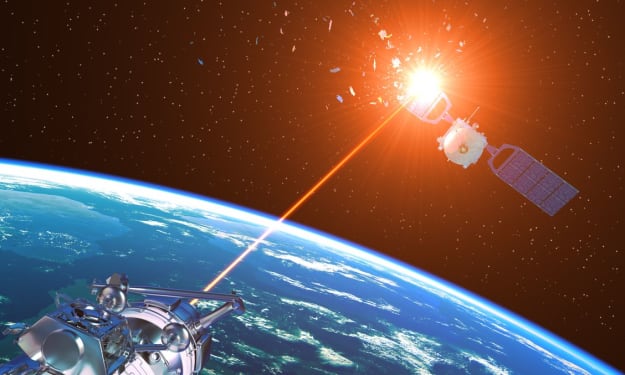
The ‘Space Laser’ Wars Have Begun—And America Wants to Be First to Develop the High-Powered Weapons
The ‘Space Laser’ Wars Have Begun—And America Wants to Be First to Develop the High-Powered Weapons The concept of space based laser weapons has long been a staple of science fiction but it is now rapidly becoming a reality. As technological advancements accelerate major global powers particularly the United States are investing heavily in the development of high powered laser systems designed for space warfare. The emergence of these weapons marks the beginning of a new era of military competition one that extends beyond the Earth’s surface and into the vastness of space. The United States recognizing the strategic advantages of space based lasers has committed substantial resources to research and development in this field. The Pentagon and other defense agencies are exploring the potential of laser weapons to enhance national security neutralize threats and establish dominance in space. Unlike traditional kinetic weapons which rely on projectiles or missiles lasers offer near instantaneous response times precision targeting and the ability to disable enemy satellites and other space assets without generating debris. This makes them an attractive option for modern warfare particularly as nations become increasingly reliant on satellite networks for communication navigation surveillance and military operations. One of the key motivations behind the U.S. push for space-based laser technology is the growing threat posed by adversarial nations particularly China and Russia. Both countries have been actively developing their own space weaponry including anti satellite (ASAT) missiles and electronic warfare capabilities. In recent years China has demonstrated its ability to destroy satellites using ground based missiles while Russia has been accused of testing space based weapons capable of targeting American and allied assets. These developments have raised concerns in Washington about the vulnerability of U.S space infrastructure and the need to counter potential threats with advanced defensive and offensive measures.
By Adnan Rasheed12 months ago in Earth



Comments
There are no comments for this story
Be the first to respond and start the conversation.