Climate
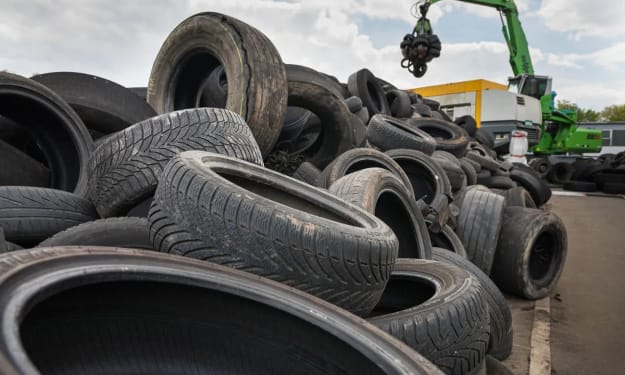
Policy Directions for Tyre Recycling in Europe
The management of end-of-life tyres (ELTs) in Europe has evolved into a sophisticated regulatory framework aimed at resource recovery, environmental protection, and circular economy advancement. Over the past decade, the European Union (EU) has shifted its policy orientation from disposal and incineration toward material and energy recovery, encouraging sustainable methods such as pyrolysis of tyre. This transformation reflects the EU’s broader ambitions under the Green Deal and the Circular Economy Action Plan.
By Wayne Shen3 months ago in Earth
Earth: The One-of-a-Kind Planet — But How Unique Is It, Really?
Look up at the night sky and you’ll see countless stars scattered across an endless canvas. Each one could have planets orbiting it some rocky, some gaseous, some maybe even Earth-like. Yet among all of them, our world remains an exception. Scientists have discovered thousands of exoplanets over the years, but none match Earth’s perfect mix of distance, composition, and stability that allows life to thrive.
By kashif khan3 months ago in Earth
The End of the Earth – A Glimpse Into Our Future
It’s hard to imagine a world without the Earth we know today. The blue oceans, the green forests, the soft winds, and the warmth of sunlight have always been part of our story. But what if one day, all of this began to fade? What if the Earth slowly reached its end—not through a sudden explosion or asteroid impact—but through a quiet, painful decline?
By kashif khan3 months ago in Earth
Heat Pumps In A Rainforest City
“Go electric” is everywhere, but what matters at home is comfort that works with our cool, wet winters. Heat pumps aren’t just a trend in Vancouver; they’re a climate match. When they’re sized and installed properly, they run quietly and efficiently, removing moisture and reducing emissions without requiring you to bundle up.
By The Weekend Project3 months ago in Earth
The oldest known stalagmite, which dates back 289 million years, was discovered in rocks in Oklahoma.
Did you know that troglobites are organisms that only inhabit caves? Although it's not the most attractive name in the world, it seems appropriate. evokes visions of damp, chilly, and shadowy spaces where unidentified liquids, some of which have been found to be the oldest water on Earth—and people drank it!—drip from the roof.
By Francis Dami3 months ago in Earth
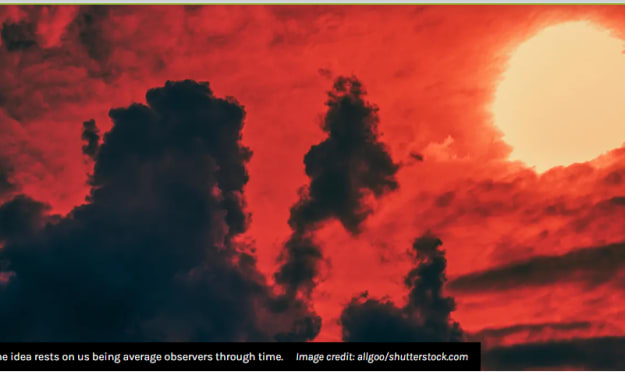
"Carter Catastrophe": The Math Formula That Foretells Human Demise
Humanity has been on a lengthy road to discover that we are not the centre of the universe, the galaxy, or even the Solar System since we evolved into a (semi) sentient species and began studying the cosmos.
By Francis Dami3 months ago in Earth
Supermoons in the U.S.
In the crisp evening air of early October 2025, millions of Americans stepped outside, gazing upward in awe. The moon—bright, immense, and glowing with an almost surreal brilliance—hung low on the horizon, casting silver reflections across oceans, lakes, and rooftops. It was the beginning of an extraordinary celestial sequence: four consecutive supermoons that would illuminate the skies over the United States from October through January, a phenomenon unseen for decades.
By [email protected]3 months ago in Earth
Light of the Horizon
Nestled between rolling green hills and the edge of a crystal-blue lake lay the village of Liora—a place so quiet, many maps forgot it existed. Yet, for those who found it, Liora was unforgettable. No one rushed in Liora. Morning began not with alarms but with the sound of birdsong and the smell of warm bread baking. Children played barefoot in dewy fields, their laughter echoing through the valley. The sky always seemed a little bluer, and the air carried the scent of lavender and hope. It was in this village that Maren arrived one autumn morning, a traveler in search of something she couldn’t quite name. She had left the noise of the city behind—its honking cars, endless screens, and hurried footsteps—and followed a hand-drawn map given to her by an old woman on a train. “Go there,” the woman had whispered. “They still remember how to live.” Maren didn’t expect much. Perhaps a quaint stop, a few photo opportunities, maybe some fresh bread. But as she stepped off the small bus that only came twice a week, something shifted. The air seemed lighter here, the kind that made you breathe a little deeper without realizing it. An elderly man named Elias greeted her at the village square. He had a beard like soft wool and eyes that had seen decades of peace. “Welcome to Liora,” he said, his voice like river stones. “Here, we live by the rhythm of kindness.” Maren smiled politely, not yet understanding. But she stayed. Each day, she watched. A child, no more than five, helped her grandmother water plants in mismatched pots. A group of teenagers repaired a neighbor’s broken fence without being asked. There were no locks on doors, no loudspeakers, no stress. When someone was ill, food appeared on their porch. When someone grieved, the village walked silently with them to the lake, candles in hand. No one was rich in Liora—not in money. But in time, in community, in joy—they were wealthy beyond measure. It wasn’t long before Maren began to change. She found herself waking with the sun, baking bread with the village baker, singing songs in languages she didn’t know. She painted for the first time in years, her fingers smudged with color. Her shoulders, once heavy with unspoken worries, relaxed. One evening, she sat by the lake as the sun melted into the water. Next to her was Anya, a girl of about ten, drawing in the dirt with a stick. “Do you like it here?” Anya asked, not looking up. “I do,” Maren replied. “It’s… peaceful.” Anya grinned. “That’s because we choose peace. Every day.” Maren looked at her, surprised. “You choose it?” “Of course,” Anya said, as if it were the most obvious thing in the world. “Kindness doesn’t just happen. We plant it, like seeds.” That night, those words stayed with Maren. Months passed. The villagers began calling her one of their own. She had found what she didn’t know she was seeking—not just peace, but a way of being. A reminder that goodness wasn’t a rare miracle, but a choice made in every small act. When she finally left, she didn’t feel like she was leaving something behind—but carrying something forward. She knew the world outside Liora was louder, harder. But she also knew something else now: that goodness, once seen, can’t be unseen. That peace, once planted, can grow anywhere. Even in the busiest cities. Even in the darkest times. And so, Maren drew her own map—simple, hand-drawn, with a note on the bottom that read: “Go here. They still remember how to live.”
By Muhammad Saad 3 months ago in Earth