
The Silent Pandemic: One in Six Infections Now Untreatable
As bacteria outsmart modern medicine, antibiotic resistance is turning once-curable diseases into deadly threats. Here’s why experts call it the next global health crisis — and what we can still do to fight back.

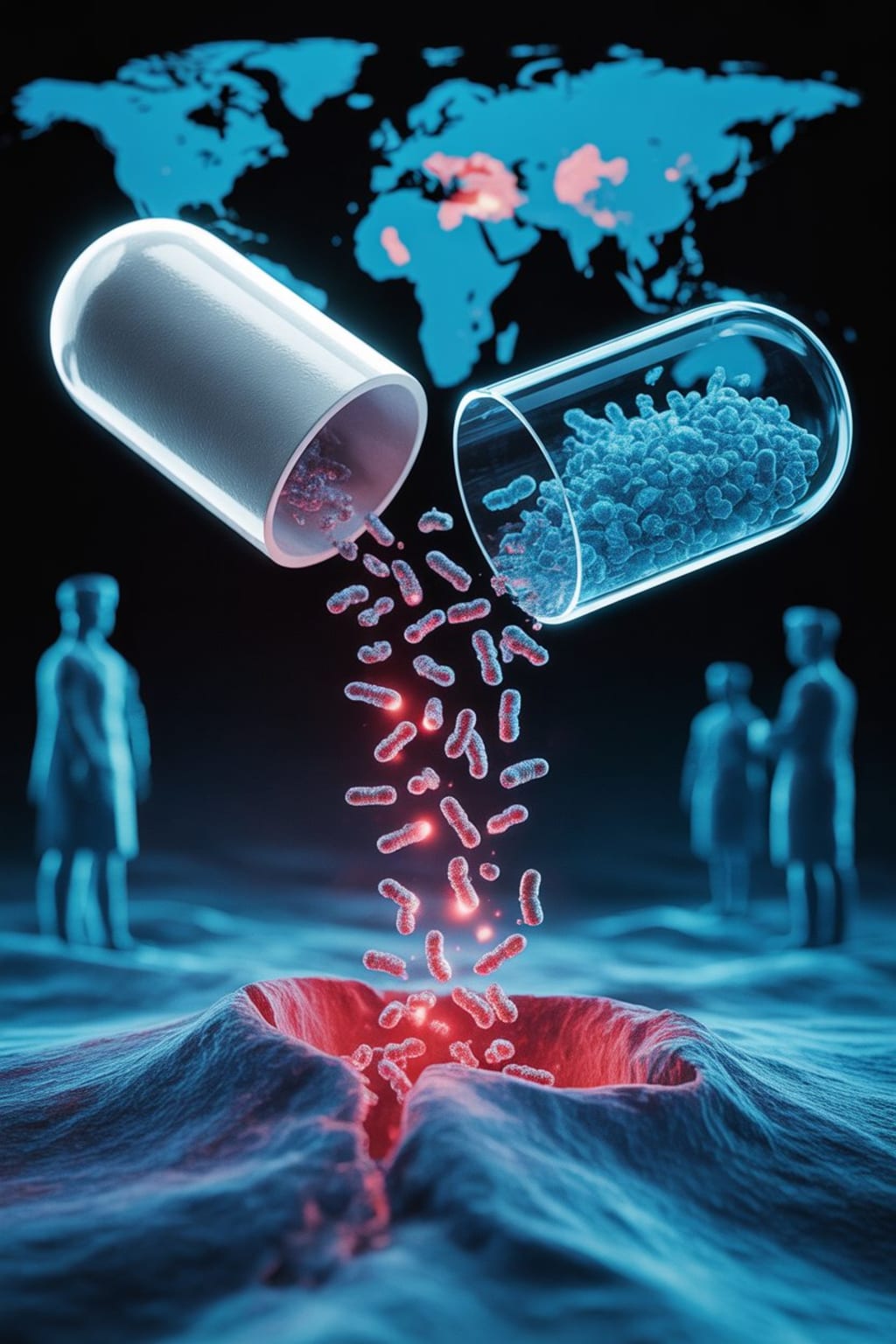
I. The Crisis We Can’t See — Yet
Imagine getting a simple cut, taking a routine antibiotic, and realizing it doesn’t work.
The infection spreads. The fever rises. The doctors run out of options.
This is not a science-fiction scenario — it’s a snapshot of the world we’re already entering.
According to new data from the World Health Organization (WHO), one in six bacterial infections globally is now resistant to standard antibiotics.
That means millions of everyday infections — from urinary tract infections to pneumonia — are becoming untreatable. And the number is rising fast.
II. How We Got Here
Antibiotics have been medicine’s miracle weapon for nearly a century. Penicillin, discovered in 1928, revolutionized healthcare — curing deadly diseases, preventing infection after surgery, and saving millions of lives.
But over time, bacteria have evolved. They’re not passive targets; they’re living organisms that mutate, adapt, and survive.
Here’s how resistance develops:
Antibiotics kill most bacteria — but a few survive due to natural mutations.
Those survivors multiply, passing on their resistance genes.
The next time we use the same drug, it’s less effective — or completely useless.
The more we overuse antibiotics, the faster this evolution happens.
And we’ve been overusing them everywhere — in hospitals, on farms, even in fish tanks.
III. The Global Numbers Are Terrifying
Recent WHO and CDC data reveal the scale of the problem:
Over 5 million deaths every year are linked to drug-resistant infections.
Common bacteria like E. coli, Klebsiella pneumoniae, and Staphylococcus aureus are developing multi-drug resistance.
Some strains of Gonorrhea and Typhoid fever are now virtually untreatable with available antibiotics.
In low- and middle-income countries, antibiotics are sold over the counter, fueling uncontrolled misuse.
Dr. Tedros Adhanom Ghebreyesus, WHO’s Director-General, called it:
“A slow-motion pandemic that threatens to undo a century of medical progress.”
IV. Everyday Infections, Deadly Consequences
Antibiotic resistance doesn’t just threaten rare or exotic diseases. It affects the most routine medical care.
Urinary Tract Infections (UTIs): Once easily treated, now some UTI-causing bacteria resist every known oral antibiotic.
Surgery: Joint replacements, cesarean sections, and even dental work rely on antibiotics to prevent infection. Without them, procedures become dangerous.
Cancer Treatment: Chemotherapy weakens immunity, making patients dependent on antibiotics for survival. Resistance makes these treatments riskier.
Childbirth: In parts of Africa and Asia, newborns are dying from infections no antibiotic can cure.
It’s not just about health — it’s about the foundation of modern medicine collapsing.
V. Why Overuse and Misuse Are the Root Causes
The blame doesn’t lie with bacteria — it lies with us.
Medical Overprescription:
Antibiotics are often prescribed for viral infections (like colds or flu) that they can’t treat.
Agricultural Abuse:
Over 60% of antibiotic use worldwide goes into livestock farming, not human medicine. Animals are routinely given low doses to make them grow faster — breeding resistant bacteria that can spread to humans through meat and water.
Incomplete Treatments:
Many people stop antibiotics early once they “feel better,” allowing surviving bacteria to multiply and adapt.
Lack of New Drugs:
Big pharmaceutical companies have largely abandoned antibiotic research because it’s not profitable — new drugs are expensive to develop, and bacteria evolve too fast for sustained sales.
VI. Superbugs: The New Killers
Some of the most feared names in modern medicine are “superbugs” — bacteria that laugh in the face of our strongest drugs.
MRSA (Methicillin-Resistant Staphylococcus aureus): Once confined to hospitals, now found in communities and gyms.
CRE (Carbapenem-Resistant Enterobacteriaceae): Resistant to nearly all antibiotics; mortality rate up to 50%.
XDR-TB (Extensively Drug-Resistant Tuberculosis): A form of TB that’s almost impossible to cure; spreading in Africa and Eastern Europe.
These infections turn routine hospital visits into potential death traps. And unlike COVID-19, there’s no vaccine or global mobilization to stop them.
VII. The Economic and Social Fallout
The World Bank estimates that by 2050, antibiotic resistance could cause:
$100 trillion in lost global productivity,
Push 24 million people into extreme poverty, and
Make modern healthcare unaffordable in many countries.
Every resistant infection means longer hospital stays, costlier treatments, and a greater burden on already strained healthcare systems.
It’s not just a health issue — it’s an economic and humanitarian crisis.
VIII. Fighting Back: What the World Is Doing
Thankfully, not all hope is lost. Across the globe, efforts are growing to slow the spread:
Global Surveillance:
WHO’s GLASS (Global Antimicrobial Resistance Surveillance System) tracks resistant strains worldwide.
Antibiotic Stewardship Programs:
Hospitals are adopting strict guidelines for antibiotic use — prescribing only when absolutely necessary.
Phage Therapy & New Research:
Scientists are reviving the use of bacteriophages — viruses that kill bacteria naturally. Others are exploring AI-driven antibiotic discovery.
Public Awareness Campaigns:
Countries like Sweden and the Netherlands have cut antibiotic misuse dramatically through education.
One Health Approach:
A growing movement recognizes that human, animal, and environmental health are connected — and that stopping resistance requires all three systems working together.
IX. What You Can Do Right Now
While the crisis sounds global, individual choices truly matter.
💊 Never demand antibiotics for viral illnesses like colds or flu.
⏳ Finish your full course of antibiotics when prescribed — don’t stop early.
🚫 Avoid self-medicating or buying antibiotics without a prescription.
🥩 Choose antibiotic-free meat when possible to discourage misuse in farming.
🧼 Practice good hygiene — handwashing, vaccination, and safe food handling prevent infections before they start.
Resistance begins at the microscopic level, but prevention begins at home.
X. The Bottom Line: A Fight for the Future
Antibiotics gave humanity an edge over nature — but that edge is dulling fast.
If we lose them, we risk sliding back into an era where a minor cut or sore throat could kill.
This is the silent pandemic — one that grows without headlines, without panic, but with deadly precision.
The good news? It’s still reversible — if we act now, together.
Because in the war against superbugs, every choice, every dose, and every life counts.
About the Creator
Keep reading
More stories from arsalan ahmad and writers in Earth and other communities.
A $170 Million Gemstone Discovery Shocks Myanmar’s Mining World
Myanmar, a country long known for its rich natural resources, has once again captured global attention after the discovery of an extraordinary gemstone estimated to be worth around $170 million. The remarkable find has stunned geologists, gem traders, and mining experts, reaffirming Myanmar’s reputation as one of the world’s most important sources of precious stones.
By Irshad Abbasi 6 days ago in Earth



Comments
There are no comments for this story
Be the first to respond and start the conversation.