
Light of the Horizon
A Journey to the World's Most Peaceful Village and the People Who Keep Its Spirit Alive
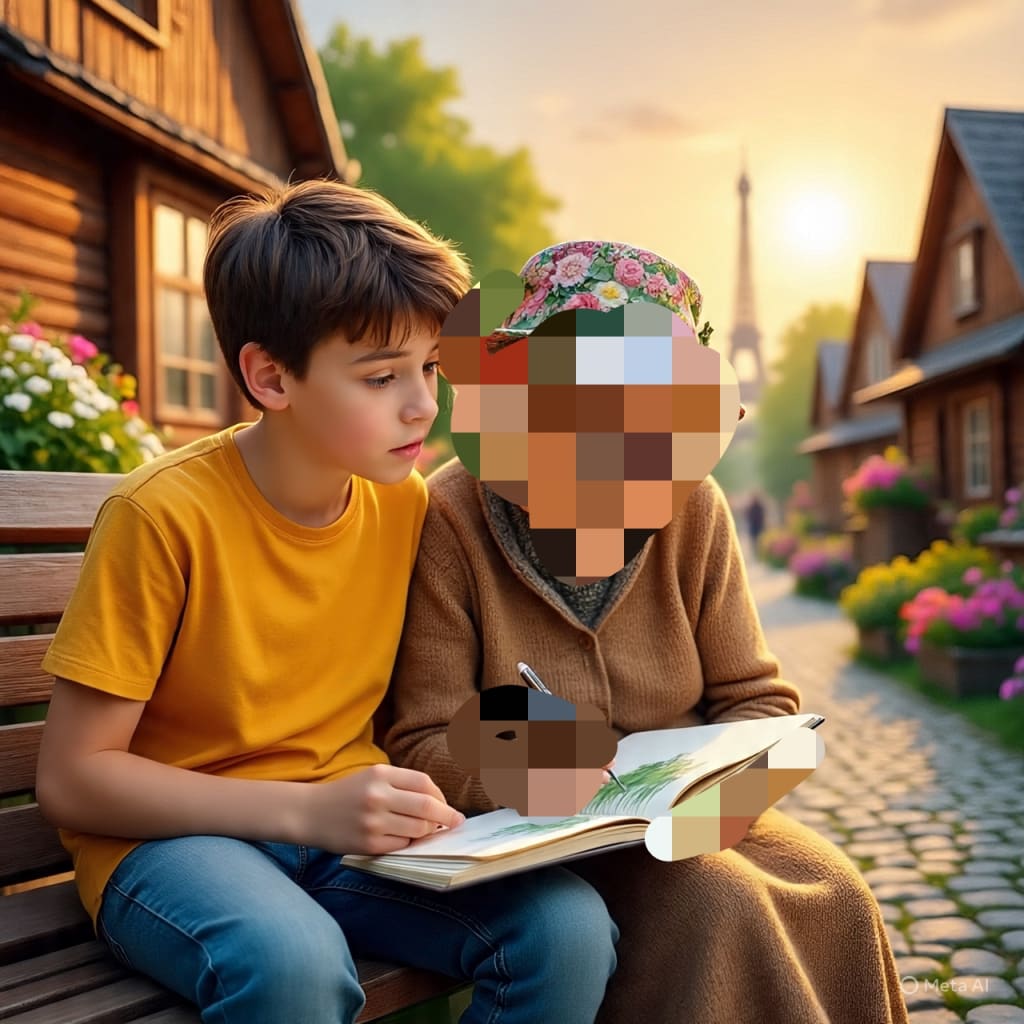
Nestled between rolling green hills and the edge of a crystal-blue lake lay the village of Liora—a place so quiet, many maps forgot it existed. Yet, for those who found it, Liora was unforgettable.
No one rushed in Liora. Morning began not with alarms but with the sound of birdsong and the smell of warm bread baking. Children played barefoot in dewy fields, their laughter echoing through the valley. The sky always seemed a little bluer, and the air carried the scent of lavender and hope.
It was in this village that Maren arrived one autumn morning, a traveler in search of something she couldn’t quite name. She had left the noise of the city behind—its honking cars, endless screens, and hurried footsteps—and followed a hand-drawn map given to her by an old woman on a train. “Go there,” the woman had whispered. “They still remember how to live.”
Maren didn’t expect much. Perhaps a quaint stop, a few photo opportunities, maybe some fresh bread. But as she stepped off the small bus that only came twice a week, something shifted. The air seemed lighter here, the kind that made you breathe a little deeper without realizing it.
An elderly man named Elias greeted her at the village square. He had a beard like soft wool and eyes that had seen decades of peace. “Welcome to Liora,” he said, his voice like river stones. “Here, we live by the rhythm of kindness.”
Maren smiled politely, not yet understanding. But she stayed.
Each day, she watched. A child, no more than five, helped her grandmother water plants in mismatched pots. A group of teenagers repaired a neighbor’s broken fence without being asked. There were no locks on doors, no loudspeakers, no stress. When someone was ill, food appeared on their porch. When someone grieved, the village walked silently with them to the lake, candles in hand.
No one was rich in Liora—not in money. But in time, in community, in joy—they were wealthy beyond measure.
It wasn’t long before Maren began to change. She found herself waking with the sun, baking bread with the village baker, singing songs in languages she didn’t know. She painted for the first time in years, her fingers smudged with color. Her shoulders, once heavy with unspoken worries, relaxed.
One evening, she sat by the lake as the sun melted into the water. Next to her was Anya, a girl of about ten, drawing in the dirt with a stick.
“Do you like it here?” Anya asked, not looking up.
“I do,” Maren replied. “It’s… peaceful.”
Anya grinned. “That’s because we choose peace. Every day.”
Maren looked at her, surprised. “You choose it?”
“Of course,” Anya said, as if it were the most obvious thing in the world. “Kindness doesn’t just happen. We plant it, like seeds.”
That night, those words stayed with Maren.
Months passed. The villagers began calling her one of their own. She had found what she didn’t know she was seeking—not just peace, but a way of being. A reminder that goodness wasn’t a rare miracle, but a choice made in every small act.
When she finally left, she didn’t feel like she was leaving something behind—but carrying something forward. She knew the world outside Liora was louder, harder. But she also knew something else now: that goodness, once seen, can’t be unseen. That peace, once planted, can grow anywhere.
Even in the busiest cities. Even in the darkest times.
And so, Maren drew her own map—simple, hand-drawn, with a note on the bottom that read:
“Go here. They still remember how to live.”
About the Creator
Keep reading
More stories from Muhammad Saad and writers in Earth and other communities.
Rising Waters, Rising Resilience
Rising Waters, Rising Resilience How Communities Are Adapting, Innovating, and Thriving in the Face of Floods Floods have long been seen as devastating forces of nature—sweeping away homes, crops, and livelihoods. But in many corners of the world, communities are rewriting the narrative. Instead of merely bracing for disaster, they are preparing, adapting, and even finding opportunities to grow stronger. This is the story of resilience—of people who face the rising waters not with fear, but with innovation and unity. In the rural district of Gaibandha, Bangladesh, where monsoon floods are an annual certainty, families used to spend months each year displaced from their homes. But today, something remarkable is happening. Thanks to local initiatives supported by NGOs and climate-adaptive strategies, homes are being built on raised earthen mounds called plinths. These mounds rise above expected flood levels, keeping families dry even when surrounding areas are submerged. “When the floods come, we stay home now,” says Anika, a mother of three. “We used to lose everything each year. Now we can grow vegetables on floating gardens, and my children still go to school.” These floating gardens—constructed from water hyacinth, bamboo, and soil—are another example of how communities are adapting creatively. They allow for year-round farming, even during flood season. Crops like spinach, pumpkin, and okra are grown on rafts that gently rise and fall with the water, ensuring food security and income when traditional fields are underwater. Innovation is not limited to rural areas. In the city of Rotterdam, Netherlands, which lies largely below sea level, engineers and urban planners have turned water management into an art form. The city features flood-resilient infrastructure like water plazas—public spaces that serve as parks in dry weather and water catchment areas during storms. Buildings are constructed on floating platforms or elevated on stilts, and the city’s complex system of dikes, canals, and surge barriers are managed with cutting-edge technology. “We don’t fight water—we live with it,” says Pieter de Vries, a water management engineer in Rotterdam. “That’s the secret to our success.” In Jakarta, Indonesia, frequent floods once paralyzed the city. Today, local youth groups are leading awareness campaigns, helping clean drainage systems, and planting trees in urban wetlands to prevent runoff. They’ve also helped implement a digital flood-warning system that alerts residents via mobile phones hours before floodwaters arrive, giving them time to protect their homes and evacuate if necessary. Education plays a critical role in fostering resilience. In the Philippines, where typhoons and flooding are increasingly common, schools are teaching children how to respond during disasters, turning them into “young preparedness ambassadors.” These students often go home and teach their families what to do—how to build emergency kits, where to go, and when to act. Across the world, governments, scientists, and citizens are collaborating to develop more adaptive and inclusive flood strategies. Satellite data and artificial intelligence are being used to predict floods with increasing accuracy. Community leaders are working closely with scientists to integrate traditional knowledge with modern solutions. And more importantly, marginalized groups—often the most affected by flooding—are being included in planning and decision-making processes. Floods are no longer viewed solely as natural disasters but as challenges that can be managed and even anticipated. Through smart design, community education, and local empowerment, people are learning not just to survive, but to thrive in the face of rising waters. These stories of resilience carry a powerful message: Climate change may be intensifying floods, but human determination is rising even faster. “The water doesn’t scare us anymore,” says Anika, smiling as she pulls fresh tomatoes from her floating garden. “It reminds us to stay ready, to stay united, and to keep building better.” In every flooded field turned into a floating farm, every child learning disaster readiness, and every community reimagining how to coexist with water, a quiet revolution is underway. The world may be changing—but so are we. And in that change lies hope.
By Muhammad Saad 7 months ago in Earth
Stanislav Kondrashov Oligarch Series: Oligarchy and Global Supergrids in the Next Phase of the Energy Transition
The global energy transition is entering a new and complex phase. While early discussions focused primarily on renewable technologies such as solar panels, wind turbines, and battery storage, the next stage of transformation is increasingly centered on infrastructure. Among the most ambitious ideas shaping this evolution is the concept of **global supergrids**—vast electricity networks designed to connect distant regions through high-capacity, long-distance transmission systems.
By Stanislav Kondrashov 7 days ago in Earth




Comments
There are no comments for this story
Be the first to respond and start the conversation.