
The End of the Earth – A Glimpse Into Our Future
What would life look like if our planet began to truly die?

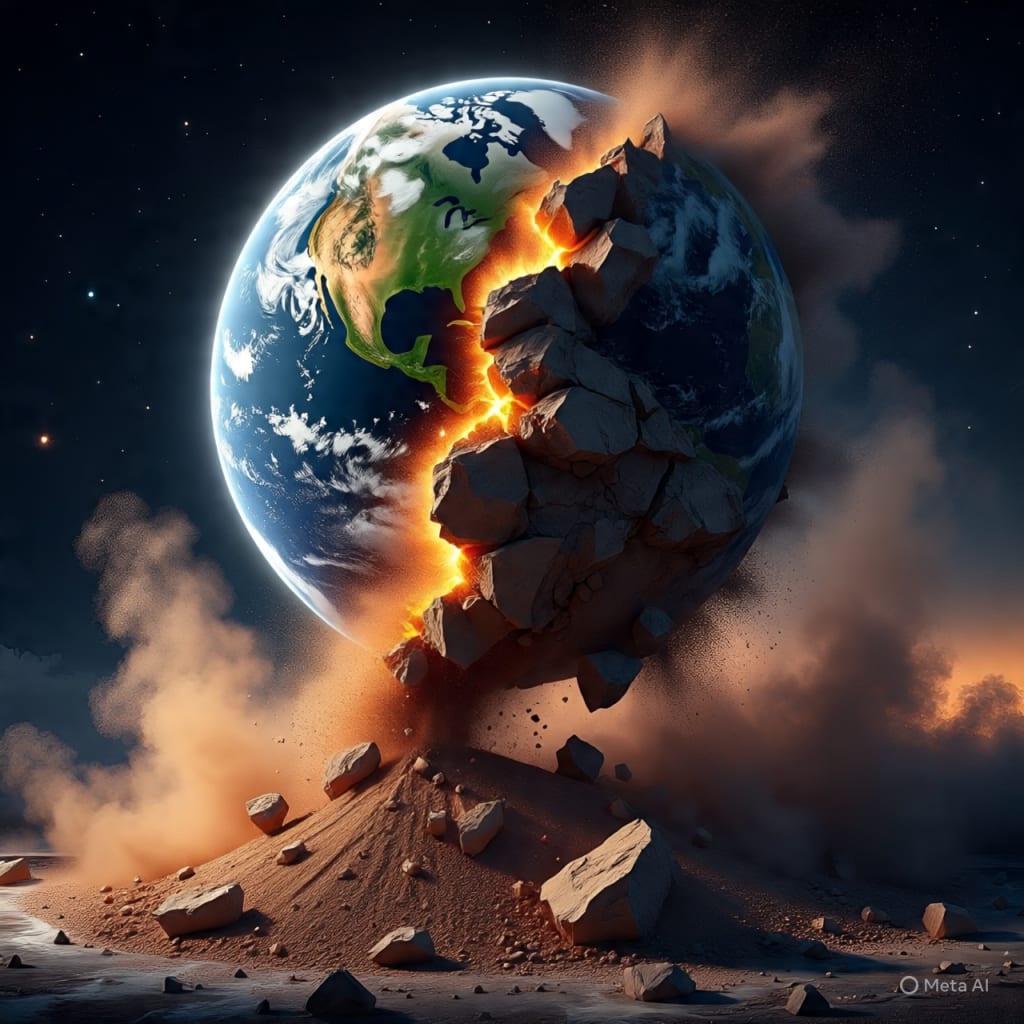
It’s hard to imagine a world without the Earth we know today. The blue oceans, the green forests, the soft winds, and the warmth of sunlight have always been part of our story. But what if one day, all of this began to fade? What if the Earth slowly reached its end—not through a sudden explosion or asteroid impact—but through a quiet, painful decline?
This isn’t a story about science fiction. It’s a reflection on what might really happen if we keep ignoring the signs around us.
The Beginning of the End
Scientists believe the Earth still has billions of years before the sun grows so large that it swallows our planet. But our real danger isn’t that far in the future. It’s happening now—in rising temperatures, melting ice, dying forests, and polluted air.
Imagine a day when stepping outside feels like walking into an oven. Cities turn into deserts. Rivers dry up. The ocean, once full of life, becomes a graveyard of plastic and dead coral. People don’t notice the change all at once—it creeps in slowly, year by year.
The Silent Warning
The first to feel the Earth’s ending would not be us sitting in cities. It would be the small creatures—the bees that vanish, the fish that die in warm water, the trees that fail to bloom. These quiet deaths are nature’s warnings.
And yet, we continue our lives, scrolling through screens, buying more, wasting more, and thinking someone else will fix it. But the truth is, no one else can. The Earth doesn’t belong to governments or billionaires—it belongs to all of us.
---
The Human Struggle
As the climate worsens, humans will fight over what’s left—food, water, and safe places to live. Imagine countries closing borders, not because of war, but because their land can no longer feed new people. Millions might flee from floods or heatwaves, searching for a home that no longer exists.
Technology may try to save us—machines that clean the air or turn seawater into drinking water—but they’ll only buy us time. No machine can replace the forests that breathe for us or the oceans that balance our world.
---
The Emotional Side of the End
The end of the Earth isn’t just about destruction. It’s about loss. The loss of simple joys—children playing in the rain, farmers planting crops in fertile soil, travelers watching sunsets over clean beaches. These are the memories that will fade when nature disappears.
It’s also about guilt. We’ll ask ourselves: Could we have done more? The answer will hurt because, deep down, we’ll know we could have. We’ll remember how we wasted time arguing about money and politics while the planet quietly begged for help.
A Glimmer of Hope
But even at the edge of the Earth’s end, hope might survive. Humans are capable of great change when we finally understand what’s at stake. Communities could come together to rebuild forests, clean oceans, and choose renewable energy over comfort.
Imagine a world where people plant trees instead of building walls. Where countries work together, not for power, but for survival. Where every child grows up knowing that saving the planet is not just science—it’s love.
---
The Choice We Still Have
The end of the Earth is not a fixed destiny. It’s a warning—a mirror showing us what could happen if we don’t change. The good news is that it’s not too late.
Every small action matters. Turning off unnecessary lights, reducing waste, supporting clean energy, and teaching others to care. These aren’t grand gestures, but together, they shape the future.
The Earth doesn’t need saving—it needs understanding. It needs people to remember that it’s alive, that it breathes, and that it feels every wound we cause.
Final Thoughts
One day, far in the future, the Earth will truly end. The sun will expand, the oceans will boil, and life will fade. But that’s not our story—not yet. Our story is still being written, and we have the power to decide how it ends.
If the end ever comes, let it be after we’ve done everything we could to protect this planet. Let it be after we’ve learned to live in harmony with the soil, the sea, and the sky. Because when the last human looks back at Earth, they should be able to say, We tried. We loved this world.
About the Creator
kashif khan
Passionate storyteller and tech enthusiast sharing real thoughts, modern trends, and life lessons through words.
Keep reading
More stories from kashif khan and writers in Earth and other communities.
Earth: The One-of-a-Kind Planet — But How Unique Is It, Really?
Look up at the night sky and you’ll see countless stars scattered across an endless canvas. Each one could have planets orbiting it some rocky, some gaseous, some maybe even Earth-like. Yet among all of them, our world remains an exception. Scientists have discovered thousands of exoplanets over the years, but none match Earth’s perfect mix of distance, composition, and stability that allows life to thrive.
By kashif khan3 months ago in Earth
Ghana Wheat Market Size & Forecast 2025–2033
Introduction Ghana’s wheat market is steadily emerging as an essential segment of the country’s food economy. Driven by rapid urbanization, changing dietary habits, and the expansion of bakeries, fast-food outlets, and packaged food manufacturing, wheat has become a key ingredient in everyday Ghanaian diets. According to Renub Research, the Ghana wheat market was valued at US$ 46.20 million in 2024 and is projected to reach US$ 79.89 million by 2033, growing at a compound annual growth rate (CAGR) of 6.27% during 2025–2033.
By Marthan Sir2 days ago in Earth
Met Office Issues Yellow Fog Warnings After Parts of UK Battered by Rain
After days of relentless rainfall sweeping across large parts of the United Kingdom, the Met Office has issued yellow fog warnings, cautioning residents and travelers to prepare for reduced visibility and hazardous conditions. The sudden shift from heavy rain to dense fog highlights the volatile nature of the UK’s winter weather and underscores the challenges it poses to transport, public safety, and daily life. From Heavy Rain to Thick Fog The recent spell of intense rain saturated the ground across England, Wales, and parts of Scotland, leaving rivers swollen and fields waterlogged. As calmer weather followed the downpours, a combination of high moisture levels, falling temperatures, and light winds created ideal conditions for fog formation. According to meteorologists, this type of fog—often called radiation fog—develops when moisture near the ground condenses overnight, forming thick, low-lying clouds that can linger well into the morning. The Met Office’s yellow warning signals that fog could significantly reduce visibility, in some areas dropping below 100 meters. While not the most severe level of weather alert, yellow warnings are designed to prompt awareness and caution, particularly for motorists, cyclists, and pedestrians who may be caught off guard during early morning commutes. Travel Disruptions and Safety Concerns Fog is one of the most dangerous weather conditions for road travel, as it can dramatically shorten reaction times and obscure hazards. Authorities have urged drivers to slow down, use fog lights appropriately, and maintain greater distances between vehicles. Motorways and rural roads alike are vulnerable, with sudden patches of thick fog appearing without much warning. Rail services may also experience delays, as drivers are required to reduce speeds when visibility drops. At airports, fog can disrupt flight schedules, causing delays or cancellations, particularly during peak morning hours. Aviation authorities closely monitor visibility thresholds, and even a short-lived fog bank can ripple through tightly scheduled operations. Emergency services have emphasized that pedestrians and cyclists should wear reflective clothing where possible, especially during early mornings and evenings. With darker winter days already limiting visibility, fog compounds the risks for vulnerable road users. Why Fog Follows Heavy Rain Meteorologists explain that fog warnings often follow periods of heavy rainfall. When rain saturates the ground, it leaves behind large amounts of surface moisture. If skies then clear and winds ease, the ground cools rapidly overnight, allowing moisture to condense into fog. This pattern is becoming increasingly familiar in the UK, where weather systems are growing more erratic. Climate scientists note that a warming atmosphere holds more moisture, increasing the likelihood of intense rainfall events followed by fog, frost, or sudden temperature drops. Regional Impact Across the UK The yellow fog warnings are not uniform across the country. Low-lying areas, river valleys, and rural regions are particularly susceptible. Parts of southern England, the Midlands, and eastern regions are among those most at risk, though localized fog could appear almost anywhere conditions align. In Scotland and northern England, lingering wet ground combined with colder overnight temperatures raises the possibility of fog forming alongside icy patches. This mix of hazards further complicates travel and increases the risk of accidents. What a Yellow Warning Really Means A yellow weather warning does not mean severe disruption is guaranteed, but it does indicate a heightened likelihood of impacts. The Met Office uses yellow alerts to encourage the public to stay informed and take sensible precautions. For fog, that means checking travel updates, allowing extra journey time, and staying alert to rapidly changing conditions. Weather experts stress that fog can be highly variable. One area may experience clear skies while another, just a few miles away, is blanketed in thick mist. This unpredictability is what makes fog particularly dangerous. Looking Ahead: More Changeable Weather Forecasts suggest that unsettled weather will continue in the coming days, with further spells of rain interspersed with calmer, colder nights—conditions that could lead to additional fog warnings. While no prolonged severe weather is currently expected, the pattern reflects the broader trend of increasingly changeable winters in the UK. For many residents, this serves as another reminder that winter weather is no longer defined by just cold or snow. Instead, a mix of heavy rain, flooding risks, fog, and sudden temperature shifts is becoming the new normal. Staying Prepared The Met Office advises the public to regularly check forecasts, especially before traveling, and to remain flexible with plans during periods of weather warnings. Simple measures—such as cleaning car windows, ensuring lights are functioning, and staying updated via official channels—can significantly reduce risk. As the UK continues to navigate this wet and fog-prone winter, awareness and preparation remain the best defenses. While the fog may lift by midday in many areas, its early impact serves as a timely reminder that even seemingly mild weather hazards can have serious consequences.
By Fiaz Ahmed about 19 hours ago in Earth


Comments
There are no comments for this story
Be the first to respond and start the conversation.