Politics
Unraveling Worlds. Content Warning.
“Open your eyes, Ananke. Do you understand what you witnessed, Love? I tried to only give you a small part of the event because I did not want to overwhelm you or put you under the emotional toll of truly reliving our destruction.”
By Luna Verity9 months ago in Chapters
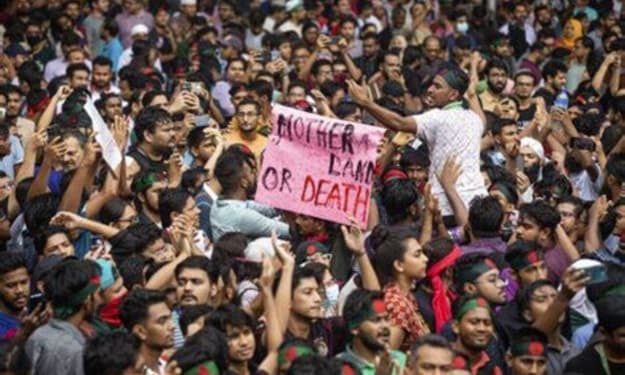
🇵🇸 Massive Rally in Dhaka: Tens of Thousands Protest Israeli Actions in Gaza
Dhaka, April 12, 2025 — The heart of Bangladesh’s capital transformed into a sea of Palestinian flags, placards, and passionate protestors as over 100,000 people gathered to denounce the ongoing Israeli military operations in Gaza. The rally, held at the iconic Shahbagh intersection, marked one of the most significant public outcries in recent memory, uniting people across political, religious, and social lines.
By Shahida Begum9 months ago in Chapters
The Security Dilemma: Challenges in Khyber Pakhtunkhwa
Khyber Pakhtunkhwa (KP), once known as the frontier province, has been at the epicenter of Pakistan's battle with militancy, extremism, and insurgency. The region’s security challenges are not just a matter of political discourse but have profound implications for the future of Pakistan itself. With its proximity to Afghanistan, the porous border, and a long history of regional and ethnic complexities, Khyber Pakhtunkhwa’s security dilemma is a microcosm of the larger global struggle against terrorism and extremism.
By Umair Ali Shah 9 months ago in Chapters
Harvard's lawyers in the dispute
Harvard University has enlisted two high-profile attorneys, Robert Hur and William Burck, to represent it in a legal dispute with the Trump administration over the freezing of $2.2 billion in grants and $60 million in contracts. This action is part of the administration's broader effort to pressure elite universities into adopting campus reforms aligned with its political agenda.
By Md Faruk Ali9 months ago in Chapters
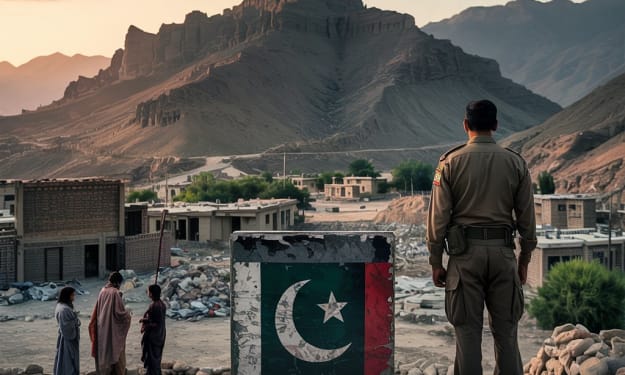
A Silent Province, A Wounded Heart: The Crisis of Balochistan and the State's Responsibility
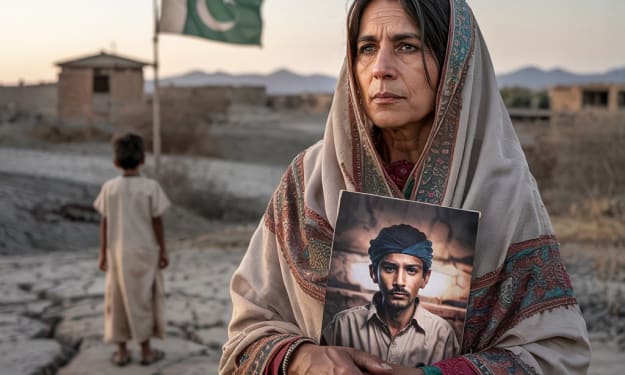
Introduction In the southwest corner of Pakistan lies Balochistan, the largest yet most neglected province of the country. Spread over nearly 44% of the national territory, its deserts, mountains, and coastlines hold not just natural resources but stories of pain, deprivation, resistance, and resilience. From Quetta to Gwadar, from Khuzdar to Turbat, the air is thick with silent screams — of mothers who have lost sons, of families without water and electricity, and of soldiers fighting in the shadows of a long-festering conflict. While the rest of the country debates politics and progress, Balochistan remains caught in a cycle of conflict, underdevelopment, and mistrust. This article is an attempt to explore the reality on the ground — the people’s suffering, the state’s failures, the burden on security institutions, and the lingering hope for a better tomorrow.
By Umair Ali Shah 9 months ago in Chapters
The Silent Threat: Why the Muslim Brotherhood Deserves a Closer Look
The Muslim Brotherhood, once seen by some as a reformist and democratic force within the Muslim world, has long evoked mixed reactions on the global stage. The organization, which was established in Egypt in 1928 by Hassan al-Banna, had the initial objective of reviving Islamic values and promoting social welfare. But over the years, it has grown into a complicated, international network with a lot of political power and controversy in the Middle East and elsewhere. Critics contend that the Brotherhood poses a "silent threat" to democratic principles, national security, and regional stability, despite the Brotherhood's assertion that it is a peaceful movement founded on Islamic principles. Ideology Beneath the Surface At the heart of the concern is the Brotherhood’s long-term vision. Though the group often presents itself as a moderate and lawful political actor—particularly when participating in democratic elections—its core ideology is rooted in establishing a global Islamic order governed by Sharia law. This dual messaging has allowed it to gain political footholds in various countries while avoiding overt confrontation, but it has also raised suspicions about its true intentions. Documents uncovered during a variety of investigations indicate that some Brotherhood branches advocate a "phased" strategy for Islamization, beginning with grassroots education and charitable work, progressing to political engagement, and ultimately aiming to establish Islamic governance. In Western democracies, where religious freedom and civil rights are deeply protected, this gradual approach makes it difficult to confront the Brotherhood head-on. Political Influence and Regional Instability The Brotherhood’s involvement in politics has often led to significant instability. In Egypt, its brief time in power following the Arab Spring culminated in widespread unrest and a military coup in 2013. In other parts of the Arab world, Brotherhood-affiliated parties have caused friction by challenging existing regimes, often aligning with populist movements and exploiting societal grievances to gain influence. The Brotherhood has been labeled a terrorist organization by governments in Egypt, Saudi Arabia, and the United Arab Emirates. These governments say that the Brotherhood is responsible for inciting unrest and encouraging young people to become radicals. These countries argue that even if the Brotherhood does not always engage in violence directly, it serves as an ideological gateway to more extremist movements like al-Qaeda or ISIS. This allegation is the subject of intense debate, but the shared narratives and ideological overlap cannot be completely discounted. Western Blind Spots In the West, particularly in Europe and the United States, the Brotherhood has often managed to portray itself as a civil society actor. Its members run charities, educational organizations, and interfaith dialogues. However, intelligence agencies and scholars warn that this facade can obscure deeper connections to political Islamism and radical networks. One of the challenges in addressing the Brotherhood’s influence is the lack of transparency within its operations. Its decentralized structure makes it hard to track, and its affiliates often operate under different names. This ambiguity gives it plausible deniability while complicating efforts to regulate or monitor its activities. The Case for Vigilance Labeling the Muslim Brotherhood as an outright terrorist organization remains contentious, particularly given its heterogeneous nature across different regions. However, the potential threat it poses lies not necessarily in direct violence, but in its gradual and often concealed efforts to reshape societies along rigid ideological lines. In this context, the Brotherhood can be seen as a "silent threat"—not loud or explosive, but persistent and influential. Governments, policymakers, and civil society organizations must take a closer look at how the Brotherhood operates, especially within liberal democracies. Legal oversight, open discussion, and transparency are essential tools for distinguishing between open ideological subversion and legitimate political participation. Conclusion The Muslim Brotherhood is not a monolith, and it would be a mistake to paint all of its affiliates with the same brush. However, its history, ideological underpinnings, and pattern of behavior warrant close scrutiny. The global community must strike a careful balance between upholding civil liberties and safeguarding democratic institutions from ideological manipulation. Only by acknowledging the silent threat can we begin to understand and respond to it effectively.
By Mahi Chowdury9 months ago in Chapters
Imran Ahmed Khan Niazi’s Government: A Distinct Chapter in Pakistan’s 74-Year Political History
Introduction Since gaining independence in 1947, Pakistan has witnessed a variety of leadership styles, political ideologies, and governance structures. Among the many political leaders who held the office of Prime Minister, Imran Ahmed Khan Niazi stands out not only for his cricketing fame but also for his ambitious and reformist approach to governance. Leading the Pakistan Tehreek-e-Insaf (PTI), Imran Khan assumed office on August 18, 2018, and served until April 10, 2022 — a period of approximately 3 years and 8 months. His tenure, though short of the full five-year term, left a significant impact on Pakistan’s political, economic, and social landscape. This article explores the beginning of his government, the challenges he faced, the initiatives he introduced for the welfare of the common man, and how his overall performance compares to the governance of Pakistan over the past 74 years and 9 months.
By Umair Ali Shah 9 months ago in Chapters
Experimental Launch of Starlink in Bangladesh
Bangladesh's Starlink: A New Era in Internet Connectivity Elon Musk’s SpaceX satellite-based internet service ‘Starlink’ has officially been launched in Bangladesh. On April 9, 2025, during the Bangladesh Investment Summit in Dhaka, this service was trialed out. This service is expected to make high-speed internet available even in the country's most remote areas. How does Starlink work? Starlink is a project by SpaceX that provides high-speed internet service globally by deploying thousands of low-earth orbit (LEO) satellites. This technology reduces dependence on terrestrial infrastructure, making it possible to provide internet even in rural and hard-to-reach locations. Starlink’s Journey in Bangladesh The process to launch Starlink in Bangladesh began with technological trials in July 2023. Later, a video call between Nobel Laureate Professor Muhammad Yunus and Elon Musk on February 13, 2025, helped accelerate the initiative. On March 29, the Bangladesh Investment Development Authority (BIDA) granted Starlink an investment registration, giving them 90 working days to begin operations. However, Starlink launched its trial service even before the deadline, inaugurating it on April 9 in Dhaka.
By Sakin Islam9 months ago in Chapters
Toxic Friends to Avoid
Friendships are essential for emotional support and personal growth, but not all friendships are healthy. Some individuals bring negativity, manipulation, and emotional strain into your life, draining your energy and damaging your well-being. Recognizing toxic friends and understanding their behavior is crucial to maintaining healthy relationships. In this piece, we will explore the different types of toxic friends to avoid.
By Muhammad Hidayatullah9 months ago in Chapters
Unraveling Worlds. Content Warning.
My dad spoke the words that my mom was already thinking at that same moment because that location puts us on the mainland and not in an empty area of the mainland either. When I opened my eyes, I saw the look on both of my parents' faces as I realized why my dad said it was going to be a problem as he laid the map out on the table and marked where we were currently. We were several days away from the location and would be traveling in highly monitored waters to get there.
By Luna Verity9 months ago in Chapters
From Bullied Boy to Billionaire: The Unbelievable Rise of Elon Musk.
Chapter 1: “The Quiet Genius from Pretoria”. Elon Musk was born on “June 28, 1971”, in Pretoria, South Africa. From an early age, he was different. While other kids played outside, Elon buried himself in books, teaching himself programming from a manual. At just “12 years old”, he created and sold a video game called “Blastar” for $500. But school wasn't easy — he was often bullied for being quiet, nerdy, and awkward. Once, a group of boys pushed him down a staircase and beat him so badly that he couldn't breathe. He had to undergo surgery.
By Riya mandal10 months ago in Chapters