
Experimental Launch of Starlink in Bangladesh
Launch of Starlink in Bangladesh
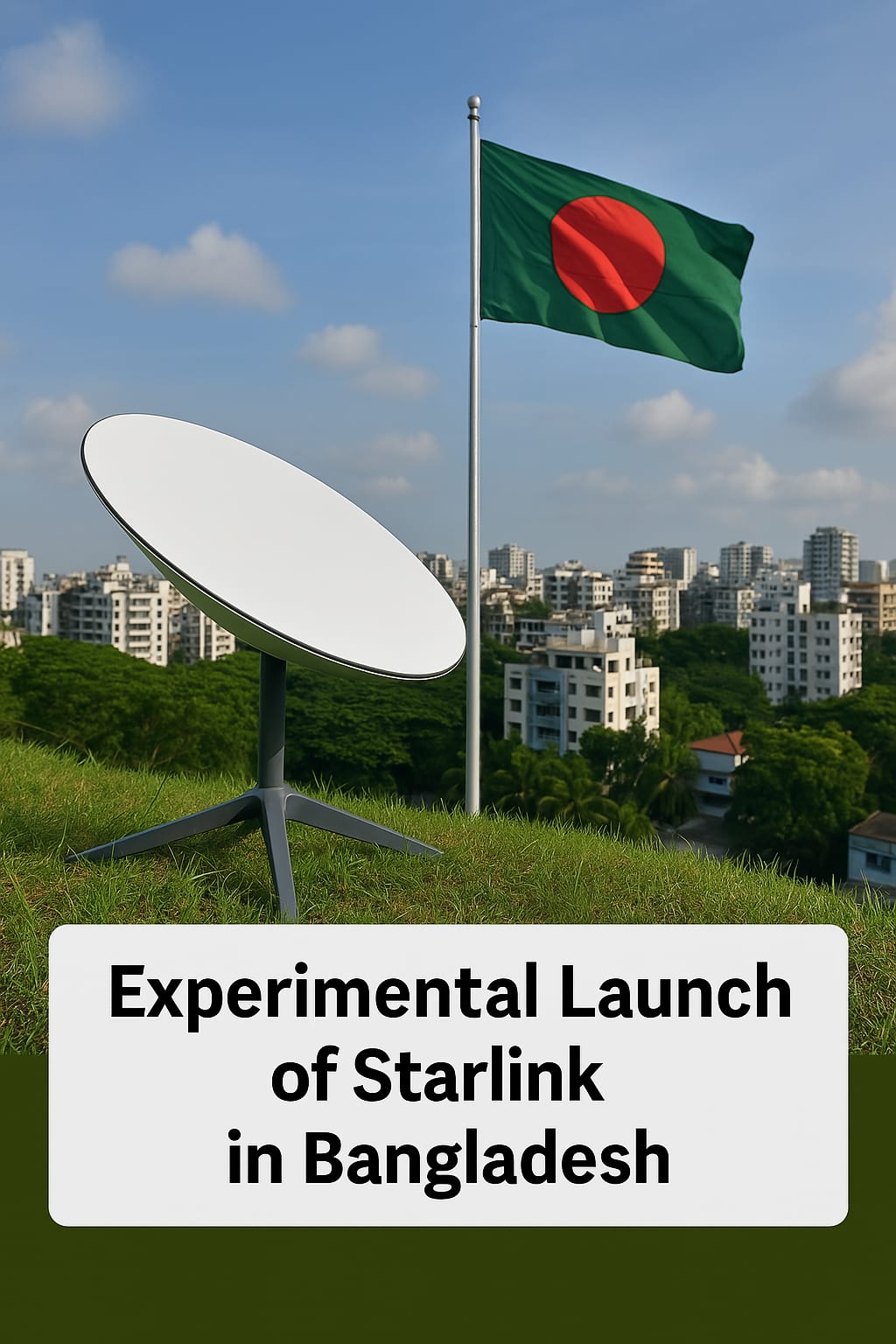
Bangladesh's Starlink: A New Era in Internet Connectivity Elon Musk’s SpaceX satellite-based internet service ‘Starlink’ has officially been launched in Bangladesh. On April 9, 2025, during the Bangladesh Investment Summit in Dhaka, this service was trialed out. This service is expected to make high-speed internet available even in the country's most remote areas. How does Starlink work? Starlink is a project by SpaceX that provides high-speed internet service globally by deploying thousands of low-earth orbit (LEO) satellites. This technology reduces dependence on terrestrial infrastructure, making it possible to provide internet even in rural and hard-to-reach locations.
Starlink’s Journey in Bangladesh
The process to launch Starlink in Bangladesh began with technological trials in July 2023. Later, a video call between Nobel Laureate Professor Muhammad Yunus and Elon Musk on February 13, 2025, helped accelerate the initiative. On March 29, the Bangladesh Investment Development Authority (BIDA) granted Starlink an investment registration, giving them 90 working days to begin operations.
However, Starlink launched its trial service even before the deadline, inaugurating it on April 9 in Dhaka.
Equipment and Cost of Maintenance A "Starlink Kit," which includes a satellite receiver (antenna), kickstand, router, cables, and power supply, is required for customers to access Starlink's service. The cost of the kit ranges from $349 to $599 (roughly BDT 43,000 to 74,000). The monthly subscription fee for residential users is $120, or approximately BDT 15,000. For corporate users, the cost may be higher.
Potential Advantages Internet in Remote Areas: Many rural and remote regions in Bangladesh still lack reliable internet access. These underserved areas can benefit from high-speed connectivity provided by Starlink. Disaster-Time Communication: When ground-based networks are disrupted by a natural disaster, satellite internet can assist in maintaining emergency communications.
Reducing the Digital Divide: The service will help reduce the internet accessibility gap between urban and rural areas, promoting digital inclusion.
Obstacles and Plans for the Future Starlink's service may be too expensive for many Bangladeshi customers, which may prevent widespread adoption. However, experts in technology claim that as the technology becomes more widespread, prices are anticipated to fall over time. The service is currently being tested. Starlink requires a Non-Geostationary Satellite Orbit (NGSO) license from the Bangladesh Telecommunication Regulatory Commission (BTRC), which is currently in process, for commercial rollout. Conclusion
With Starlink's launch, a new era in Bangladesh's internet service landscape has begun. This technology will open up new opportunities in the field of information and communication technology and play a crucial role in the digital advancement of the nation. It has the potential to help close the digital divide and advance the country by providing everyone in Bangladesh with equal access to high-speed internet.
About the Creator
Keep reading
More stories from writers in Chapters and other communities.
Fair Exchange, No Robberies
Dark Memoirs - Index There are at least two kinds of people in the world: those who write this half-arsed kind of intro to a story that looks to separate the rare and the norm, and those who realise it's an overused framing device and don't.
By Paul Stewart12 days ago in Chapters
When Hobbies Become Life What Happens?
As we live our lives and do the things we enjoy, what do we call it? Do we call the things that we enjoy in life something like hobbies or are hobbies just a form of relaxation for us to clear our minds and not think of all the living we have to do to make our lives what they are for ourselves? Now you might not all understand that so what that means is, doing the things that make our lives enjoyable for ourselves, yes we all have to work to make money to live but life shouldn’t be all about working. If our lives are all about working, where do our hobbies come in? Or do they come in at all when that happens? Usually if we work ourselves to the bone we can feel it. However what happens we make our lives hobbiesque and live that way, do our hobbies become life? Yes they do and when that happens how does that make us feel? Well it makes us feel good and that life is livable and fun versus all work and no play. Not that hobbies and living is all about play but we can live our lives on our own terms this way.
By Louise Barraco7 days ago in Chapters




Comments
There are no comments for this story
Be the first to respond and start the conversation.