Fiaz Ahmed Brohi
Bio
I am a passionate writer with a love for exploring and creating content on trending topics. Always curious, always sharing stories that engage and inspire.
Stories (633)
Filter by community
Israel Intercepts 'False Target' After Drone Alert Near Lebanon Border: A Step Towards Tighter Security Measures. AI-Generated.
On a recent occasion, Israeli forces reported successfully intercepting a "false target" after a drone alert was raised near its northern border with Lebanon. The incident is one in a series of escalating security concerns in the region, raising questions about Israel's vulnerability to aerial threats and its preparedness for unconventional warfare. As tensions remain high between Israel and Hezbollah, and with the growing instability in the Middle East, Israel’s defense infrastructure continues to be tested, but this event also underscores Israel’s technological advancements and their role in preventing potential attacks. The Incident: A False Alarm and its Implications On a day marked by high alert in Israel’s northern districts, military sources reported a drone that was detected approaching the country’s airspace from the direction of Lebanon. Initially, security forces believed the drone posed a potential threat, possibly related to Hezbollah, the Shiite militant group backed by Iran and a significant player in regional conflicts. This group has a long history of using drones to target Israeli defense structures and has even used drones for intelligence-gathering purposes in previous years. The alarm bells went off when the drone entered a restricted airspace zone, triggering Israel’s air defense systems. Israel’s Iron Dome defense system, which is widely known for its success in intercepting missiles and rockets, was prepared to take action. However, after closely analyzing the situation, Israel’s military concluded that the drone was a “false target” and did not pose any immediate risk to the country’s infrastructure or personnel. The target was assessed as potentially being an unmanned aerial vehicle (UAV) being tested or deployed for reconnaissance or surveillance purposes, rather than a weaponized drone. Despite the interception being a false alarm, the situation highlights the increasing reliance on drones in warfare and the growing complexities of border security in the Middle East. It is a reminder that Israel's technological edge in air defense is continually under scrutiny as new forms of warfare and tactics emerge, especially along volatile borders like the one with Lebanon. The Regional Context: Israel’s Security Concerns and Lebanon Israel’s northern border with Lebanon is home to Hezbollah, a group that has been involved in numerous cross-border skirmishes with Israel over the years. While the group’s activities have remained relatively contained, the use of drones and other advanced technologies by Hezbollah is seen as a sign of the group’s growing capabilities. Over the years, there have been reports of Hezbollah attempting to deploy drones to target Israeli military positions and facilities, as well as for intelligence gathering. The Israeli government has repeatedly warned about the growing threat posed by Hezbollah and its increasing sophistication in drone technology. While Israel has managed to intercept and neutralize many such threats, the reality of drone warfare is that it can be hard to detect and neutralize, especially when UAVs are used for surveillance or reconnaissance. Moreover, the broader geopolitical landscape adds to Israel’s insecurity. With the Iran-backed Hezbollah situated on Israel’s northern border and Syria to the northeast, Israel remains on high alert for any provocation. Iran’s influence in the region, coupled with the activities of Hezbollah and other armed groups, amplifies the risks faced by Israel. It is no surprise that Israel’s defense systems, including the Iron Dome and its aerial defense radar networks, are constantly upgraded to detect and neutralize evolving threats. Israel’s Technological Edge: The Iron Dome and Beyond The recent incident also highlights Israel’s technological prowess and its continuous innovation in defense systems. The Iron Dome, widely credited with its success in intercepting short-range rockets and artillery shells, has been instrumental in protecting civilian areas from missile attacks. However, the Iron Dome’s capability against drones is still under development and represents one of the main focuses of Israel’s military innovation. Israel’s defense sector, in collaboration with private tech companies, has been developing more advanced systems to track and neutralize UAV threats. The Israeli military has introduced technologies like C-MUSIC (Commercial Multi-Spectral Infrared Countermeasure), a laser-based defense system designed to counter aerial threats, including drones. This system is capable of destroying incoming projectiles mid-air and is part of Israel’s efforts to adapt to the growing use of drones in military conflicts worldwide. In addition to intercepting missiles, Israel is also focused on improving its surveillance and intelligence capabilities to better detect drone activities before they can reach sensitive targets. This includes radar systems that can detect small and low-flying objects such as drones, allowing for earlier detection and more effective interception. Global Implications: Drone Warfare in Modern Conflicts The incident near Lebanon’s border is also part of a larger global trend toward drone warfare. Armed drones are now used by state and non-state actors alike for a variety of military purposes, from surveillance to precision strikes. In conflicts like those in the Middle East, drones have become a significant tool for both intelligence gathering and combat. For Israel, the incident is a wake-up call to further invest in drone defense technologies. Israel’s experience in intercepting and neutralizing drones can provide valuable lessons to other countries facing similar threats. However, Israel’s reliance on technology does not diminish the need for diplomatic efforts to resolve the underlying tensions in the region, particularly with Hezbollah and Iran. Conclusion: The Changing Face of Modern Warfare The recent drone incident in Israel’s northern border with Lebanon underscores the evolving nature of modern warfare, where aerial threats, including drones, play an increasingly important role. While the drone in question may have been a false alarm, the reality is that Israel’s security concerns are legitimate, especially with groups like Hezbollah employing advanced technologies in their operations. Israel’s air defense systems, particularly the Iron Dome, remain among the best in the world, but they must continuously evolve to stay ahead of emerging threats. The incident near Lebanon’s border serves as a reminder that security in the modern world requires more than just physical borders—it requires a sophisticated and agile defense system capable of responding to the ever-growing threat of drones and other unconventional tactics.
By Fiaz Ahmed Brohi2 months ago in The Swamp
Unnecessary C-Sections Surge in Pakistan as Hospitals Prioritize Profit: A Growing Health Crisis. AI-Generated.
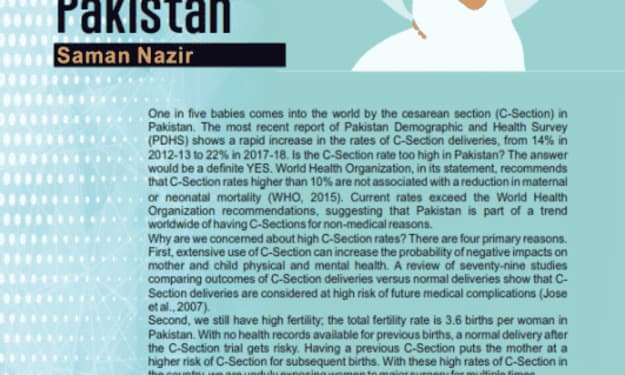
In Pakistan, the surge in unnecessary cesarean sections (C-sections) has become a disturbing trend, raising concerns over maternal health and hospital ethics. While C-sections are crucial for saving lives in certain medical situations, an increasing number of them are being performed for non-medical reasons, leading to complications and long-term health issues for mothers. This surge is largely attributed to hospitals prioritizing profit over patient care, with some institutions encouraged to push C-sections as a more profitable option for delivery. According to recent studies, the C-section rate in Pakistan has seen a significant increase over the past few years, with some reports indicating that nearly 40% of all births in private hospitals are by C-section. This is an alarming statistic when compared to the World Health Organization's recommendation that C-sections should only account for 10-15% of births, indicating that the practice in Pakistan is not only widespread but often unnecessary. The Profit Motive in the Medical Industry One of the primary reasons behind the rising number of C-sections is the increasing commercialisation of the healthcare sector in Pakistan, particularly in private hospitals. C-sections, though more expensive than vaginal deliveries, are viewed as more profitable for hospitals. This is due to the higher medical fees associated with the procedure, including the surgical costs, the length of hospital stays, and follow-up care. As a result, some private hospitals are incentivized to encourage expectant mothers to opt for a C-section, even when a natural birth would suffice. Hospitals and healthcare providers often use persuasive tactics to convince women to undergo C-sections, claiming that the procedure is safer or more convenient, particularly for women who have busy schedules or prefer the predictability of scheduled surgeries. However, these claims are not always grounded in medical necessity. The over-reliance on C-sections is undermining maternal health and causing unnecessary medical risks for both mothers and their babies. Health Risks and Consequences While C-sections can save lives in certain high-risk situations, they also carry significant health risks. These include infections, blood loss, longer recovery times, and increased risks for future pregnancies. Women who undergo multiple C-sections are at greater risk for complications in subsequent pregnancies, such as placenta previa, uterine rupture, and placenta accreta, which can be life-threatening. Additionally, C-sections also contribute to a higher rate of premature births and respiratory problems for babies. The impact of unnecessary C-sections on maternal health cannot be understated. Women who have C-sections may experience more intense pain during recovery, longer hospital stays, and a higher risk of post-surgical complications, such as infections or blood clots. These risks are compounded by the fact that many women in Pakistan do not receive proper post-operative care or adequate information about the potential risks associated with C-sections. The Role of Education and Awareness One of the most significant factors contributing to the rise in unnecessary C-sections is the lack of education and awareness among pregnant women. Many women in Pakistan are unaware of the risks associated with C-sections and are often swayed by the advice of healthcare providers. The lack of proper information leaves women vulnerable to making decisions based on convenience rather than informed consent. Educational campaigns about the benefits of natural childbirth, the risks of C-sections, and the importance of seeking second opinions could help empower women to make better choices for their health and the health of their babies. There is also a need for better training for healthcare providers, emphasizing patient-centered care and the importance of using C-sections only when medically necessary. The Need for Regulatory Measures The rise in unnecessary C-sections in Pakistan points to a larger problem of inadequate regulation and oversight in the healthcare industry. While private hospitals continue to prioritize profits, the government and relevant medical authorities must step in to enforce stricter guidelines for C-sections. This could include stricter monitoring of medical practices, better reporting of C-section rates, and more stringent requirements for informed consent before performing elective C-sections. Furthermore, health insurance companies must also play a role in reducing unnecessary procedures by incentivizing hospitals to follow evidence-based practices and discouraging over-medicalization of childbirth. Conclusion The surge in unnecessary C-sections in Pakistan is a troubling trend that raises serious questions about the priorities of the healthcare system. While private hospitals may benefit financially from increased C-section rates, the consequences for maternal and child health are dire. It is essential that Pakistan’s healthcare system shifts its focus from profit to patient-centered care, prioritizing the health and well-being of mothers and babies. Public awareness, regulatory oversight, and proper education for both healthcare providers and patients are crucial to reversing this trend and ensuring a safer, healthier future for all expectant mothers in Pakistan.
By Fiaz Ahmed Brohi2 months ago in The Swamp
China Threatened to Cancel Key Trade Talks After UK Minister’s Taiwan Visit in June. AI-Generated.
China reportedly threatened to cancel important trade negotiations with the United Kingdom following the visit of a British minister to Taiwan in June, according to multiple diplomatic sources. The revelation underscores the delicate balance between economic engagement and geopolitical sensitivities in the Indo-Pacific region. The UK minister’s visit to Taiwan, aimed at strengthening diplomatic and economic ties, prompted a sharp reaction from Beijing. Chinese officials viewed the visit as a violation of the “One China” policy, which considers Taiwan part of China, and warned London that it could jeopardize ongoing trade discussions. While the UK insists its visit was in line with international norms and focused on trade and cultural exchange, China perceived it as a political provocation. Trade relations between China and the UK have been significant, with billions of pounds of goods exchanged annually. Sectors such as finance, technology, and advanced manufacturing have benefited from bilateral cooperation. However, Beijing’s threat to cancel talks reflects growing caution in its approach to countries that engage with Taiwan in a formal capacity. Diplomatic sources indicate that Chinese officials issued the warning shortly after the minister’s visit, signaling that they could reconsider future trade agreements if the UK continued actions perceived as undermining Chinese sovereignty. A senior UK official described the threat as “blunt but expected,” emphasizing that such responses are part of China’s broader strategy to maintain influence over Taiwan-related matters. The incident also highlights the increasingly complex environment for global trade negotiations. Governments are now required to navigate not only economic objectives but also geopolitical considerations. Analysts suggest that countries like the UK, which seek to expand trade with Asian markets, must weigh the benefits of economic engagement against the potential diplomatic repercussions of high-profile visits to Taiwan. Beijing’s approach follows a pattern observed with other Western nations that have pursued closer ties with Taiwan. In recent years, countries that have sent officials to Taiwan or strengthened defense and economic cooperation have faced warnings, sanctions, or diplomatic pushback from China. The UK’s situation is a clear example of how even routine trade discussions can be influenced by broader geopolitical dynamics. The timing of the threat was particularly sensitive, as both the UK and China were preparing for high-level trade negotiations intended to secure agreements in areas such as technology transfer, green energy, and financial services. Analysts suggest that Beijing’s warning created pressure for London to balance its diplomatic principles with the economic imperative of securing trade deals with one of its largest trading partners. Despite the tension, both countries have signaled a desire to continue engagement. British officials have emphasized that trade talks will proceed, albeit with the awareness that political developments, such as ministerial visits to Taiwan, can influence negotiations. China, meanwhile, is reportedly monitoring the UK’s actions closely, sending signals that further engagement may be contingent on diplomatic restraint regarding Taiwan. Experts note that this incident is part of a broader challenge facing international relations in 2026 and beyond. Trade, technology, and geopolitical influence are increasingly interconnected, meaning that countries cannot treat economic discussions as separate from political actions. The UK’s experience highlights the complexities facing smaller powers attempting to maintain sovereignty over their foreign policy while engaging economically with major global powers. For the business community, the threat of canceled talks serves as a reminder of the unpredictability inherent in international trade. Companies operating in both the UK and China may face delays or uncertainty in contracts and agreements if political tensions escalate. Industries reliant on Chinese imports or investment must now factor in potential diplomatic disputes that could affect supply chains and market access. In the broader context, the episode underscores the continuing tension over Taiwan, a flashpoint in global geopolitics. While countries like the UK engage with Taiwan on trade, culture, and technology, China remains highly sensitive to any form of international recognition or engagement that could suggest support for Taiwanese independence. This dynamic ensures that trade relations are often intertwined with political signaling, requiring careful diplomatic navigation. As the UK and China move forward, observers are closely watching how both nations manage their economic and political priorities. The challenge lies in maintaining robust trade relations while avoiding actions that could provoke diplomatic backlash. The June incident serves as a reminder of the fine line countries walk in balancing global trade ambitions with geopolitical realities. Ultimately, the warning issued by China in response to the UK minister’s Taiwan visit highlights the complex interplay of diplomacy and commerce in today’s world. While trade talks are vital for economic growth, they cannot be separated from the broader strategic environment in which they occur, particularly when sensitive issues like Taiwan are involved. For the UK, navigating this delicate balance will remain a priority in ensuring both economic opportunities and stable international relations.
By Fiaz Ahmed Brohi2 months ago in The Swamp
Fighting Breaks Out in Eastern Yemen Along Border With Saudi Arabia. AI-Generated.
Fighting has erupted in eastern Yemen along the border with Saudi Arabia, raising fears of a wider escalation in a region already struggling with years of conflict and humanitarian crises. The clashes, reported by multiple sources including local authorities and international monitoring groups, involve both Yemeni forces and armed factions operating near the strategic border areas.
By Fiaz Ahmed Brohi2 months ago in The Swamp
Young Italian Golfer Feared Dead: What We Know About Swiss Resort Fire. AI-Generated.
Tragedy struck a Swiss mountain resort when a fire broke out, claiming lives and leaving several guests injured. Among the missing is a young Italian golfer, whose fate remains uncertain, as authorities work tirelessly to assess the full impact of the blaze. The Incident The fire erupted late in the evening at a luxury resort nestled in the Swiss Alps. According to preliminary reports, flames engulfed one of the resort’s main lodges, forcing a rapid evacuation. Witnesses describe chaotic scenes as smoke billowed from the windows and guests scrambled to reach safety. Emergency services responded swiftly, with firefighters and rescue teams battling sub-zero temperatures to contain the fire and search for anyone trapped inside. Despite the quick response, multiple injuries were reported, and the resort suffered significant structural damage. The Young Golfer Among those feared dead is Luca Romano, a promising young golfer from Italy. Romano had been staying at the resort for a winter sports vacation while also taking part in a regional golf training session. Friends and family have expressed deep concern, as authorities have yet to confirm his status. Romano’s coach shared his distress: “He is one of the most talented players I have ever worked with. We are all praying for him and hoping for a miracle.” The Italian Golf Federation has also released a statement expressing solidarity with the golfer’s family and the victims of the fire. Casualties and Injuries Local authorities confirmed several fatalities, while dozens more suffered burns and smoke inhalation. Victims were rushed to nearby hospitals, where medical staff continue to treat injuries ranging from minor to critical. Swiss authorities have emphasized that the rescue operation remains ongoing, with search teams combing the building and surrounding areas for any missing guests. Helicopters equipped with thermal imaging cameras have been deployed to assist in locating individuals who may be trapped or lost in the vicinity. Cause of the Fire The cause of the fire remains under investigation. Early reports suggest that it may have started due to an electrical fault in the building, although officials have not ruled out other possibilities. Fire investigators are examining the scene to determine whether negligence, faulty equipment, or external factors contributed to the rapid spread of flames. Impact on the Resort and Community The resort, a popular destination for tourists and sports enthusiasts, has suffered extensive property damage. Many rooms and facilities have been rendered unusable, raising concerns about the economic impact on the local community, which relies heavily on winter tourism. Local residents and guests who witnessed the fire described the scene as “horrifying” and “unimaginable.” Social media posts show thick smoke rising from the mountainside and emergency vehicles rushing to the location. International Response The incident has drawn international attention, particularly from Italy, where the young golfer’s family awaits updates. Italian authorities have dispatched consular officials to Switzerland to assist with the investigation and provide support to affected families. Several European countries have offered assistance, including specialized rescue teams and medical support, highlighting the close cooperation within the region during such emergencies. Safety Measures and Lessons Learned The fire has prompted renewed focus on safety regulations at mountain resorts, especially in winter months when heating systems and electrical appliances are heavily used. Experts have emphasized the importance of early detection systems, fire alarms, and clear evacuation plans to prevent similar tragedies in the future. Hotel management and local authorities have urged travelers to remain vigilant and follow safety protocols, particularly in resorts located in remote or high-altitude areas where rescue operations can be challenging. Families and Friends in Distress The uncertainty surrounding Luca Romano’s fate has left family members in agony. Messages of support and prayers have poured in from around the world, reflecting the global attention the incident has received. Friends remember him as a passionate and disciplined athlete, whose life was full of promise. “It’s heartbreaking not knowing whether he is safe,” said a family friend. “We hope the rescue teams find him and bring him back alive.” Conclusion The Swiss resort fire is a stark reminder of how quickly accidents can escalate, particularly in high-altitude environments with cold weather and electrical equipment in constant use. While emergency services continue their search and investigation, the focus remains on saving lives and providing aid to the injured. For now, the world watches anxiously, hoping that young Luca Romano and all other missing guests are found safe. This tragedy underscores the need for stringent safety measures and rapid emergency response protocols in tourist destinations worldwide.
By Fiaz Ahmed Brohi2 months ago in The Swamp
Indian Families Grieve Deaths Caused by Contaminated Tap Water: A Growing Public Health Crisis. AI-Generated.
In a tragic reflection of ongoing infrastructure and sanitation challenges, families across India are mourning the deaths of loved ones due to contaminated tap water. The crisis, which has affected both rural and urban communities, underscores the urgent need for clean water access and stringent quality monitoring.
By Fiaz Ahmed Brohi2 months ago in Longevity
Egypt Joins Other African Nations in Facing Stricter US Visa Policies: What Travelers Need to Know in 2026. AI-Generated.
As 2026 begins, travelers from several African countries—including Egypt, South Africa, Morocco, Nigeria, Ghana, and Zimbabwe—are preparing for significant changes to US visa policies. The new rules, introduced by the US government, are expected to affect entry processes, potentially delay visa issuance, and require additional documentation for travelers. Why the Change? US authorities have cited security and immigration concerns as the primary reasons behind the updated visa policies. While the United States continues to welcome tourists, business travelers, students, and professionals, officials stress the need to ensure thorough vetting for individuals coming from countries that have experienced irregular migration patterns or visa violations in the past. This tightening comes amid growing scrutiny over US border security and efforts to balance travel facilitation with national security priorities. African travelers, who historically formed a significant portion of US tourist and student arrivals, are now being advised to allow extra time for visa processing and prepare for more rigorous interviews. What the New Visa Policies Mean The updated visa regulations involve several key changes: Stricter Documentation Requirements: Travelers may need to provide additional evidence of their purpose in the US. This could include detailed itineraries, proof of funds, and confirmation of accommodation and return plans. Longer Processing Times: With added checks, visa applications may take longer to process. Officials suggest applying at least three to six months in advance of the planned travel date to avoid complications. Enhanced Interview Scrutiny: Visa interviews may involve more in-depth questioning regarding travel history, ties to the home country, and intent to return. US consular officers aim to reduce the risk of visa overstays. Potential Entry Delays: Even after obtaining a visa, travelers may face additional inspections at US entry points. Officers may verify documentation and confirm that the traveler’s purpose aligns with their visa category. Countries Affected Egypt joins the growing list of African countries impacted by these measures. Others include South Africa, Morocco, Nigeria, Ghana, and Zimbabwe, as well as select nations with increasing numbers of US-bound travelers. While these changes are not a complete travel ban, they do signal a more cautious approach toward visitors from specific regions. Impact on Tourism and Business The new visa policies are expected to have short-term effects on tourism, education, and business travel. Students planning to study in the US may need to start application processes earlier, while business professionals and investors must prepare comprehensive documentation to support their trips. Tour operators and travel agencies are already advising clients to plan ahead and verify all documentation. “These new policies require travelers to be fully prepared. Any missing document could result in delays or even denial,” said travel consultant Adeola Johnson, who specializes in African-US travel arrangements. Tips for African Travelers For those planning to travel to the US in 2026, several steps can help navigate the updated procedures: Apply Early: Submit visa applications well in advance to account for longer processing times. Maintain Accurate Records: Ensure all documents, including passports, financial statements, and invitations, are current and verifiable. Prepare for Interviews: Be ready to answer questions clearly and confidently, emphasizing ties to the home country and intent to return. Check Updates Regularly: US embassy websites and official travel portals provide the latest information on visa requirements, processing times, and policy updates. Broader Implications The changes reflect a global trend of more rigorous travel and immigration policies, particularly in countries that receive high volumes of international visitors. While the US remains a top destination for African travelers, these policies highlight the importance of planning, documentation, and adherence to visa regulations. Experts note that these updates may also encourage regional governments and travel agencies to enhance support systems for applicants, including guidance on documentation and interview preparation. Travelers who understand the rules and follow best practices are more likely to experience smooth processing. Conclusion Egypt’s inclusion in the list of African countries facing stricter US visa policies signals a new era of travel for the continent in 2026. While the changes introduce additional steps and potential delays, proactive preparation can help mitigate challenges. Students, tourists, and business professionals must remain informed, apply early, and ensure all documentation is complete to navigate the new regulations successfully. With careful planning, travelers from Egypt, Nigeria, South Africa, Morocco, Ghana, Zimbabwe, and other affected countries can continue to explore opportunities in the United States while complying with the updated requirements.
By Fiaz Ahmed Brohi2 months ago in The Swamp
New £200 Cost-of-Living Payments Confirmed for 2026: What You Need to Know. AI-Generated.
As households across the UK continue to grapple with rising living costs, the government has confirmed a new round of £200 cost-of-living payments scheduled for 2026. This announcement comes amid ongoing concerns over inflation, energy prices, and the financial pressures faced by millions of families nationwide. The £200 payment is designed to provide targeted relief to those most affected by the rising cost of essentials such as food, electricity, and fuel. According to government sources, this support will be delivered automatically to eligible individuals, with no need to submit additional applications, ensuring quick and seamless access to funds. Who Will Benefit? Eligibility for the payment mirrors previous cost-of-living support programs. Those receiving certain benefits or tax credits, including Universal Credit, Pension Credit, and Income Support, are expected to be automatically enrolled. The aim is to ensure that vulnerable households, particularly those on fixed or low incomes, receive timely assistance to offset the financial strain of 2026. Experts highlight that while £200 may not fully cover all the increased costs, it serves as an important buffer. “It’s about helping families navigate the unavoidable rise in household expenses without forcing them to make impossible trade-offs between essentials,” said financial analyst Sarah Whitmore. Why the Payment Was Introduced Over the past few years, the UK has experienced fluctuating inflation rates, driven by global energy prices, supply chain disruptions, and economic uncertainty. The government’s decision to roll out this support ahead of the new year is intended to ease immediate financial pressures and provide stability for households facing unpredictable costs. According to recent statistics, many families have reported having to reduce spending on essential items, from heating homes to purchasing groceries. A survey conducted by the National Institute for Social Research found that nearly 60% of respondents had cut back on energy consumption during winter months due to higher bills. The £200 payment is therefore viewed as a direct response to public concern, aiming to ensure that households do not face excessive hardship during the cold winter months of 2026. How the Payment Will Be Distributed The government has stated that payments will be issued automatically to eligible recipients. Those on electronic benefits payment systems will see funds transferred directly into their bank accounts, while recipients of paper-based benefits will receive mailed cheques. Officials have emphasized that the process has been streamlined to avoid delays and reduce administrative burdens, allowing households to access the funds without unnecessary complications. Impact on Households While £200 may not solve the cost-of-living crisis entirely, economists suggest that it could make a meaningful difference for many families. For households with multiple dependents, even a modest injection of funds can help cover essential expenses, particularly heating and grocery costs, which have seen steep increases in recent years. “The £200 payment is not a long-term solution, but it’s a short-term relief measure that provides immediate financial breathing room,” explained economist Dr. Michael Pearson. “It demonstrates the government’s recognition of the ongoing pressures faced by households and its willingness to act proactively to prevent extreme financial strain.” Looking Ahead This announcement has sparked wider discussions about the sustainability of cost-of-living support programs. With inflation and global economic uncertainty likely to continue, experts stress the importance of not only providing one-off payments but also implementing broader policies aimed at boosting household incomes, supporting employment, and controlling inflation. In the meantime, recipients of the upcoming £200 payment are encouraged to plan carefully, using the funds to cover urgent household expenses and avoid accumulating debt. Many financial advisors recommend prioritizing essential bills, such as energy, rent, or mortgage payments, before discretionary spending. Conclusion The confirmation of the £200 cost-of-living payment for 2026 offers a glimmer of relief for struggling households across the UK. While it is not a comprehensive solution to the challenges of rising costs, it represents a proactive step by the government to support citizens during a period of economic uncertainty. Families receiving the payment can expect a modest, yet timely, boost to help navigate the financial pressures of the upcoming year. With rising living costs continuing to dominate public discourse, the effectiveness of this payment and potential future support programs will be closely watched by both citizens and economic analysts. For now, the £200 payment provides a much-needed injection of relief, helping households begin 2026 on a slightly more secure financial footing.
By Fiaz Ahmed Brohi2 months ago in The Swamp
Venezuela Has Detained Several Americans as Tensions With US Rise. AI-Generated.
Venezuela is once again at the center of international scrutiny as reports emerge that several American citizens have been detained by Venezuelan authorities. The arrests come amid escalating political tensions between Caracas and Washington, signaling a deepening rift in an already strained relationship between the two nations. The detained Americans, whose identities have not been fully disclosed for security reasons, are reportedly accused of activities that Venezuelan officials describe as threats to national security. While details remain sparse, experts say these arrests are likely a strategic move by the Venezuelan government to assert pressure on the United States amid ongoing diplomatic disputes. Venezuela’s relationship with the US has been fraught for decades, shaped by ideological differences, sanctions, and accusations of interference in internal affairs. The detention of foreign nationals, especially from the US, is not unprecedented. In past years, Washington has accused Caracas of using such arrests as political leverage, a tactic known as "hostage diplomacy," to extract concessions or negotiate favorable terms in sanctions and trade disputes. In response to the recent detentions, US officials have expressed concern and called for the immediate release of their citizens. The State Department issued a statement emphasizing the safety and rights of Americans abroad while urging Venezuela to adhere to international norms regarding the treatment of detainees. "We are deeply concerned about reports of the detention of American citizens in Venezuela and are working tirelessly to ensure their safe return," said a spokesperson. The arrests occur against the backdrop of rising tensions over oil, economic sanctions, and regional influence. Venezuela, rich in oil reserves, has long relied on its natural resources as a bargaining tool in international politics. With the US maintaining stringent economic sanctions aimed at curbing the Venezuelan government’s revenue streams, Caracas may be signaling its discontent and attempting to recalibrate its leverage. Political analysts suggest that these detentions could have multiple objectives. Firstly, they serve as a domestic message, demonstrating the government’s vigilance in protecting national sovereignty. Secondly, they are a warning to international actors that Venezuela will resist perceived foreign interference. Finally, they could be used as bargaining chips in potential diplomatic negotiations with Washington. Historically, cases of Americans detained in Venezuela have led to tense standoffs, negotiations, and sometimes the eventual release of the individuals involved through diplomatic channels. However, the process is often slow, complicated, and influenced by broader geopolitical considerations, including the US’s position on sanctions, regional security concerns, and alliances in Latin America. The impact of these detentions extends beyond the immediate diplomatic friction. Families of the detainees are facing immense stress and uncertainty, and advocacy groups have called for urgent interventions. Organizations such as Amnesty International have urged both nations to prioritize humanitarian considerations and ensure that the rights and safety of civilians are respected amidst political disputes. The international community is closely monitoring the situation. Neighboring countries, regional blocs, and human rights organizations have expressed concern over the potential implications for regional stability. Latin America has seen its share of political tensions in recent years, and incidents like these often exacerbate fears of further polarization and conflict. For the US, the challenge lies in balancing a firm stance on protecting its citizens while avoiding actions that could escalate tensions. Diplomatic channels remain the primary route for resolution, but military or economic options are sometimes discussed in public discourse, increasing the stakes of such incidents. As this situation unfolds, the world is watching closely. The detentions highlight the fragility of US-Venezuela relations and the complex interplay of domestic politics, international diplomacy, and strategic leverage. While the immediate future for the detained Americans remains uncertain, the broader implications for bilateral relations could be long-lasting, affecting trade, diplomacy, and regional alliances. In conclusion, the detention of several American citizens by Venezuela underscores the ongoing challenges in international relations, particularly between nations with contrasting political ideologies. As tensions rise, careful diplomacy, international advocacy, and adherence to legal norms will be crucial in navigating this crisis and ensuring that the rights and safety of individuals are upheld amidst geopolitical maneuvering.
By Fiaz Ahmed Brohi2 months ago in The Swamp
Winter Blooming of Hundreds of Plants in UK: A Visible Signal of Climate Breakdown. AI-Generated.
Across the United Kingdom, a startling natural phenomenon is capturing both public attention and scientific concern: hundreds of plant species are blooming during the winter months, months earlier than their usual spring or summer cycles. Experts warn that this unprecedented winter flowering is more than just a seasonal curiosity—it is a visible signal of climate breakdown. Botanists and ecologists across the UK have observed early blooms in a variety of trees, shrubs, and flowers, including daffodils, primroses, and even certain species of cherry blossoms. In some urban parks and countryside areas, vibrant patches of yellow, pink, and white have emerged amidst frost and short daylight hours, creating an unusual spectacle for residents. “This is an alarming phenomenon,” says Dr. Emily Harrington, a plant ecologist at the Royal Botanic Gardens, Kew. “Plants are responding to warmer winter temperatures and erratic weather patterns. These early blooms can disrupt natural cycles, affecting pollination, fruit production, and overall ecosystem health.” The immediate cause of this winter blooming is a combination of rising average temperatures, milder winters, and unusually early periods of warmth. In December and January, many parts of the UK recorded temperatures significantly above historical averages, prompting plants to break dormancy earlier than usual. While these warmer spells may seem harmless or even beautiful to casual observers, scientists warn that they can have serious long-term consequences. One key concern is the impact on pollinators. Bees and other insects rely on a predictable cycle of flowering to feed themselves and their colonies. When plants bloom too early, there may be insufficient pollinator activity to fertilize flowers, reducing fruit and seed production later in the year. This can disrupt local ecosystems and even threaten food supply chains for crops reliant on insect pollination. Additionally, winter blooming leaves plants vulnerable to sudden cold snaps or frosts. Early blooms exposed to freezing temperatures can die off, damaging plants and reducing their productivity. “These mismatched cycles between climate and plant biology indicate stress on ecosystems,” notes Dr. Harrington. “We are seeing the consequences of climate variability manifesting in very visible ways.” Urban areas have also felt the effects. Landscaped gardens, city parks, and roadside plantings that normally remain dormant during winter are now showing unexpected greenery and flowers. While this may delight residents and photographers, it signals a shift in seasonal norms that can affect horticulture and landscaping practices. Nurseries may struggle with premature growth, and gardeners may need to adjust care routines to prevent frost damage. Environmental organizations are linking the winter flowering to broader climate trends, including global warming, increased carbon dioxide levels, and shifting jet streams that bring unseasonal warmth. Data from the UK Met Office indicate that the country’s winter temperatures have risen consistently over the last few decades, with the past five years recording some of the mildest winters on record. “This is not an isolated event,” says Professor Richard Greene, a climate scientist at the University of Edinburgh. “Winter blooming is a symptom of systemic changes in our climate. It is a visible reminder that human-driven climate change is reshaping natural rhythms, often in unpredictable ways.” The phenomenon also has social and economic implications. Early blooming can mislead the public into thinking spring has arrived, affecting travel, tourism, and even local celebrations traditionally tied to seasonal events. Agricultural sectors face challenges as fruit trees and other crops may bloom too early, exposing them to frost damage and potential financial losses. Despite these concerns, scientists stress that such unusual events provide valuable data for studying climate impacts on ecosystems. Researchers are monitoring flowering patterns across the UK, using them as indicators of how plants adapt—or struggle—to cope with climate change. Citizen science initiatives are also encouraging residents to record unusual blooms, helping build a broader understanding of the effects on local biodiversity. In conclusion, the winter blooming of hundreds of plants across the UK is more than an aesthetic curiosity—it is a visible warning of climate disruption. As unseasonal temperatures and erratic weather patterns continue, experts urge increased awareness and proactive measures to protect ecosystems, pollinators, and agricultural productivity. The vibrant winter blooms may delight the eye, but they also remind us that the natural rhythms we take for granted are being fundamentally altered by climate change.
By Fiaz Ahmed Brohi2 months ago in Longevity
Saudi Arabia: NCM Warns of Cold Wave from Saturday to Tuesday Across Multiple Regions. AI-Generated.
Saudi Arabia is bracing for a sudden cold wave, with the National Center of Meteorology (NCM) issuing warnings for multiple regions from Saturday through Tuesday. The announcement comes as meteorologists predict a significant drop in temperatures, unusual for the Kingdom’s typically arid climate, prompting authorities and residents to prepare for the extreme weather.
By Fiaz Ahmed Brohi2 months ago in The Swamp
Trump Says He Takes a Higher Daily Dose of Aspirin Than Doctors Recommend: What It Reveals About Power, Health, and Risk. AI-Generated.
Former U.S. President Donald Trump has once again sparked public debate—this time not with a policy decision or campaign rally, but with a personal health disclosure. Trump recently stated that he takes a higher daily dose of aspirin than doctors typically recommend. While the remark may appear casual, it has reopened important conversations about self-medication, cardiovascular health, and the influence of public figures on medical behavior. Aspirin is one of the most commonly used medications in the world. Often taken to reduce pain, inflammation, or the risk of heart attacks and strokes, it is also one of the most misunderstood drugs. Trump’s comment, therefore, carries significance far beyond his personal routine. Why Aspirin Is Prescribed — and Why Dosage Matters Low-dose aspirin is frequently prescribed to individuals at high risk of cardiovascular events because it helps prevent blood clots. However, medical guidelines emphasize precision. Too little may be ineffective; too much can be dangerous. Doctors typically recommend low-dose aspirin only when the benefits outweigh the risks. Higher daily doses can increase the chances of internal bleeding, stomach ulcers, and hemorrhagic stroke. Medical professionals stress that aspirin is not harmless simply because it is available over the counter. Trump’s admission that he exceeds recommended levels has raised concerns among health experts, not necessarily about his individual health, but about how such statements may be interpreted by the public. The Culture of Self-Medication Among the Powerful Trump is not the first influential figure to speak openly about managing health on his own terms. High-profile leaders often operate under intense stress, long schedules, and constant public scrutiny. This environment can foster a mindset of control—where personal judgment overrides medical advice. In Trump’s case, the statement aligns with his long-standing image of independence and resistance to convention. However, when leaders normalize self-adjusted medical decisions, it risks reinforcing a broader culture of self-medication. Health experts warn that what may be manageable under constant medical supervision can become dangerous when copied by the general population without proper guidance. Public Influence and Medical Responsibility When public figures speak about health habits, they do more than share personal anecdotes—they shape behavior. Millions listen, especially supporters who may view such disclosures as endorsements. Medical professionals have emphasized that aspirin therapy is highly individualized. Age, weight, medical history, and existing conditions all play a role in determining safe dosage. What works for one person—even a former president—may be harmful to another. This raises a critical question: should public figures frame health disclosures more carefully, especially when discussing medication? The Risks of “More Is Better” Thinking One of the most dangerous misconceptions in medicine is the idea that higher doses equal better protection. Aspirin does not work that way. In fact, excessive intake can erode the stomach lining, increase bleeding risk, and interact negatively with other medications. Studies have shown that unnecessary aspirin use in older adults can cause more harm than benefit. This is why many medical associations have revised their guidelines in recent years, advising caution even for long-term users. Trump’s statement, while brief, highlights how deeply ingrained the “more protection is better” mindset remains—even among those with access to top-tier healthcare. Transparency or Provocation? Some analysts believe Trump’s comment was an attempt at transparency, reinforcing an image of toughness and resilience. Others argue it fits his pattern of provocative remarks that generate headlines without elaboration. Regardless of intent, the reaction underscores how health disclosures by public figures are rarely neutral. They intersect with politics, trust in institutions, and public understanding of science. In an era already strained by medical misinformation, even small statements can have outsized effects. A Broader Lesson for the Public The real takeaway from this episode is not about Trump’s aspirin intake, but about how individuals approach their own health. Aspirin, like all medications, should be taken based on professional medical advice—not personal intuition or celebrity behavior. Doctors consistently urge patients to discuss any long-term medication use, especially blood thinners, with qualified healthcare providers. What seems like a minor adjustment can carry serious consequences over time. Conclusion: Health Is Not a Political Statement Trump’s revelation may fade from headlines, but the questions it raises remain relevant. Health decisions should be guided by evidence, not ideology, confidence, or public persona. In a world where leaders influence behavior simply by speaking, responsibility matters. Aspirin may be a small pill, but the conversation around it reminds us of a larger truth: when it comes to health, expertise—not bravado—should lead the way.
By Fiaz Ahmed Brohi2 months ago in The Swamp