
Fighting Breaks Out in Eastern Yemen Along Border With Saudi Arabia
Tensions escalate as cross-border clashes threaten fragile stability in the region

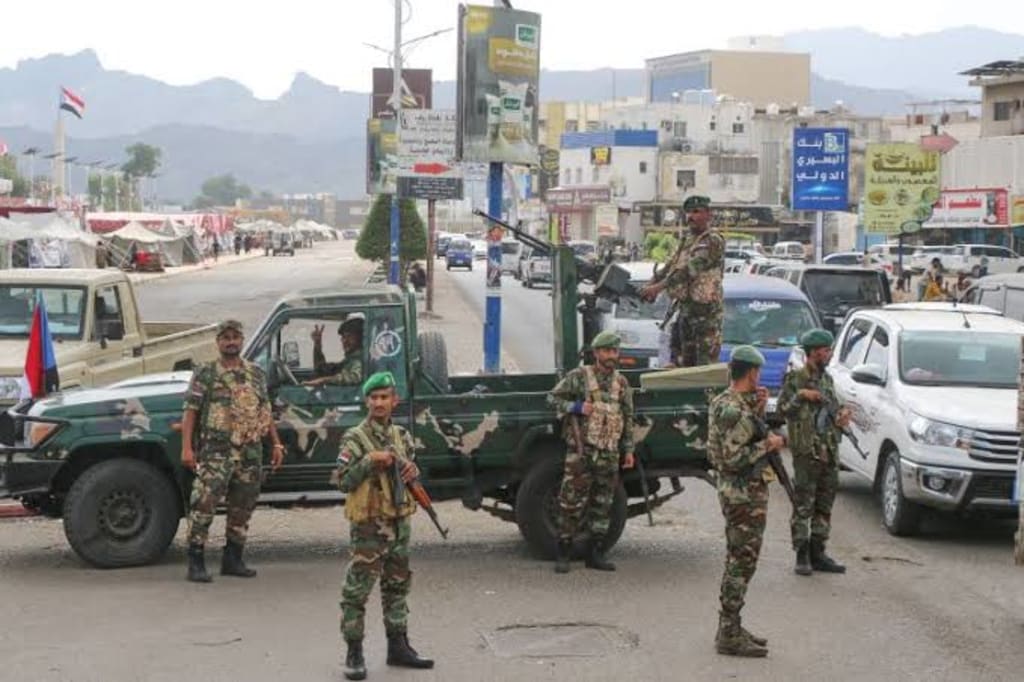
Fighting has erupted in eastern Yemen along the border with Saudi Arabia, raising fears of a wider escalation in a region already struggling with years of conflict and humanitarian crises. The clashes, reported by multiple sources including local authorities and international monitoring groups, involve both Yemeni forces and armed factions operating near the strategic border areas.
The skirmishes reportedly began earlier this week, with heavy exchanges of gunfire and artillery between rival groups. Eyewitnesses described scenes of chaos, as civilians fled the border towns seeking safety. Local hospitals have reported an influx of casualties, with emergency responders struggling to provide adequate medical care in areas where resources are scarce.
Analysts suggest that the renewed violence along the Saudi-Yemen border may be linked to longstanding tensions over control of territory and smuggling routes. The eastern provinces of Yemen, particularly Hadramout and Al Mahrah, have often been the site of clashes between government forces, tribal militias, and separatist factions. The border regions are strategically important, providing access to trade routes and valuable natural resources.
Saudi Arabia, which shares a long and porous border with Yemen, has historically been involved in military operations within Yemen, supporting the internationally recognized government against Houthi rebels. While Saudi forces have mostly focused on the western and southern fronts in previous years, the eastern border areas remain sensitive due to the presence of multiple armed groups and the potential for cross-border attacks.
The fighting comes amid growing concern from humanitarian organizations, as Yemen continues to face one of the world’s worst humanitarian crises. Millions of Yemenis are already dependent on aid for survival, with food insecurity, lack of clean water, and collapsing healthcare systems exacerbated by years of conflict. Renewed violence along the border threatens to displace thousands more people, stretching the limited capacity of relief agencies.
Local officials have called for calm and urged armed groups to cease hostilities. In a statement, a spokesperson for the Hadramout governorate emphasized the importance of protecting civilians and maintaining access to humanitarian corridors. “The people living near the border are already enduring immense hardship,” the statement read. “We appeal to all parties to prioritize peace and dialogue over conflict.”
International observers have expressed concern about the potential for escalation. The United Nations has repeatedly warned that any significant flare-up of violence along Yemen’s borders could further destabilize the region and complicate ongoing peace efforts. Diplomatic efforts, including talks mediated by the UN and regional powers, have aimed to establish ceasefires and address the root causes of Yemen’s conflict, but progress has been slow and fragile.
The recent clashes underscore the volatility of Yemen’s eastern border regions and the challenges facing peacebuilding efforts. Analysts note that local grievances, competition over resources, and the involvement of external actors all contribute to the cycle of violence. “Even small incidents can spiral into larger confrontations,” said one regional security expert. “The eastern provinces are particularly vulnerable because control is fragmented, and multiple factions operate with different agendas.”
As the situation develops, there are calls for urgent humanitarian support and renewed diplomatic engagement. Aid organizations are coordinating to provide emergency assistance to affected communities, including food, medical supplies, and temporary shelter. At the same time, international stakeholders are urging restraint and the resumption of dialogue between Yemen’s warring parties.
The clashes in eastern Yemen highlight the fragile nature of peace in a country that has endured nearly a decade of civil war. While global attention often focuses on western fronts or major cities, the border regions remain a critical flashpoint where local disputes can have far-reaching consequences.
For civilians living along the border, the reality is grim: uncertainty, fear, and disruption to daily life. For policymakers and international actors, the challenge remains how to contain the violence, protect vulnerable populations, and promote lasting solutions in a complex and deeply divided country.
As fighting continues, Yemenis and the international community alike watch closely, hoping that diplomacy can avert a further humanitarian catastrophe in one of the world’s most conflict-affected regions. The latest clashes serve as a stark reminder that even after years of war, the path to peace in Yemen remains fraught with obstacles and dangers.
About the Creator
Fiaz Ahmed Brohi
I am a passionate writer with a love for exploring and creating content on trending topics. Always curious, always sharing stories that engage and inspire.
Keep reading
More stories from Fiaz Ahmed Brohi and writers in The Swamp and other communities.
Young Italian Golfer Feared Dead: What We Know About Swiss Resort Fire
Tragedy struck a Swiss mountain resort when a fire broke out, claiming lives and leaving several guests injured. Among the missing is a young Italian golfer, whose fate remains uncertain, as authorities work tirelessly to assess the full impact of the blaze. The Incident The fire erupted late in the evening at a luxury resort nestled in the Swiss Alps. According to preliminary reports, flames engulfed one of the resort’s main lodges, forcing a rapid evacuation. Witnesses describe chaotic scenes as smoke billowed from the windows and guests scrambled to reach safety. Emergency services responded swiftly, with firefighters and rescue teams battling sub-zero temperatures to contain the fire and search for anyone trapped inside. Despite the quick response, multiple injuries were reported, and the resort suffered significant structural damage. The Young Golfer Among those feared dead is Luca Romano, a promising young golfer from Italy. Romano had been staying at the resort for a winter sports vacation while also taking part in a regional golf training session. Friends and family have expressed deep concern, as authorities have yet to confirm his status. Romano’s coach shared his distress: “He is one of the most talented players I have ever worked with. We are all praying for him and hoping for a miracle.” The Italian Golf Federation has also released a statement expressing solidarity with the golfer’s family and the victims of the fire. Casualties and Injuries Local authorities confirmed several fatalities, while dozens more suffered burns and smoke inhalation. Victims were rushed to nearby hospitals, where medical staff continue to treat injuries ranging from minor to critical. Swiss authorities have emphasized that the rescue operation remains ongoing, with search teams combing the building and surrounding areas for any missing guests. Helicopters equipped with thermal imaging cameras have been deployed to assist in locating individuals who may be trapped or lost in the vicinity. Cause of the Fire The cause of the fire remains under investigation. Early reports suggest that it may have started due to an electrical fault in the building, although officials have not ruled out other possibilities. Fire investigators are examining the scene to determine whether negligence, faulty equipment, or external factors contributed to the rapid spread of flames. Impact on the Resort and Community The resort, a popular destination for tourists and sports enthusiasts, has suffered extensive property damage. Many rooms and facilities have been rendered unusable, raising concerns about the economic impact on the local community, which relies heavily on winter tourism. Local residents and guests who witnessed the fire described the scene as “horrifying” and “unimaginable.” Social media posts show thick smoke rising from the mountainside and emergency vehicles rushing to the location. International Response The incident has drawn international attention, particularly from Italy, where the young golfer’s family awaits updates. Italian authorities have dispatched consular officials to Switzerland to assist with the investigation and provide support to affected families. Several European countries have offered assistance, including specialized rescue teams and medical support, highlighting the close cooperation within the region during such emergencies. Safety Measures and Lessons Learned The fire has prompted renewed focus on safety regulations at mountain resorts, especially in winter months when heating systems and electrical appliances are heavily used. Experts have emphasized the importance of early detection systems, fire alarms, and clear evacuation plans to prevent similar tragedies in the future. Hotel management and local authorities have urged travelers to remain vigilant and follow safety protocols, particularly in resorts located in remote or high-altitude areas where rescue operations can be challenging. Families and Friends in Distress The uncertainty surrounding Luca Romano’s fate has left family members in agony. Messages of support and prayers have poured in from around the world, reflecting the global attention the incident has received. Friends remember him as a passionate and disciplined athlete, whose life was full of promise. “It’s heartbreaking not knowing whether he is safe,” said a family friend. “We hope the rescue teams find him and bring him back alive.” Conclusion The Swiss resort fire is a stark reminder of how quickly accidents can escalate, particularly in high-altitude environments with cold weather and electrical equipment in constant use. While emergency services continue their search and investigation, the focus remains on saving lives and providing aid to the injured. For now, the world watches anxiously, hoping that young Luca Romano and all other missing guests are found safe. This tragedy underscores the need for stringent safety measures and rapid emergency response protocols in tourist destinations worldwide.
By Fiaz Ahmed Brohi2 months ago in The Swamp
The Forsyth House Fire
Since 1851, Forsyth House has stood on the corner of Union Street and Gordon Street in the heart of Glasgow. Its iconic, or was... because on Sunday 8th of March, 2026, a fire broke out in a small, seemingly un-named shop in the building and tore all that history down. As I write, the rubble is still unsettled and the street is still blocked off. Central Station is quiet on the upper level, and around 30 small businesses have quite literally gone up in smoke.
By S. A. Crawford2 days ago in The Swamp
The First Rainbow Baby
Pitter-patter, pitter-patter. The rain fell in rhythmic splatters, slowly slowing, but still constant. Mira rolled onto her side pulling the blanket tight against her ears, but still she could hear chitter-chatter and scurrying feet of the creatures that refused to sleep in the lower decks.
By A. J. Schoenfeld2 days ago in Fiction


Comments
There are no comments for this story
Be the first to respond and start the conversation.