Fiaz Ahmed Brohi
Bio
I am a passionate writer with a love for exploring and creating content on trending topics. Always curious, always sharing stories that engage and inspire.
Stories (633)
Filter by community
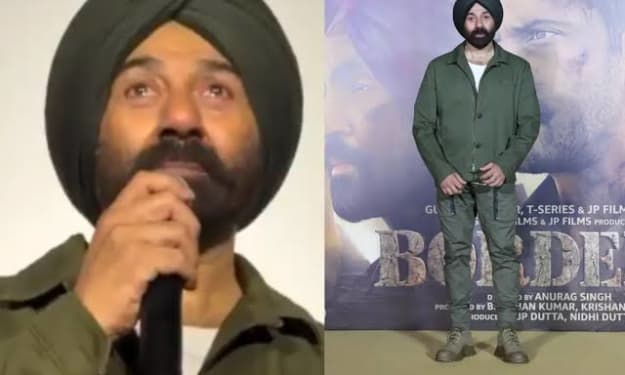
Sunny Deol Gets Emotional at "Border 2" Song Launch; Reveals His Current State After Dharmendra’s Demise. AI-Generated.
In a poignant moment at the launch event of the much-anticipated song from Border 2, actor Sunny Deol opened up about the emotional turmoil he’s been facing following the passing of his beloved father, the legendary Dharmendra. A true pillar of the Indian film industry, Dharmendra’s demise left an irreplaceable void in not only the Deol family but also in the hearts of millions of fans across the globe. As Sunny Deol sat before the media at the Border 2 event, the star—usually known for his intense and powerful on-screen presence—was visibly emotional. The actor, who had just recently finished shooting for the film, spoke about how the loss of his father had affected him deeply. In his own words, Sunny revealed, “Mera dimaag hila hua hain,” which roughly translates to "My mind is shaken." For a man of his stature, known for his reserved nature, these words were a raw, unfiltered expression of the grief he has been enduring in private. The Impact of Dharmendra’s Death on Sunny Dharmendra, often referred to as the “He-Man of Bollywood,” was not just an iconic actor but also a father who shaped Sunny and his brother Bobby Deol’s careers. Sunny has always been incredibly close to his father, a relationship that many fans had admired. The emotional weight of Dharmendra’s passing has left Sunny grappling with the reality of life without the guiding presence of his father. Though Sunny’s father had lived a full life and had been part of the entertainment industry for decades, his loss has still been a heavy blow. While discussing the ongoing shooting of Border 2, Sunny Deol spoke about how his emotional state affected his ability to focus. He shared that he had moments when filming scenes felt impossible, as the grief made him question everything. “Life has changed. I can’t deny that,” he admitted. Yet, despite the intense emotional upheaval, Sunny continued to fulfill his professional commitments, reminding himself of the legacy Dharmendra had left behind in the industry. Sunny’s resilience became a topic of admiration during the event, as he talked about how important it was to continue with the work and honor his father’s legacy through his films. The Emotional Tribute at the Launch At the song launch for Border 2, the atmosphere was charged with a mixture of excitement for the film’s upcoming release and a sense of sadness. The event, which was attended by the film’s cast and crew, was a tribute to both the film’s success and the memory of Dharmendra. Sunny Deol, with his eyes occasionally brimming with tears, took a moment to reflect on how much his father’s guidance had meant to him and how he still felt his presence with him. In his address, Sunny emphasized the importance of family in the midst of sorrow. He spoke about how Dharmendra's values, such as hard work, integrity, and humility, had been instilled in him and how they helped him cope with his current emotions. “I don’t have the words to describe how empty I feel, but I find solace in knowing that my father’s teachings guide me every day,” he shared. Family support during such a challenging time has been essential for Sunny. Bobby Deol, his younger brother, stood beside him throughout the emotional exchange at the launch event. The Deol family has always been a strong, tight-knit unit, and the bond between the brothers remains as unbreakable as ever. Both Sunny and Bobby have said that while the grief is overwhelming, they find comfort in their shared memories of their father, and these moments keep them going. A Legacy That Lives On The legacy of Dharmendra is so deeply embedded in Bollywood culture that it will continue to live on in the hearts of film lovers for generations. Dharmendra’s contribution to Indian cinema was immeasurable, and his impact on the world of acting, filmmaking, and family values has been profound. Sunny, who has often been compared to his father due to their similar on-screen presence, has carved out his own identity in the film industry. He’s known for his deep, intense roles and has established himself as an action icon, much like Dharmendra once did. But as much as he’s his own person in the film industry, there’s no denying that Sunny’s work is deeply influenced by his father’s legacy. In light of Dharmendra’s death, Border 2 has gained an even more significant place in Sunny’s career. It is seen as not just another film but also a way for Sunny to honor his father’s work and continue his journey in the industry. The emotional connection that Sunny feels to the project adds a personal layer to the film’s storyline, and it will undoubtedly resonate with audiences. A Grieving Son and an Unforgettable Legacy As Sunny Deol continues his journey in the film industry, the impact of losing his father will likely stay with him for a long time. However, as he has shown, his resilience and commitment to his craft have been his guiding lights. While Dharmendra’s absence leaves a profound hole, the love and teachings he passed down to his sons will forever remain, and with it, the legacy of one of Bollywood’s most iconic figures. For now, Sunny Deol’s words at the Border 2 song launch continue to reverberate in the hearts of fans. “Mera dimaag hila hua hain,” he said, expressing the raw grief of a son who has lost his father. Yet, in this sadness, Sunny’s resolve to honor his father’s legacy, and the strength of his family, shows the enduring bond that will live on through both his personal journey and his professional accomplishments.
By Fiaz Ahmed Brohi2 months ago in Geeks
Esha Deol Pays Tribute to Late Father Dharmendra as She Rings in New Year 2026 in Dubai; Brother Bobby Deol Sends Her Love. AI-Generated.
As the world ushered in the New Year, Bollywood actress Esha Deol celebrated the occasion in a meaningful way, paying tribute to her late father, the iconic Dharmendra, who passed away earlier in 2025. Esha, along with her family, chose to spend this significant moment in Dubai, where she reflected on the memories of her father while embracing the future with hope. A Legacy That Lives On Dharmendra, known as Bollywood’s "He-Man," was a towering figure in Indian cinema. His influence transcended his roles on the big screen; he was also an embodiment of strength, humility, and enduring charm. Dharmendra’s contribution to the film industry was immeasurable, and his absence left an undeniable void in the hearts of his loved ones, including his children. Esha, who shares an incredibly close bond with her father, found herself grieving the loss deeply. However, as the year came to a close and the new one began, Esha made sure to honor his memory in a heartfelt manner. While many people mark New Year’s Eve with parties and grand celebrations, Esha chose to reflect on her father’s legacy in a more intimate setting. Dubai, a city known for its vibrant culture and sparkling skyline, was the perfect backdrop for her moment of remembrance. Surrounded by loved ones, she lit candles and shared a quiet, personal moment to celebrate Dharmendra’s life and the mark he left on her. A Tribute from Esha: Embracing Both Grief and Gratitude During her New Year’s celebrations, Esha shared a poignant tribute to her father on social media. "Wishing my dad was here with us tonight, but I know you are always in my heart. 2026 is for you, Dad, for everything you taught me," she posted, accompanied by a photo of her with a framed picture of Dharmendra. It was a moment that reflected both the grief of losing a father and the strength gained from his teachings and the love he imparted throughout his life. Esha’s words resonated with her followers, many of whom grew up watching Dharmendra’s iconic films and were touched by the close-knit Deol family dynamic. Her tribute was a reminder that the Deol legacy continues, not only through films but also through the values Dharmendra instilled in his children. For Esha, 2026 marked a fresh start, but with deep gratitude and reverence for the past, she vowed to honor her father’s memory as she navigated this new chapter in her life. Bobby Deol’s Heartfelt Message While Esha was in Dubai, her brother Bobby Deol, who also shares a deep emotional connection with their father, took to social media to send his love and support. Bobby, known for his more introverted nature, rarely posts emotional messages on social media, but he made an exception to express his feelings at this poignant moment. "Sending my sister all my love today and every day. You’re stronger than you realize. Dad would be so proud of you," Bobby wrote in a heartfelt post alongside a picture of them as children with their father. The image, capturing a rare, candid moment from their childhood, was a reminder of the powerful bond they all shared as a family. Bobby's message resonated deeply with fans who have always admired the Deol family for their unity and love for one another. His words offered Esha much-needed emotional support as she navigated through her grief, reminding her that they would always have each other, just as they had when their father was alive. A New Year, A New Chapter For Esha, the year 2026 is not just a time for reflecting on the past but also an opportunity to move forward, carrying the lessons and love her father shared. As the Deol family continues to grieve their loss, they are finding strength in one another and the precious memories of their father. Though the sadness of Dharmendra’s passing looms large, Esha has also turned to her work and her family as sources of healing. Throughout her career, she has maintained a strong presence in the film industry and has become a figure of strength and inspiration for many. As she moves forward, it’s clear that she will continue to honor her father’s legacy not only in her personal life but also through her professional endeavors. Looking to the Future 2026 marks a new chapter for Esha, but it also honors the legacy of a man who brought joy, laughter, and unforgettable moments to millions of people. As she rang in the new year, it was evident that Esha’s tribute to her father would not just be a fleeting moment. The lessons Dharmendra imparted will guide her every step of the way, and his memory will live on through her actions and the Deol family’s ongoing success. As for the Deols, their family bond remains unbroken, and through their love and strength, they will continue to carry forward the Deol legacy into the future, one marked by resilience, love, and an undying commitment to family. The new year may have begun without Dharmendra, but for his children, his spirit will forever live on in their hearts.
By Fiaz Ahmed Brohi2 months ago in Geeks
Forget Burj Khalifa and Shanghai Tower: Saudi Arabia Readies a 1km-Tall Skyscraper. AI-Generated.
Saudi Arabia has taken another bold step toward reshaping the skyline with its plan to build a monumental 1-kilometer-tall skyscraper, aiming to surpass iconic structures like the Burj Khalifa and Shanghai Tower. The project, known as the Jeddah Tower, is not just about breaking records—it's about signaling the country's ambitions for the future, positioning it as a global center for business, culture, and technology. Ambitious Vision for the Future The vision for a 1-kilometer-high skyscraper in Jeddah comes as part of Saudi Arabia's broader plan for diversification under its Vision 2030 initiative. While the country is widely recognized for its oil wealth, Vision 2030 seeks to reduce its dependency on oil by investing in various sectors such as technology, tourism, and entertainment. The Jeddah Tower is intended to be a symbol of this transformation—an audacious architectural statement that signals Saudi Arabia's forward-thinking agenda. The skyscraper will be the centerpiece of a new development project called the Jeddah Economic City, which aims to revitalize the area and create a modern urban center. This new district will blend cutting-edge technology with luxury living and serve as a hub for international trade and tourism, further driving economic growth and diversification. Design and Engineering Marvel Designed by renowned architect Adrian Smith, who is also behind the Burj Khalifa, the Jeddah Tower will feature a sleek, modern design that draws inspiration from traditional Islamic architecture. The tower will have a unique and aerodynamic shape, with a pointed tip that seems to pierce the sky. Its reflective glass façade will change in color and intensity depending on the time of day and the angle of sunlight, making it a dynamic feature in the Jeddah skyline. The construction of the Jeddah Tower presents numerous engineering challenges. Building a structure of this height requires not just innovative design but also cutting-edge materials and advanced engineering techniques. The tower will feature a high-strength concrete core, specially designed to withstand the extreme wind pressures that come with such immense heights. Additionally, the foundation needs to be deep and solid, due to the tower’s weight and the challenging ground conditions in the region. The tower’s construction is being carried out by the Saudi Binladin Group, with the project expected to be completed in phases. The building is set to include a range of uses, from luxury residences and offices to high-end hotels and commercial spaces. It will also feature an observation deck offering breathtaking views of Jeddah and the Red Sea. Economic and Cultural Impact The construction of a 1-kilometer-high tower in Jeddah represents more than just a physical structure—it’s a strategic move in positioning Saudi Arabia as a key player in the global economy. The tower is expected to become a major tourist attraction, drawing visitors from around the world who are eager to experience the tallest building on the planet once completed. Moreover, the Jeddah Tower project aims to create thousands of jobs during its construction and in the years following its completion. It will also contribute significantly to the development of the local economy by attracting multinational corporations, investors, and professionals seeking a modern and dynamic business environment. The tower’s design and the surrounding development area will embrace elements of Saudi Arabia’s rich culture and heritage, incorporating public spaces for art exhibitions, cultural events, and leisure activities. As such, it will not only be a business hub but also a center for cultural exchange, where international visitors and locals alike can interact and learn from one another. The Competition: Can It Surpass Burj Khalifa? Currently, the Burj Khalifa in Dubai holds the title of the world's tallest building at 828 meters. However, the Jeddah Tower’s ambitious 1-kilometer height would more than double that. With its completion, Saudi Arabia would be stepping into uncharted territory, leaving behind the tallest skyscrapers of the past and setting a new standard for architectural achievement. However, there are challenges to overcome. The Burj Khalifa was not built without its own setbacks, with years of delays and challenges along the way. While the Jeddah Tower is set to rise higher, its journey is bound to face similar hurdles, ranging from funding issues to geopolitical tensions. Still, Saudi Arabia’s leadership is committed to making this ambitious dream a reality. The country has the financial backing and political will to push forward, even in the face of global economic uncertainties. The Jeddah Tower, when completed, will stand as an enduring symbol of the country’s vision for growth and modernization. Conclusion: A Monumental Step for Saudi Arabia’s Vision 2030 The Jeddah Tower will be a defining landmark, not only for Saudi Arabia but for the world. As the country shifts from oil-dependency to a more diversified economy, this massive skyscraper is a statement of its evolving identity on the global stage. The tower will serve as a beacon of innovation and aspiration, showing the world that Saudi Arabia is not just looking towards the future, but is actively building it—one mile-high structure at a time.
By Fiaz Ahmed Brohi2 months ago in The Swamp
People Who Still Look Youthful in Their 70s Almost Always Follow These 6 Morning Habits’. AI-Generated.
Aging is a natural process, but the key to maintaining youthful energy and appearance even as we age lies in our daily habits. In particular, people who maintain a youthful look and feel well into their 70s are often those who follow specific morning routines that nourish both their bodies and minds. As we age, our metabolism slows down, and our skin loses elasticity, but the right habits can help slow down these processes, enhancing both longevity and vitality. Here are six morning habits that those who stay youthful in their 70s almost always follow. 1. Start the Day with Hydration One of the simplest yet most effective morning habits to maintain a youthful appearance is staying hydrated. As we sleep, our bodies lose moisture, and starting the day with a glass of water helps replenish fluids. Proper hydration helps to keep the skin looking plump, bright, and healthy, and it also boosts digestion and energy levels. Dehydration can cause dryness, wrinkles, and sagging skin, so drinking water first thing in the morning can keep you looking fresh and feeling energized throughout the day. For added benefits, some people choose to infuse their water with lemon or a dash of apple cider vinegar, which can promote detoxification, improve metabolism, and provide a refreshing start to the day. The habit of hydrating first thing can set the tone for a health-conscious routine, ensuring you maintain optimal hydration levels throughout the day. 2. Morning Exercise to Boost Circulation Exercise is essential for maintaining a youthful physique and energy levels. Even in your 70s, people who look and feel youthful prioritize physical activity. It doesn’t have to be intense; light stretching, yoga, or a brisk walk can work wonders for circulation, muscle tone, and overall health. Exercise in the morning jumpstarts metabolism, improves blood flow, and helps release endorphins, which are known to boost mood and reduce stress. Moreover, exercise has anti-aging benefits for the skin. Regular movement promotes the flow of oxygen-rich blood to the skin, which can enhance the skin’s natural glow and give it a youthful appearance. Individuals who incorporate morning physical activity into their routine typically have better posture, more energy, and a higher level of confidence. 3. Mindfulness and Meditation The mind-body connection plays a vital role in maintaining youthful energy and clarity. Practicing mindfulness, meditation, or gratitude exercises in the morning can reduce stress, promote emotional well-being, and improve focus. Stress can accelerate aging by increasing inflammation and triggering the production of cortisol, a hormone that breaks down collagen and damages skin. Starting the day with a few minutes of deep breathing or meditation helps calm the nervous system, promotes mental clarity, and reduces anxiety. Those who prioritize mindfulness are more likely to stay balanced throughout the day, fostering not only emotional health but physical well-being as well. 4. Healthy Breakfast with Nutrient-Rich Foods A nourishing breakfast is essential for fueling the body after a long night’s sleep. People who age gracefully and maintain their youthful appearance tend to follow a morning routine that includes a balanced, nutrient-rich breakfast. Foods high in antioxidants, healthy fats, and protein help support skin health, provide sustained energy, and aid in digestion. Eating a healthy breakfast, such as a bowl of oatmeal topped with fresh berries, chia seeds, or a smoothie made with spinach, avocado, and protein powder, helps replenish the body’s nutrients and stabilize blood sugar levels. These types of foods provide essential vitamins, like vitamin C and E, which play a role in reducing oxidative stress and promoting collagen production, resulting in healthier, more youthful-looking skin. 5. Skincare and Sun Protection The skin is often the first area of the body to show signs of aging, and adopting a consistent skincare routine in the morning can help maintain a youthful complexion. Many individuals in their 70s who appear young swear by their skincare routines, which typically include cleansing, moisturizing, and applying sunscreen. Sunscreen is crucial for preventing premature aging, as exposure to UV rays leads to wrinkles, sun spots, and sagging skin. Using a hydrating moisturizer, followed by a broad-spectrum SPF, not only protects against harmful UV rays but also locks in moisture to keep the skin looking firm and vibrant. Regular skincare practices reduce the appearance of fine lines and wrinkles, keeping the skin looking radiant and youthful for years. 6. Positive Mindset and Setting Intentions for the Day A positive mindset is one of the most powerful tools for maintaining youthfulness. People who continue to look and feel youthful often cultivate an optimistic outlook in the morning. Whether through a gratitude practice, setting intentions for the day, or simply taking a moment to appreciate the present moment, this habit helps to promote a sense of joy, peace, and purpose. A positive mindset can also help reduce stress levels, which is essential for both emotional and physical health. People who are optimistic and have a sense of purpose tend to be more resilient to the challenges of aging, which has a direct impact on their overall health, energy, and appearance. Conclusion: The Power of Routine As we age, our habits have the power to determine how well we age. While genetics play a role, maintaining a healthy and mindful morning routine can significantly contribute to staying youthful in both appearance and energy. By following habits like hydrating, exercising, practicing mindfulness, eating a nutrient-rich breakfast, taking care of your skin, and cultivating a positive mindset, it is possible to age with grace and vitality. Individuals in their 70s who embrace these morning routines often continue to look youthful, feel energized, and maintain a positive outlook on life, defying the aging process with each passing year.
By Fiaz Ahmed Brohi2 months ago in Longevity
Finland Makes Progress in Cable Breach Investigation: Police Report New Developments. AI-Generated.
Finland is making significant strides in its investigation into a breach of undersea cables that has raised alarms within the country and beyond. The case, which involves the disruption of vital international communication and energy infrastructure, is gaining traction due to its potential geopolitical implications and the growing concern over cybersecurity vulnerabilities.
By Fiaz Ahmed Brohi2 months ago in The Swamp
Richard Pollak, 91, Dies; Edited Magazine That Criticized the Media. AI-Generated.
Richard Pollak, the longtime editor of The Washington Monthly, passed away at the age of 91, leaving behind a legacy of fearless journalism and a sharp critique of the American media landscape. His work, especially his editorship of The Washington Monthly during the 1970s and 1980s, significantly influenced the field of political and media reporting. Known for his incisive editorial voice and relentless questioning of the media’s role in shaping public opinion, Pollak’s death marks the end of an era in American journalism. A Career Rooted in Critique and Integrity Pollak’s career was defined by his commitment to integrity in journalism and a deep skepticism about the way media institutions operated. As the editor of The Washington Monthly, a magazine that tackled the issues of the day with clarity and boldness, he was unafraid to challenge conventional narratives and hold the media accountable for its shortcomings. His tenure at the magazine was marked by a series of critiques on the very nature of media coverage, which he saw as often shallow, sensational, and far too concerned with maintaining the status quo. Under Pollak’s leadership, The Washington Monthly became known for its in-depth reporting on political issues, media analysis, and its criticism of the American political establishment. The magazine's bold, unapologetic voice set it apart from its peers and made it a crucial publication for readers seeking thoughtful and incisive commentary. Pollak’s editorial work helped shape the magazine’s reputation as a leading voice in media criticism, and he consistently pushed for more transparency and responsibility from those who shaped the public discourse. Pollak’s critical view of the media was not merely a personal vendetta or an ideological stance. It was rooted in his belief that a free press was essential to democracy, but that it required constant vigilance and reform to live up to its potential. His criticisms were grounded in the belief that the media had become too close to the centers of political and corporate power, often sacrificing the role of watchdog to become an extension of those in charge. He argued that a truly independent media was one that held power accountable, no matter how uncomfortable the truth might be. A Vision for Journalism In addition to his role as an editor, Pollak was also a tireless advocate for journalism as a tool for social change. He believed that journalism should not merely reflect the world as it was, but should aim to make it better by exposing injustices, asking tough questions, and holding those in power to account. Throughout his career, he wrote numerous essays and op-eds, exploring the relationship between journalism, politics, and the public. His writing often emphasized the need for journalists to maintain an ethical distance from their subjects, a principle that was sometimes overlooked in the race to attract readers or sensationalize the news. Pollak also took issue with the corporate consolidation of media outlets, a trend he saw as a threat to the diversity of opinions and voices in the public sphere. He warned that as a small number of conglomerates gained control over more of the nation’s media landscape, the ability for alternative voices and investigative reporting to thrive would diminish. Pollak was particularly critical of the mainstream media's failure to address important issues such as economic inequality, environmental destruction, and the concentration of power in the hands of a few wealthy elites. Despite his criticisms of the media, Pollak was never anti-media. Rather, he saw the media’s failures as an opportunity for improvement, and he believed in the potential for reform. His tenure at The Washington Monthly was about more than just criticism—it was about urging the media to live up to its highest ideals, to serve as an institution of public service rather than a tool for those in power. Legacy of Impact Pollak’s work at The Washington Monthly and his broader contributions to American journalism have left a lasting imprint on the field. His work has inspired a new generation of journalists to critically examine the media’s role in society and its relationship to power. His sharp commentary and commitment to an independent, ethical press remain relevant as challenges to journalistic integrity continue to mount in an age dominated by misinformation and media consolidation. Pollak’s death has sparked an outpouring of admiration from those who knew him, both professionally and personally. His colleagues and fellow journalists have remembered him as a man of principle, a sharp thinker, and a champion of journalistic integrity. His impact on the industry will be felt for years to come, as the issues he raised during his career continue to shape the conversation about media responsibility, public trust, and the need for a free and independent press. A Final Tribute As news of Richard Pollak’s passing spreads, it is clear that his legacy will endure. His ability to ask tough questions, challenge the status quo, and demand better from both the media and those in power is something that many journalists and readers can aspire to. In a media environment often marked by sensationalism, bias, and corporate influence, Pollak’s career serves as a reminder of the importance of holding the powerful to account and the vital role that journalism plays in shaping a healthy democracy. Richard Pollak’s life was a testament to the power of a free press to shape society for the better. His work at The Washington Monthly continues to serve as a beacon of journalistic excellence, integrity, and unwavering commitment to the truth.
By Fiaz Ahmed Brohi2 months ago in Journal
China Receives 22 Shipments of LNG from Sanctioned Russian Projects in 2025: A Strategic Energy Partnership Amid Geopolitical Tensions. AI-Generated.
In 2025, a significant shift in global energy markets is unfolding as China has received 22 shipments of liquefied natural gas (LNG) sourced from Russian projects that have been sanctioned by the international community. This move, amidst ongoing geopolitical tensions, signals a deeper strategic alliance between the two nations as they navigate the complexities of global energy supply chains, sanctions, and economic cooperation. Sanctions on Russia: A Game of Geopolitics and Energy The international community, led by the United States and European Union, has imposed severe sanctions on Russia following its invasion of Ukraine in 2022. These sanctions have impacted various sectors of the Russian economy, including its energy industry, one of the largest sources of revenue for the country. Russian energy giants, particularly in the natural gas sector, have faced restrictions that have isolated them from the western markets. However, despite these sanctions, Russia has found an ally in China, which has gradually expanded its energy relationship with Moscow. China, being the world’s largest importer of natural gas, has become a key player in Russia’s energy strategy, providing a market for the LNG that would otherwise go unsold due to western sanctions. In 2025, the 22 shipments of LNG represent a growing trend in China's energy diversification strategy, which aims to reduce its dependence on other regional suppliers and foster deeper ties with Russia. A Strategic Energy Partnership: China and Russia This ongoing energy cooperation between China and Russia is not merely a temporary arrangement but a long-term strategy that has been evolving over the past several years. China’s demand for energy is immense, and securing stable, long-term sources of energy is critical to its growing economy. Russia, on the other hand, seeks to circumvent the economic isolation imposed by the West, and energy exports provide a vital lifeline for the Russian economy. The flow of LNG from Russia to China, especially from projects that are sanctioned by the West, highlights the way these two countries are navigating the global energy market. For China, this partnership is not just about securing energy resources but also about positioning itself as a major geopolitical player. By buying LNG from Russian projects, China is reinforcing its ties with Russia while simultaneously demonstrating its ability to operate independently from the West, which is essential for its long-term strategic goals. The Impact on Global Energy Markets The 22 LNG shipments from sanctioned Russian projects represent a significant portion of China’s natural gas imports. As of 2025, China has become the primary destination for Russian energy exports, and this shift in trade patterns has had ripple effects across the global energy landscape. The growth of LNG exports from Russia to China has contributed to higher global LNG prices, as Western countries seek alternative suppliers to offset their loss of access to Russian energy. Furthermore, China’s increased reliance on Russian LNG is reshaping energy supply chains. With the West increasingly shunning Russian energy, countries like India, Turkey, and certain Southeast Asian nations are also turning to Russia for their energy needs, further isolating Russia from European and North American markets. The energy dynamics between China and Russia could lead to a more fragmented global energy market, where power shifts away from traditional energy players such as the United States and the EU. The Role of Geopolitics in Energy Decisions Geopolitical considerations play a pivotal role in shaping the energy relationship between China and Russia. While the energy trade between the two countries is driven by economic factors, it is also influenced by broader political motives. For Russia, the strategic value of the energy partnership with China lies in its ability to diversify its exports and reduce dependence on European markets, which have been increasingly hostile due to the ongoing war in Ukraine. For China, the energy partnership with Russia serves multiple purposes. It helps to ensure a stable supply of energy at competitive prices, but it also allows China to maintain a position of influence in the global energy market. This partnership provides China with leverage in its ongoing rivalry with the United States, as the US has led the push for sanctions against Russia. By continuing to engage with Russia, China is positioning itself as a key player in the global energy landscape, capable of shaping the future of global energy trade. Challenges and Future Implications Despite the growth in energy cooperation between China and Russia, the relationship is not without its challenges. The logistical difficulties of transporting LNG across vast distances, especially through routes that may be subject to geopolitical risks, remain a significant concern. Additionally, the ongoing tensions between Russia and the West could lead to further economic and political instability, which might disrupt energy trade routes and raise the risk of sanctions being imposed on China for its ties with Russia. Moreover, the increased reliance on Russian LNG could complicate China’s efforts to diversify its energy sources. As the global push for clean energy intensifies, China faces mounting pressure to shift towards renewable energy sources and reduce its reliance on fossil fuels. The long-term sustainability of the Russia-China energy partnership will depend on how both nations manage the growing challenges posed by global energy transitions, environmental concerns, and international political pressures. Conclusion: A Complex Energy Landscape The delivery of 22 shipments of LNG from sanctioned Russian projects to China in 2025 underscores the complexity of the global energy market, where economic, geopolitical, and environmental considerations intersect. As China and Russia continue to strengthen their energy relationship, the implications for global energy markets are far-reaching, with shifts in power and influence becoming increasingly evident. However, the future of this partnership remains uncertain, as both nations navigate the evolving landscape of energy production, climate change policies, and international relations.
By Fiaz Ahmed Brohi2 months ago in The Swamp
Breaking Barriers: One Woman's Fight to Empower Girls in Her Village. AI-Generated.
In many rural communities around the world, access to education for girls remains a significant challenge. A combination of traditional beliefs, economic hardships, and a lack of infrastructure often leads to the denial of basic education to young girls, despite the undeniable benefits of education in breaking the cycle of poverty. However, there are inspiring stories of women who have faced these barriers and, against all odds, have turned their own struggles into a driving force to change the lives of others. One such woman is [Name], a resident of a small village in [Country], who, despite being denied education as a child, has vowed to ensure that no girl in her village will have to face the same fate. A Childhood Denied Education Growing up in a conservative village, [Name] was just like any other young girl with dreams of learning. However, due to the prevalent gender norms in her community, her dreams were crushed before they could even begin to materialize. Her family, influenced by traditional customs, believed that education for girls was not a priority. It was far more important, they argued, for her to stay at home, take care of household chores, and learn the skills that were thought to be necessary for a future as a wife and mother. "I wasn’t allowed to study, but I will make sure no girl in this village hears those same words," [Name] says with a resolute tone. These words, born from the pain of lost opportunities in her own childhood, have since become the foundation for her life’s work. The Turning Point: Education Against All Odds Although she was initially denied an education, [Name] didn’t let this setback define her. Instead, she found ways to educate herself. She would sneak into the community's informal gatherings, where boys were allowed to learn basic reading and writing. She taught herself from books she borrowed from a local teacher and listened intently to the discussions around her. Her passion for learning grew stronger every day, and soon, the desire to make a difference for the next generation of girls in her village became a guiding light. “I would study in secret. I would ask the boys for help with difficult words, and sometimes, I’d just read books on my own. The more I learned, the more I realized how much I had missed out on,” [Name] recalls. “I made a promise to myself that I would change things for others.” Raising Awareness and Taking Action As [Name] grew older, she realized the immense value of education, not just for herself but for all girls. Armed with the knowledge she had gained on her own and a strong desire to help, she began speaking out against the traditional practices that held girls back in her community. She faced tremendous resistance from her family, elders, and other community members who believed that girls had no place in formal education. Yet, [Name] was undeterred. She began small by organizing informal literacy sessions for girls in her village, often holding these classes in the evenings after school. Initially, many parents were hesitant, but as they began to see the positive impact that education was having on their daughters—on their confidence, behavior, and future prospects—attitudes started to change. "At first, the parents were skeptical. They thought education would distract their daughters from household duties. But soon, they saw how the girls were transforming. Some started helping their younger siblings with homework, others began to take leadership roles in the community," she says with pride. "Education made them believe in themselves." Building the Future: Empowering Girls in the Village [Name] did not stop at teaching a few girls. She dreamt bigger, aiming to build a more sustainable educational structure for future generations. With the help of local and international non-governmental organizations (NGOs), she managed to secure funding to build a small community school for girls. This school is now a beacon of hope for girls who had previously been denied the chance to learn. "I want every girl in my village to know that they can achieve anything they set their minds to. They are not just destined to be wives and mothers—they have the potential to be doctors, teachers, engineers, and leaders," [Name] asserts. “It’s about changing the narrative and giving them the freedom to dream.” Today, [Name] works alongside other educators and advocates for girls' education in her community. Her efforts have inspired other women and young girls, some of whom now act as role models for their peers. In a village where education for girls was once viewed as unnecessary and unimportant, [Name]'s work has planted the seed for a revolution in the way girls are perceived and valued. The Wider Impact of [Name]'s Work [Name]'s story is just one example of how individual determination can catalyze significant change in communities. Her journey also speaks to the larger global movement toward ensuring that girls have access to education, especially in regions where gender-based inequality still prevails. With millions of girls around the world still denied an education, [Name]'s efforts are a powerful reminder of the importance of education in empowering women and creating more equitable societies. As [Name] continues her work, her message is clear: "Education is not just a right; it is the key to breaking cycles of poverty, to unlocking potential, and to building stronger communities." Conclusion [Name]'s life story is an inspiring example of resilience, determination, and the transformative power of education. From a girl who was denied the opportunity to study to a woman who now champions the cause of girls' education, she embodies the potential for change that exists in all of us. As her village, and eventually her country, begins to recognize the value of educating girls, [Name]'s dream of a brighter future for young women is slowly becoming a reality. Her work serves as a beacon of hope for countless others who are still fighting for their right to learn and for their voices to be heard. [Name] stands as a testament to the power of one woman’s determination to change the world, one girl at a time.
By Fiaz Ahmed Brohi2 months ago in Humans
Russians Won’t Represent Their Country at Winter Olympics Even If Ukraine War Ends, IOC Chief Says. AI-Generated.
In a recent statement that has sent ripples through the world of sports, the President of the International Olympic Committee (IOC), Thomas Bach, declared that Russian athletes will not be allowed to compete under their country’s flag at the Winter Olympics, even if the war in Ukraine were to come to an end. The decision has sparked a fierce debate across the international sporting community, touching on issues of politics, patriotism, and the role of sports in a time of global conflict. The Context: War, Sanctions, and Sport Since the onset of the war in Ukraine, global sporting organizations, including the IOC, have faced increasing pressure to take a stand. In the aftermath of Russia’s invasion of Ukraine in 2022, many international bodies imposed sanctions on Russian athletes and officials, preventing them from participating in major global sporting events. The 2022 Winter Olympics in Beijing, for instance, saw athletes from Russia competing under a neutral flag, as the country was banned from using its national symbols or anthem due to the ongoing war. The IOC has been at the center of controversy regarding its stance on Russian athletes. Initially, the organization took a rather lenient approach, allowing Russian athletes to compete as neutrals in various international competitions. However, as the war persisted, pressure from the global community intensified, with many urging the IOC to impose a complete ban on Russian participation in all Olympic events. Bach’s Stance on Russian Athletes In his latest statement, IOC President Thomas Bach emphasized that even in the hypothetical scenario where the war in Ukraine is brought to a close, Russian athletes would still be banned from competing under their national flag in future Winter Olympics. According to Bach, the IOC is committed to maintaining the integrity of the Olympic Games, and the participation of Russian athletes—who would be seen as representatives of a government involved in a military conflict—is viewed as a direct contradiction to the Olympic ideals of peace and unity. This statement has been met with both support and opposition. Supporters argue that the IOC must uphold its principles and not allow Russia to use the Olympics as a platform to promote a nationalistic agenda in the wake of its aggression in Ukraine. They contend that such a ban is necessary to send a clear message that war and violence have no place in the international sporting community. On the other hand, critics argue that banning Russian athletes—many of whom have no control over the actions of their government—is unfair and punishes individuals who have dedicated their lives to their sports. Some have called for a more nuanced approach that would allow athletes to compete as neutrals, without being tied to the political actions of their nation. The Political Divide in Sports The controversy over the participation of Russian athletes in international competitions underscores a growing divide between the political world and the world of sports. Historically, the Olympics have been seen as a forum for peaceful competition, where athletes from all nations come together to showcase their skills, irrespective of their countries’ political ideologies. However, in recent years, the increasing politicization of sports has become more apparent. The Russian ban also raises questions about the future of global sporting events and the role of organizations like the IOC in navigating international politics. For example, many have pointed out that while Russia faces widespread sanctions and exclusions from major sporting events, other nations with questionable human rights records continue to compete without similar scrutiny. This inconsistency has led to calls for a broader conversation about how politics and sport should coexist. Moreover, some sports officials have expressed concern about the potential long-term impact of such bans on the Olympic movement. There is a fear that if the IOC continues to make political decisions regarding athlete participation, it could undermine the neutrality and fairness of the Games. The Olympics, after all, were established with the idea of bringing together the world’s best athletes in a celebration of human achievement, not as a platform for international political messaging. The Role of Neutrality in International Sports The debate surrounding the participation of Russian athletes also highlights the importance of neutrality in international sports. For years, the IOC and other sports organizations have worked hard to ensure that their events remain free from political influence. The neutrality of athletes is considered a cornerstone of the Olympic ideal, with participants expected to represent their sport, not their government. In recent years, however, this ideal has been increasingly challenged. As geopolitical tensions rise and conflicts spill over into the sporting world, the question of whether athletes can truly be neutral has become more complicated. While some have argued that it is unrealistic to expect athletes from politically contentious nations to be seen as neutral, others maintain that sport should remain separate from politics, with athletes representing their personal achievements, not the agendas of their governments. The Way Forward: Balancing Ideals and Practicality Looking forward, the IOC faces a difficult task in balancing its commitment to the Olympic ideals with the reality of an increasingly politicized global landscape. While the exclusion of Russian athletes from the Winter Olympics may seem like a necessary step in the face of global unrest, it also raises questions about the role of sport in diplomacy and the treatment of athletes caught in the crossfire of international conflicts. As the situation continues to evolve, it will be crucial for sports organizations like the IOC to carefully consider the long-term implications of their decisions. They must balance the integrity of their events with the need to remain fair and neutral, ensuring that sport continues to serve as a unifying force in a world divided by politics and conflict. Ultimately, the future of Russian participation in global sports will depend on the resolution of the ongoing war in Ukraine and the willingness of the international community to find common ground. For now, however, it seems that Russia’s athletes will remain sidelined, waiting for a peace that seems increasingly elusive. Conclusion The IOC’s decision to bar Russian athletes from competing under their national flag, even in the event of a ceasefire in Ukraine, has ignited a debate that will likely continue for years to come. The crossroads of politics and sports are more apparent than ever, and the world is watching closely as global sporting bodies navigate these complex issues.
By Fiaz Ahmed Brohi2 months ago in The Swamp
Looking Ahead to the Most Anticipated Poetry of 2026: A Year of Creative Innovation and Cultural Reflection. AI-Generated.
Poetry, often regarded as a mirror to society, evolves with the changing tides of culture, politics, and personal experience. As we look ahead to 2026, a year brimming with potential and anticipation, it’s exciting to consider what the poetry landscape will look like. From young poets breaking barriers to established names exploring new territories, the year promises to be a thrilling chapter in the world of verse. With new themes, forms, and voices emerging, 2026 will undoubtedly be a year for literary innovation.
By Fiaz Ahmed Brohi2 months ago in Poets
Why the Nuclear Plant Is a Sticking Point in Peace Negotiations. AI-Generated.
As the conflict between Russia and Ukraine continues into its prolonged phase, one of the most significant and contentious issues standing in the way of peace talks is the situation surrounding nuclear energy infrastructure, particularly the Zaporizhzhia Nuclear Power Plant (ZNPP). With both Russia and Ukraine accusing each other of targeting or taking control of such facilities, the broader implications for security, energy, and international diplomacy have turned the ZNPP and other nuclear assets into a flashpoint in the pursuit of peace.
By Fiaz Ahmed Brohi2 months ago in The Swamp
FIA ASI Shifted to Airport Sanitation: An Unexpected Turn for Pakistan's Federal Investigation Agency. AI-Generated.
The Federal Investigation Agency (FIA) in Pakistan has been at the forefront of maintaining law and order, investigating a wide range of criminal activities from human trafficking to cybercrimes. Recently, however, an unexpected move has caught the attention of both the public and officials—one of the Assistant Sub-Inspectors (ASI) from FIA has been reassigned to airport sanitation duties. This decision, which comes as part of an internal reshuffling, has raised eyebrows across various sectors. With the FIA's core responsibility being law enforcement and investigating federal crimes, the reassignment of an officer to sanitation tasks has prompted questions about the agency's operational priorities, its internal decision-making, and the wider implications of such changes for the law enforcement community. A Sudden Shift: The Role of the FIA ASI The Federal Investigation Agency (FIA) is one of Pakistan's leading law enforcement bodies, responsible for enforcing federal laws related to human trafficking, immigration, anti-narcotics, and cybercrimes. The agency is known for its rigorous investigation methods, and its officials often play a pivotal role in tackling organized crime and corruption. Assistant Sub-Inspectors (ASI) within the FIA hold significant roles, usually handling investigative and supervisory tasks. These officers are generally tasked with ensuring the smooth functioning of their respective departments, gathering intelligence, and supporting larger operations against federal crimes. So when an ASI, usually involved in such critical work, was reassigned to work on airport sanitation, it raised questions about the agency’s internal priorities and the potential reasons for this reallocation. Given the serious nature of the FIA's work, this decision has led to mixed reactions from various quarters. The Sanitation Shift: Understanding the Reasoning At first glance, the idea of an ASI being reassigned to airport sanitation may seem unusual, especially considering the importance of the FIA in enforcing federal laws. However, according to government sources, this move might be a part of an administrative reshuffling that aims to optimize staff distribution and address personnel shortages. Sanitation work at major international airports, such as Jinnah International Airport in Karachi or Allama Iqbal International Airport in Lahore, is no small task. These areas are hubs for thousands of travelers, and maintaining cleanliness and hygiene is a top priority to ensure the health and safety of passengers and staff. The assignment of an ASI to this task could be an effort to streamline airport services, or it may represent a short-term measure to address staffing issues within the airport’s sanitation department. While the rationale behind the move may appear practical, it still remains a puzzling decision to many within the law enforcement community, especially when one considers the significant expertise and skills required for positions within the FIA. Some believe that this move could represent a misalignment of the ASI’s potential and responsibilities, while others suggest it reflects internal management challenges that are being tackled at the cost of operational efficiency. Public Reactions: Questions and Concerns The reassignment of the FIA ASI to sanitation duties has led to mixed reactions. Many within the law enforcement community have questioned whether this is the best use of resources and whether the move is in line with the agency’s original purpose. Critics argue that this type of reshuffling can lead to a lack of focus on critical law enforcement duties, particularly when personnel may be better suited for investigative tasks. In addition to the concerns within law enforcement, the public has also expressed confusion. For example, citizens have raised questions about the agency's role in combating federal crimes when it appears to be diverting personnel to non-law enforcement roles. Some have even pointed to other issues facing the country, such as rising crime rates and corruption, suggesting that the FIA should focus on its core responsibilities rather than addressing internal personnel matters. On the other hand, some have suggested that this may be a temporary move to address immediate operational needs at the airport, where sanitation staff could be lacking. The reassignment of an ASI, who is often regarded as experienced in handling complex tasks, might be an attempt to bring an experienced leader to oversee sanitation activities, ensuring the airport remains in top form during high-travel periods. The Broader Implications: A Sign of Deeper Challenges? While it’s important not to jump to conclusions about the intentions behind the reassignment, this move might also be reflective of broader organizational challenges within the FIA. It could signal a need for better personnel management, restructuring, or even a response to budget constraints. If the FIA is experiencing staffing shortages, it might not have enough resources to assign personnel to its traditional roles within law enforcement, thus prompting temporary reassignments such as the one observed with this ASI. There are also questions about whether the FIA is underfunded or grappling with personnel cuts, which might explain such decisions. Given the complexities involved in maintaining a law enforcement agency’s operations, staffing issues can significantly impact its ability to function at full capacity, potentially leading to the reassignment of personnel to less relevant roles. Conclusion: A Moment of Reflection for the FIA The reassignment of an FIA ASI to work in airport sanitation serves as a reminder that even prestigious law enforcement agencies are not immune to internal challenges. While the reasons behind this decision may not be entirely clear, it reflects the importance of the FIA’s role and the difficulties associated with ensuring that personnel are allocated to tasks that align with their skills and expertise. It remains to be seen whether this reassignment is a temporary solution or part of a larger trend within the agency. Nonetheless, it underscores the need for thoughtful and strategic management within the FIA to ensure that it can continue to serve the public effectively, while addressing staffing concerns and fulfilling its critical mandate of maintaining national security. This incident also opens a conversation about how government agencies handle workforce management, crisis situations, and the reallocation of resources in times of need. As public opinion and internal discussions unfold, the FIA may find ways to further strengthen its approach to balancing the needs of the public with the practicalities of operating a major law enforcement agency.
By Fiaz Ahmed Brohi2 months ago in The Swamp