
Bradford-on-Avon Tithe Barn: A Medieval Masterpiece
Medieval England

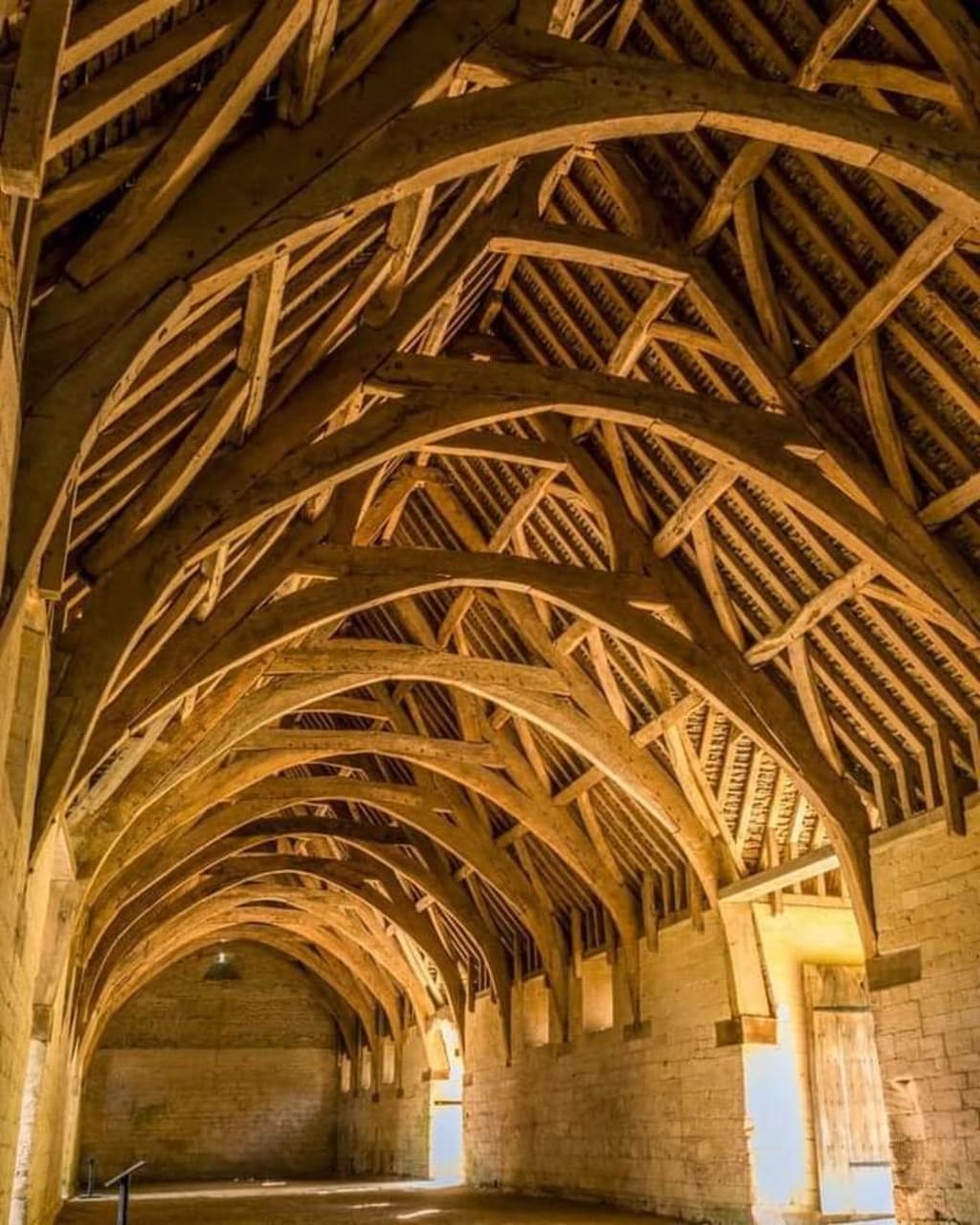
Nestled in the picturesque Wiltshire countryside, the Bradford-on-Avon Tithe Barn stands as one of the most impressive examples of medieval architecture in England. Built in the mid-14th century, this remarkable structure is not only one of the largest medieval barns in the country but also one of the finest in terms of its design and craftsmanship. Serving as a reminder of the agricultural and ecclesiastical history of the region, the Tithe Barn was originally constructed to support Barton Grange, a manor farm that belonged to the powerful Shaftesbury Abbey in Dorset.
With its towering stone walls and majestic timber roof, the Bradford-on-Avon Tithe Barn offers visitors a glimpse into England’s rural past. In this post, we’ll explore the history, architecture, and significance of this medieval barn, as well as its enduring legacy.
The Origins of the Tithe Barn
The Tithe Barn at Bradford-on-Avon was built during the mid-14th century, a time when the rural economy of England was heavily intertwined with the power and wealth of the Church. Shaftesbury Abbey, which owned Barton Grange and its lands, was the wealthiest nunnery in medieval England. As part of the Benedictine order, the nuns of Shaftesbury oversaw vast agricultural estates that supplied the abbey with food, income, and resources.
The barn was constructed to store the "tithes" that were collected from the local farming community. Under the system of tithing, farmers were required to give a portion of their produce—usually one-tenth—to the Church. These tithes could include grains, livestock, wool, and other agricultural products. The barn, therefore, played a crucial role in housing the goods that sustained the abbey’s wealth and ensured its continued operation.
After the dissolution of the monasteries under Henry VIII in 1539, Shaftesbury Abbey was suppressed, and its lands, including Barton Grange, passed into private hands. The Tithe Barn continued to be used for agricultural purposes for several centuries, remaining part of a working farm until 1914.
The Architecture of the Barn
The Bradford-on-Avon Tithe Barn is an architectural marvel, both in its scale and in the quality of its construction. Measuring over 168 feet in length and 33 feet in width, the barn is truly vast, with enough space to store substantial quantities of produce. Its design, like many medieval barns, is functional but also reflects the grandeur typical of ecclesiastical buildings of the time.
The exterior walls are constructed from limestone rubble, a common building material in the area. The thick stone walls not only provided support for the massive roof structure but also helped to protect the stored produce from the elements. The barn’s roof, made of wooden timbers, is one of its most striking features. The steeply pitched roof is supported by a series of large, intricately designed oak trusses, which are arranged in an A-frame shape. These trusses, some of which are more than 30 feet in height, demonstrate the skill and craftsmanship of medieval carpenters. Each timber was hand-cut and fitted together using traditional joinery techniques, creating a roof structure that has withstood the test of time.
One of the most impressive aspects of the barn’s architecture is the way in which form and function are perfectly balanced. The barn’s size was necessary to accommodate large quantities of agricultural produce, but the design also ensured that the interior was well-ventilated and dry. The large doorways at either end of the barn, along with smaller ventilation slits in the walls, allowed air to circulate freely, preventing dampness and rot.
The barn also features a number of original stone buttresses, which were added to support the weight of the massive roof. These buttresses, along with the barn’s sturdy stone walls, give the structure a sense of permanence and strength, qualities that were undoubtedly important for a building intended to store valuable resources.
The Significance of Shaftesbury Abbey
Shaftesbury Abbey, which owned Barton Grange and the Tithe Barn, was one of the most powerful and wealthy religious institutions in medieval England. Founded in the late 9th century by King Alfred the Great, the abbey was initially established as a royal nunnery. Over the centuries, it grew in size and influence, amassing vast estates across southern England.
The abbey was particularly known for its production of wool, which was one of the most important industries in medieval England. The wool produced on the abbey’s estates was highly prized, and much of it was exported to continental Europe, where it was used to make fine textiles. The income generated from wool sales helped to finance the abbey’s lavish building projects, including the construction of barns like the one at Bradford-on-Avon.
While Shaftesbury Abbey was dissolved in 1539 as part of Henry VIII’s dissolution of the monasteries, its legacy lives on in the many buildings and estates it once controlled. The Bradford-on-Avon Tithe Barn is one of the few remaining structures that offer a direct connection to this important chapter in English history.
The Barn’s Journey Through the Centuries
After the dissolution of Shaftesbury Abbey, the Bradford-on-Avon Tithe Barn continued to serve as an agricultural building for several centuries. By the late 19th and early 20th centuries, however, changes in farming practices and the industrialization of agriculture meant that large tithe barns like the one at Bradford-on-Avon were no longer as essential as they had once been.
In 1914, the barn ceased to function as part of a working farm and fell into a period of neglect. Fortunately, in the years that followed, efforts were made to preserve the barn and protect it from further decay. The barn was eventually restored and opened to the public, allowing visitors to appreciate its historical significance and architectural beauty.
Today, the Bradford-on-Avon Tithe Barn is managed by the English Heritage organization and stands as a popular tourist attraction. It remains one of the finest examples of medieval agricultural architecture in England, drawing visitors from around the world who come to marvel at its grandeur and learn about its rich history.
A Living Monument
The Bradford-on-Avon Tithe Barn is more than just a relic of the past—it is a living monument that continues to inspire awe and admiration. Its sheer size and remarkable craftsmanship offer a window into a time when agriculture was the backbone of the economy, and the Church wielded immense power. While much has changed in the centuries since the barn was built, its enduring presence on the landscape serves as a reminder of the skill and dedication of the people who constructed it.
Whether you’re a history enthusiast, an architecture lover, or simply someone who appreciates beautiful places, the Bradford-on-Avon Tithe Barn is a must-see destination. As you walk through its vast, echoing interior and gaze up at the intricate wooden beams overhead, you can’t help but feel a connection to the generations of people who have walked the same path, marveling at the same structure, for more than 600 years.
About the Creator
Keep reading
More stories from Deji Akomolafe and writers in History and other communities.
The Sweet Track: A 5,830-Year-Old Window into Neolithic Ingenuity
Tucked away in the marshy Somerset Levels of southwest England lies one of the most remarkable archaeological discoveries of the 20th century: the Sweet Track. This ancient Neolithic timber walkway, unearthed in 1970, is not only a marvel of prehistoric engineering but also one of the oldest known wooden trackways in the world. Dating back an astonishing 5,830 years, the Sweet Track offers a glimpse into a time when humans were transitioning from nomadic lifestyles to more settled agricultural communities. It stands as a testament to the ingenuity and resourcefulness of our distant ancestors.
By Deji Akomolafeabout a year ago in History
How a feared Mediterranean corsair rose to become Grand Admiral of the Ottoman Empire and reshaped naval power in the 16th century
In the turbulent waters of the 16th-century Mediterranean, where empires clashed and trade routes determined the fate of nations, one name inspired both fear and admiration: **Khayr al-Din Barbarossa**. Known in Europe as “Barbarossa,” meaning “Red Beard,” he began his life as a corsair—what many would call a pirate—but rose to become the Grand Admiral of the mighty **Ottoman Empire**. His journey from privateer to imperial commander is a remarkable tale of ambition, strategy, and shifting loyalties.
By Irshad Abbasi 4 days ago in History




Comments
There are no comments for this story
Be the first to respond and start the conversation.