
The Ingenious "Snake Bridge" of the Macclesfield Canal: A Testament to 19th-Century Engineering
Old engineering

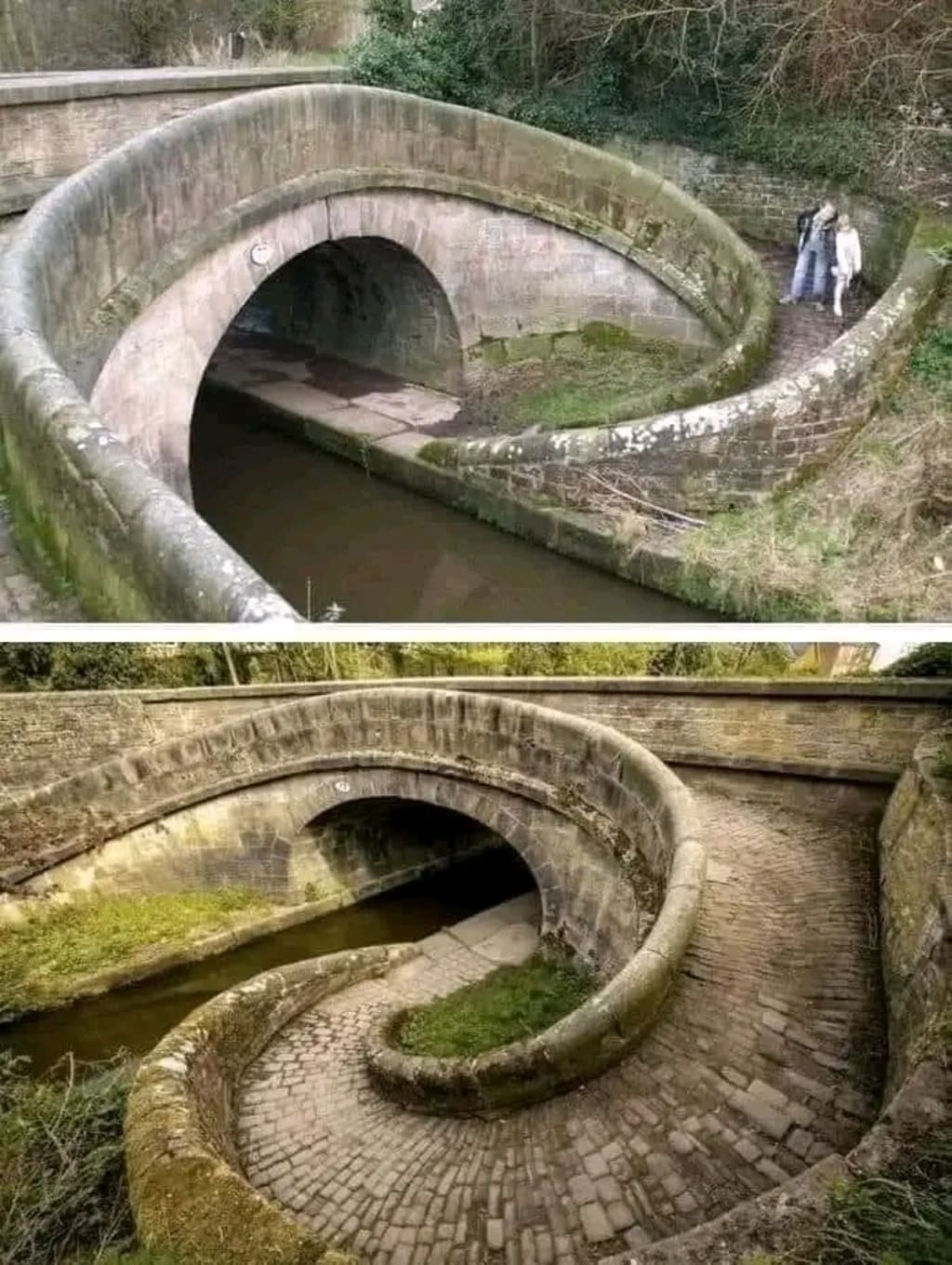
The Macclesfield Canal, which opened in 1831, played a crucial role in British industry during the 19th century, facilitating the transportation of goods and resources across northern England. A distinctive and innovative feature of this canal system is the "snake bridge," a clever engineering solution designed to allow horses to continue towing barges without the need to unhitch or interrupt their journey. These bridges are not only functional marvels of their time but also represent the ingenuity and adaptability of British canal engineering.
In this blog post, we’ll explore the history and significance of the snake bridge, its unique design, and its role in the broader context of Britain’s industrial revolution and canal system development.
The Origins of the Snake Bridge
In the early 19th century, canals were the lifeblood of British industry. They provided an efficient way to transport heavy goods, such as coal, iron, and textiles, from factories and mines to markets across the country. Barges and narrowboats were commonly used to move these materials, and horses were the primary source of power for towing the boats along the canals.
The towpaths that ran alongside the canals allowed horses to pull barges by means of long ropes, often with minimal effort, as the waterborne cargo moved relatively easily compared to road transport. However, canals often featured obstacles such as bridges, which created logistical challenges. When a bridge crossed a canal, it would typically be necessary to stop the boat, unhitch the horse from the towline, lead it across the bridge, and reattach it on the other side before resuming the journey. This process was time-consuming and labor-intensive, which became an issue as the demand for industrial transport increased.
To address this problem, the snake bridge (also known as the "turnover bridge" or "roving bridge") was developed. This innovative design allowed horses to change sides of the canal without needing to be unhooked from the towline. The name "snake bridge" derives from the serpentine or spiral ramps that the horse would use to cross the canal, making a complete 360-degree turn in the process. This feature allowed the towline to remain attached to the barge, thus avoiding the time-consuming process of stopping and re-harnessing the horse.
The Design and Functionality of the Snake Bridge
The snake bridge is a clever example of how engineering can solve practical problems in transportation. Its defining feature is the spiral or curved ramps that allow the horse to cross over the canal while maintaining its forward momentum. These ramps are carefully designed to enable the horse to make a gradual, smooth turn as it crosses the bridge, effectively reversing its direction while remaining connected to the towline.
The towline itself would pass through a slot or gap in the bridge’s parapet, allowing it to follow the boat on the water as the horse crossed overhead. By maintaining the towline's connection, the horse could continue towing the boat seamlessly, with no interruption to the journey.
The construction materials of snake bridges varied depending on the location and availability of resources. Many of the bridges along the Macclesfield Canal were made from stone or brick, with some incorporating cast iron components. The ramps were often paved with alternating rows of protruding bricks, designed to give the horse’s hooves traction and prevent slipping, especially in wet weather conditions. This detail is a testament to the thoughtfulness and attention to practical needs in the bridge’s design.
The Importance of the Snake Bridge in Industrial Transport
The development of the snake bridge was a significant innovation for the canal system, particularly in a time when speed and efficiency were paramount for industrial transport. The British industrial revolution relied heavily on the movement of raw materials like coal, iron, and textiles, and canals were the most reliable means of moving such bulky and heavy loads before the advent of railways.
By eliminating the need to stop and unhitch horses every time a bridge was encountered, snake bridges increased the efficiency of canal transport. Boats could continue their journey uninterrupted, reducing delays and allowing goods to be delivered more quickly and reliably. In this way, the snake bridge helped to streamline the logistics of canal-based transportation, contributing to the broader success of Britain’s industrial economy.
Furthermore, the design of the snake bridge exemplifies the problem-solving mindset of 19th-century engineers. Faced with a practical challenge, they devised a solution that was not only functional but also elegant in its simplicity. The bridges are a testament to the creativity and ingenuity that characterized the era of canal building in Britain.
The Legacy of the Macclesfield Canal and Its Snake Bridges
The Macclesfield Canal, completed in 1831, is one of the last narrow-gauge canals built in England before the rise of the railway system. At 26 miles long, it connects Marple, in Greater Manchester, to Hall Green, near Kidsgrove in Staffordshire. It was a crucial link in the network of canals that crisscrossed northern England, providing access to major industrial cities like Manchester, Stoke-on-Trent, and Birmingham.
Although railways eventually supplanted canals as the primary mode of industrial transport, the Macclesfield Canal and its snake bridges remain an enduring symbol of Britain’s canal-building heritage. Today, the canal is a popular destination for leisure boating and walking, with many visitors coming to admire the unique engineering features, including the iconic snake bridges.
Several of these bridges still exist along the canal, their stone and brickwork a reminder of the practical genius of their designers. The Macclesfield Canal has been preserved as a historical and recreational waterway, and the snake bridges continue to be admired for their functionality and aesthetic appeal. In a sense, they are living monuments to the ingenuity of a bygone era when horses and barges were the backbone of British industry.
Conclusion
The snake bridges of the Macclesfield Canal stand as remarkable examples of 19th-century engineering, embodying the practical, problem-solving spirit that defined Britain’s industrial revolution. By allowing horses to cross the canal without interrupting their tow, these bridges improved the efficiency of canal transport, saving time and effort for the workers and animals involved.
Though simple in concept, the snake bridge design reflects the brilliance of canal engineers who understood the importance of small innovations in improving the overall functioning of the canal system. Today, these bridges remain an enduring part of Britain’s industrial heritage, appreciated by historians, engineers, and tourists alike for their clever design and historical significance.
As we look back on the role of canals in shaping the industrial landscape of Britain, the snake bridge serves as a reminder of how thoughtful, practical engineering can have a lasting impact on transportation and infrastructure.
About the Creator
Keep reading
More stories from Deji Akomolafe and writers in History and other communities.
The Pantheon: Rome’s Ancient Marvel and the World’s Greatest Concrete Flex
If there’s one building that can boast over 1,900 years of architectural dominance, it’s the Pantheon in Rome. Not only is this awe-inspiring structure a breathtaking piece of ancient history, but it also holds the remarkable title of having the World’s Largest Unreinforced Concrete Dome—a record it’s been flaunting for nearly two millennia. That’s right, for almost 2,000 years, architects have been trying to top what the Pantheon accomplished in the 2nd century, and let’s just say, it’s a pretty tough act to follow. The Pantheon’s dome is like the ultimate architectural mic drop, challenging modern builders with a silent, "Top that, future people!"
By Deji Akomolafeabout a year ago in History
Where the Pulse Ends
© 2026 Sai Marie Johnson The humidity in the city didn’t just hang; it leaned. It was a thick, stagnant soup of diesel exhaust, ozone, and the metallic tang of blood that drifted from the "Compliance Zones." Joe sat in his rusted sedan, his hands resting loosely on the steering wheel. He wasn't gripping it. He wasn't angry. Anger was a chemical spike, a biological inefficiency. Joe was simply... focused.
By Sai Marie Johnson4 days ago in History


Comments
There are no comments for this story
Be the first to respond and start the conversation.