
A Forgotten Era: The Early Days of Electric Vehicles
Early Civilization

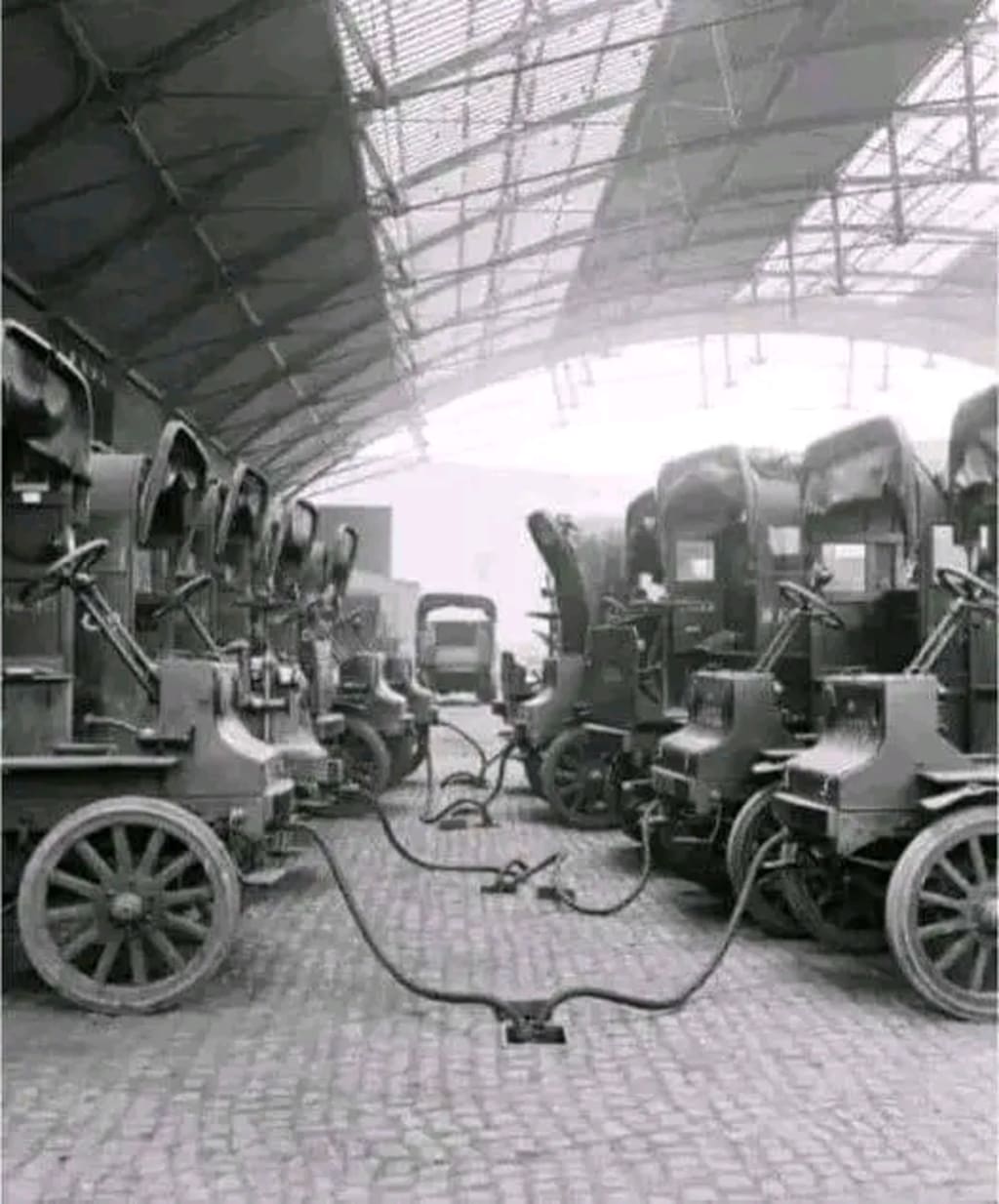
When people think of electric vehicles (EVs), they often envision them as a modern innovation—a product of the 21st century, driven by the need to combat climate change and reduce dependency on fossil fuels. However, few realize that electric vehicles have a history stretching back more than a century. In fact, electric cars were some of the first automobiles on the road, and by the early 1900s, they were a common sight. At their peak, nearly a third of all cars on the road were powered by electricity. But what happened to these early EVs, and why did they disappear for nearly a century? The answer lies in a fascinating tale of technological advancement, market forces, and the eventual dominance of internal combustion engines.
The Birth of Electric Vehicles
The first production-standard electric car that was capable of being reproduced and sold to the public was unveiled in 1884. This was a major milestone in automotive history. Before Henry Ford's gasoline-powered Model T revolutionized the car industry, electric vehicles were already making headlines. The appeal of electric cars was obvious—compared to early gasoline-powered cars, they were cleaner, quieter, and easier to operate. Petrol cars at the time were noisy, produced smelly emissions, and required manual cranking to start. In contrast, electric cars offered a smoother ride and could be powered up with the flip of a switch.
The 1880s and early 1900s were a golden age for electric vehicles. By 1900, EVs accounted for one-third of all cars on the road. They were particularly popular in urban areas where the limited range wasn’t much of an issue, and charging infrastructure was starting to develop. It wasn’t uncommon to see electric taxis, delivery vehicles, and even some electric buses operating in cities.
Ferdinand Porsche and Early EV Innovations
One of the most significant figures in the history of electric vehicles is Ferdinand Porsche, the founder of the famous sports car brand. Long before Porsche became synonymous with high-performance gasoline-powered cars, Ferdinand Porsche was already innovating in the electric vehicle space. In 1898, Porsche developed an electric vehicle known as the "P1." This was a remarkable achievement in automotive engineering, and Porsche wasn’t finished.
In 1900, Porsche created what is widely regarded as the world’s first hybrid vehicle—the Lohner-Porsche Mixte Hybrid. This groundbreaking car combined an electric motor with a gasoline engine, a concept that is still used in many hybrid vehicles today. The Lohner-Porsche was ahead of its time, featuring electric hub motors that powered the wheels, and was capable of operating either purely on electric power or with the assistance of the gasoline engine. This technology laid the foundation for the hybrids and plug-in hybrids we see today.
Mercedes-Benz and Electric Taxis
Another major automaker that ventured into the world of early electric vehicles was Mercedes-Benz. In 1906, the company introduced the "Mercedes Mixte," a hybrid vehicle designed to function both as a taxi and a race car. The Mercedes Mixte operated similarly to Porsche’s hybrid, using a combination of electric motors and a gasoline engine to provide power. This vehicle was adopted as a taxi in several cities, showcasing the practicality and reliability of electric vehicles even in the early 1900s. In 1907, the car was also modified into a race car, further demonstrating that electric and hybrid technology could be applied to high-performance vehicles.
The success of the Mercedes Mixte in both urban and competitive settings showed that electric vehicles were versatile and capable. Yet, despite their promise, these early innovations were overshadowed by the rapid development of gasoline-powered cars.
The Decline of Early Electric Vehicles
So why did electric vehicles, which had enjoyed such early success, disappear from the roads? The answer lies largely in the emergence of gasoline-powered cars and the changing landscape of the automobile industry in the early 20th century.
Two major factors contributed to the decline of EVs. First was the introduction of the mass-produced, gasoline-powered Model T by Henry Ford in 1908. Ford’s assembly line techniques dramatically lowered the cost of producing cars, making the Model T affordable for middle-class Americans. Gasoline-powered cars, which were cheaper and could travel longer distances than their electric counterparts, quickly gained popularity.
Second, the discovery of vast petroleum reserves in Texas in the early 1900s made gasoline widely available and inexpensive. As gas stations began popping up across the country, refueling became easier, addressing one of the key challenges faced by early electric vehicles: range. The limited battery technology of the time meant that electric cars could only travel short distances on a single charge, making them less practical for long journeys outside of urban areas.
By the 1920s, electric vehicles had largely disappeared from the roads, replaced by gasoline-powered cars that were faster, cheaper, and more convenient for the expanding American road network. It wasn’t until the latter half of the 20th century that electric vehicle technology began to make a comeback.
The Rebirth of Electric Vehicles
Fast-forward to the 21st century, and electric vehicles are once again making headlines. With advances in battery technology, increasing concerns about climate change, and a renewed focus on sustainable transportation, EVs are poised to reclaim their place on the roads. In many ways, we are witnessing the reincarnation of old technology—an acknowledgment that electric power, once sidelined, is now at the forefront of automotive innovation.
While modern EVs feature state-of-the-art technology, their origins can be traced back to the late 19th and early 20th centuries when pioneers like Ferdinand Porsche and Mercedes-Benz were already exploring electric and hybrid power. The early electric trucks plugged in across the UK in 1917, for example, demonstrate that the idea of electric vehicles is far from new—it’s an old solution that has found new relevance in today’s world.
Conclusion
The history of electric vehicles is a fascinating journey that stretches back more than a century. From the first production-standard electric car in 1884 to Ferdinand Porsche's hybrid creations and the early electric taxis of Mercedes-Benz, EVs were once at the forefront of automotive innovation. Although they were overtaken by gasoline-powered cars in the 20th century, the resurgence of electric vehicles in recent years reflects a return to a technology that has been with us all along, quietly waiting for the right moment to shine once again.
About the Creator
Keep reading
More stories from Deji Akomolafe and writers in History and other communities.
Bradford-on-Avon Tithe Barn: A Medieval Masterpiece
Nestled in the picturesque Wiltshire countryside, the Bradford-on-Avon Tithe Barn stands as one of the most impressive examples of medieval architecture in England. Built in the mid-14th century, this remarkable structure is not only one of the largest medieval barns in the country but also one of the finest in terms of its design and craftsmanship. Serving as a reminder of the agricultural and ecclesiastical history of the region, the Tithe Barn was originally constructed to support Barton Grange, a manor farm that belonged to the powerful Shaftesbury Abbey in Dorset.
By Deji Akomolafeabout a year ago in History
Mestre Best: The Warrior Who Taught Restraint
In the mountain city of Valenor, there was a name spoken softly, almost with reverence—Mestre Best. No statues were built in his honor, no songs officially recorded his deeds, yet every fighter, scholar, and traveler knew the legend. Some said he was the greatest master of combat the world had ever seen. Others claimed he was a philosopher disguised as a warrior. The truth was more complex than either tale.
By The best writer about 3 hours ago in History
Frozen Ground
Silence meant the guns were cooling. It meant men were waiting. It meant something was about to break. We were dug in along a frozen stretch of road near the Imjin River, the kind of place that didn’t look important until history decided otherwise. The cold wasn’t just uncomfortable—it was personal. It crept into your boots, your bones, your thoughts. At night, I dreamed of heat: radiators, kitchens, the smell of coffee. I woke up with frost on my helmet.
By Gaofeng Wang7 days ago in History
Miss Persephone's Manual to a Seemingly Ordinary Life
Miss Persephone was found at the dining table, her blue eyes swollen, her tears arriving and retreating like the tides of the ocean. Earlier that day, her family had visited her in the retirement home where she had lived for eight years. It was her eightieth birthday.
By Imola Tóth3 days ago in Fiction


Comments
There are no comments for this story
Be the first to respond and start the conversation.