
The Roman Cisternone: A Testament to the Ingenuity of Ancient Roman Engineering
Ancient Rome

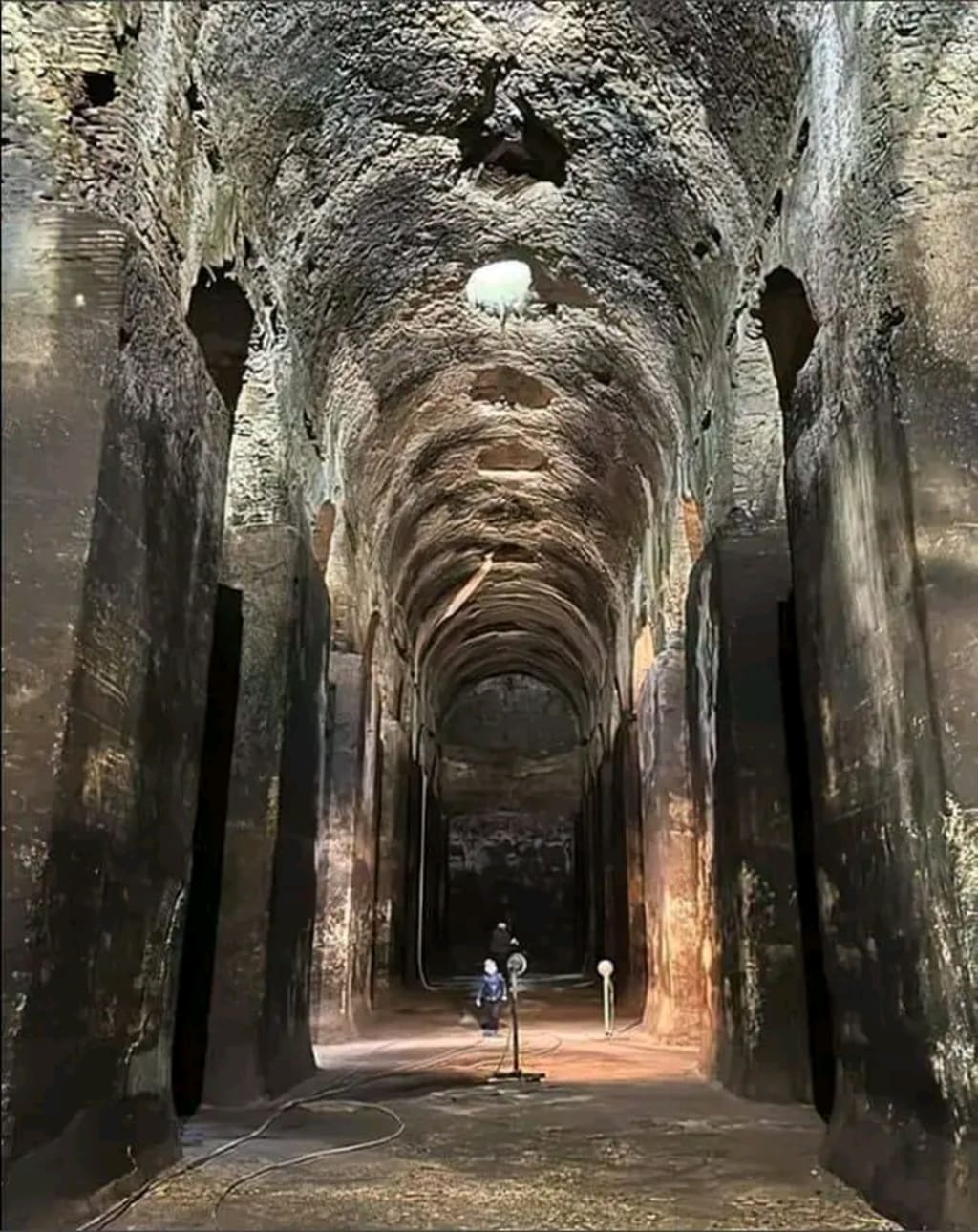
Nestled beneath the streets of Albano Laziale, a town near Rome, lies one of the most extraordinary yet lesser-known marvels of Roman engineering: the Cisternone Romano, or Roman Cistern. This massive underground water reservoir, built almost 1,800 years ago, stands as a silent witness to the ingenuity, craftsmanship, and architectural prowess of ancient Roman builders. Constructed between the 2nd and 3rd centuries AD under the direction of Emperor Septimius Severus, the Roman Cisternone was designed to supply water to the camp of the Second Parthian Legion. However, its significance transcends its functional origins, becoming an enduring monument to the might and sophistication of the Roman Empire.
The Historical Context
The Roman Empire is renowned for its incredible feats of engineering, from roads and aqueducts to amphitheaters and baths. At the time of its construction, the Roman Cisternone was part of a larger infrastructure network aimed at supporting military encampments. Albano Laziale, a town close to Rome, housed the Second Parthian Legion, a key military force stationed there to protect the empire’s eastern borders. Emperor Septimius Severus, recognizing the importance of ensuring a reliable water supply for his soldiers, commissioned the construction of this vast cistern to store and distribute water.
What makes the Roman Cisternone truly fascinating is not just its purpose but also the way it was built. The Romans were masters of adapting to the natural landscape and employing innovative methods to meet their needs. This cistern, shaped like an irregular quadrilateral, is a brilliant fusion of rock excavation and brick construction. Measuring approximately 30 meters by 50 meters, the structure covers an area larger than a standard football field and boasts a staggering water capacity of around 10,000 cubic meters, or roughly 2.64 million gallons.
The Architecture and Design
The cistern is divided into five naves, supported by 36 sturdy pillars that ensure the structure's stability. These naves, or aisles, give the interior an almost cathedral-like appearance, evoking awe and respect for the Roman architects and engineers who designed it. The meticulous craftsmanship is evident in every aspect of the construction, from the materials used to the attention to detail in its layout.
The walls of the cistern are coated with a layer of waterproof plaster, a technique that has helped preserve the integrity of the reservoir over the centuries. The use of waterproofing materials was a hallmark of Roman engineering, allowing many of their structures to remain functional long after the fall of the empire. In fact, the Roman Cisternone continues to serve its original purpose to this day—remarkably, the channels that convey water from springs along Lake Albano remain operational, supplying water to the local area.
This continued functionality is a testament to the foresight and skill of Roman builders. They not only constructed structures meant to last but also took care to ensure that their creations could be maintained over the long term. The cistern’s design was highly practical, making it easier for the Romans to manage their water supply, even during times of scarcity. Water from the cistern would have been used for everything from drinking and bathing to supplying nearby baths and fountains.
Roman Engineering Prowess
The Roman Cisternone is more than just a reservoir—it is a living example of the engineering achievements that helped Rome maintain its dominance over the Mediterranean world. Romans were experts at building infrastructure that solved practical problems, and their work in water management was second to none. The cistern’s massive capacity, sturdy pillars, and carefully crafted waterproofing layer are just some of the many features that showcase their technological prowess.
In an era when modern technology was non-existent, the Romans relied on mathematical precision, advanced understanding of hydraulics, and innovative building materials like Roman concrete. This combination of factors allowed them to create infrastructure that has endured for centuries. The Romans understood how to manipulate gravity to carry water across vast distances through aqueducts, and they applied the same principles to underground reservoirs like the Cisternone.
Preservation and Legacy
Despite nearly two millennia of use, the Roman Cisternone remains remarkably well-preserved. Its longevity can be attributed to the high-quality materials used in its construction, as well as the Romans' ability to create self-sustaining systems. The waterproof plaster lining the walls, for instance, has prevented water from seeping into the surrounding earth, preserving the cistern’s integrity.
Today, the Roman Cisternone stands as a significant historical monument. It has become a destination for tourists and scholars alike, all of whom marvel at its scale and the ingenuity of those who built it. As visitors walk through the underground chambers, it’s easy to imagine the Roman soldiers who once relied on this reservoir for survival, and to appreciate how such an ancient structure continues to serve a modern community.
Conclusion
The Roman Cisternone of Albano Laziale is more than just an ancient reservoir. It is a tangible reminder of the engineering brilliance that defined the Roman Empire. Built nearly 1,800 years ago, it has withstood the test of time, continuing to function as a water supply system while also serving as a monument to human achievement.
For anyone interested in history, architecture, or engineering, the Roman Cisternone offers a rare glimpse into the past. It stands as a symbol of Roman innovation, illustrating how their technological advancements have shaped the modern world. In a sense, the Roman Cisternone is a bridge between ancient Rome and the present, reminding us that even the oldest feats of engineering can still hold relevance today.
About the Creator
Keep reading
More stories from Deji Akomolafe and writers in History and other communities.
The Timeless Doors of the Pantheon: Rome’s Bronze Marvels
Rome, a city rich with history, is home to countless architectural wonders. Among them, the Pantheon stands tall as a testament to the grandeur of ancient Roman engineering and design. Known for its majestic dome and awe-inspiring rotunda, the Pantheon has been a subject of fascination for centuries. However, one of its lesser-discussed yet equally remarkable features is its ancient doors—massive bronze portals that have stood the test of time. These doors, dating back to 115 AD, are not only some of the oldest in the world but are still functional today, bearing a unique legacy from the reign of Emperor Hadrian.
By Deji Akomolafeabout a year ago in History
Mystery of the Egyptian Pyramids: Has the Most Complex Puzzle Finally Been Solved?
For centuries, the construction of the great pyramids of Egypt has been one of the world’s most fascinating historical mysteries. Towering above the desert sands near the ancient city of Giza, these monumental structures have puzzled historians, engineers, and archaeologists alike. How could a civilization that existed more than 4,500 years ago build such massive and precisely aligned structures without modern machinery?
By Irshad Abbasi 6 days ago in History




Comments
There are no comments for this story
Be the first to respond and start the conversation.