
Mozart’s Kitchen at No. 9 Getreidegasse: A Glimpse Into the Daily Life of a Musical Prodigy
Old kitchen

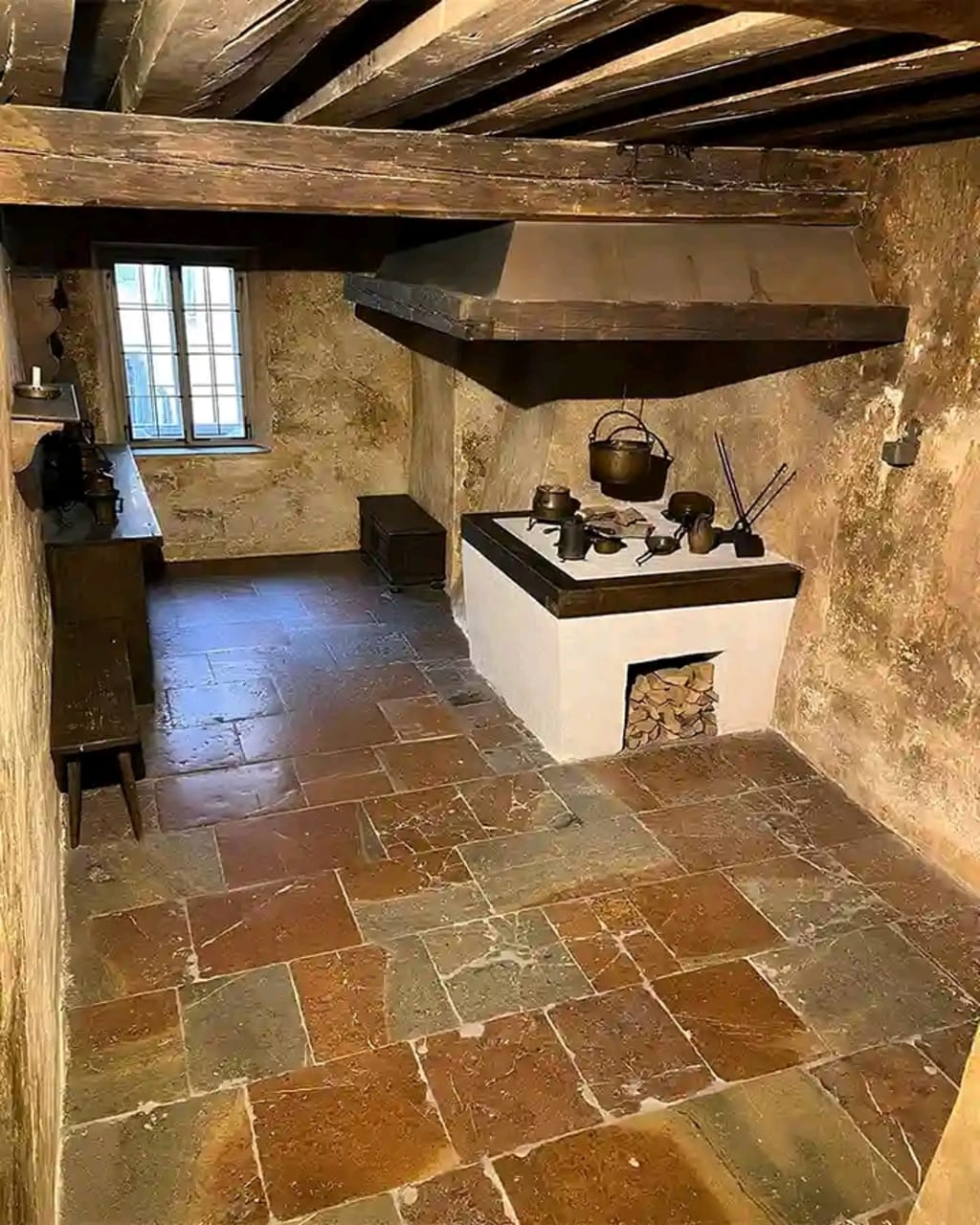
In the heart of Salzburg, Austria, tucked away in the narrow and picturesque Getreidegasse, stands a house that has become a symbol of one of the greatest musical geniuses the world has ever known. No. 9 Getreidegasse is not just any house—it is the birthplace of Wolfgang Amadeus Mozart. Born on January 27, 1756, in this very building, Mozart spent the early years of his life within these walls, and it is here that the foundation of his extraordinary musical career was laid.
While much attention is often given to the grand concert halls where Mozart performed or the compositions he penned, there is something particularly special about visiting the more intimate spaces of his childhood home, such as the kitchen. This simple room offers a rare and personal glimpse into the daily life of the young prodigy and his family. Standing in this kitchen, it is easy to imagine the Mozart family gathered around, sharing meals and conversations, while young Wolfgang grew up in the warmth of a home that nurtured his immense talents.
A Humble Beginning
Though today, Mozart is celebrated worldwide as a musical genius, his family’s life was relatively modest. Leopold Mozart, Wolfgang’s father, was a court musician and composer in Salzburg, and while the family was respected in musical circles, they were not particularly wealthy. Their apartment at No. 9 Getreidegasse, where they lived from 1747 to 1773, reflected their social standing—spacious enough to be comfortable, but not lavish by any means.
The kitchen was one of the most important rooms in this household, as it was in many homes of the time. It was the center of daily life, where food was prepared, meals were shared, and family members came together. In the 18th century, kitchens were simple spaces, without the modern appliances and conveniences we take for granted today. Cooking was done over an open fire, and ingredients were sourced from local markets or grown in small gardens. The warmth from the hearth provided heat during the cold Salzburg winters, and the kitchen became a communal space where the family would gather to escape the chill.
For young Wolfgang, the kitchen would have been a familiar and comforting place. It is not hard to imagine him, perhaps as a small child, sitting by the fire while his mother, Anna Maria, prepared meals or his father, Leopold, discussed music with friends and colleagues. In this humble setting, the early seeds of Mozart’s musical genius were being nurtured by the environment around him.
The Role of the Kitchen in Mozart’s Family Life
The kitchen was not just a place for cooking and eating—it was a social hub for the Mozart family. Leopold and Anna Maria raised their children, Wolfgang and his sister Maria Anna (Nannerl), in a tight-knit family atmosphere where music was ever-present. Leopold, a talented musician and composer in his own right, recognized Wolfgang’s exceptional talents from an early age and made it a priority to foster those gifts.
Family life in the Mozart household revolved around music, and it is likely that even in the kitchen, there were moments of music-making. In many 18th-century homes, the kitchen was also a place where simple instruments, such as flutes or violins, might be played while meals were being prepared. Given the Mozart family’s deep musical roots, it is easy to picture Leopold discussing compositions or humming melodies with his children as they gathered for meals. This was a family that lived and breathed music, and the kitchen, as the heart of the home, would have been a natural setting for such moments.
Wolfgang’s Early Musical Development
It is almost impossible to comprehend the sheer genius of young Wolfgang Amadeus Mozart. By the age of three, he was already showing signs of musical talent, and by the time he was five, he was composing his own pieces. His early exposure to music, especially through his father’s teachings, played a crucial role in his development. However, the environment in which he grew up—his home and, more specifically, the kitchen—also contributed to shaping his early experiences.
The kitchen at No. 9 Getreidegasse was not just a backdrop to daily life but a place where the young Wolfgang’s mind would have absorbed the rhythms of family life, the conversations of adults, and the sounds of his sister practicing her harpsichord. The domestic routines and family interactions that took place in this kitchen would have influenced his creativity and his understanding of the world. It is remarkable to think that the foundations of some of the greatest musical works ever composed were being formed in such a simple and unassuming space.
Standing in Mozart’s Kitchen Today
Today, No. 9 Getreidegasse has been transformed into a museum dedicated to the life and legacy of Wolfgang Amadeus Mozart. Visitors from around the world come to walk through the rooms where Mozart once lived, including the famous kitchen. Standing in this space, visitors are transported back in time, imagining the daily routines of the Mozart family and the young prodigy who would grow up to change the course of music history.
The kitchen, though modest, holds a special significance. It is a place that reminds us of Mozart’s humanity—the fact that this extraordinary genius once lived a life not so different from many others of his time. In this room, we can feel a connection to the young Wolfgang, not as the legendary composer, but as a child growing up in a loving and supportive family, surrounded by the warmth and simplicity of home life.
Conclusion
The kitchen at No. 9 Getreidegasse in Salzburg offers more than just a glimpse into the domestic life of the Mozart family—it provides a window into the early influences that shaped one of history’s greatest composers. In this modest room, the daily routines of family life unfolded, and amid the simplicity of meals and conversations, young Wolfgang Amadeus Mozart’s genius was quietly nurtured. Today, this kitchen stands as a reminder that even in the humblest of settings, extraordinary talent can emerge, forever changing the world.
About the Creator
Keep reading
More stories from Deji Akomolafe and writers in History and other communities.
The Roman Cisternone: A Testament to the Ingenuity of Ancient Roman Engineering
Nestled beneath the streets of Albano Laziale, a town near Rome, lies one of the most extraordinary yet lesser-known marvels of Roman engineering: the Cisternone Romano, or Roman Cistern. This massive underground water reservoir, built almost 1,800 years ago, stands as a silent witness to the ingenuity, craftsmanship, and architectural prowess of ancient Roman builders. Constructed between the 2nd and 3rd centuries AD under the direction of Emperor Septimius Severus, the Roman Cisternone was designed to supply water to the camp of the Second Parthian Legion. However, its significance transcends its functional origins, becoming an enduring monument to the might and sophistication of the Roman Empire.
By Deji Akomolafeabout a year ago in History
Albert Einstein: The Mind That Changed the Universe
Albert Einstein was not born a legend. When he entered the world on March 14, 1879, in the quiet German city of Ulm, nothing about his early life suggested that he would one day transform science forever. In fact, his beginnings were remarkably ordinary—and in some ways, difficult. As a child, Einstein spoke slowly, so slowly that his parents worried something might be wrong. Teachers considered him distracted and stubborn, a boy who questioned too much and obeyed too little. Yet hidden beneath that quiet exterior was a restless, powerful curiosity that would later reshape the universe itself.
By The best writer 4 days ago in History




Comments
There are no comments for this story
Be the first to respond and start the conversation.