
The Sweet Track: A 5,830-Year-Old Window into Neolithic Ingenuity
Old Civilization

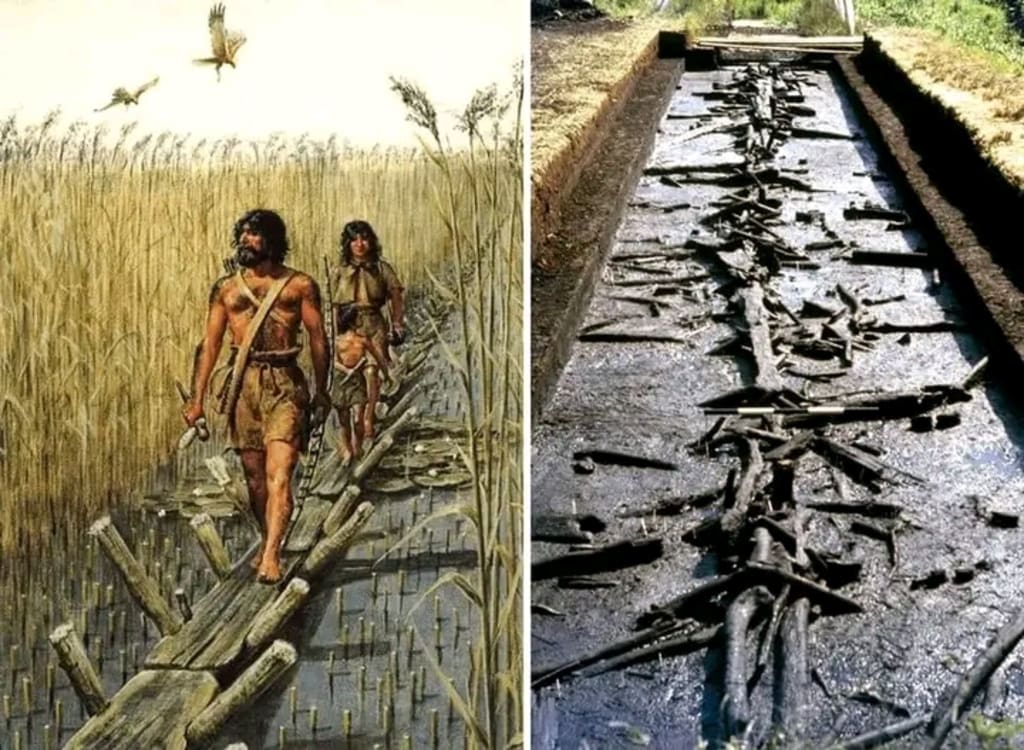
Tucked away in the marshy Somerset Levels of southwest England lies one of the most remarkable archaeological discoveries of the 20th century: the Sweet Track. This ancient Neolithic timber walkway, unearthed in 1970, is not only a marvel of prehistoric engineering but also one of the oldest known wooden trackways in the world. Dating back an astonishing 5,830 years, the Sweet Track offers a glimpse into a time when humans were transitioning from nomadic lifestyles to more settled agricultural communities. It stands as a testament to the ingenuity and resourcefulness of our distant ancestors.
The Discovery and Significance of the Sweet Track
The Sweet Track was discovered by chance in 1970 during peat excavations in the Somerset Levels, a low-lying area known for its wetlands and bogs. Local archaeologist Ray Sweet, after whom the track is named, realized the significance of the timbers that had been exposed by the digging. Subsequent investigations revealed that these wooden planks and poles formed a long, continuous pathway stretching across the boggy landscape.
Radiocarbon dating confirmed the remarkable age of the Sweet Track, pinpointing its construction to around 3807-3806 BC. This places the track in the Neolithic period, a time when the first farmers were cultivating crops and raising livestock in Britain. The discovery of the Sweet Track not only provided new insights into the technological abilities of Neolithic societies but also gave archaeologists a unique opportunity to study well-preserved organic material from this era, something rarely found in archaeological sites.
A Dry Path Through the Wetlands
The Somerset Levels, then as now, were a marshy, waterlogged landscape. For the Neolithic people living in the area, this made travel across the wetlands difficult and dangerous, especially during periods of heavy rain or flooding. The Sweet Track was part of a broader network of timber walkways built to provide a dry and stable path over the marshes, connecting settlements and facilitating movement across the landscape.
The track itself was constructed using timber planks laid across wooden poles that had been driven into the soft ground. The builders used a variety of tree species, including oak, ash, lime, and hazel, to create a sturdy structure that could support the weight of people walking across the wetland. The craftsmanship involved in its construction is impressive, especially considering that Neolithic people lacked metal tools. Instead, they relied on stone axes to fell trees and shape the timbers.
The Sweet Track extended for around 2 kilometers (1.2 miles), making it one of the longest known prehistoric timber trackways. Its careful construction and alignment suggest that the Neolithic builders had a good understanding of both the landscape and the materials they were working with, and they likely possessed significant knowledge of carpentry and engineering.
Life in Neolithic Somerset
The people who built and used the Sweet Track lived during a period of significant change in human history. The Neolithic, or New Stone Age, marked the transition from a hunter-gatherer lifestyle to one based on agriculture and permanent settlements. In Somerset, this shift would have been particularly challenging due to the region’s waterlogged environment, but the construction of trackways like the Sweet Track demonstrates that these early farmers were adapting to their surroundings in creative and innovative ways.
Excavations around the track have uncovered a wealth of artifacts that provide clues about the daily lives of the people who used it. These finds include flint tools, pottery shards, wooden containers, and even plant remains, offering a snapshot of the types of resources and materials that were available to Neolithic communities in the Somerset Levels. The discovery of human footprints preserved in the peat near the track adds a poignant reminder of the individuals who once walked this ancient path.
Interestingly, the Sweet Track was built directly on top of an earlier trackway, known as the Post Track, which suggests that the area had been an important route for some time. This raises intriguing questions about the role of these trackways in Neolithic society—were they purely functional, or did they hold some symbolic or ceremonial significance as well?
Preservation in the Peat
One of the reasons the Sweet Track has survived for nearly six millennia is the unique environment of the Somerset Levels. The waterlogged conditions of the peat bogs create an oxygen-poor environment that prevents the decay of organic materials like wood. As a result, the wooden timbers of the Sweet Track were exceptionally well-preserved when they were discovered, allowing archaeologists to study them in detail.
Peat extraction, however, poses a significant threat to the preservation of the trackway. As the peat is removed and the water table drops, the once-protected timbers are exposed to air, causing them to dry out and decay rapidly. Efforts have been made to conserve sections of the Sweet Track, but much of it has already been lost to natural decay and human activity.
The Legacy of the Sweet Track
The discovery of the Sweet Track has provided invaluable insights into Neolithic technology, society, and the relationship between humans and their environment. It serves as a reminder of the ingenuity of our ancestors, who were able to overcome the challenges of their environment using the materials and tools available to them.
Today, the Sweet Track is recognized as a significant piece of cultural heritage, not only for the people of Somerset but for the world. It stands as one of the earliest examples of large-scale human engineering and a testament to the resourcefulness of Neolithic societies. Though much of the trackway may now be hidden beneath the ground, its legacy endures, offering us a tangible connection to a distant past and a deeper understanding of the lives of the people who once walked its ancient planks.
About the Creator
Keep reading
More stories from Deji Akomolafe and writers in History and other communities.
The Ingenious "Snake Bridge" of the Macclesfield Canal: A Testament to 19th-Century Engineering
The Macclesfield Canal, which opened in 1831, played a crucial role in British industry during the 19th century, facilitating the transportation of goods and resources across northern England. A distinctive and innovative feature of this canal system is the "snake bridge," a clever engineering solution designed to allow horses to continue towing barges without the need to unhitch or interrupt their journey. These bridges are not only functional marvels of their time but also represent the ingenuity and adaptability of British canal engineering.
By Deji Akomolafeabout a year ago in History
The Year 1926 in Review: Fun Facts, Trivia, and Historic Highlights
This quick read is a collection of fun facts, trivia, and historic events from the year 1926. Discover the year’s top news stories, most influential people, sports facts, entertainment trivia, grocery prices, and much more.
By Gregory DeVictor3 days ago in History
Early March 2026: 4 Goals Accomplished
It's early March and I've now accomplished my 4th writing goal for the year of 2026. Before diving into the behind-the-scenes of it... why not tell you up front what that accomplishment was? I was published in a 2nd publication for this year. Published in Helix Literary Magazine out of Central Connecticut State University. You can read it for free right now!
By Stephen Kramer Avitabile7 days ago in Writers




Comments
There are no comments for this story
Be the first to respond and start the conversation.