Aqib Hussain
Stories (196)
Filter by community
UK Will Not Be Joining Trump’s ‘Board of Peace’ for Now, Says Yvette Cooper. AI-Generated.
The UK has decided not to join U.S. President Donald Trump’s “Board of Peace” initiative — at least not yet. Yvette Cooper, the UK’s Foreign Secretary, confirmed this during the World Economic Forum in Davos, citing concerns over Russian President Vladimir Putin’s potential involvement. This announcement highlights growing tensions in global politics, as Western nations weigh their response to international peace initiatives that include controversial figures. What Is the ‘Board of Peace’? President Trump introduced the “Board of Peace” at the 2026 World Economic Forum. Originally designed to oversee reconstruction and governance in Gaza, it has quickly expanded into a broader conflict resolution forum. The board aims to bring together world leaders, business figures, and diplomats to work on post-conflict strategies, with the potential to influence peace negotiations beyond just the Middle East. Trump has pitched it as a prestigious, high-level body, almost like an alternative to the United Nations. However, its powers, structure, and authority are still unclear, raising questions about how it might overlap with existing international institutions. Why the UK Is Hesitant Yvette Cooper stressed that while the UK supports peace efforts, it is not ready to join the board yet. She emphasized concerns over Putin’s involvement, noting that it would be problematic for a leader actively involved in conflict in Ukraine to be part of a peace initiative. “We have concerns about President Putin being part of something that talks about peace while his forces are still active in Ukraine,” Cooper said. Other issues include legal and diplomatic questions about the board’s charter and the roles of participating countries. For London, joining prematurely could risk legitimizing decisions without proper international oversight. The Diplomatic Landscape The UK is not alone in its caution. Other Western countries, including France, Sweden, and Norway, have also declined to join the board at this stage. Their reasoning is similar: while they support peace efforts, they do not want to see a new body undermine established institutions like the United Nations. Meanwhile, Trump has invited several prominent figures to the board, including U.S. Secretary of State Marco Rubio, adviser Jared Kushner, and former UK Prime Minister Tony Blair. Critics argue that the board leans heavily toward U.S. influence, raising doubts about its impartiality. UK Foreign Policy Considerations The UK’s decision reflects its ongoing balancing act between: Supporting peace in the Middle East, Upholding Ukrainian sovereignty, and Ensuring international law is respected. Cooper highlighted that the board’s treaty raises broader legal issues, and the UK wants to ensure alignment with existing international frameworks before committing. This cautious approach also signals London’s long-term diplomatic strategy: engage in global initiatives without compromising principles or legitimacy. What’s Next for the Board of Peace? For now, the UK is stepping back, but that doesn’t mean it will permanently reject participation. Dialogue with allies is ongoing, and the UK remains interested in supporting peace initiatives — just not through a board that includes controversial leaders or unresolved legal questions. Trump, meanwhile, continues to push his initiative in Davos, with both support and criticism from the international community. Whether the board will evolve into a credible global peace instrument or deepen divisions between countries remains to be seen. Takeaway The UK’s cautious approach highlights the complexities of modern diplomacy. Supporting peace is easy in principle, but navigating global politics — especially when controversial figures are involved — requires careful consideration. For now, Yvette Cooper and the UK are making it clear: peace initiatives must be credible, lawful, and legitimate. Anything less risks undermining both international trust and long-term global stability. This blog format keeps the content easy to read, engaging, and structured for online audiences, while staying informative and authoritative.
By Aqib Hussainabout a month ago in The Swamp
US Set to Quit World Health Organization: What It Means for Global Health. AI-Generated.
The United States is officially leaving the World Health Organization (WHO), a move that has sent ripples through international health and politics. On January 22, 2026, after a year-long notice period, the U.S. formally exited the WHO — a decision driven by political priorities, criticisms of the organization, and a desire to focus on national health initiatives.
By Aqib Hussainabout a month ago in The Swamp
US Dollar Buoyed by Trump’s Greenland About-Face; Aussie Jumps After Jobs Data. AI-Generated.
Global currency markets had plenty to digest this week as geopolitics and economic data collided in dramatic fashion. The U.S. dollar regained strength after former President Donald Trump unexpectedly softened his stance on Greenland-related trade threats, while the Australian dollar surged following a surprisingly strong employment report. These two developments highlight how quickly sentiment can shift in foreign exchange markets — and why traders keep one eye on political headlines and the other on hard economic numbers. Let’s break down what happened and why it matters. Trump’s Greenland Reversal Supports the U.S. Dollar Earlier this week, markets were rattled by comments from Donald Trump suggesting the United States could impose tariffs on European NATO allies unless they cooperated with U.S. interests involving Greenland. The remarks reignited concerns about trade wars, diplomatic rifts, and broader global instability. Such uncertainty typically drives investors toward safe-haven assets like gold, the Swiss franc, and the Japanese yen — while putting pressure on risk-sensitive currencies. However, sentiment shifted sharply after Trump walked back the tariff threat during his appearance at the World Economic Forum in Davos. He indicated that tariffs were no longer under consideration and that discussions were instead focused on a cooperative framework with NATO partners. While details remain vague, the market reaction was immediate. Traders viewed the change in tone as a de-escalation of geopolitical risk, which helped stabilize confidence and reduce fears of another major trade conflict. As a result, the U.S. dollar found support, holding gains against the euro and Swiss franc while giving investors a reason to scale back defensive positions. How Currency Markets Reacted The dollar’s renewed strength was most evident in its performance against traditional safe-haven currencies. The Swiss franc retreated from recent highs, and gold prices eased after touching record levels earlier in the week. The Japanese yen, meanwhile, continued to struggle. Already under pressure due to Japan’s ultra-loose monetary policy, the yen remained near record lows as investors anticipated no immediate tightening from the Bank of Japan. Political uncertainty in Japan, including a snap election and expansionary fiscal plans, only added to the currency’s weakness. Overall, the market response suggested a shift toward a risk-on environment, where investors are more willing to seek yield rather than hide in defensive assets. Australian Dollar Jumps on Strong Jobs Data While the U.S. dollar was buoyed by geopolitics, the Australian dollar (AUD) rallied for a completely different reason: strong economic fundamentals. Australia’s latest employment report delivered a significant upside surprise. Job creation far exceeded expectations, and the unemployment rate fell to a multi-month low. The data pointed to a labor market that remains resilient despite global economic headwinds. This was a major confidence boost for investors — and for the Australian dollar. Strong employment figures often signal rising wages and sustained consumer spending, which can increase inflationary pressure. That, in turn, raises the likelihood that the Reserve Bank of Australia (RBA) may adopt a more hawkish stance on interest rates. With markets already speculating about potential rate hikes at the RBA’s upcoming meeting, the data provided fresh justification for bullish AUD positions. Why Interest Rates Matter for Currencies Interest rates play a crucial role in currency valuation. Higher rates typically attract foreign investment, as global investors seek better returns on bonds and other fixed-income assets. The stronger-than-expected jobs report led traders to reassess their outlook for Australian monetary policy, pushing the Australian dollar to a 15-month high against the U.S. dollar and boosting it against the Japanese yen as well. In contrast to the U.S. dollar’s geopolitical support, the Aussie’s rally was rooted in domestic economic strength — a key distinction that makes its move potentially more sustainable if upcoming data remains solid. A Broader Shift Toward Risk Assets Together, Trump’s diplomatic retreat and Australia’s robust labor data helped fuel a broader risk-on mood across global markets. Equities across Asia-Pacific markets gained ground, commodity prices stabilized, and high-beta currencies like the Australian dollar benefited from renewed investor confidence. That said, analysts remain cautious. Political uncertainty can resurface quickly, and Trump’s Greenland comments — while softened — did not come with a concrete agreement. Similarly, employment data can be volatile from month to month, meaning future inflation or wage figures could still alter the RBA’s trajectory. What Investors Are Watching Next Looking ahead, several key factors could influence currency markets in the coming weeks: U.S. inflation and labor data, which will shape expectations for Federal Reserve policy Australian inflation figures, which could confirm or undermine the case for RBA rate hikes Global political developments, especially any renewed trade or diplomatic tensions For now, the takeaway is clear: markets are responding positively to reduced geopolitical tension and strong economic signals. Final Thoughts The recent movements in the U.S. dollar and Australian dollar underscore a fundamental truth of financial markets — perception matters as much as data. Trump’s Greenland about-face reduced immediate political risk, giving the dollar a lift, while Australia’s impressive jobs numbers strengthened confidence in the country’s economic outlook and sent the Aussie soaring. As always, the balance between politics, policy, and performance will determine whether these trends have staying power — or fade as quickly as they appeared.
By Aqib Hussainabout a month ago in The Swamp
Greenland’s Strategic Position in Seven Maps: Why Trump Wants the Island. AI-Generated.
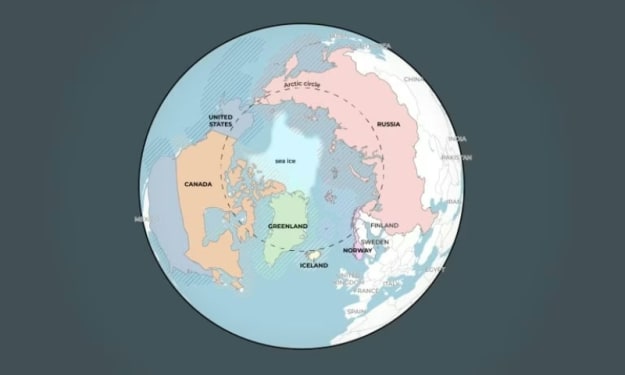
When Donald Trump first suggested buying Greenland, the world laughed. Memes spread faster than Arctic winds, and Denmark firmly rejected the idea. But beneath the headlines and humor lies a serious geopolitical reality: Greenland is one of the most strategically valuable pieces of land on Earth. Far from being just a frozen wilderness, Greenland sits at the crossroads of global security, emerging trade routes, military defense systems, and untapped natural resources. When you look at Greenland through a series of strategic maps, Trump’s interest — and America’s long-term focus — begins to make sense. Let’s explore seven maps that explain why Greenland matters and why Trump wants the island. 1. Greenland on the World Map: A Strategic Crossroads On a global map, Greenland dominates the North Atlantic and Arctic regions. Located between North America and Europe, it occupies a prime position along the shortest routes between major global powers. For military planners, geography is everything. Any aircraft, missile, or satellite traveling between Russia, Europe, and the United States often passes over or near Greenland. This makes the island a natural surveillance and defense hub — one the U.S. has relied on since World War II. Greenland isn’t remote; it’s central. 2. The GIUK Gap: NATO’s Northern Gateway Zoom into the North Atlantic, and another critical map emerges: the GIUK Gap — the maritime corridor between Greenland, Iceland, and the United Kingdom. During the Cold War, this gap was vital for tracking Soviet submarines moving from Arctic bases into the Atlantic. Today, with Russia once again expanding its Arctic military presence, the GIUK Gap has regained strategic importance. Control or influence over Greenland strengthens NATO’s ability to monitor naval movements, protect shipping lanes, and deter adversaries — a major reason Washington continues to prioritize the region. 3. Arctic Shipping Routes: The Ice Is Melting A map of the Arctic today looks very different than it did 50 years ago. Climate change is opening new sea lanes, including the Northwest Passage and the Northern Sea Route, dramatically shortening travel between Asia, Europe, and North America. Greenland sits right beside these emerging trade routes. As Arctic shipping becomes more viable, ports, refueling stations, and monitoring points near Greenland will become economically and strategically valuable. Any nation with influence over Greenland gains leverage in future global trade — a fact not lost on the U.S., Russia, or China. 4. Beneath the Ice: Greenland’s Resource Wealth Another map reveals what lies under Greenland’s ice: rare earth minerals, uranium, copper, gold, and possibly oil and gas. Rare earth elements are essential for modern technology — from smartphones and electric vehicles to advanced military hardware. Currently, China dominates the global supply. Greenland offers a potential alternative source, making it strategically important for countries looking to reduce dependency on foreign suppliers. As ice recedes, access to these resources becomes easier — turning Greenland into an economic prize as well as a strategic one. 5. Military Maps: The Importance of Pituffik Space Base One of the most critical maps highlights Pituffik Space Base (formerly Thule Air Base), the northernmost U.S. military installation. This base plays a key role in: Missile early-warning systems Space surveillance Ballistic missile defense From Greenland, the U.S. can detect potential missile launches from across the Arctic faster than from anywhere else. Trump has publicly linked Greenland’s importance to future missile defense plans, framing the island as essential to protecting the U.S. homeland. This isn’t speculative — it’s operational reality. 6. Arctic Power Competition: Russia and China A geopolitical map of the Arctic shows increasing activity from Russia and China. Russia has reopened Cold War-era bases, deployed advanced weapons, and expanded its Arctic infrastructure. China, calling itself a “near-Arctic state,” has invested heavily in Arctic research, mining, and shipping projects. Greenland sits between these ambitions. For the United States, maintaining influence over Greenland helps counter rivals in a region that is rapidly becoming a new arena for global power competition. 7. Political Boundaries: Greenland Isn’t for Sale The final map is political rather than military. Greenland is a self-governing territory within the Kingdom of Denmark, with its own parliament and growing push for independence. While Denmark handles defense and foreign policy, Greenlanders strongly oppose being “sold” to another country. Trump’s proposal sparked debate not just about geopolitics, but about sovereignty and self-determination. Greenland’s leaders made one thing clear: the island’s future belongs to its people. So, Why Does Trump Want Greenland? When these seven maps are viewed together, Trump’s interest becomes less shocking and more strategic. Greenland offers: A military advantage in missile defense and surveillance Control near critical Arctic shipping routes Access to valuable natural resources A strategic foothold in rising Arctic competition Greater influence over NATO’s northern defenses Trump’s blunt approach may have grabbed headlines, but the underlying logic reflects long-standing U.S. strategic thinking. Final Thoughts Greenland is no longer just an icy landmass at the top of the map. It is a strategic chess piece in a changing world — shaped by climate change, technological demand, and renewed great-power rivalry. Whether or not Greenland ever changes hands, one thing is certain: the world’s attention is now firmly fixed on the Arctic, and Greenland sits right at its center.
By Aqib Hussainabout a month ago in The Swamp
Stocks Rebound After Trump Rules Out Military Action on Greenland: Live Updates. AI-Generated.
Global stock markets rallied Wednesday after a turbulent couple of days, following fears over U.S. President Donald Trump’s controversial interest in Greenland. Traders had been spooked by speculation about military action to acquire the Arctic territory — but Trump clarified that the U.S. would not pursue force, calming investors.
By Aqib Hussainabout a month ago in The Swamp
Israel Bulldozes UNRWA Headquarters in East Jerusalem. AI-Generated.
Earlier this week, news broke that Israeli forces demolished the United Nations Relief and Works Agency for Palestine Refugees in the Near East (UNRWA) headquarters in East Jerusalem’s Sheikh Jarrah neighborhood. The heavy machinery razed buildings that were once key to UNRWA’s work, sparking international criticism and raising serious questions about the future of humanitarian aid in the region.
By Aqib Hussainabout a month ago in The Swamp
Satellite Images of the Secretive US Military Base at the Center of a New Trump Controversy. AI-Generated.
In a world where satellites can capture images from thousands of miles above Earth, secrecy is harder to maintain than ever. Recently, satellite images of a highly secretive U.S. military base have reignited global debate—this time placing former U.S. President Donald Trump at the center of a new political and geopolitical controversy.
By Aqib Hussainabout a month ago in The Swamp
Trump to Address Davos World Economic Forum as America’s Allies Push Back Against His Bid to Take Greenland. AI-Generated.
When former U.S. President Donald Trump takes the stage at the World Economic Forum (WEF) in Davos, the spotlight will not be solely on economic recovery, innovation, or global markets. Instead, his appearance is overshadowed by a controversial and highly unusual geopolitical ambition — his renewed push for U.S. control over Greenland. What might have been a routine high-profile address has become a diplomatic stress test for America’s alliances, particularly across Europe. As Trump prepares to speak to world leaders, business elites, and policymakers, his stance on Greenland has sparked resistance, debate, and growing concern about the future of transatlantic cooperation. Why Greenland Matters More Than Ever At first glance, Greenland may seem like an unlikely centerpiece of global controversy. However, beneath its icy terrain lies immense strategic value. The Arctic region is becoming increasingly important due to melting ice routes, untapped natural resources, and its proximity to Russia and China. Trump has repeatedly framed Greenland as “essential to national and world security,” arguing that U.S. control would strengthen Western defenses in the Arctic. Supporters of this view claim that increased American presence could counter rising influence from rival powers. But there’s a problem — Greenland is not for sale, and both Denmark and Greenland’s autonomous government have made that abundantly clear. Allies Push Back: Sovereignty Over Strategy America’s closest allies have responded with unusually firm resistance. Denmark has rejected any discussion of transferring sovereignty, emphasizing that Greenland’s future belongs to its people alone. Greenlandic leaders have echoed this sentiment, with public demonstrations making local opposition impossible to ignore. European leaders attending Davos have also taken a united stance. French President Emmanuel Macron, European Commission President Ursula von der Leyen, and other senior officials have highlighted the importance of international law and territorial sovereignty, implicitly criticizing coercive diplomacy. This moment marks a shift. Traditionally, allies might quietly negotiate behind closed doors. This time, opposition is public — and intentional. Economic Pressure Enters the Equation Adding fuel to the fire are Trump’s threats of economic retaliation. Reports suggest that he has floated the idea of imposing tariffs on European nations that oppose U.S. ambitions regarding Greenland. Such tactics have alarmed European governments. Many see the use of trade leverage to influence territorial matters as a dangerous precedent. In response, the European Union has begun discussing countermeasures, including significant tariffs on American goods. Financial markets have reacted cautiously, with investors worried that what started as a territorial dispute could escalate into a broader trade confrontation between major economic powers. Davos: From Economic Dialogue to Diplomatic Drama The World Economic Forum is designed to foster cooperation on global challenges — not amplify geopolitical rifts. Yet Trump’s upcoming speech has shifted conversations across the Swiss resort town. NATO officials have urged restraint, warning that internal conflict weakens collective security at a time when global instability is already high. Several leaders have quietly expressed concern that aggressive rhetoric toward an ally could undermine the very foundations of NATO unity. Behind closed doors, diplomats are working overtime to prevent the Greenland issue from spilling into long-term damage to alliances built over decades. Security vs. Political Theater Critics argue that Trump’s Greenland push is as much about political messaging as it is about strategy. His blunt style and willingness to challenge norms appeal strongly to his domestic base, particularly voters who favor assertive foreign policy. However, allies worry that treating sovereignty as a negotiable asset — especially under economic pressure — risks destabilizing international norms. Some European leaders have gone as far as warning that such actions could erode trust within NATO itself. The concern is not just about Greenland, but about what comes next. Global Reactions Beyond Europe The ripple effects of this dispute extend far beyond the Atlantic. Canada has warned that the rules-based international order is under strain, while other global powers are watching closely. Russia and China, both active in Arctic affairs, have seized the opportunity to criticize Western unity, portraying the dispute as evidence of internal fractures among U.S. allies. For them, the situation is both a diplomatic opportunity and a strategic advantage. What to Expect from Trump’s Davos Speech All eyes are now on Trump’s address. Will he soften his stance to reassure allies, or double down on his vision for U.S. dominance in the Arctic? If history is any guide, Trump is unlikely to back away quietly. His speech may blend economic optimism with hardline geopolitical messaging — a combination that could either open the door to negotiation or deepen existing rifts. One thing is certain: the conversation around Greenland is no longer hypothetical. It has become a defining issue in global diplomacy. Final Thoughts Trump’s Davos appearance is more than just another headline moment. It reflects a changing world where economic power, security concerns, and national sovereignty increasingly collide. Whether this dispute ends in compromise or confrontation, it has already reshaped discussions at one of the world’s most influential forums. Greenland, once a peripheral topic, now sits at the heart of a debate about alliances, power, and the future of global cooperation. As leaders leave Davos, the real question remains — can unity survive ambition?
By Aqib Hussainabout a month ago in The Swamp
Russia Cheers the Growing NATO Rift Over Greenland. AI-Generated.
Geopolitics doesn’t always play out on battlefields. Sometimes, it unfolds through disagreements, diplomatic snubs, and conflicting priorities among allies. One such moment is currently playing out over Greenland — and Russia is watching with visible satisfaction. What may seem like a remote Arctic issue has evolved into a revealing test of NATO unity. As tensions rise between the United States and European allies over Greenland’s future, Russia has seized the opportunity to amplify the cracks, portraying the situation as proof that NATO is weaker and more divided than it wants the world to believe. How Greenland Became a Flashpoint Greenland, an autonomous territory under Denmark, has long been strategically important due to its location between North America and Europe. Rich in natural resources and critical for Arctic military positioning, it has increasingly drawn global attention as climate change opens new shipping routes and resource opportunities. The controversy intensified after U.S. President Donald Trump publicly revived the idea of acquiring Greenland, arguing it was necessary for American national security. While Washington framed the proposal as a strategic move, Denmark and several European NATO members saw it as a breach of sovereignty and alliance norms. The result? A public disagreement within NATO — exactly the kind of situation Russia thrives on. Russia’s Public Delight at NATO’s Discomfort Russia’s response was swift and unmistakable. Senior Russian officials and state media openly framed the dispute as a sign of NATO’s internal crisis. Foreign Minister Sergey Lavrov suggested the Greenland issue exposed contradictions within the alliance, even hinting that NATO members were beginning to act against one another. From Moscow’s perspective, this is more than diplomatic drama. NATO unity has long been one of Russia’s greatest strategic obstacles. Any visible fracture, especially one involving the United States and its closest European partners, is seen as a geopolitical win. Russian media outlets have amplified the narrative, portraying NATO as disorganized, hypocritical, and incapable of resolving its own disputes — a message aimed not only at Western audiences but also at countries watching from the sidelines. The Arctic Narrative Russia Is Pushing Interestingly, while celebrating NATO’s discord, Russia has also pushed back against Western claims that Moscow poses a growing Arctic threat. Russian officials argue that NATO exaggerates Russian ambitions in the region to justify militarization and increased U.S. presence. By positioning itself as a “rational” Arctic actor, Russia attempts to flip the script — presenting NATO as the destabilizing force while framing itself as a defender of regional balance. This messaging plays well domestically and resonates internationally among countries skeptical of Western military expansion. Yet, this calm exterior masks deeper strategic interests. Why Russia Is Both Happy and Cautious Despite its public enthusiasm, Russia has reason to be uneasy. Greenland’s strategic value means that any shift in control or influence could significantly alter Arctic power dynamics. If the United States were to gain greater control or expand its military footprint there, it could limit Russia’s maneuverability in the region. Russia has invested heavily in Arctic infrastructure, reopening Cold War–era bases, expanding its icebreaker fleet, and asserting control over northern shipping routes. A stronger U.S. presence in Greenland could complicate those ambitions. In essence, Russia enjoys NATO’s internal conflict — but not the potential long-term consequences of increased American dominance in the Arctic. Europe Pushes Back to Preserve Unity European NATO members have responded by doubling down on solidarity with Denmark. Countries like France, Germany, and Norway have emphasized that Greenland is already protected under NATO’s collective defense framework. Military deployments and joint exercises in the region send a clear signal: Europe will not allow internal disagreements to undermine alliance security. European leaders have also criticized economic pressure tactics linked to the Greenland dispute, warning that such moves risk eroding trust within the alliance. Behind the scenes, damage control is underway. NATO officials are keenly aware that public division plays directly into Russia’s hands. Why This Rift Matters Beyond the Arctic The Greenland dispute highlights a broader challenge facing NATO — maintaining cohesion in a world where strategic priorities are shifting rapidly. While Russia didn’t create the rift, it is expertly exploiting it. For Moscow, the goal is not necessarily immediate territorial gain but long-term influence. A divided NATO is less capable of coordinated action, whether on sanctions, military deterrence, or support for Ukraine and Eastern Europe. This situation also serves as a warning. If allies fail to resolve disputes internally, external rivals will step in to shape the narrative — and potentially the outcome. Final Thoughts Russia’s reaction to the NATO rift over Greenland reveals a familiar strategy: celebrate division, amplify disagreement, and position itself as the beneficiary of Western discord. While the Arctic island may seem distant, the implications of this dispute stretch far beyond its icy shores. For NATO, the challenge is clear — unity is not optional. In a world of rising geopolitical competition, even symbolic fractures can have real consequences. And as long as those cracks remain visible, Moscow will be watching — and smiling.
By Aqib Hussainabout a month ago in The Swamp
“You’ll Find Out,” Trump Says on Greenland Takeover Strategy. AI-Generated.
When former U.S. President Donald Trump says, “You’ll find out,” it rarely signals the end of a conversation. Instead, it usually marks the beginning of speculation, controversy, and wall-to-wall media coverage. His recent comment regarding a potential Greenland takeover strategy is no exception. Once again, Trump has revived a topic that stunned the world during his presidency—and this time, he’s being even more enigmatic. Greenland, the world’s largest island, has long been strategically important, but Trump’s renewed interest raises questions about geopolitics, climate change, and America’s global ambitions. What does he really mean? And could this idea ever move beyond rhetoric? A Remark That Reignited an Old Debate During a recent public appearance, Trump was asked about past discussions surrounding the United States acquiring Greenland. Rather than dismissing the idea as outdated or impractical, he responded with a familiar, teasing phrase: “You’ll find out.” The ambiguity was deliberate—and effective. This isn’t the first time Trump has floated the idea. In 2019, he openly proposed purchasing Greenland from Denmark, calling it a “large real estate deal.” At the time, Danish officials swiftly rejected the idea, calling Greenland “not for sale.” The proposal was widely mocked, but it also sparked serious conversations among policy experts. Now, years later, Trump’s renewed comment suggests the idea may not be as dead as critics assumed. Why Greenland Matters More Than Ever Greenland isn’t just an icy landmass with a small population. It occupies a critical position in the Arctic, a region growing in strategic importance due to melting ice caps and emerging shipping routes. As climate change reshapes the Arctic, access to natural resources such as rare earth minerals, oil, and gas is becoming increasingly valuable. The island is also strategically positioned between North America and Europe, making it a key military asset. The U.S. already maintains a military presence at Thule Air Base (now Pituffik Space Base), which plays a role in missile defense and space surveillance. In short, Greenland represents economic opportunity, military leverage, and geopolitical influence—all factors that align with Trump’s transactional approach to foreign policy. Trump’s Strategy: Real Policy or Political Theater? Critics argue that Trump’s comments are less about a realistic policy plan and more about maintaining relevance. His political style thrives on bold statements and strategic ambiguity. By refusing to explain what he means, Trump ensures that the spotlight stays firmly on him. Supporters, however, see something else: a willingness to challenge diplomatic norms and think big. They argue that past administrations failed to recognize Greenland’s long-term value and that Trump was simply ahead of his time. Whether this is a genuine strategy or rhetorical provocation remains unclear—but history suggests Trump rarely speaks without intent. Denmark and Greenland Push Back From Denmark’s perspective, the matter is settled. Greenland is an autonomous territory within the Kingdom of Denmark, and its leadership has consistently emphasized that its future will be decided by Greenlanders themselves. Greenland’s own government has also expressed discomfort with being treated like a commodity. Many residents favor greater independence, but not at the cost of becoming a geopolitical bargaining chip. Trump’s comments, while vague, risk reigniting diplomatic tensions—especially if they’re perceived as dismissive of Greenlandic self-determination. The Arctic Power Struggle Beyond Denmark and the U.S., other global powers are watching closely. Russia and China have expanded their Arctic presence in recent years, investing heavily in infrastructure, research, and military capabilities. For the United States, maintaining influence in the Arctic is increasingly seen as a national security priority. Trump’s remarks may reflect broader concerns within the U.S. political establishment, even if his delivery is unconventional. In that sense, “You’ll find out” could be less of a threat and more of a signal: America is not backing away from Arctic competition. What Comes Next? At this stage, there is no concrete plan, proposal, or negotiation underway. Trump’s statement offers more intrigue than information. Still, it highlights a larger truth: Greenland’s role on the world stage is growing, and discussions about its future are far from over. If Trump returns to power—or continues to influence Republican foreign policy—Greenland may once again become a talking point, if not a diplomatic flashpoint. Final Thoughts Trump’s cryptic comment about a Greenland takeover strategy fits neatly into his political persona—bold, unpredictable, and headline-grabbing. Whether it leads to meaningful action or remains symbolic, it underscores shifting global priorities in a warming, competitive Arctic world.
By Aqib Hussainabout a month ago in The Swamp
Explosion in a Restaurant in Afghan Capital Kills at Least 7 and Injures a Dozen More. AI-Generated.
It was supposed to be a normal evening at a busy Chinese restaurant in Kabul, Afghanistan. Families were dining, friends were chatting, and the streets of the Shahr‑e‑Naw district were alive with the usual hustle and bustle. But on January 19, 2026, everything changed. A powerful explosion tore through the restaurant, killing at least seven people and injuring more than a dozen others. This tragic event has shaken the city and reminded everyone that violence and insecurity are still very real in Afghanistan, even in areas once considered safe. The Blast That Shook Kabul The explosion happened near the kitchen area of the restaurant, which was popular with both Afghan locals and Chinese expatriates. Witnesses described chaos: debris scattered across the street, smoke rising from the building, and terrified diners trying to escape. Emergency services arrived quickly, rushing the wounded to nearby hospitals. Among the dead were six Afghan citizens and one Chinese national, with many others injured, including women and children. Some injuries were minor, but several victims needed urgent surgical care. Who Was Affected The restaurant was more than a place to eat—it was a cultural bridge between Afghan and Chinese communities. Owned jointly by Afghan nationals and a Chinese couple, it served locals and expatriates alike. Tragically, this made it a target. Reports confirmed that two Chinese citizens were seriously injured, and a security guard lost his life. Families, children, and staff were all affected, highlighting the human cost of such attacks. Investigations and Responsibility Afghan authorities initially did not reveal the cause of the explosion. However, reports later suggested that the Islamic State (ISIL) claimed responsibility. According to ISIL’s news agency, the blast was carried out by a suicide bomber targeting Chinese interests. This incident highlights the ongoing threat of extremist groups in Afghanistan. Even under Taliban control, groups like ISIL continue to carry out attacks in urban areas, targeting civilians and foreign nationals. International Reactions The explosion drew immediate attention from the international community. China, whose citizens were among the victims, condemned the attack and called on Afghan authorities to protect foreign nationals. Pakistan also voiced concern, linking the attack to broader terrorism issues in the region and criticizing Afghanistan for failing to maintain security. These reactions underscore the regional and diplomatic implications of violence in Kabul. Afghanistan’s Security Situation Afghanistan has struggled with security since the Taliban took over in 2021. While some areas have seen a decrease in attacks, extremist groups like ISIL still operate freely, exploiting political instability and weak law enforcement. The Shahr‑e‑Naw district, where the explosion occurred, is a symbolic and strategic area. It’s home to businesses, embassies, and commercial establishments, making attacks here not only tragic but also highly visible on the international stage. Why This Matters Beyond the immediate tragedy, this attack highlights several key points: Security Challenges: Even central areas of Kabul are vulnerable to attacks. Risk to Foreign Investments: Businesses and expatriates face growing danger. Human Cost: Innocent civilians, families, and children bear the brunt of violence. The restaurant explosion is a stark reminder that Afghanistan’s road to stability remains fragile. Extremist groups can strike unexpectedly, leaving devastation in their wake. Conclusion At least seven lives were lost, and many more were injured in what should have been a peaceful evening. The attack in Kabul’s Shahr‑e‑Naw district highlights the persistent threat of militant violence and the challenges Afghanistan faces in ensuring the safety of its citizens and foreign residents. As investigations continue, families mourn, and the city grapples with the aftermath, one thing is clear: Afghanistan’s fight against extremism is far from over. The tragedy also raises a critical question for the nation and its neighbors: how can civilians and foreign communities coexist safely in a country where attacks can strike at any moment? For now, Kabul mourns, tending to its wounded while the shadow of uncertainty lingers over one of its busiest neighborhoods. ✅ Tip for Vocal Media: Blog posts should be scannable, with subheadings, short paragraphs, and clear language—this version is optimized for that. You can also add images, tags, and related posts for more engagement.
By Aqib Hussainabout a month ago in The Swamp
Britain Approves ‘Mega’ Chinese Embassy in London Despite National Security Fears. AI-Generated.
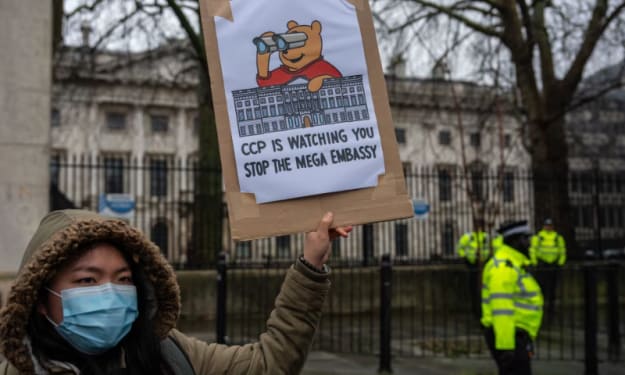
Big news from London: the UK government has just approved the construction of a massive new Chinese embassy right in the heart of the city — and it’s raising more than a few eyebrows. Despite concerns from security experts, lawmakers, and local residents, ministers have given the green light to what’s set to become Europe’s largest Chinese diplomatic mission. Let’s break down why this decision is so controversial — and what it could mean for Britain, China, and global diplomacy. A Long Road to Approval The saga began back in 2018 when China bought Royal Mint Court, a historic site near the Tower of London, for hundreds of millions of pounds. Plans for a sprawling 20,000 square metre embassy have been in limbo ever since, facing delays, legal challenges, and repeated scrutiny from the UK government. Originally, local officials rejected the plans, citing security risks and concerns from the surrounding community. But under the current government led by Prime Minister Sir Keir Starmer, the central authorities ultimately signed off on the embassy in January 2026. This decision ends a seven-year planning saga, but it’s far from quiet: many are still worried about what this mega-embassy could mean for London and the UK’s national security. Security Fears Take Center Stage It’s not hard to see why people are concerned. The embassy is close to critical fibre-optic cables and major data infrastructure, which means it could theoretically be a hotspot for espionage. MI5 itself has acknowledged that it’s “not realistic to eliminate every potential risk” associated with the embassy. At the same time, government officials insist that intelligence services were fully consulted, and that security measures will help mitigate risks. They even argue that consolidating China’s diplomatic operations — currently scattered across seven separate sites — might actually make it easier to monitor activities rather than harder. Still, critics remain unconvinced. Political and Public Backlash Opposition has been loud and bipartisan. Figures like Kemi Badenoch and Priti Patel have called the approval a “security surrender” to Beijing. Protests have cropped up around Royal Mint Court, with locals citing not just espionage fears but also potential disruptions to their daily lives. Some residents are even raising funds for legal action to block the embassy’s construction, arguing that the development threatens community safety and could strain local police resources. Why the UK Is Moving Ahead So why did the government approve it despite all these red flags? Partly, it’s about diplomacy and economics. Britain wants to maintain open channels with China, which remains one of the world’s largest economic powers. Officials have hinted that this approval could pave the way for Starmer’s visit to China — the first by a UK prime minister since 2018 — unlocking potential trade and climate cooperation. Beijing, on the other hand, has criticized the delays as politically motivated and called the opposition to the embassy “malicious slander.” For China, the mega-embassy is a symbol of friendship and a statement of its global influence. Bigger Picture: Diplomacy vs. Security This decision highlights the delicate balancing act Britain faces today: protecting national security while engaging economically with powerful global players. The embassy, with its vast footprint and secretive basement spaces, could become a focal point for intelligence activities, not just in the UK, but across Europe. It also sparks a bigger debate: how should democracies manage the presence of foreign powers on their soil, especially when digital and geopolitical vulnerabilities are involved? And how much power should local planning authorities really have when national government priorities override community concerns? What Comes Next Construction is expected to begin soon, and China is set to consolidate its diplomatic operations in London. But the story isn’t over. Critics promise ongoing legal battles, and lawmakers are calling for more transparency and stricter security safeguards. As London prepares to host Europe’s largest Chinese embassy, the eyes of the UK — and indeed the world — will be on this project. How it unfolds could shape Sino-British relations for decades, and offer a glimpse into the broader dynamics of modern global diplomacy. Bottom line: The mega-embassy is more than just a building. It’s a symbol of the UK’s careful, sometimes uneasy, dance with China — balancing trade, diplomacy, and security in an increasingly complex world.
By Aqib Hussainabout a month ago in The Swamp