
Greenland’s Strategic Position in Seven Maps: Why Trump Wants the Island
How geography, military defense, Arctic trade routes, and untapped resources turned Greenland into a global geopolitical prize
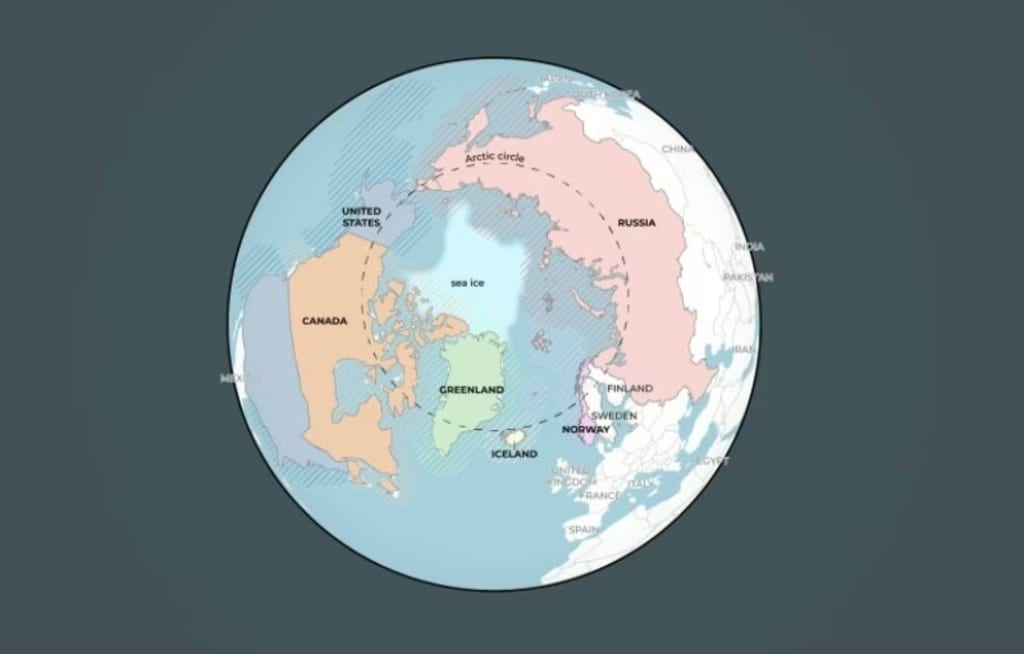
When Donald Trump first suggested buying Greenland, the world laughed. Memes spread faster than Arctic winds, and Denmark firmly rejected the idea. But beneath the headlines and humor lies a serious geopolitical reality: Greenland is one of the most strategically valuable pieces of land on Earth.
Far from being just a frozen wilderness, Greenland sits at the crossroads of global security, emerging trade routes, military defense systems, and untapped natural resources. When you look at Greenland through a series of strategic maps, Trump’s interest — and America’s long-term focus — begins to make sense.
Let’s explore seven maps that explain why Greenland matters and why Trump wants the island.
1. Greenland on the World Map: A Strategic Crossroads
On a global map, Greenland dominates the North Atlantic and Arctic regions. Located between North America and Europe, it occupies a prime position along the shortest routes between major global powers.
For military planners, geography is everything. Any aircraft, missile, or satellite traveling between Russia, Europe, and the United States often passes over or near Greenland. This makes the island a natural surveillance and defense hub — one the U.S. has relied on since World War II.
Greenland isn’t remote; it’s central.
2. The GIUK Gap: NATO’s Northern Gateway
Zoom into the North Atlantic, and another critical map emerges: the GIUK Gap — the maritime corridor between Greenland, Iceland, and the United Kingdom.
During the Cold War, this gap was vital for tracking Soviet submarines moving from Arctic bases into the Atlantic. Today, with Russia once again expanding its Arctic military presence, the GIUK Gap has regained strategic importance.
Control or influence over Greenland strengthens NATO’s ability to monitor naval movements, protect shipping lanes, and deter adversaries — a major reason Washington continues to prioritize the region.
3. Arctic Shipping Routes: The Ice Is Melting
A map of the Arctic today looks very different than it did 50 years ago. Climate change is opening new sea lanes, including the Northwest Passage and the Northern Sea Route, dramatically shortening travel between Asia, Europe, and North America.
Greenland sits right beside these emerging trade routes.
As Arctic shipping becomes more viable, ports, refueling stations, and monitoring points near Greenland will become economically and strategically valuable. Any nation with influence over Greenland gains leverage in future global trade — a fact not lost on the U.S., Russia, or China.
4. Beneath the Ice: Greenland’s Resource Wealth
Another map reveals what lies under Greenland’s ice: rare earth minerals, uranium, copper, gold, and possibly oil and gas.
Rare earth elements are essential for modern technology — from smartphones and electric vehicles to advanced military hardware. Currently, China dominates the global supply. Greenland offers a potential alternative source, making it strategically important for countries looking to reduce dependency on foreign suppliers.
As ice recedes, access to these resources becomes easier — turning Greenland into an economic prize as well as a strategic one.
5. Military Maps: The Importance of Pituffik Space Base
One of the most critical maps highlights Pituffik Space Base (formerly Thule Air Base), the northernmost U.S. military installation.
This base plays a key role in:
Missile early-warning systems
Space surveillance
Ballistic missile defense
From Greenland, the U.S. can detect potential missile launches from across the Arctic faster than from anywhere else. Trump has publicly linked Greenland’s importance to future missile defense plans, framing the island as essential to protecting the U.S. homeland.
This isn’t speculative — it’s operational reality.
6. Arctic Power Competition: Russia and China
A geopolitical map of the Arctic shows increasing activity from Russia and China.
Russia has reopened Cold War-era bases, deployed advanced weapons, and expanded its Arctic infrastructure. China, calling itself a “near-Arctic state,” has invested heavily in Arctic research, mining, and shipping projects.
Greenland sits between these ambitions.
For the United States, maintaining influence over Greenland helps counter rivals in a region that is rapidly becoming a new arena for global power competition.
7. Political Boundaries: Greenland Isn’t for Sale
The final map is political rather than military.
Greenland is a self-governing territory within the Kingdom of Denmark, with its own parliament and growing push for independence. While Denmark handles defense and foreign policy, Greenlanders strongly oppose being “sold” to another country.
Trump’s proposal sparked debate not just about geopolitics, but about sovereignty and self-determination. Greenland’s leaders made one thing clear: the island’s future belongs to its people.
So, Why Does Trump Want Greenland?
When these seven maps are viewed together, Trump’s interest becomes less shocking and more strategic.
Greenland offers:
A military advantage in missile defense and surveillance
Control near critical Arctic shipping routes
Access to valuable natural resources
A strategic foothold in rising Arctic competition
Greater influence over NATO’s northern defenses
Trump’s blunt approach may have grabbed headlines, but the underlying logic reflects long-standing U.S. strategic thinking.
Final Thoughts
Greenland is no longer just an icy landmass at the top of the map. It is a strategic chess piece in a changing world — shaped by climate change, technological demand, and renewed great-power rivalry.
Whether or not Greenland ever changes hands, one thing is certain: the world’s attention is now firmly fixed on the Arctic, and Greenland sits right at its center.
About the Creator
Keep reading
More stories from Aqib Hussain and writers in The Swamp and other communities.
Stocks Rebound After Trump Rules Out Military Action on Greenland: Live Updates
Global stock markets rallied Wednesday after a turbulent couple of days, following fears over U.S. President Donald Trump’s controversial interest in Greenland. Traders had been spooked by speculation about military action to acquire the Arctic territory — but Trump clarified that the U.S. would not pursue force, calming investors.
By Aqib Hussaina day ago in The Swamp
Ubisoft Shares Tumble After ‘Assassin’s Creed’ Creator Announces Restructuring and Game Cancellations
Ubisoft, one of the biggest names in the gaming industry, is facing a turbulent period. The company’s shares fell sharply after the creator behind its blockbuster franchise, Assassin’s Creed, revealed plans for a major corporate restructuring and the cancellation of several games. For gamers and investors alike, this news has raised questions about the future of the company and its popular titles.
By Muhammad Hassanabout 8 hours ago in The Swamp



Comments
There are no comments for this story
Be the first to respond and start the conversation.