
Trump to Address Davos World Economic Forum as America’s Allies Push Back Against His Bid to Take Greenland
A global economic summit turns into a geopolitical flashpoint as sovereignty, security, and alliances collide

When former U.S. President Donald Trump takes the stage at the World Economic Forum (WEF) in Davos, the spotlight will not be solely on economic recovery, innovation, or global markets. Instead, his appearance is overshadowed by a controversial and highly unusual geopolitical ambition — his renewed push for U.S. control over Greenland.
What might have been a routine high-profile address has become a diplomatic stress test for America’s alliances, particularly across Europe. As Trump prepares to speak to world leaders, business elites, and policymakers, his stance on Greenland has sparked resistance, debate, and growing concern about the future of transatlantic cooperation.
Why Greenland Matters More Than Ever
At first glance, Greenland may seem like an unlikely centerpiece of global controversy. However, beneath its icy terrain lies immense strategic value. The Arctic region is becoming increasingly important due to melting ice routes, untapped natural resources, and its proximity to Russia and China.
Trump has repeatedly framed Greenland as “essential to national and world security,” arguing that U.S. control would strengthen Western defenses in the Arctic. Supporters of this view claim that increased American presence could counter rising influence from rival powers.
But there’s a problem — Greenland is not for sale, and both Denmark and Greenland’s autonomous government have made that abundantly clear.
Allies Push Back: Sovereignty Over Strategy
America’s closest allies have responded with unusually firm resistance. Denmark has rejected any discussion of transferring sovereignty, emphasizing that Greenland’s future belongs to its people alone. Greenlandic leaders have echoed this sentiment, with public demonstrations making local opposition impossible to ignore.
European leaders attending Davos have also taken a united stance. French President Emmanuel Macron, European Commission President Ursula von der Leyen, and other senior officials have highlighted the importance of international law and territorial sovereignty, implicitly criticizing coercive diplomacy.
This moment marks a shift. Traditionally, allies might quietly negotiate behind closed doors. This time, opposition is public — and intentional.
Economic Pressure Enters the Equation
Adding fuel to the fire are Trump’s threats of economic retaliation. Reports suggest that he has floated the idea of imposing tariffs on European nations that oppose U.S. ambitions regarding Greenland.
Such tactics have alarmed European governments. Many see the use of trade leverage to influence territorial matters as a dangerous precedent. In response, the European Union has begun discussing countermeasures, including significant tariffs on American goods.
Financial markets have reacted cautiously, with investors worried that what started as a territorial dispute could escalate into a broader trade confrontation between major economic powers.
Davos: From Economic Dialogue to Diplomatic Drama
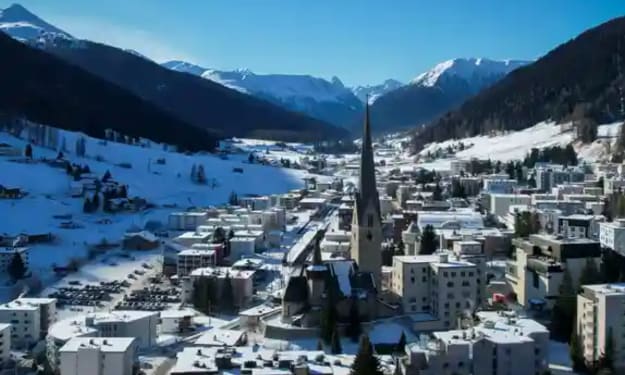
The World Economic Forum is designed to foster cooperation on global challenges — not amplify geopolitical rifts. Yet Trump’s upcoming speech has shifted conversations across the Swiss resort town.
NATO officials have urged restraint, warning that internal conflict weakens collective security at a time when global instability is already high. Several leaders have quietly expressed concern that aggressive rhetoric toward an ally could undermine the very foundations of NATO unity.
Behind closed doors, diplomats are working overtime to prevent the Greenland issue from spilling into long-term damage to alliances built over decades.
Security vs. Political Theater
Critics argue that Trump’s Greenland push is as much about political messaging as it is about strategy. His blunt style and willingness to challenge norms appeal strongly to his domestic base, particularly voters who favor assertive foreign policy.
However, allies worry that treating sovereignty as a negotiable asset — especially under economic pressure — risks destabilizing international norms. Some European leaders have gone as far as warning that such actions could erode trust within NATO itself.
The concern is not just about Greenland, but about what comes next.
Global Reactions Beyond Europe
The ripple effects of this dispute extend far beyond the Atlantic. Canada has warned that the rules-based international order is under strain, while other global powers are watching closely.
Russia and China, both active in Arctic affairs, have seized the opportunity to criticize Western unity, portraying the dispute as evidence of internal fractures among U.S. allies. For them, the situation is both a diplomatic opportunity and a strategic advantage.
What to Expect from Trump’s Davos Speech
All eyes are now on Trump’s address. Will he soften his stance to reassure allies, or double down on his vision for U.S. dominance in the Arctic?
If history is any guide, Trump is unlikely to back away quietly. His speech may blend economic optimism with hardline geopolitical messaging — a combination that could either open the door to negotiation or deepen existing rifts.
One thing is certain: the conversation around Greenland is no longer hypothetical. It has become a defining issue in global diplomacy.
Final Thoughts
Trump’s Davos appearance is more than just another headline moment. It reflects a changing world where economic power, security concerns, and national sovereignty increasingly collide.
Whether this dispute ends in compromise or confrontation, it has already reshaped discussions at one of the world’s most influential forums. Greenland, once a peripheral topic, now sits at the heart of a debate about alliances, power, and the future of global cooperation.
As leaders leave Davos, the real question remains — can unity survive ambition?
About the Creator
Keep reading
More stories from Aqib Hussain and writers in The Swamp and other communities.
Russia Cheers the Growing NATO Rift Over Greenland
Geopolitics doesn’t always play out on battlefields. Sometimes, it unfolds through disagreements, diplomatic snubs, and conflicting priorities among allies. One such moment is currently playing out over Greenland — and Russia is watching with visible satisfaction. What may seem like a remote Arctic issue has evolved into a revealing test of NATO unity. As tensions rise between the United States and European allies over Greenland’s future, Russia has seized the opportunity to amplify the cracks, portraying the situation as proof that NATO is weaker and more divided than it wants the world to believe. How Greenland Became a Flashpoint Greenland, an autonomous territory under Denmark, has long been strategically important due to its location between North America and Europe. Rich in natural resources and critical for Arctic military positioning, it has increasingly drawn global attention as climate change opens new shipping routes and resource opportunities. The controversy intensified after U.S. President Donald Trump publicly revived the idea of acquiring Greenland, arguing it was necessary for American national security. While Washington framed the proposal as a strategic move, Denmark and several European NATO members saw it as a breach of sovereignty and alliance norms. The result? A public disagreement within NATO — exactly the kind of situation Russia thrives on. Russia’s Public Delight at NATO’s Discomfort Russia’s response was swift and unmistakable. Senior Russian officials and state media openly framed the dispute as a sign of NATO’s internal crisis. Foreign Minister Sergey Lavrov suggested the Greenland issue exposed contradictions within the alliance, even hinting that NATO members were beginning to act against one another. From Moscow’s perspective, this is more than diplomatic drama. NATO unity has long been one of Russia’s greatest strategic obstacles. Any visible fracture, especially one involving the United States and its closest European partners, is seen as a geopolitical win. Russian media outlets have amplified the narrative, portraying NATO as disorganized, hypocritical, and incapable of resolving its own disputes — a message aimed not only at Western audiences but also at countries watching from the sidelines. The Arctic Narrative Russia Is Pushing Interestingly, while celebrating NATO’s discord, Russia has also pushed back against Western claims that Moscow poses a growing Arctic threat. Russian officials argue that NATO exaggerates Russian ambitions in the region to justify militarization and increased U.S. presence. By positioning itself as a “rational” Arctic actor, Russia attempts to flip the script — presenting NATO as the destabilizing force while framing itself as a defender of regional balance. This messaging plays well domestically and resonates internationally among countries skeptical of Western military expansion. Yet, this calm exterior masks deeper strategic interests. Why Russia Is Both Happy and Cautious Despite its public enthusiasm, Russia has reason to be uneasy. Greenland’s strategic value means that any shift in control or influence could significantly alter Arctic power dynamics. If the United States were to gain greater control or expand its military footprint there, it could limit Russia’s maneuverability in the region. Russia has invested heavily in Arctic infrastructure, reopening Cold War–era bases, expanding its icebreaker fleet, and asserting control over northern shipping routes. A stronger U.S. presence in Greenland could complicate those ambitions. In essence, Russia enjoys NATO’s internal conflict — but not the potential long-term consequences of increased American dominance in the Arctic. Europe Pushes Back to Preserve Unity European NATO members have responded by doubling down on solidarity with Denmark. Countries like France, Germany, and Norway have emphasized that Greenland is already protected under NATO’s collective defense framework. Military deployments and joint exercises in the region send a clear signal: Europe will not allow internal disagreements to undermine alliance security. European leaders have also criticized economic pressure tactics linked to the Greenland dispute, warning that such moves risk eroding trust within the alliance. Behind the scenes, damage control is underway. NATO officials are keenly aware that public division plays directly into Russia’s hands. Why This Rift Matters Beyond the Arctic The Greenland dispute highlights a broader challenge facing NATO — maintaining cohesion in a world where strategic priorities are shifting rapidly. While Russia didn’t create the rift, it is expertly exploiting it. For Moscow, the goal is not necessarily immediate territorial gain but long-term influence. A divided NATO is less capable of coordinated action, whether on sanctions, military deterrence, or support for Ukraine and Eastern Europe. This situation also serves as a warning. If allies fail to resolve disputes internally, external rivals will step in to shape the narrative — and potentially the outcome. Final Thoughts Russia’s reaction to the NATO rift over Greenland reveals a familiar strategy: celebrate division, amplify disagreement, and position itself as the beneficiary of Western discord. While the Arctic island may seem distant, the implications of this dispute stretch far beyond its icy shores. For NATO, the challenge is clear — unity is not optional. In a world of rising geopolitical competition, even symbolic fractures can have real consequences. And as long as those cracks remain visible, Moscow will be watching — and smiling.
By Aqib Hussainabout 17 hours ago in The Swamp
WEF: Donald Trump Set to Dominate Davos 2026
When world leaders, billionaires, CEOs, and policy architects gather in the Swiss Alps for the World Economic Forum (WEF) in Davos, they usually arrive with carefully balanced messages about cooperation, stability, and long-term planning. But in 2026, one figure is expected to overshadow all others—Donald J. Trump. According to analysts and political observers, Trump’s influence is set to dominate Davos 2026, whether he appears in person or not. His policies, rhetoric, and potential return to the White House are already shaping conversations about trade, security, globalization, and the future of Western democracies. For an event traditionally associated with liberal internationalism, Trump’s looming presence marks a dramatic shift. Why Trump Matters at Davos The World Economic Forum has long been a symbol of elite global consensus—an annual meeting where governments, multinational corporations, and international institutions attempt to align their visions. Donald Trump, by contrast, has consistently positioned himself as an outsider to that system. During his previous presidency, Trump openly criticized global institutions, questioned NATO commitments, challenged free-trade agreements, and promoted a fiercely nationalist “America First” agenda. Those policies reshaped global markets and alliances, making Trump impossible to ignore—even for the very elites he often criticized. As Davos 2026 approaches, Trump’s political comeback has forced attendees to confront an uncomfortable reality: global decision-making may once again revolve around a leader who rejects many of the forum’s foundational ideas. A Forum Forced to Adapt Unlike past years, Davos 2026 is expected to focus less on long-term climate targets and more on immediate geopolitical uncertainty. Trump’s potential return to power has triggered renewed debate over tariffs, defense spending, and global supply chains. Executives attending the forum are reportedly recalculating investment strategies in anticipation of stricter U.S. trade policies. Trump’s past willingness to impose tariffs—even on allies—has made corporations wary of overreliance on globalized production networks. At the same time, European leaders are preparing for the possibility of reduced U.S. commitment to multilateral agreements. Trump’s skepticism toward institutions like the World Trade Organization and the Paris Climate Agreement remains a central concern at Davos. Trade, Tariffs, and Economic Nationalism Few topics are expected to dominate Davos discussions more than trade protectionism. Trump’s previous presidency saw aggressive tariff policies aimed at China, the European Union, and even Canada. Those moves disrupted global markets but also appealed to voters who felt left behind by globalization. At Davos 2026, business leaders are expected to debate whether the era of unrestricted global trade is permanently over. Trump’s influence has legitimized economic nationalism in ways that many global elites once dismissed. For emerging economies, this shift raises difficult questions. Should they continue betting on export-driven growth, or pivot toward regional self-sufficiency? Trump’s worldview has forced Davos attendees to reconsider assumptions that defined the post-Cold War global economy. Security and NATO Back on the Agenda Trump’s approach to security alliances is another reason his presence looms so large. His past criticism of NATO—especially his insistence that European allies increase defense spending—changed the alliance’s internal dynamics. At Davos 2026, security experts are expected to openly discuss whether the U.S. would remain a reliable security guarantor under another Trump administration. This uncertainty has already pushed European nations to rethink military budgets and strategic autonomy. For global investors, geopolitical instability is no longer an abstract risk. Trump’s unpredictability, supporters argue, brings leverage; critics say it introduces dangerous volatility. Either way, Davos cannot ignore the impact. Climate Policy in Trump’s Shadow Climate change has traditionally been a centerpiece of the World Economic Forum. However, Trump’s skepticism toward international climate agreements has complicated that narrative. While global corporations continue to promote sustainability goals, there is growing concern that political momentum may shift away from aggressive climate regulation if Trump regains power. At Davos 2026, climate discussions are expected to reflect a more cautious tone—focused on market-driven solutions rather than binding international commitments. This represents a significant shift for a forum that once championed ambitious global climate action as inevitable. Why Trump Dominates Even Without Attending What makes Trump’s influence unique is that he doesn’t need to attend Davos to dominate it. His policies, rhetoric, and political movement have reshaped the global conversation. Panels discussing China, supply chains, AI regulation, defense spending, and even democracy itself are all framed by a single question: How would a Trump-led America respond? In many ways, Trump has forced the World Economic Forum to confront its own limitations. The assumption that global elites can guide the world toward consensus no longer holds. Political polarization, nationalist movements, and voter backlash against globalization have changed the rules. A Divided Reaction Among Davos Attendees Reactions to Trump’s looming dominance are deeply divided. Some executives privately welcome his transactional approach, arguing that it brings clarity and decisive action. Others fear that his unpredictability undermines stability and long-term planning. For policymakers, Trump represents both a challenge and a reality check. His rise exposed a disconnect between elite institutions and large segments of the global population—an issue Davos has struggled to address convincingly. What Davos 2026 Represents Davos 2026 may go down as a turning point—not because of any single announcement, but because of what it symbolizes. The forum is no longer setting the global agenda; it is reacting to political forces it once underestimated. Donald Trump’s dominance of the conversation reflects a broader transformation in global politics. Power is shifting away from consensus-driven institutions toward leaders who thrive on disruption and national interest. Whether one views Trump as a destabilizing force or a corrective to global overreach, his shadow over Davos 2026 is undeniable. Conclusion The World Economic Forum was designed as a place where the world’s most powerful actors could shape the future together. In 2026, that future is being shaped elsewhere—by elections, populist movements, and leaders like Donald Trump. Davos 2026 will still host speeches, panels, and promises. But the most influential presence may be the one challenging its very foundations.
By Muhammad Hassan5 days ago in The Swamp
European Markets Set to Open in Negative Territory as Tariff Uncertainty Lingers
European equity markets are poised to open in negative territory as persistent tariff uncertainty continues to weigh on investor sentiment. With global trade tensions resurfacing and policy signals remaining mixed, market participants across the continent are approaching the trading session with caution. Futures tied to major European indices point to a subdued start, reflecting concerns that unresolved tariff disputes could dampen economic momentum at a time when growth is already fragile.
By Salaar Jamali2 days ago in The Swamp
Thoughts on Vocal and the way the world is
"Death cannot stop true love, only delay it." – Wesley in The Princess Bride. I decided to come back to Vocal on a very cold and dark night at the end of December. I had been, and still am, convalescing from a horrible staph infection that had gone misdiagnosed for months. This, paired with the increasing challenges of being healthy, making the best choices for my co-parented child, being a wife, and being a director at a new job, was a lot to manage.
By Jazzy 3 days ago in Confessions


Comments
There are no comments for this story
Be the first to respond and start the conversation.