Aqib Hussain
Stories (196)
Filter by community
Ferry Carrying Over 350 People Sinks in the Philippines, Killing at Least 18. AI-Generated.
A tragic maritime accident unfolded in the southern Philippines on January 26, 2026, when a ferry carrying over 350 people sank off the coast of Basilan province. At least 18 people lost their lives, while dozens remain missing. The incident has once again raised concerns about the safety of passenger ferries in the archipelago.
By Aqib Hussainabout a month ago in The Swamp
Tearful Goodbyes as Japan Returns Pandas to China Amid Worsening Ties. AI-Generated.
On a chilly January morning at Ueno Zoological Gardens in Tokyo, crowds gathered for a bittersweet occasion. Xiao Xiao and Lei Lei, the beloved giant pandas who had captured the hearts of Japanese citizens since their birth in 2021, were about to leave Japan and return to their native China. The air was heavy with emotion as visitors, many of whom had grown up visiting these iconic black-and-white bears, lined up for hours just to say their final goodbyes.
By Aqib Hussainabout a month ago in The Swamp
Iran Is Selling More Oil but Making Less Money. AI-Generated.
When it comes to oil, Iran should be in the money. After all, the country is selling more barrels than it has in years. But here’s the twist: despite higher sales, Iran is earning less. Yes, you read that right. More oil, but less cash in the bank.
By Aqib Hussainabout a month ago in The Swamp
Pentagon Downplays China Threat: What It Means for U.S. Allies. AI-Generated.
For years, China has been framed as the central strategic threat in U.S. defense planning. From military modernization to tensions over Taiwan and the South China Sea, Washington’s messaging consistently placed Beijing at the heart of its global security concerns.
By Aqib Hussainabout a month ago in The Swamp
Russian Strike on Ukraine’s Kyiv Leaves 1,330 Buildings Still Without Heat, Mayor Says. AI-Generated.
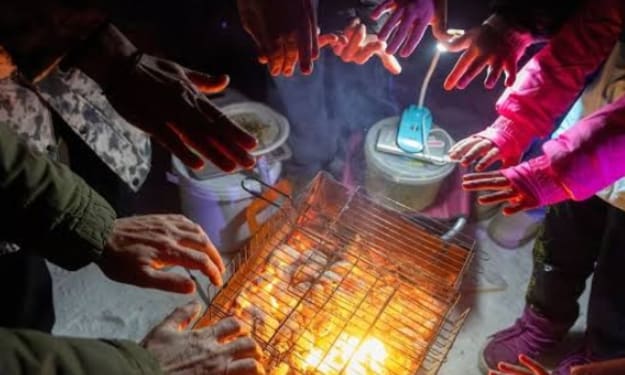
Winter in Kyiv is unforgiving, and for thousands of residents, it has become even harsher. Following a recent Russian strike on Ukraine’s capital, 1,330 residential buildings remain without heat, according to Kyiv Mayor Vitali Klitschko. As temperatures drop below freezing, the impact of these attacks goes far beyond damaged infrastructure — they strike directly at civilian life. This latest assault highlights a grim reality of the ongoing war: energy systems have become one of the most vulnerable and strategic targets, turning winter itself into a weapon. A City Left in the Cold The strike, carried out in late January, targeted key energy facilities across Kyiv. Missiles and drones hit power substations and heating infrastructure, causing widespread outages across the city. At its peak, nearly 6,000 apartment buildings lost heating, leaving families scrambling for warmth in the middle of winter. While emergency crews have restored heat to many areas, Mayor Klitschko confirmed that 1,330 buildings — roughly 15% of the city’s housing stock — remain without heating. For residents inside those buildings, daily life has become a test of endurance. Kyiv’s winter temperatures often fall well below zero, and without central heating, apartments can quickly become uninhabitable. Elderly residents, children, and people with chronic illnesses are especially vulnerable. Why Energy Infrastructure Is Being Targeted Since the early stages of the war, Russia has repeatedly targeted Ukraine’s energy infrastructure, particularly during winter months. The strategy is widely viewed as an attempt to break civilian morale by cutting off electricity, water, and heating when they are needed most. By striking power grids and heating systems, these attacks create cascading effects: Homes lose warmth and lighting Hospitals and schools face disruptions Businesses are forced to close Emergency services are stretched thin Unlike damage to military targets, infrastructure attacks impact entire neighborhoods at once, turning everyday survival into a struggle. Emergency Measures and Citywide Response In response to the crisis, Kyiv authorities activated emergency plans almost immediately. Municipal workers, energy engineers, and emergency services have been working around the clock to repair damaged systems and reconnect buildings to the heating network. To support residents still without heat, the city has opened warming centers, sometimes referred to as “resilience points.” These facilities provide: Heated spaces Hot drinks and food Charging stations for phones Internet access Basic medical assistance Schools, metro stations, and community buildings have been converted into temporary shelters where residents can warm up and rest. Mayor Klitschko praised repair crews for their rapid response but warned that repeated attacks make long-term stability difficult. Each new strike risks undoing days or weeks of repair work. Life Inside Unheated Homes For many Kyiv residents, living without heat has become an unfortunate routine. Families are layering clothing indoors, sleeping under multiple blankets, and using portable heaters when electricity is available. Some residents have temporarily relocated to friends’ homes or safer regions, while others simply endure, hoping repairs arrive soon. Community support has become essential, with neighbors checking on one another and sharing resources. Volunteer organizations and charities have stepped in, distributing thermal blankets, generators, and warm meals to the most affected households. In the face of hardship, solidarity has become one of Kyiv’s strongest defenses. A Broader Humanitarian Crisis The Kyiv outage is not an isolated incident. Across Ukraine, millions have experienced power and heating disruptions over the course of the war. Each winter attack deepens an already serious humanitarian situation. Ukrainian officials have repeatedly emphasized that these strikes are aimed at civilians, not military targets. International observers and humanitarian organizations have echoed those concerns, warning that continued infrastructure attacks could result in severe health crises if temperatures continue to fall. International Support and the Road Ahead Ukraine’s international partners have pledged continued support, not only in military aid but also in strengthening energy resilience. Air defense systems, backup generators, and funding for infrastructure repairs have become critical components of foreign assistance. However, experts warn that no energy system can remain fully protected under constant attack. Long-term solutions will require not only repairs, but reinforced grids, decentralized power sources, and sustained international cooperation. For now, Kyiv’s priority remains simple: restoring heat to every building as quickly as possible. Conclusion The Russian strike that left 1,330 buildings in Kyiv without heat serves as a stark reminder that modern warfare extends far beyond the battlefield. When energy systems are targeted, civilians bear the brunt — especially during winter. As repair crews work through freezing nights and residents adapt to life without warmth, Kyiv continues to demonstrate resilience. But the situation also raises urgent questions about civilian protection, humanitarian responsibility, and the true cost of prolonged conflict. Winter may be temporary, but the damage left behind — physical and human — will last far longer.
By Aqib Hussainabout a month ago in The Swamp
Republican Senators Join Calls for Fuller Investigation Into Minneapolis Killing. AI-Generated.
In a rare moment of bipartisan alignment, several Republican senators have joined Democrats and civil rights advocates in calling for a fuller investigation into the killing that occurred in Minneapolis, reigniting national conversations around police accountability, justice, and transparency. The incident, which has already sparked public outrage and protests, is now drawing heightened scrutiny from federal lawmakers who argue that unanswered questions remain and that public trust depends on a thorough and independent review.
By Aqib Hussainabout a month ago in The Swamp
Half the World’s 100 Largest Cities Are in High Water Stress Areas. AI-Generated.
A recent analysis has uncovered a startling truth: half of the world’s 100 largest cities are now located in regions under high water stress. Even more alarming, nearly 40 of these cities are in the “extremely high stress” category, meaning their water demand is dangerously close to — or even surpassing — what nature can sustainably provide.
By Aqib Hussainabout a month ago in The Swamp
Japan Suspends World’s Largest Nuclear Plant Hours After Restart. AI-Generated.
Japan made headlines recently when the Kashiwazaki‑Kariwa Nuclear Power Plant, the world’s largest by capacity, had to halt operations just hours after restarting. The sudden suspension has reignited debates over nuclear safety, energy security, and Japan’s path to a carbon-neutral future.
By Aqib Hussainabout a month ago in The Swamp
Jared Kushner Lays Out Trump-Backed ‘Master Plan’ for Post-War Gaza. AI-Generated.
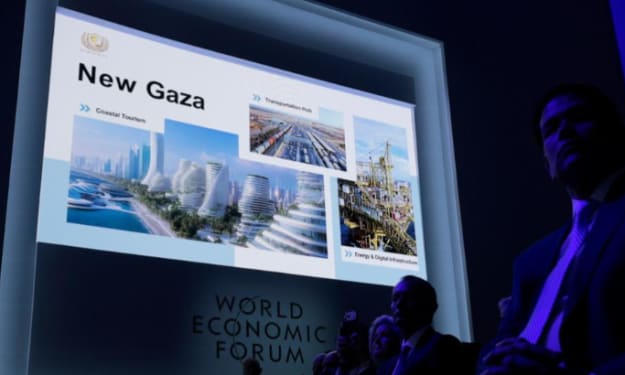
Jared Kushner, former senior adviser to President Donald Trump, has once again stepped into the center of Middle East discourse by outlining what he describes as a Trump-backed “master plan” for post-war Gaza. The proposal, which has circulated through recent interviews, policy discussions, and media commentary, presents an ambitious — and deeply polarizing — vision for what Gaza could look like after the current phase of conflict ends. Supporters frame it as pragmatic and forward-looking, while critics see it as detached from political realities on the ground.
By Aqib Hussainabout a month ago in The Swamp
Trump’s Greenland ‘Framework’ Deal: What We Know About It, What We Don’t. AI-Generated.
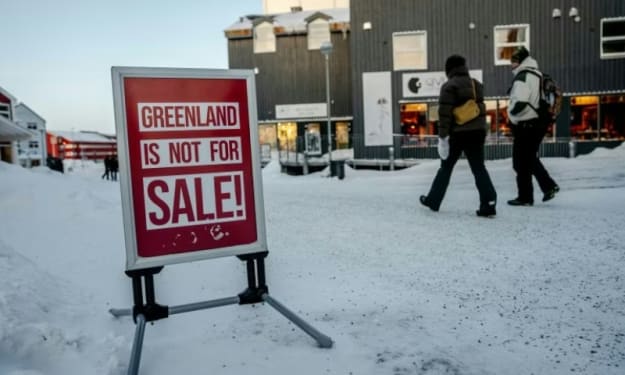
When Donald Trump speaks, the world listens — often with raised eyebrows. That was certainly the case when the former U.S. president announced that he had reached a “framework of a future deal” involving Greenland, a vast Arctic territory that technically belongs to Denmark but holds enormous strategic value.
By Aqib Hussainabout a month ago in The Swamp
Donald Trump’s Latest Visa Ban Hits African Countries Hard. AI-Generated.
When former U.S. President Donald Trump announced a new round of visa restrictions, the global reaction was swift — but nowhere was the impact felt more deeply than across African nations. The policy, which suspends or severely limits immigrant visa processing for dozens of countries, has once again placed immigration, security, and discrimination at the center of international debate.
By Aqib Hussainabout a month ago in The Swamp
Trump News at a Glance: President’s ‘Board of Peace’ Takes Shape. AI-Generated.
In the ever-evolving world of Trump news, one phrase has recently captured attention across political media: the president’s so-called “board of peace.” As discussions around foreign policy, global conflict, and American influence resurface, this emerging advisory group is being framed as a core pillar of Donald Trump’s broader geopolitical vision.
By Aqib Hussainabout a month ago in The Swamp