A História
Bio
"Hi. My name is Wellington and I'm a passion for general history. Here, I publish articles on different periods and themes in history, from prehistory to the present day.
Stories (165)
Filter by community
Echoes of Pindorama
In the extensive narrative of human history, few elements are as rich and lasting as those contributed by the Tupi people. Their journey, which spans thousands of years, exemplifies the resilience and creativity of humanity, serving as a poignant reminder of our transient nature on this planet. The Tupi, one of the most prominent indigenous groups in South America, have left a profound impact on the continent, especially in present-day Brazil. Although their legacy has often been eclipsed by the forces of colonization, it continues to influence the language, culture, and traditions of contemporary Brazil.
By A História12 months ago in History
Caral-Supe
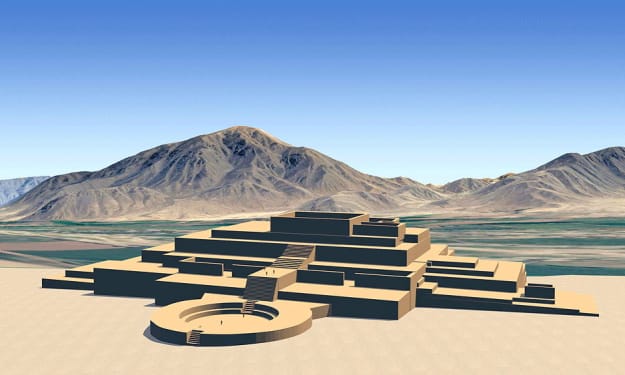
Nestled in the depths of the Peruvian desert, where the sun relentlessly beats down and the winds carry whispers of the past, resides the birthplace of the Americas' earliest civilization. Long before the Inca Empire ascended to prominence and even prior to the Olmecs of Mesoamerica sculpting their monumental heads, the Caral-Supe civilization thrived along the dry coastline of present-day northern Peru. This mysterious culture, which dates back to 3700 BCE, predates the construction of the pyramids at Giza and serves as a remarkable example of human creativity and endurance. Its narrative is characterized by collaboration, innovation, and an extraordinary lack of violence—a notable exception in the history of ancient societies.
By A História12 months ago in History
From Legends to Empires
In the stillness of the night, when the world appears to hold its breath, our thoughts frequently drift back to the ancient past, where the distinctions between history and myth become indistinct. It is during these reflective moments that we become engrossed in the narratives of bygone civilizations, their beginnings cloaked in legend, and their ascendance chronicled in the records of time. One notable civilization, the ancient kingdom of Magadha, exemplifies the captivating nature of history and raises the intriguing question: at what point does myth transition into reality?
By A História12 months ago in History
Banned Literature
In a society where literature can spark revolutions, confront authoritarian powers, and reveal the most troubling aspects of humanity, it is unsurprising that certain texts have been classified as too perilous for public consumption. Ranging from dystopian visions to narratives depicting moral decline, these prohibited works share a commonality: they compel us to face unsettling realities about our identities and the communities we inhabit. This exploration delves into the most contentious literary pieces and the reasons behind their suppression.
By A História12 months ago in BookClub
The Forgotten Empire
Throughout history, certain empires stand out, their legacies immortalized in the shared consciousness of humanity. The Egyptians, Greeks, Chinese, and Indians are among those whose contributions have withstood the test of time. However, not every significant kingdom has enjoyed such enduring recognition. The Kingdom of Mitanni, once a formidable power in the ancient world, has largely slipped into obscurity, its narrative obscured by the passage of time. This is the story of Mitanni, a realm that achieved remarkable heights, only to be lost to the annals of history.
By A Históriaabout a year ago in History
The Yellow Turban Rebellion
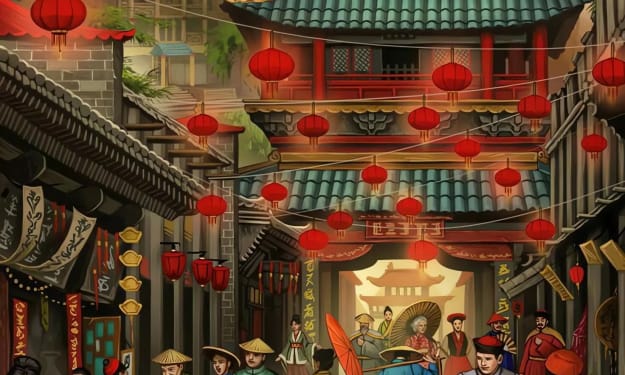
Since the beginning of civilization, humanity has experienced various systems of governance, each seeking to gain legitimacy and ensure steadfast loyalty. The hereditary dynasty model was particularly dominant, influencing the rise and fall of empires. However, history is marked by instances when the populace has risen up, contesting the divine authority of their rulers and challenging the established order. A notable example of this occurred in ancient China more than 1,800 years ago during the Yellow Turban Rebellion—a significant uprising that not only questioned the legitimacy of the ruling dynasty but also altered the trajectory of Chinese history.
By A Históriaabout a year ago in History
Echoes of the Peninsula
The Korean Peninsula, renowned for its stunning scenery and deep cultural roots, currently represents both harmony and discord. Globally recognized for its innovations in technology, vibrant pop culture, and critical geopolitical role, Korea's narrative is marked by endurance, strife, and change. To fully grasp the contemporary essence of Korea, it is essential to trace back thousands of years to an era when the peninsula was home to ancient civilizations, well before the contemporary separation of North and South.
By A Históriaabout a year ago in History
Echoes of the Past
As soon as we acquire the skills of speaking, reading, and writing, we become intricately connected to the cultural tapestry of our homeland. The myths, traditions, and values of our forebears become integral to our identity, influencing our perspectives and understanding of the world. In contemporary times, what is often referred to as Western culture is a rich amalgamation of diverse traditions, yet its roots can be traced back to one ancient civilization: Rome. The narrative of Rome's ascent is not merely one of military triumph and authority; it is a profound story of mythology, aspiration, and the lasting impact of a city that would ultimately shape the known world.
By A Históriaabout a year ago in History
The Fall of Giants
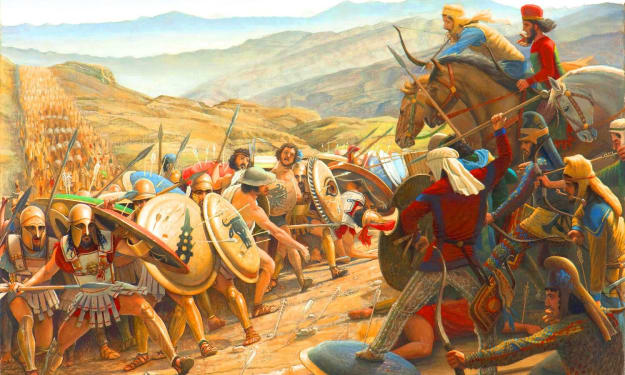
History has a unique way of demonstrating that no empire, regardless of its size or strength, is truly invulnerable. Time after time, those who seem all-powerful have succumbed, often to adversaries who initially appeared weak and inconsequential. This recurring narrative is prominently showcased in the ascension and decline of empires such as the Akkadian, Assyrian, and the Qin Dynasty in China. However, one of the most remarkable illustrations of this concept is the saga of the Persian Empire, a giant of the ancient world, ultimately defeated by a coalition of small, resolute Greek city-states. This narrative encompasses the Greco-Persian Wars, a series of battles that not only influenced the ancient world but also established the groundwork for Western civilization as we recognize it today.
By A Históriaabout a year ago in History
The Nomadic Empire
For millennia, the vast expanse of the Asian steppes has been a crucible of human history. Its strategic location and abundant resources made it a prize fiercely contested by numerous ancient peoples. Among these, the Scythians stand out as one of the most influential civilizations, leaving an indelible mark on both Asia and Europe. Their nomadic lifestyle, warrior culture, and intricate artistry not only defined their own era but also shaped the civilizations that followed. This is the story of how the Scythians, a people of the open plains, became a force to be reckoned with, defying empires and leaving a legacy that endures to this day.
By A Históriaabout a year ago in History
Animal Farm
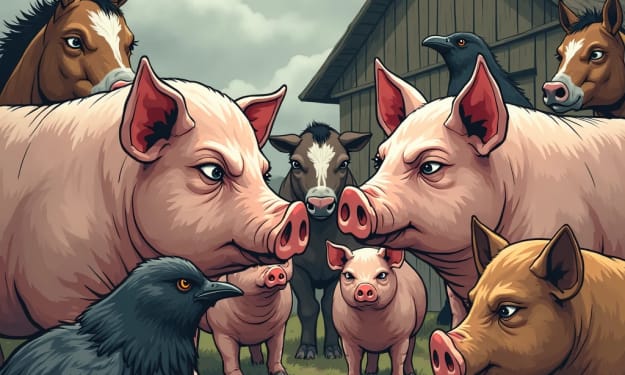
George Orwell’s Animal Farm transcends mere literature; it serves as a reflection of society, illuminating the enduring conflicts surrounding power, corruption, and the essence of humanity. Released in 1945, this allegorical novella employs a straightforward narrative about farm animals to offer a deep critique of political structures, especially the emergence of totalitarian regimes. Through its compelling characters and engaging storyline, Animal Farm stands as a poignant reminder of how noble ideals can be distorted and how revolutions can ultimately betray their foundational principles.
By A Históriaabout a year ago in BookClub
1984
George Orwell's 1984 is more than a mere novel; it serves as a haunting prophecy, a cautionary tale inscribed in ink, and a reflection of the most sinister aspects of human society. Released in 1949, this dystopian work has endured through the decades, maintaining a disturbing relevance in the 21st century. Its exploration of surveillance, propaganda, and the degradation of truth strikes a profound chord in an era where technology and authority converge in ways that Orwell could hardly have foreseen.
By A Históriaabout a year ago in BookClub