
Echoes of Pindorama
The Lasting Heritage of the Tupi People


In the extensive narrative of human history, few elements are as rich and lasting as those contributed by the Tupi people. Their journey, which spans thousands of years, exemplifies the resilience and creativity of humanity, serving as a poignant reminder of our transient nature on this planet. The Tupi, one of the most prominent indigenous groups in South America, have left a profound impact on the continent, especially in present-day Brazil. Although their legacy has often been eclipsed by the forces of colonization, it continues to influence the language, culture, and traditions of contemporary Brazil.
The Tupi people's roots can be traced to the core of the Amazon rainforest, specifically around the central areas of the Amazon and Madeira rivers. From this starting point, they embarked on a gradual migration, navigating major waterways such as the Tocantins, Xingu, and Paraguay rivers, ultimately arriving at the coastal territories they referred to as Pindorama, or the Land of Palmeiras. This migration, which commenced over 2,000 years ago, was characterized by a slow and intentional expansion, enabling the Tupi to develop intricate societies along their path.
Recent archaeological discoveries have revised the timeline regarding Tupi habitation in various areas. For example, findings in Araruama, Rio de Janeiro, indicate human activity dating back approximately 2,920 years, which challenges earlier beliefs about the timing of their migration. This research, spearheaded by archaeologist Rita Scheel-Ybert, has significantly altered our comprehension of the Tupi's ancient journey and their deep-rooted connection to the land.
The Tupi were not a singular entity but rather a diverse assembly of peoples linked by a shared linguistic foundation known as the Tupi-Guarani trunk. This linguistic connection served not only as a means of communication but also as a cultural and spiritual bond that united tribes such as the Tupinambá, Tabajara, Tupiniquim, and Potiguara, among others. Despite their geographical variations, these groups exhibited similar social, religious, and military frameworks, fostering a sense of cohesion across extensive regions.
At the heart of Tupi society was their profound spiritual relationship with nature. They practiced polytheism, venerating deities tied to natural phenomena such as the sun, moon, and rain. The pajé, or shaman, held a vital position within this spiritual system, acting as a bridge between the human and divine worlds. The pajé's duties included interpreting dreams and omens, utilizing medicinal plants for healing, and preserving oral traditions to ensure the transmission of the community's history and spiritual customs across generations.
Tupi villages were centered around large communal structures known as malocas, which played a vital role in community life. Constructed collaboratively from wood and palm leaves, these huts served not only as shelters but also as venues for social interactions, rituals, and collective decision-making. Typically, each village accommodated between 200 to 600 residents, with responsibilities divided by gender. Men focused on hunting, fishing, and warfare, while women managed agriculture, childcare, and household tasks.
In Tupi culture, marriage was often utilized to enhance social bonds. The most sought-after unions were those between uncles and nieces or cousins, reinforcing tribal alliances. Before a man could marry, he was required to demonstrate his valor as a warrior, often by capturing an enemy in battle. These captives were occasionally subjected to ritual sacrifices, a practice that, while unsettling by contemporary standards, was deeply embedded in the spiritual and social traditions of the Tupi people.
Warfare was an integral aspect of Tupi society, fueled by a cycle of retribution and ritualistic practices. Conflicts typically stemmed from territorial or resource disputes, yet they were also intricately linked to the Tupi's spiritual convictions. The act of capturing enemies transcended mere military strategy; it was regarded as a sacred obligation, as prisoners were intended for ritual sacrifice. These ceremonies, which included anthropophagy (ritual cannibalism), were not expressions of brutality but rather sophisticated rituals designed to pay homage to the gods and reinforce social connections.
The Tupi held the belief that by consuming the flesh of their adversaries, they could absorb their strength and valor. These rituals were communal gatherings, drawing participation not only from warriors but also from allies and neighboring tribes. Consequently, warfare functioned as both a unifying and divisive element, sustaining a cycle of conflict that significantly shaped Tupi history.
The arrival of European colonizers in the 16th century signaled a significant decline for many Tupi societies. The introduction of diseases, enslavement, and enforced assimilation led to a drastic reduction in their populations, fundamentally changing their way of life. Nevertheless, the legacy of the Tupi persists. Their impact is evident in the Brazilian Portuguese language, which features a wealth of Tupi vocabulary, particularly in the names of flora, fauna, and geographical features.
Additionally, the Tupi have influenced Brazilian agriculture, cuisine, and traditional medicine. Staples such as manioc (cassava) and agricultural methods like slash-and-burn farming were adopted from Tupi traditions. The concept of mamelucos, referring to the mixed-race descendants of Europeans and indigenous peoples, also illustrates the cultural fusion that began during the colonial period.
Perhaps the most significant aspect of the Tupi legacy is their enduring spirit of resilience. Similar to the Indo-Europeans of Asia and the Afro-Asiatic groups of Africa, the Tupi were explorers and conquerors in their own right, motivated by a fundamental human urge to expand and prosper. Their narrative serves as a poignant reminder that while civilizations may rise and fall, the remnants of their existence continue to influence the world long after their time has passed.
About the Creator
A História
"Hi. My name is Wellington and I'm a passion for general history. Here, I publish articles on different periods and themes in history, from prehistory to the present day.
Keep reading
More stories from A História and writers in History and other communities.
Caral-Supe
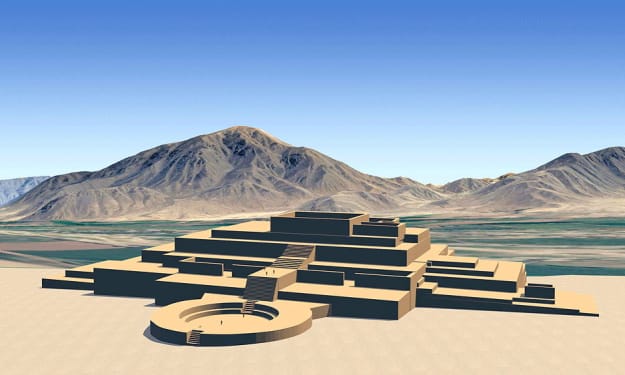
Nestled in the depths of the Peruvian desert, where the sun relentlessly beats down and the winds carry whispers of the past, resides the birthplace of the Americas' earliest civilization. Long before the Inca Empire ascended to prominence and even prior to the Olmecs of Mesoamerica sculpting their monumental heads, the Caral-Supe civilization thrived along the dry coastline of present-day northern Peru. This mysterious culture, which dates back to 3700 BCE, predates the construction of the pyramids at Giza and serves as a remarkable example of human creativity and endurance. Its narrative is characterized by collaboration, innovation, and an extraordinary lack of violence—a notable exception in the history of ancient societies.
By A História12 months ago in History
The Piggy Project
I’ve had so many names in this life I lose track of which ones were ever really mine and which ones I wore because someone needed me to. Some were handed to me before I had words to refuse them, before I knew what they meant, before I knew I could say no. Most weren’t meant to hurt. That doesn’t mean they didn’t leave marks. Marks that told me who I belong to, who I am by way of who claims me, recognizes me in the good and bad, who walks beside me.
By Fatal Serendipity6 days ago in Confessions


Comments
There are no comments for this story
Be the first to respond and start the conversation.