
Echoes of the Past
The Legendary Birth of Rome and the Roots of Western Civilization

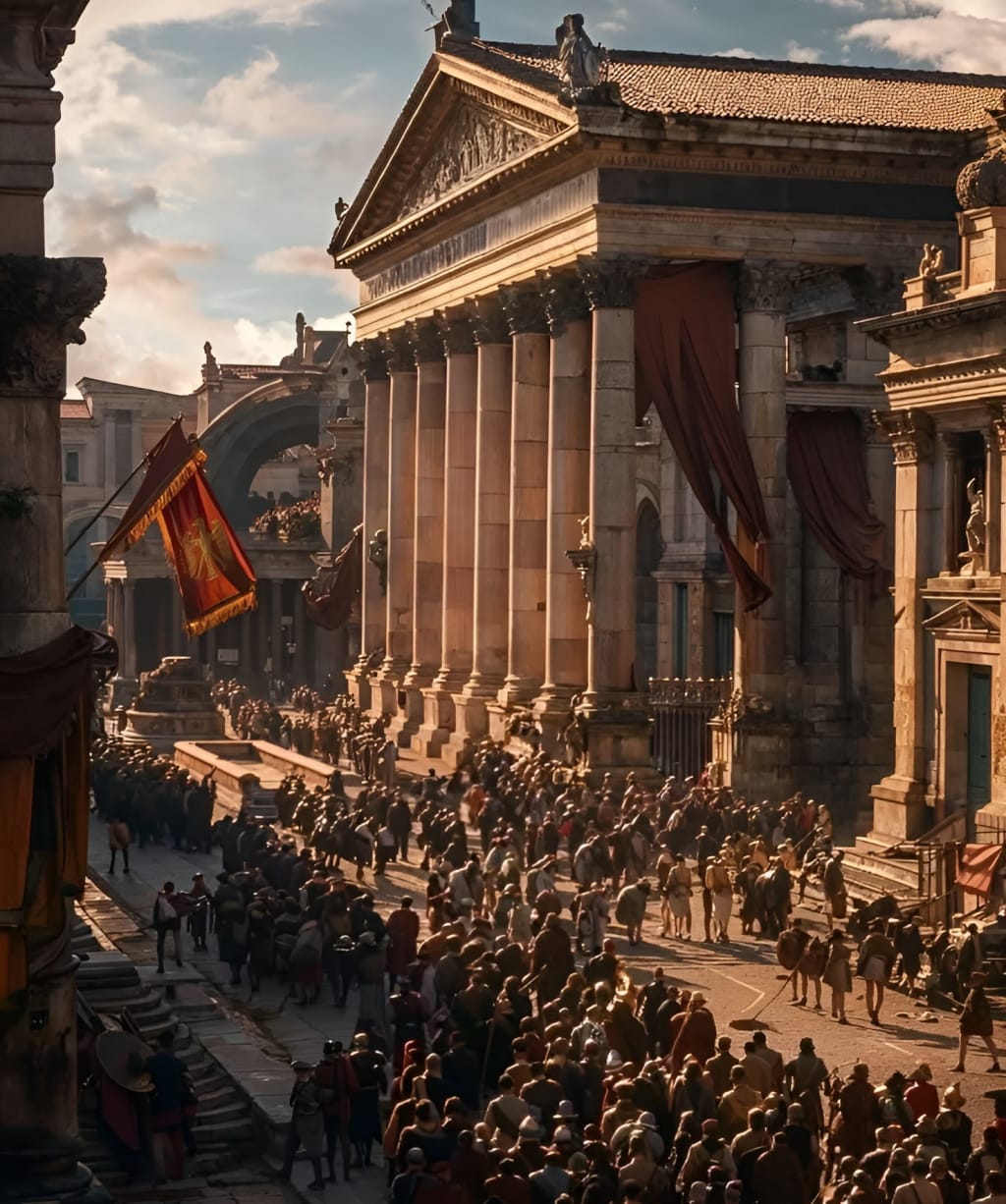
As soon as we acquire the skills of speaking, reading, and writing, we become intricately connected to the cultural tapestry of our homeland. The myths, traditions, and values of our forebears become integral to our identity, influencing our perspectives and understanding of the world. In contemporary times, what is often referred to as Western culture is a rich amalgamation of diverse traditions, yet its roots can be traced back to one ancient civilization: Rome. The narrative of Rome's ascent is not merely one of military triumph and authority; it is a profound story of mythology, aspiration, and the lasting impact of a city that would ultimately shape the known world.
Let us travel back over 2,700 years to the inception of Rome, a city whose beginnings are as mythical as they are enigmatic. According to legend, the tale of Rome starts with two brothers, Rômulo and Remo, the twin sons of the god Mars and Reia Silvia, the daughter of King Numitor of Alba Longa. Their narrative is filled with themes of betrayal, survival, and fate. When their great-uncle Amulius seized the throne, he commanded that the twins be thrown into the Tiber River, fearing they might one day threaten his reign. However, destiny had different intentions. The river god Tiberinus guided their cradle to safety, where a she-wolf discovered and cared for them. Eventually, a shepherd named Faustulus and his wife, Larentia, took the boys in and raised them as their own.
As they matured, Rômulo and Remo emerged as leaders among the shepherds. Their true lineage was unveiled when they confronted Amulius, toppled his oppressive rule, and reinstated their grandfather Numitor as the king of Alba Longa. Yet, the brothers were meant for even greater endeavors. They aspired to establish a city of their own, a place where their legacy could thrive. However, their visions clashed. Rômulo opted for the Palatine Hill, while Remo preferred the Aventine Hill. Their disagreement escalated tragically when Remo, in a moment of defiance, jumped over the walls that Rômulo had constructed. In a fit of anger, Rômulo killed his brother, thus becoming the sole founder of what would eventually be known as Rome.
This iconic narrative, while rooted in legend, embodies the principles and challenges faced by early Roman society. The establishment of the city on April 21, 753 BCE, signifies the dawn of a civilization that evolved from a modest settlement along the Tiber River into a sprawling empire. Archaeological findings indicate that Rome's beginnings were more modest than the legends imply, with small hilltop communities gradually coalescing into a cohesive political structure. Nevertheless, the tale of Rômulo and Remo encapsulates the spirit of Rome: a fusion of ambition, strife, and tenacity.
The formative years of Rome were significantly influenced by surrounding cultures, especially the Etruscans and Greeks. The Romans adopted urban development, trade methods, and religious customs from the Etruscans. From the Greeks, they embraced literacy, architectural styles, and mythological narratives. These cultural exchanges established the foundation for Rome's distinct identity, merging the practical with the spiritual.
The Roman monarchy, while frequently eclipsed by the subsequent Republic and Empire, was instrumental in establishing the foundational institutions of the city. The kings, starting with Rômulo, were responsible for the creation of the Senate, the Assembly, and the religious customs that became integral to Roman society. Unlike a hereditary system, the monarchy was elective, with the Senate selecting the king and the Assembly providing its endorsement. Although this arrangement had its flaws, it set the groundwork for the system of checks and balances that would later define Roman political structure.
The monarchy's decline was precipitated by the tyranny of Tarquin the Proud, whose oppressive governance and neglect of Roman traditions ultimately led to his ousting in 509 BCE. This event signified the dawn of the Roman Republic, ushering in a new phase of governance that would enable Rome to broaden its influence throughout the Mediterranean and beyond.
The narrative surrounding the origins of Rome transcends mere historical documentation; it serves as a powerful reminder of the lasting influence of culture and tradition. From the legendary she-wolf to the establishment of the Republic, the legacy of Rome remains a significant force in shaping our contemporary world. In contemplating this ancient civilization, we recognize that the reverberations of history are always present.
About the Creator
A História
"Hi. My name is Wellington and I'm a passion for general history. Here, I publish articles on different periods and themes in history, from prehistory to the present day.
Keep reading
More stories from A História and writers in History and other communities.
The Fall of Giants
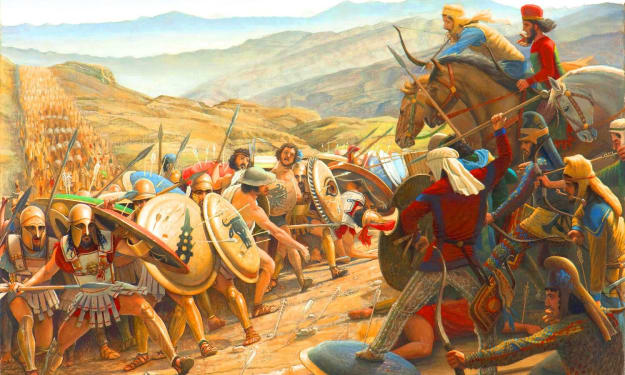
History has a unique way of demonstrating that no empire, regardless of its size or strength, is truly invulnerable. Time after time, those who seem all-powerful have succumbed, often to adversaries who initially appeared weak and inconsequential. This recurring narrative is prominently showcased in the ascension and decline of empires such as the Akkadian, Assyrian, and the Qin Dynasty in China. However, one of the most remarkable illustrations of this concept is the saga of the Persian Empire, a giant of the ancient world, ultimately defeated by a coalition of small, resolute Greek city-states. This narrative encompasses the Greco-Persian Wars, a series of battles that not only influenced the ancient world but also established the groundwork for Western civilization as we recognize it today.
By A Históriaabout a year ago in History


Comments (1)
Nice one