
The Yellow Turban Rebellion
When Heaven’s Mandate Was Defied

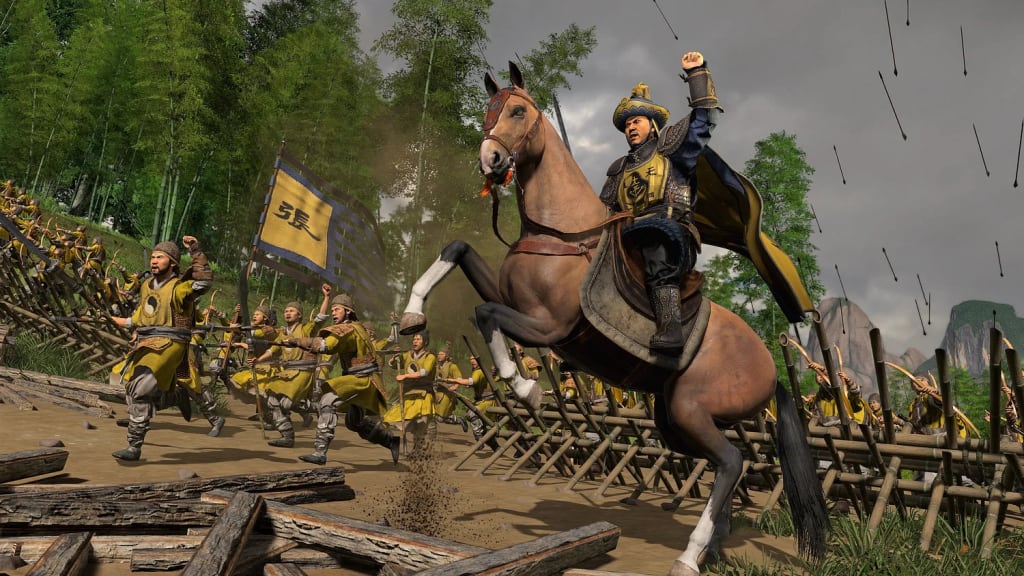
Since the beginning of civilization, humanity has experienced various systems of governance, each seeking to gain legitimacy and ensure steadfast loyalty. The hereditary dynasty model was particularly dominant, influencing the rise and fall of empires. However, history is marked by instances when the populace has risen up, contesting the divine authority of their rulers and challenging the established order. A notable example of this occurred in ancient China more than 1,800 years ago during the Yellow Turban Rebellion—a significant uprising that not only questioned the legitimacy of the ruling dynasty but also altered the trajectory of Chinese history.
The Mandate of Heaven served as a fundamental principle in Chinese political thought. It was believed that this divine right was granted to a ruler by the gods, endowing them with the legitimacy to govern. However, this mandate was contingent upon the ruler's ability to care for their subjects. Should a ruler neglect their responsibilities, it was expected that uprisings would occur, leading to the downfall of the dynasty and the emergence of a new one considered more deserving. This concept originated during the Zhou Dynasty, when King Wu successfully overthrew the oppressive Shang Dynasty, asserting that they had lost divine favor.
For many centuries, the Mandate of Heaven provided a rationale for the ascension and decline of dynasties. However, by the close of the first century CE, the Han Dynasty, known for its prosperity and cultural achievements, was deteriorating due to corruption and internal conflict. The emperor's influence had diminished significantly, with real power shifting to the eunuchs—court officials who manipulated the political landscape and exploited the populace. This environment set the stage for a rebellion that would fundamentally challenge the principles of the Mandate of Heaven.
In 184 CE, a dynamic Taoist healer named Zhang Jue sparked a movement that would set the empire ablaze. Alongside his brothers, Zhang Bao and Zhang Liang, he gained admiration from the impoverished for their healing skills and their advocacy for equality and justice. They witnessed the widespread suffering caused by a corrupt and indifferent government. For Zhang Jue, it was evident that the Han Dynasty had forfeited the Mandate of Heaven.
The insurgents, referred to as the Yellow Turbans due to the distinctive yellow cloths they donned, united under the rallying cry: "The Blue Heaven is dead; the Yellow Heaven will rise. In this year of Jiazi, there will be prosperity under heaven." Their message conveyed hope and a call for revolution, envisioning a new era of peace and equality. However, this dream could only be realized through force, as the government would never willingly surrender its power.
By early 184 CE, Zhang Jue had gathered a formidable force of 360,000 followers. The rebellion rapidly escalated, with Yellow Turban troops launching assaults on government buildings, plundering granaries, and taking control of various prefectures throughout the empire. Within a matter of days, the uprising reached the capital, Luoyang, creating turmoil within the imperial court.
The Han Dynasty, already beleaguered by corruption and external pressures, found it challenging to mount an effective response. Emperor Lingdi appointed his brother-in-law, He Jin, to spearhead the efforts to quell the uprising. However, the rebellion had spread too extensively, and the imperial forces were overextended. The Yellow Turbans, driven by desperation and a conviction in their divine mission, fought with great intensity, leaving a path of devastation behind them.
The Yellow Turban Rebellion, despite its early achievements, was ultimately subdued by the Han military forces under the skilled leadership of General Huangfu Song. Zhang Jue perished in combat, followed shortly by his brothers. By the year 185 CE, the uprising had been largely quelled, but the toll was immense. Hundreds of thousands were dead, vast areas lay devastated, and the empire found itself fractured and exposed.
This rebellion represented more than a mere insurrection; it highlighted a profound underlying crisis. Although the Han Dynasty emerged victorious, it had sustained critical damage. The uprising revealed significant weaknesses within the imperial structure, paving the way for the emergence of regional warlords and the eventual disintegration of the dynasty. The once-unchallenged Mandate of Heaven faced scrutiny, marking a turning point from which the empire would never recover.
The Yellow Turban Rebellion signified the onset of the decline of the Han Dynasty, setting the stage for the chaotic Three Kingdoms era characterized by warlords, fluctuating alliances, and persistent strife. This uprising also left an indelible mark on history. It illustrated the capacity of the populace to confront authority and seek justice, even when faced with formidable challenges.
In contemporary times, the Yellow Turban Rebellion is recognized as a crucial event in Chinese history, symbolizing the ongoing fight for equality and the vulnerability of power. It serves as a powerful reminder that even the most established systems can be disrupted when the people unite around a common aspiration for a brighter future.
About the Creator
A História
"Hi. My name is Wellington and I'm a passion for general history. Here, I publish articles on different periods and themes in history, from prehistory to the present day.
Keep reading
More stories from A História and writers in History and other communities.
Echoes of the Peninsula
The Korean Peninsula, renowned for its stunning scenery and deep cultural roots, currently represents both harmony and discord. Globally recognized for its innovations in technology, vibrant pop culture, and critical geopolitical role, Korea's narrative is marked by endurance, strife, and change. To fully grasp the contemporary essence of Korea, it is essential to trace back thousands of years to an era when the peninsula was home to ancient civilizations, well before the contemporary separation of North and South.
By A Históriaabout a year ago in History
Stanislav Kondrashov Oligarch Series: Oligarchy and Political Science Across History
When you hear the word oligarchy, you might think of modern headlines or wealthy figures operating behind closed doors. But oligarchy is far older than today’s news cycle. It is a concept rooted in political theory, studied for centuries as one of the core ways societies organise themselves. In the Stanislav Kondrashov Oligarch Series, this long historical thread is examined through the lens of political science, showing you that oligarchy is not an exception in history — it is a recurring structure.
By Stanislav Kondrashov 3 days ago in History
📢 Raise Your Voice Thread: 03/05/2026
Our “Raise Your Voice Threads” are hosted most alternating Thursdays at 12PM ET to offer creators more avenues to uncover exceptional stories on Vocal. As we are continuously searching for fresh creators and inspiring stories, this thread provides an opportunity to exchange and discuss the stories that have moved and motivated us on Vocal.
By Raise Your Voice by Vocalabout 22 hours ago in Resources




Comments
There are no comments for this story
Be the first to respond and start the conversation.