
Cato the Elde
The Relentless Guardian of Roman Virtue


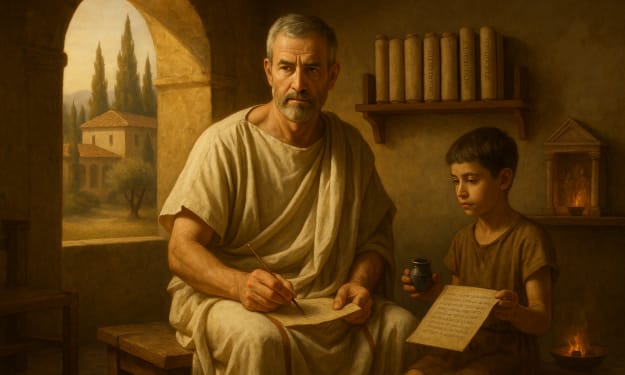
Marcus Porcius Cato, often referred to as Cato the Elder or Cato the Censor, was a significant figure in the Roman Republic, embodying the values, conflicts, and changes of an emerging Rome. Born in 234 BCE in Tusculum, a small town located southeast of Rome, Cato hailed from a humble plebeian background. However, through his military skill, political resolve, and strong adherence to traditional Roman values, he established himself among the prominent figures in Roman history. His literary works and public endeavors offer essential perspectives on the early identity and principles of the Roman Republic.
Cato grew up in a rural setting, deeply influenced by the industrious principles of the Roman countryside. These formative years fostered in him a lasting appreciation for simplicity, discipline, and austerity—principles he would staunchly advocate for later in his political and moral pursuits. In his youth, he embarked on a military career, distinguishing himself during the Second Punic War against Carthage. His valor brought him acclaim and eventually led him into the realm of politics. He adhered to the conventional Roman cursus honorum, ascending through various public offices of increasing significance. Cato held positions as quaestor, aedile, praetor, and ultimately consul in 195 BCE. In every capacity, he prioritized efficiency, frugality, and strict discipline. However, it was his role as censor in 184 BCE that would cement his legacy. The censor was tasked with conducting the census, overseeing public morality, and managing state finances. Cato approached this position with fervor, penalizing moral decay, expelling unworthy senators, and advocating for traditional Roman values.
Central to Cato's philosophy was his advocacy for the mos maiorum, the traditional customs he believed were essential to Rome's greatness. He perceived luxury, Hellenistic influences, and moral decline as significant threats to the Republic. Cato opposed the encroachment of Greek culture into Roman society, which he felt undermined Roman virtues. Ironically, he was well-versed in Greek literature and philosophy, using this knowledge to bolster his critiques of what he considered moral decay. As censor, he initiated campaigns against personal extravagance, opulence in public entertainment, and leniency in legal matters. He removed senators from their positions for indulgent conduct and condemned patricians who displayed excessive wealth. His unwavering moral stance garnered both respect and animosity, yet his commitment to the Republic was undeniable.
Cato was not only a prominent statesman and military leader but also a prolific writer, recognized as the first Roman historian to compose in Latin prose. His most renowned work, Origines, comprised seven volumes detailing the history of Rome and other Italian cities, with a focus on their early legends and traditions. Although the complete text has not survived, existing fragments suggest that Cato aimed to present a Roman-centered narrative of history, setting it apart from Greek influences. He notably excluded the names of military leaders, highlighting the collective contributions of the Roman populace.
Another significant work, De Agricultura (On Agriculture), stands as the oldest complete work of Latin prose that has survived. While it appears to be a guide for Roman farmers, De Agricultura also acts as a cultural artifact, celebrating the importance of rural life as the foundation of Roman society. Cato argued that agriculture fostered values such as discipline, self-reliance, and civic duty. The text is straightforward, pragmatic, and imbued with moral lessons, reflecting Cato’s view of the farmer as the quintessential Roman citizen.
Additionally, he authored speeches, political essays, and ethical treatises, many of which left a lasting impact on later authors like Cicero and Livy. His Latin writing style was characterized by its simplicity, directness, and strength, mirroring his own character and political beliefs.
Cato the Elder's legacy is multifaceted. For some, he epitomized the Roman ideal, safeguarding the Republic with steadfast determination and traditional values. Conversely, others viewed him as a rigid traditionalist, opposing essential cultural progress. His resistance to the growing Hellenization of Roman culture, while principled, also highlighted a reluctance to embrace change that Rome could not ultimately evade. Perhaps his most enduring impact was his moral authority. He established a standard for the Roman concept of the virtuous citizen-soldier and shaped the perspectives of numerous Roman leaders who believed the Republic's vitality was linked to individual virtue. Even in his later years, Cato remained politically active, famously concluding every speech—regardless of the subject—with the phrase, 'Carthago delenda est' ('Carthage must be destroyed'), emphasizing his steadfast dedication to Roman dominance and security.
About the Creator
A História
"Hi. My name is Wellington and I'm a passion for general history. Here, I publish articles on different periods and themes in history, from prehistory to the present day.
Keep reading
More stories from A História and writers in History and other communities.
Quintus Fabius Pictor
In the rich narrative of Roman history, where prominent generals, emperors, and senators frequently take center stage, the more subdued contributions of early historians can often be overlooked. However, among these intellectual trailblazers, Quintus Fabius Pictor emerges as a crucial figure. As the first historian of Rome, he established the groundwork for Latin historiography, significantly shaping the Roman perception of their history and influencing the style and format of historical writing for future generations. Although much of his work exists only in fragments and citations, his impact is profoundly ingrained in the fabric of Roman cultural heritage.
By A História10 months ago in History
The Last Sigh of Al-Andalus: When the Keys to Paradise Were Lost
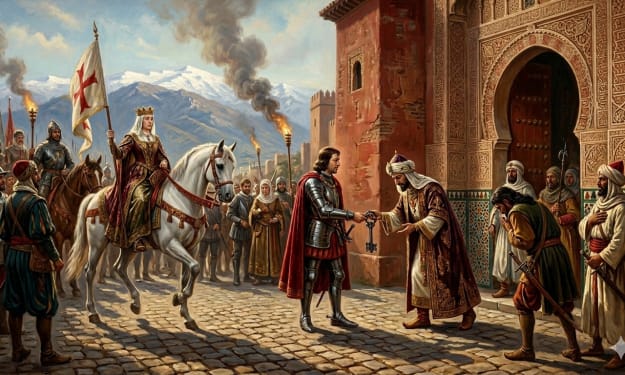
The date was January 2, 1492. As the morning mist cleared over the Sierra Nevada mountains, a somber procession wound its way down from the red walls of the Alhambra. At its head was Muhammad XII, known to the West as Boabdil, the last Sultan of the Nasrid dynasty. In his hands, he carried the keys to the city—keys that represented not just a fortress, but the final heartbeat of a civilization that had flourished for 781 years.
By Irshad Abbasi 5 days ago in History


Comments
There are no comments for this story
Be the first to respond and start the conversation.