
The Forgotten Shepherd
The Life and Legacy of Pope Clement I

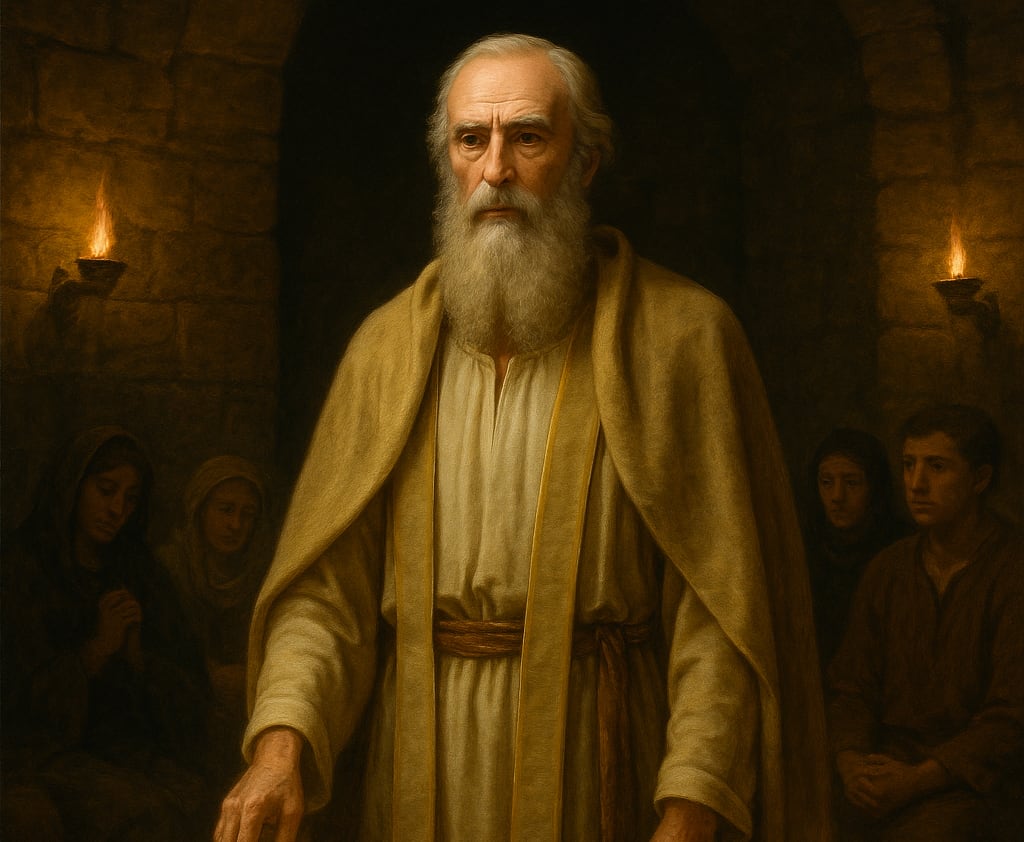
Among the initial leaders of the Christian Church, few individuals exhibit the same quiet dignity and spiritual authority as Pope Clement I, also referred to as Clement of Rome. Esteemed as the third successor of Saint Peter and one of the Apostolic Fathers, Clement's life and contributions were crucial in defining the identity and unity of the early Church. While the specifics of his biography are scarce and frequently shrouded in legend, his works—particularly his letter to the Corinthians—serve as a significant testament to early Christian theology, pastoral care, and church governance.
Clement I is often regarded as the fourth pope, following Saint Peter, Linus, and Anacletus, around 88 AD. Although the precise timeline of his papacy is subject to discussion, the majority of scholars suggest that his tenure lasted from 88 to 99 AD. What sets Clement apart from other early popes is his significant relationship with the Apostles. Early Church historians such as Irenaeus and Tertullian confirm that Clement had personal connections with both Peter and Paul, and it is generally accepted that he was ordained by Peter himself. This direct association endowed his teachings with an apostolic authority that was rarely contested in the early Christian communities. During Clement's leadership, the Roman Church had already emerged as one of the most influential in the Christian realm, and his guidance further solidified its moral and doctrinal standing. He is thought to have been an educated individual, well-versed in both Scripture and classical philosophy, adept at resolving intricate disputes with both wisdom and humility.
Clement's most renowned work is the First Epistle to the Corinthians, commonly referred to as 1 Clement. Composed around 96 AD, this letter stands as one of the earliest Christian texts outside the New Testament, offering a crucial insight into the early Church's dynamics. The epistle arose in response to a crisis within the Corinthian community, where younger members had ousted their leaders, leading to discord and conflict. Clement's approach exemplifies pastoral care; instead of reprimanding, he addresses the Corinthians with a gentle authority, drawing on the harmony of creation, the examples of martyrs, and the teachings of the Apostles to inspire repentance, humility, and the restoration of order. Through eloquent prose, Clement integrates Scriptural references, theological insights, and appeals to Christian tradition. He underscores the necessity of obedience to church authority and highlights the significance of peace and unity—principles that continue to be fundamental to Christian ecclesiology. The letter was held in such high regard in the early Church that it was read during liturgical services in certain communities alongside the canonical Scriptures.
Although specific historical records are limited, tradition suggests that Pope Clement was martyred during the reign of Emperor Trajan. Legend has it that he was exiled to Crimea, where he provided support to Christian prisoners laboring in the quarries. His efforts in evangelization are said to have resulted in numerous conversions, which angered Roman authorities. Ultimately, he was bound to an anchor and cast into the sea—an image that has evolved into a significant Christian symbol and a part of his iconography.
The anchor has transformed into a symbol of hope within Christian art, while also representing Clement’s unwavering faith. He remained devoted until his death, guiding the faithful through both words and actions until his last moments.
In the 9th century, it is believed that Saints Cyril and Methodius recovered Clement’s relics and brought them to Rome, where they are housed in the Basilica of San Clemente. This church, constructed over earlier sites of Christian worship, stands as a testament to the enduring nature and strength of the faith.
Clement's impact reaches well beyond his era. His correspondence with the Corinthians not only influenced the theology surrounding church governance but also established a foundation for papal involvement in the matters of other Christian communities. In this regard, Clement is regarded as one of the pioneering figures in the development of papal primacy—a doctrine that has continued to progress over the centuries. Theologians and historians recognize Clement as an essential witness to the beliefs and frameworks of the early Church. His focus on apostolic succession, the importance of humility, and the need for ecclesial unity remain relevant in contemporary debates regarding church authority and Christian fellowship. Additionally, Clement is among the few early popes acknowledged as a Church Father and is honored as a saint by the Catholic, Eastern Orthodox, Anglican, and certain Protestant denominations. His feast day is commemorated on November 23rd in the Western Church.
About the Creator
A História
"Hi. My name is Wellington and I'm a passion for general history. Here, I publish articles on different periods and themes in history, from prehistory to the present day.
Keep reading
More stories from A História and writers in History and other communities.
Cato the Elde
Marcus Porcius Cato, often referred to as Cato the Elder or Cato the Censor, was a significant figure in the Roman Republic, embodying the values, conflicts, and changes of an emerging Rome. Born in 234 BCE in Tusculum, a small town located southeast of Rome, Cato hailed from a humble plebeian background. However, through his military skill, political resolve, and strong adherence to traditional Roman values, he established himself among the prominent figures in Roman history. His literary works and public endeavors offer essential perspectives on the early identity and principles of the Roman Republic.
By A História10 months ago in History
Sultan Mehmed II: The Conquest of Constantinople That Europe Never Forgot
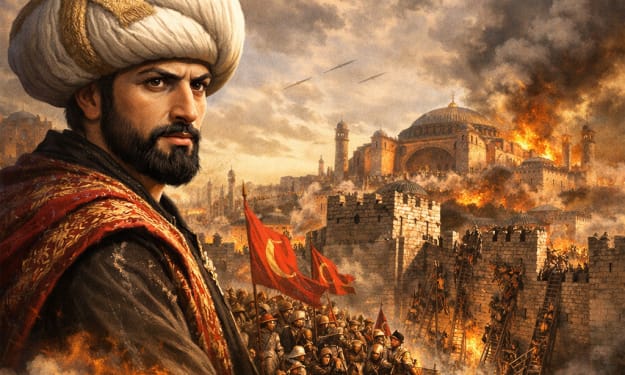
In the spring of 1453, one of the most dramatic moments in world history unfolded when Sultan Mehmed II captured the great city of Constantinople. This event did not simply mark the fall of a city; it ended the thousand-year-old Byzantine Empire and transformed the balance of power between Europe and the Muslim world. Even centuries later, the conquest remains one of the most significant turning points in global history.
By Irshad Abbasi 2 days ago in History
Guard Your Battery
Why are some people so attractive just by standing there? It’s not because they are "likable," but because they don’t need everyone to like them. I realized later that truly charismatic people allow themselves to be criticized, but they never criticize themselves. They never try to please the world; instead, the world stops to watch them.
By Emily Chan - Life and love sharing3 days ago in Poets



Comments
There are no comments for this story
Be the first to respond and start the conversation.