
US Dollar Strengthens as Trump Nominates Kevin Warsh as Federal Reserve Chair
Markets react to Trump’s choice: What it means for investors, the economy, and the future of U.S. monetary policy
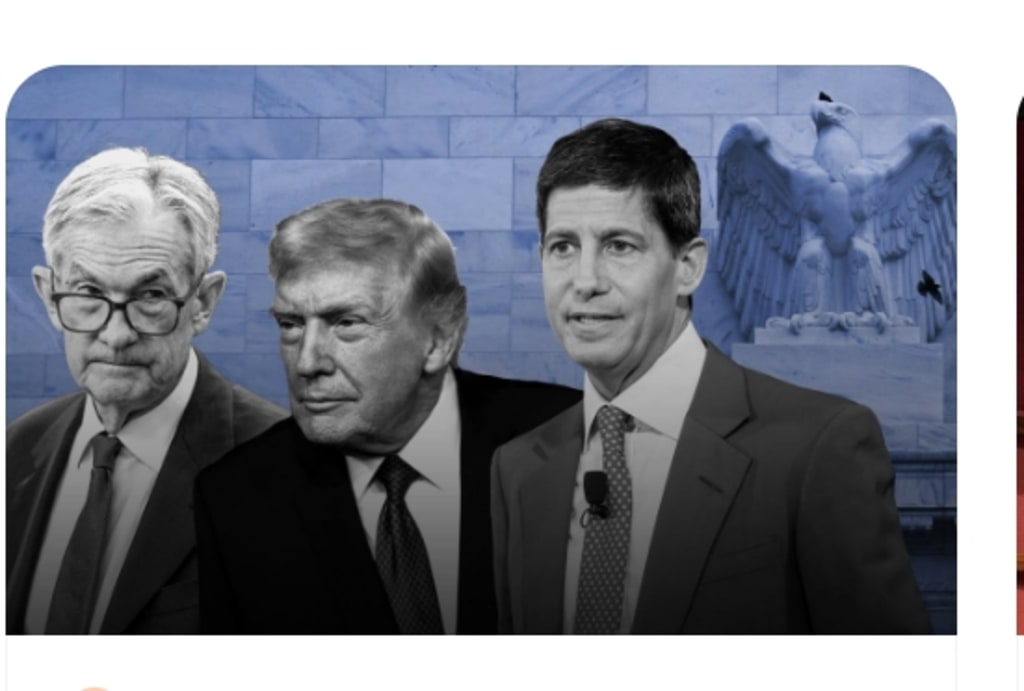
A Pivotal Moment for the Fed and the Dollar
In a move that has captured global attention, President Donald Trump nominated Kevin Warsh to serve as Chair of the U.S. Federal Reserve. The decision immediately sent ripples through the financial markets, with the U.S. dollar strengthening sharply, treasury yields rising, and investors reassessing their expectations for monetary policy in the coming months.
The Fed, the United States’ central bank, plays a critical role in shaping the economy, controlling inflation, and influencing global financial markets. As such, the nomination of a new Fed Chair is more than a political decision—it is a signal to markets, businesses, and international observers about the future direction of U.S. monetary policy.
Kevin Warsh, known for his experience during the 2008 financial crisis and his reputation as a market-savvy economist, brings a particular philosophy to the role, which investors believe will influence the dollar and broader markets.
Kevin Warsh: Background and Experience
Kevin Warsh’s career has been defined by high-stakes financial environments and navigating economic crises. His background includes:
Education at Harvard University, where he earned a degree in Economics
Early experience in investment banking and financial consulting, providing him insights into market mechanics
Senior advisory roles in the Federal Reserve, where he contributed to policy decisions during periods of market volatility
Warsh’s professional trajectory has made him well-versed in the mechanics of monetary policy and risk management, positioning him as a credible choice for a Fed Chair during a period of global economic uncertainty.
Why Markets Reacted to the Nomination
1. Dollar Strengthening
The most immediate market reaction to Warsh’s nomination was a strengthening of the U.S. dollar against major currencies. Analysts attribute this to several factors:
Hawkish Expectations: Warsh is perceived as more inclined toward tightening monetary policy, controlling inflation, and maintaining the strength of the dollar
Investor Confidence: Markets interpret his experience during previous financial crises as an ability to maintain economic stability, which increases confidence in U.S. assets
Interest Rate Anticipation: A stronger dollar typically reflects expectations of higher interest rates relative to other economies
The dollar’s movement has implications for imports, exports, and global financial flows. A stronger dollar can reduce import costs for American consumers, but may also pressure emerging market economies and commodity prices.
2. Treasury Yields Rise
Alongside the dollar, U.S. Treasury yields climbed, reflecting investor expectations that Warsh may advocate for interest rates that prevent overheating of the economy. Rising yields often:
Make borrowing more expensive for corporations and consumers
Attract foreign investment into U.S. government bonds
Signal market confidence in the Fed’s ability to manage inflation
The combination of higher yields and a stronger dollar underscores investor belief in Warsh’s commitment to financial stability.
3. Stocks and Risk Assets
Equity markets showed mixed reactions. While some sectors, particularly financials, welcomed the prospect of a more predictable monetary policy, other risk assets, including technology stocks and cryptocurrencies, experienced modest declines.
A tighter monetary policy can affect:
Growth-sensitive sectors like tech and real estate
Non-yielding assets such as gold and silver, which fell in value as investors moved toward interest-bearing assets
These movements reflect the complex balance markets strike between stability, growth, and interest rate expectations.
Kevin Warsh’s Policy Philosophy
Warsh is known for a balanced, data-driven approach, combining market awareness with caution. Analysts highlight key aspects of his likely policy stance:
Inflation Control: Warsh has historically emphasized preventing runaway inflation, which could strengthen the dollar and support long-term growth
Financial Stability: His experience in crisis management suggests a focus on risk mitigation in banking and markets
Measured Decision-Making: Warsh is not expected to make sudden or unpredictable policy moves, which markets typically favor
This philosophy explains why traders and investors reacted with a positive sentiment for the dollar, seeing his nomination as a sign of steady and competent economic stewardship.
Global Implications of the Nomination
The Fed Chair’s decisions impact not only the U.S. economy but also the global financial system:
Emerging Markets: Rising U.S. yields and a stronger dollar could pressure debt-servicing costs in countries with dollar-denominated debt
Commodity Prices: Metals, oil, and other commodities often react to a stronger dollar, affecting global supply chains
International Trade: Exporters may face challenges as their goods become more expensive for U.S. consumers
Kevin Warsh’s leadership may therefore reshape international markets depending on his approach to interest rates and monetary policy.
Historical Context: Fed Chairs and Market Confidence
The Fed Chair’s role is unique because their statements and policy actions directly influence market psychology. For example:
Alan Greenspan: Known for his careful guidance during volatile periods, instilled confidence in markets
Ben Bernanke: Guided the Fed through the 2008 financial crisis, emphasizing crisis response
Janet Yellen: Focused on gradual policy shifts, balancing growth and inflation
Warsh, shaped by the 2008 crisis, is expected to combine analytical rigor with market prudence, reassuring investors that the Fed will act responsibly.
Why the Dollar Reacted So Quickly
Market participants often price in expectations long before policies take effect. Warsh’s nomination likely caused immediate reactions due to:
Perceived hawkishness: Investors anticipate tighter monetary policy
Crisis credibility: His past experience suggests a capable steward of the economy
Market psychology: Traders adjust positions quickly to reflect potential Fed moves
The speed of the reaction is typical for high-stakes financial news, where sentiment and perception can move markets faster than policy itself.
Potential Risks and Challenges
While the nomination has been positively received, there are risks:
Global Economic Volatility: Rising rates could slow global growth and impact trade
Political Pressures: The Fed must maintain independence, even as political narratives around Warsh’s appointment emerge
Market Overreaction: Investors may have priced in too much optimism, risking a correction if policies differ from expectations
These risks mean that Warsh will need to balance market expectations with real economic conditions, a delicate task for any Fed Chair.
The Road Ahead for Investors
Investors and financial planners are advised to:
Monitor Treasury yields and dollar movements closely
Prepare for potential interest rate adjustments affecting loans, mortgages, and investments
Assess the impact on commodities, emerging markets, and equities
Follow Warsh’s early speeches and Fed statements for guidance
Long-term, Warsh’s tenure may stabilize the U.S. dollar, influence global markets, and reshape investor strategies worldwide.
Conclusion: A Critical Juncture for U.S. Monetary Policy
Kevin Warsh’s nomination as Federal Reserve Chair is more than a political choice—it is a market-moving event with immediate and far-reaching implications. The dollar’s strength, rising yields, and cautious equity responses reflect a combination of expectation, confidence, and strategic anticipation.
As Warsh prepares to take the helm, the world watches closely. His decisions will not only influence domestic growth and inflation but also global financial stability, investor sentiment, and international trade flows.
In a period marked by economic uncertainty and market sensitivity, Warsh’s leadership will be a key factor in determining whether markets remain calm or face volatility, making this nomination one of the most consequential for investors in recent years.
About the Creator
Keep reading
More stories from Zahid Hussain and writers in The Swamp and other communities.
Why Iran’s Response to a U.S. Attack Could Be Different This Time
As tensions rise between the United States and Iran — with U.S. warnings, military buildups, and political posturing on both sides — analysts are asking a key question: If a U.S. attack were to occur, why might Iran’s response differ from past patterns? The answer lies in an unprecedented blend of internal instability, external pressures, and strategic rethinking within Iran’s leadership. 1. A More Volatile Internal Political Landscape Unlike previous confrontations, Iran is currently grappling with significant domestic unrest. Massive anti‑government protests have shaken the country and led to thousands of deaths, according to activist reports. � albaniandailynews.com Previous military responses — such as the more measured retaliation after U.S. strikes in June 2025 — were partly designed to project resolve while avoiding immediate escalation. But today’s leaders face internal pressures that could encourage a faster and more forceful response if attacked. Some officials might see rapid retaliation as a way to unify public sentiment and distract from persistent domestic challenges. � albaniandailynews.com And at times of internal strain, political leaders may feel they have less room to maneuver — making sudden retaliation appear as the only viable way to demonstrate strength. 2. More Direct and Uncompromising Rhetoric from Iran’s Top Officials Iranian military and political statements have become significantly less restrained. In contrast to past conflicts where responses were calibrated to signal only limited retaliation, current official statements emphasize that any attack — limited or otherwise — would be treated as an “all‑out war.” � trtworld.com Brigadier General Mohammad Akraminia, a spokesperson for Iran’s army, said that any assault would be met with a “decisive and swift response,” stressing that Iranian forces have been instructed to react “in real time and without delay.” � Anadolu Ajansı This shift in tone indicates that Tehran may no longer prefer delayed or symbolic retaliation, as it has at times in the past, but instead could opt for an immediate, robust military response. 3. Strengthened Military Readiness and Broader Arsenal Since the previous confrontations, Iran has invested in expanding and upgrading its military capabilities — including missile systems, drones, and naval defenses. Reports suggest that Iran’s armed forces consider their level of readiness significantly heightened compared to previous years. � A News This improved readiness means Tehran may feel capable of responding swiftly and across multiple fronts if attacked. That includes: Missile and drone strikes against U.S. forces or bases in the Middle East Targeting U.S. naval assets, including aircraft carriers Cyber and asymmetric responses that could challenge U.S. infrastructure or regional interests � Anadolu Ajansı +1 The combination of expanded capabilities and ideological resolve suggests a response could be broader and more complex than what the United States has observed during previous stand‑offs. 4. Regional Considerations and Proxy Dynamics Iran no longer faces tensions with the U.S. as a solely bilateral issue. Its regional network — including allied militias and proxy forces — increases the potential scope of any retaliation. Gulf states, Israel, and U.S. partners in the region could be drawn into response scenarios indirectly or directly, heightening the risk that conflict spreads beyond Iran itself. � Le Monde.fr This dynamic means Tehran may be preparing not just a direct reply but a multi‑layered response involving both its conventional forces and allied groups — a stark contrast to earlier, more constrained exchanges. 5. Diplomatic Shifts and External Pressures The international environment also affects Iran’s calculus. The European Union’s designation of the Iranian Revolutionary Guard Corps (IRGC) as a terrorist organization has increased diplomatic isolation and pressure on Tehran. � The Guardian At the same time, Iranian officials have expressed conditional openness to diplomacy, preferring negotiations on an equitable footing rather than talks tied to defense‑capability restrictions. � Reuters This mix of harsher international pressure and limited diplomatic avenues could push Tehran toward a more assertive defensive posture, interpreting an attack as both a national and ideological threat. 6. Lessons from Past Conflicts and “Deterrence Signals” In the 2025 U.S. strikes on Iranian nuclear facilities, Iran retaliated with a missile attack on U.S. forces the next day — a response seen as both a warning and a signal that it would retaliate without triggering full‑scale war. � WHYY But current rhetoric from Iranian leaders suggests that narrow or symbolic retaliation may no longer suffice to preserve deterrence. They have repeatedly framed any attack as potentially equal to an act of war, hinting they may escalate more quickly than before to avoid appearing weak — a legacy of missed deterrence opportunities and the perceived costs of prolonged domestic unrest. � trtworld.com 7. Risk of Rapid Escalation: What Could Change the Game Past patterns of measured, delayed, or proportionate retaliation were rooted in a desire to avoid full‑blown conflict. Now, Tehran’s leaders may feel: They must reassert deterrence immediately Internal political legitimacy depends on a strong posture Regional allies expect decisive action That means Iran’s response — if faced with a U.S. attack — is more likely to be immediate, forceful, and multifaceted, involving simultaneous military, cyber, and proxy responses. Such escalation dynamics differ fundamentally from earlier periods when Tehran carefully calibrated its responses to avoid widening wars, making today’s potential conflict far more unpredictable and dangerous. Conclusion: A Turning Point in Strategic Calculus If the United States were to strike Iran, Tehran’s response could be dramatically different than in the past. The combination of: internal instability, harder official rhetoric, enhanced military capabilities, complex regional alliances, and heightened international isolation points toward a scenario where Iran might respond swiftly, decisively, and broadly. This shift heightens the stakes for U.S. policymakers and global security. In a world where miscalculation can quickly spiral into wider conflict, understanding these evolving dynamics isn’t just strategic — it’s essential.
By Zahid Hussaina day ago in The Swamp
Saudi Arabia Stands as Earth’s Largest Country Without Permanent Rivers
Subtitle: Saudi Arabia holds a unique and striking distinction on the global map: it is the largest country on Earth without a single permanent river. Covering more than 2.15 million square kilometers, the Kingdom dominates most of the Arabian Peninsula, yet none of its waterways flow year-round. This geographic reality has shaped Saudi Arabia’s history, settlement patterns, water management strategies, and modern development in profound ways.
By Salaar Jamalia day ago in The Swamp
SStrange Metal From Beyond Our Planet Spotted in Ancient Treasure Stash
Sometimes, history throws us a curveball so strange it feels more like science fiction than archaeology. Imagine opening a Bronze Age treasure chest—gold gleaming, artifacts carefully arranged—only to discover that some of the metal inside didn’t even come from Earth.
By Aarif Lashari7 days ago in The Swamp


Comments
There are no comments for this story
Be the first to respond and start the conversation.