
SStrange Metal From Beyond Our Planet Spotted in Ancient Treasure Stash
“Driver killed and dozens injured in sudden crash, authorities investigate causes”
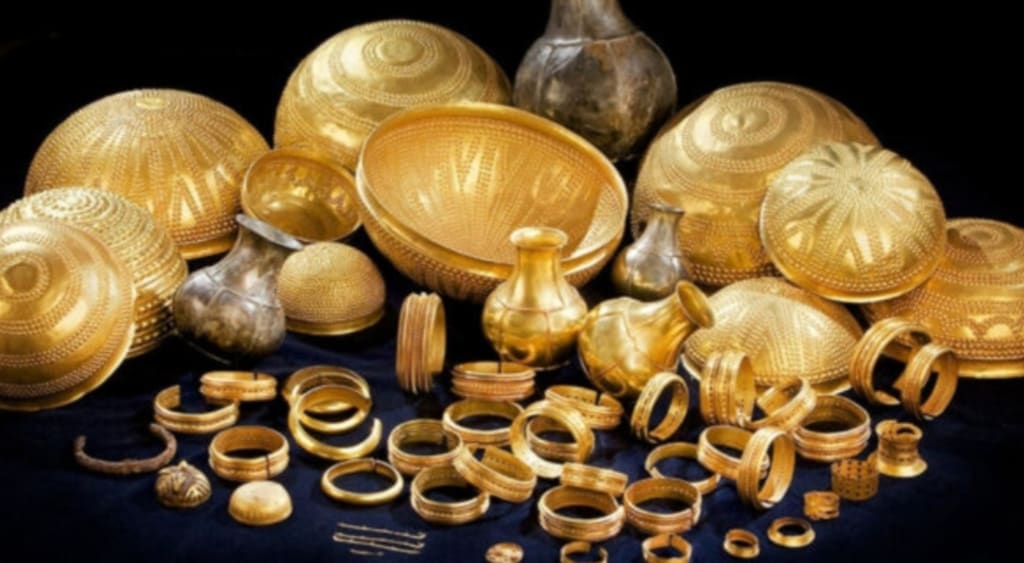
Sometimes, history throws us a curveball so strange it feels more like science fiction than archaeology. Imagine opening a Bronze Age treasure chest—gold gleaming, artifacts carefully arranged—only to discover that some of the metal inside didn’t even come from Earth.
That’s exactly what scientists now believe happened more than 3,000 years ago.
An ancient treasure found in Spain, known as the Treasure of Villena, has revealed a shocking secret: parts of it may have been crafted from metal that originated in outer space. This extraordinary discovery is changing what we know about ancient technology, human curiosity, and our long-standing fascination with the cosmos.
An Ancient Treasure With a Modern Mystery
The Treasure of Villena was first uncovered in 1963 in the Alicante province of southeastern Spain. It quickly became one of the most important prehistoric finds in Europe. The hoard includes more than 60 objects—mostly gold—such as bowls, bracelets, bottles, and decorative ornaments, weighing nearly 10 kilograms in total.
For decades, the treasure was celebrated as a stunning example of Late Bronze Age craftsmanship. But two objects in the collection never quite fit in.
Among the gleaming gold were:
A small, heavily corroded hemispherical object decorated with gold
A simple, dark metal bracelet shaped like an open ring
At first glance, these pieces appeared to be made of iron. That alone was puzzling, because the treasure dates back to around 1400–1200 BCE, centuries before ironworking was common in the Iberian Peninsula.
So how did iron objects end up in a Bronze Age treasure?
The Clue Hidden in the Chemistry
To solve the mystery, researchers turned to modern scientific tools. Using advanced chemical analysis, they examined tiny samples from the strange metal artifacts.
What they found was astonishing.
The metal contained unusually high levels of nickel, a chemical signature that doesn’t match iron found naturally on Earth. Terrestrial iron typically contains very little nickel—but meteoritic iron, formed in space and delivered to Earth by meteorites, contains much more.
This discovery strongly suggests that the bracelet and hemispherical object were made from iron that fell from the sky.
In other words, these Bronze Age artifacts were forged from meteorite fragments.
Metal From the Stars
Meteoritic iron forms in space, often in the cores of ancient asteroids or during massive cosmic events like star explosions. When meteorites crash into Earth, they bring with them this rare metal—one of the only sources of workable iron available to humans before iron smelting was invented.
To ancient societies, this material would have seemed magical.
Imagine seeing a blazing fireball streak across the sky, crash into the ground, and later discovering that the strange stone left behind could be hammered into tools or ornaments. For early humans, this wasn’t just metal—it was a gift from the heavens.
That belief may explain why meteoritic iron was often reserved for symbolic, ceremonial, or high-status objects rather than everyday tools.
Not the First Time—But Still Rare
This isn’t the first known example of ancient humans using metal from space. One of the most famous cases is the dagger buried with Pharaoh Tutankhamun, which was also confirmed to be made from meteoritic iron.
However, such discoveries are extremely rare.
What makes the Villena treasure special is that these extraterrestrial metal objects were found alongside an enormous collection of gold artifacts. This suggests that the people who buried the hoard didn’t see meteoritic iron as inferior to gold—quite the opposite. It may have been considered equally valuable, or even more meaningful.
Why Would Ancient People Use Meteorite Metal?
Before iron smelting technology existed, working with meteoritic iron required remarkable skill. The metal is tough, difficult to shape, and rare. Yet ancient craftspeople managed to turn it into wearable objects and decorative pieces.
This tells us several important things:
Ancient people recognized the uniqueness of the material and deliberately sought it out.
They had the technical ability to shape extremely hard metals without modern tools.
Meteoritic iron likely held spiritual or symbolic significance, possibly associated with gods, stars, or cosmic power.
The inclusion of these objects in a treasure hoard suggests they may have belonged to an elite individual or held ceremonial importance.
A Bronze Age Connection to the Cosmos
What’s truly fascinating about this discovery is what it reveals about the human mindset thousands of years ago. Long before telescopes, rockets, or space exploration, people were already interacting with material from beyond Earth.
They may not have understood astrophysics, but they clearly recognized that some materials were different—special—and worthy of preservation.
The Villena treasure shows that humanity’s relationship with the cosmos didn’t begin with modern science. It began the moment early humans looked up at the sky, watched fire fall from the heavens, and decided that those fragments were worth treasuring.
What Happens Next?
The metal artifacts from the Villena treasure are heavily corroded, making analysis challenging. However, researchers hope that future non-invasive techniques will allow them to confirm the meteoritic origin beyond any doubt and possibly trace where the meteorite itself came from.
As science continues to evolve, ancient objects like these may reveal even more secrets—bridging the gap between archaeology and astronomy.
A Final Thought
The idea that a Bronze Age bracelet may have been forged from stardust is more than just a fascinating fact—it’s a reminder of how deeply connected humanity has always been to the universe.
About the Creator
Keep reading
More stories from Aarif Lashari and writers in The Swamp and other communities.
Toddler Taken Into ICE Custody With Father and Flown From Minnesota to Texas Before Being Returned to Mother, Lawyer Says
A troubling incident involving the U.S. Immigration and Customs Enforcement (ICE) agency has sparked public debate after reports emerged that a toddler was temporarily taken into custody alongside their father in Minnesota, flown to Texas, and then returned to the child’s mother the next day, according to the family’s lawyer.
By Aarif Lashariabout 15 hours ago in The Swamp
Somaliland President Pitches Lucrative Business Opportunities to Donald Trump Jr.
In an intriguing move signaling growing global interest in Somaliland, the President of Somaliland recently met with Donald Trump Jr. to discuss potential business opportunities that could drive economic growth in the self-declared republic. This event has captured attention not only for the prominent personalities involved but also for the possible implications it holds for the future of Somaliland’s economy and international partnerships.
By Ayesha Lashariabout 19 hours ago in The Swamp
What the TikTok Deal Means for the App’s Future in the US
After years of political, legal, and diplomatic drama, TikTok has finally secured its future in the United States through a landmark deal that transforms its U.S. presence and resolves long-standing concerns from lawmakers, regulators, and national security officials. The agreement, officially finalized in January 2026, creates a new corporate structure that allows TikTok to continue operating legally and widely among its roughly 200 million U.S. users — while imposing new layers of data security and government oversight.
By Salaar Jamali2 days ago in The Swamp
Rachel Reviews: The Spiral Archive by Pieter Hendrik
It's difficult for me to know where to start with a review of this book as it was, for me, an entirely unique experience and one that I'll probably never have again. I don't want that to be interpreted as unenjoyable but it has left me scratching my head a little and ruminating on its content, its themes and its characters.
By Rachel Deeming7 days ago in BookClub



Comments
There are no comments for this story
Be the first to respond and start the conversation.