politics
Politics does not dictate our collective cultural mindset as much as it simply reflects it; We've got to look in the mirror sometimes, and we've got one.
UK and France Bomb Underground IS Arms Bunker in Syria. AI-Generated.
In a rare show of military cooperation, the United Kingdom and France launched coordinated airstrikes against a suspected Islamic State (IS) arms bunker in Syria this week. Officials have described the strike as a targeted operation aimed at disrupting the terrorist organization’s supply lines and preventing further attacks in the region. While the details of the operation remain classified, Western authorities emphasized that intelligence indicated the bunker housed large quantities of weapons, ammunition, and explosives intended for future IS operations. Precision Strikes in a Volatile Region According to military sources, the operation involved a combination of aerial surveillance and precision-guided munitions. The UK’s Royal Air Force and France’s Armée de l’Air carried out simultaneous strikes on the underground facility, located in eastern Syria, near the border regions that have been historically contested by IS fighters. “This action demonstrates our commitment to confronting terrorism wherever it threatens international security,” a spokesperson for the UK Ministry of Defence said. The strikes were reportedly timed to minimize civilian casualties. Western officials claim that intelligence indicated the site was primarily used for storing weaponry and planning operations rather than housing civilians. However, independent verification on the ground remains challenging due to ongoing conflict in the region, making it difficult to confirm the full extent of the damage or casualties resulting from the airstrikes. Disrupting Islamic State Operations Islamic State, although weakened since its territorial peak in 2014, continues to operate as an insurgent network in parts of Syria and Iraq. Underground bunkers like the one targeted by the UK and France play a critical role in sustaining the group’s activities. Weapons caches, improvised explosive device (IED) components, and other supplies are often stored in these hidden facilities, allowing IS fighters to maintain mobility while evading detection by international forces. “Operations like this disrupt their logistical networks and force them to spend more time hiding supplies rather than launching attacks,” said a Middle East security analyst. “While they no longer control large swaths of territory, their ability to strike unpredictably still poses a serious threat to regional stability.” Regional Implications The joint operation highlights growing Western concern over the persistence of extremist elements in Syria. Analysts suggest that the strike could also serve as a warning to other groups considering the reestablishment of IS strongholds. However, the operation may complicate relationships with regional powers, including Russia and Iran, who have a significant military presence in Syria. Both countries have historically opposed unilateral Western military interventions, arguing that such strikes risk further destabilization. In addition to its tactical objectives, the operation may also carry political significance. The UK and France have both faced domestic pressure to show decisive action against terrorism. Recent threats from IS affiliates in Europe have reignited public debate over national security measures, making visible military actions an important aspect of political messaging. Challenges of Fighting an Underground Threat One of the main difficulties in targeting underground bunkers is the high risk of intelligence errors. Military planners rely on satellite imagery, drone reconnaissance, and human intelligence to locate and verify these facilities. Even a small miscalculation can result in unintended damage or missed targets. Experts note that the design of underground facilities is often sophisticated. Bunkers may include reinforced concrete walls, ventilation systems, and multiple concealed entrances, making them difficult to neutralize completely. Precision-guided bombs and specialized munitions are therefore crucial tools for reducing collateral damage while achieving operational goals. “Striking a target like this requires detailed intelligence and careful coordination between multiple military units,” said an independent defense consultant. “It’s not just about dropping bombs—it’s about disrupting an entire network without creating new security risks.” Reactions and Consequences The airstrikes have received mixed reactions internationally. Western allies, including the United States, praised the operation as a necessary step to prevent IS from reconstituting its capabilities. A spokesperson for the U.S. State Department stated, “This joint strike demonstrates our ongoing commitment to defeating terrorist organizations in the region and protecting civilians from future attacks.” Conversely, some regional actors have criticized the operation, warning that it could inflame local tensions and provoke retaliatory attacks. Human rights organizations also emphasized the need for transparency and accountability in military operations, especially in areas where civilians may be at risk. While it is too early to assess the long-term impact of the strike, analysts suggest that targeting critical supply hubs is a strategy likely to continue. Disrupting logistics not only weakens IS operational capacity but also forces the group to rely on riskier supply routes, making them more vulnerable to detection and interdiction. The Broader Fight Against IS The operation in Syria reflects a broader international strategy to combat the remnants of Islamic State. Over the past decade, coalition forces have pursued a combination of military, intelligence, and diplomatic measures aimed at dismantling IS networks. This approach has seen varying degrees of success, with territorial defeat achieved in key areas but insurgent activity persisting in pockets of Syria and Iraq. Experts argue that ongoing vigilance is essential. “Even when the headlines suggest IS is defeated, their ideology and underground networks can persist,” said a counterterrorism researcher. “Operations like this, while not decisive on their own, contribute to a larger, coordinated effort to prevent resurgence.” Looking Ahead The UK and France’s operation in Syria signals a continued willingness among Western nations to conduct targeted strikes against terrorist infrastructure. While immediate effects may be limited to the destruction of weapons caches and disruption of logistical networks, the psychological and strategic impact could be significant. For IS and other extremist groups, the message is clear: their ability to operate with impunity in Syria is increasingly constrained. As international observers monitor developments in the region, the broader challenge remains: ensuring long-term stability in Syria while addressing the persistent threat of extremist violence. The success of operations like this one may hinge not only on military precision but also on coordinated efforts to support political reconciliation and economic recovery in conflict-affected areas. The joint UK-France strike on the underground IS arms bunker thus represents more than a tactical action; it is part of an ongoing, multifaceted struggle to curtail extremist influence in a volatile and strategically critical region.
By Muhammad Hassan24 days ago in The Swamp
China Social Media Hails US Maduro Move as a Taiwan Template: A Growing Geopolitical Dynamic. AI-Generated.
In recent months, global politics has witnessed significant shifts in the way nations and powers are asserting their influence. One of the most intriguing developments has been China's reaction to the United States' decision to target Venezuelan leader Nicolás Maduro’s assets. This move, which included the freezing of assets linked to Maduro and his government, has caught the attention of China, where social media is buzzing with discussions on how this might serve as a "template" for future U.S. dealings, particularly in relation to Taiwan. The complexities of these political maneuvers raise several important questions about global power dynamics, international law, and the role of sanctions as tools of geopolitical control. As tensions rise between the U.S., China, and other global actors, the implications of such actions could have far-reaching effects not only on Venezuela and Taiwan but on the broader international order as well. A Turning Point: US and Venezuela The U.S. has long had contentious relations with Venezuela, particularly since Maduro’s ascent to power. His government has faced accusations of corruption, human rights violations, and undermining democracy. In response, the U.S. imposed sanctions, aimed at destabilizing his government and pressuring him to relinquish power. However, the recent decision to target Maduro's assets and government members directly reflects a much more aggressive stance. The significance of this move lies not just in the economic impact on Venezuela but also in the broader political message it sends. The U.S. is demonstrating that it can exert considerable influence over sovereign nations by targeting individuals and governments it deems adversarial. The action was made to tighten the international isolation of Maduro’s regime and to rally other nations against his leadership. China's Response: A Strategic Perspective China, which has close ties with Venezuela, particularly in economic and energy deals, has not taken kindly to the U.S.'s aggressive stance. While Beijing has denounced the U.S. sanctions on Venezuela, it has also made its views clear on a related geopolitical issue — Taiwan. On Chinese social media, including popular platforms like Weibo, there has been a significant uptick in discussion around the U.S. sanctions on Venezuela. Many commentators have started drawing parallels between the treatment of Maduro and the growing tensions surrounding Taiwan. A prominent narrative suggests that the U.S. move in Venezuela is being seen as a "template" for future actions against Taiwan, given the strained relations between the U.S. and China over the latter's growing ambitions to assert sovereignty over Taiwan. China’s view of Taiwan as a breakaway province has been consistent for decades. Beijing has not ruled out the use of force to reclaim Taiwan if necessary, and it views the U.S. as the primary supporter of Taiwan's independence. Given this, Chinese social media users have observed that the U.S.’s targeting of Venezuela could be seen as a potential precursor to similar actions directed at Taiwan’s leadership, particularly as the U.S. continues to bolster its ties with Taipei. A Template for Taiwan? The notion that the U.S. might use similar tactics on Taiwan is grounded in a broader strategic concern for China. If the U.S. can successfully impose its will on a foreign government through economic pressure, freezing assets, and escalating diplomatic isolation — actions that have already been demonstrated with Venezuela — then this model could potentially be replicated in Taiwan. China is particularly sensitive to any external interference in Taiwan, given its long-standing commitment to reunification, and any perceived destabilization of the island could invite similar responses. On Chinese social media, the idea of “sanctioning Taiwan” has gained traction. While it remains unclear what specific measures might be considered, experts suggest that they could involve targeting Taiwanese companies and financial institutions, placing restrictions on Taiwanese officials, or even leveraging international platforms like the United Nations to diplomatically isolate Taiwan. In this sense, China could very well view the U.S.’s actions against Venezuela as a potential precursor to a more forceful response regarding Taiwan. Implications for Global Politics The potential use of such a "template" for Taiwan raises serious concerns for international relations and security in the Asia-Pacific region. The increasing militarization of the Taiwan Strait, combined with the rising number of sanctions and economic warfare tactics between global powers, signals a volatile future for the region. For China, the specter of Taiwan's separation and U.S. involvement in its protection is a point of immense national pride and strategic importance. Therefore, as the U.S. applies increasing pressure on global actors, Beijing may feel justified in responding with similar tactics, further destabilizing global security. The U.S. and China are already locked in a delicate trade war, with both sides taking actions that affect each other's economies. The Taiwan situation is merely one more area where these superpowers are likely to butt heads in the coming years. Furthermore, the situation calls into question the effectiveness of sanctions as a foreign policy tool. While they may bring short-term political gains, sanctions often have long-lasting, negative effects on the people of the country involved. In Venezuela, for instance, the economic fallout from U.S. sanctions has been devastating for the Venezuelan population, with inflation and poverty reaching new highs. In the case of Taiwan, any sanctions or economic isolations could have similar consequences, damaging its economy and the livelihoods of its citizens. Conclusion As China watches the U.S. respond to Venezuela with increasingly aggressive measures, it is looking over its shoulder at the Taiwan issue with heightened concern. The idea that the U.S. might follow a similar template with Taiwan, imposing economic pressure and diplomatic isolation, is a chilling prospect for Beijing. This development underscores the importance of international diplomacy, dialogue, and a reevaluation of how we use economic tools like sanctions. The situation remains fluid, and how the U.S., China, and other global powers navigate this delicate moment will shape the geopolitical landscape for years to come. The world is watching closely, with global security and economic stability hanging in the balance.
By Fiaz Ahmed Brohi24 days ago in The Swamp
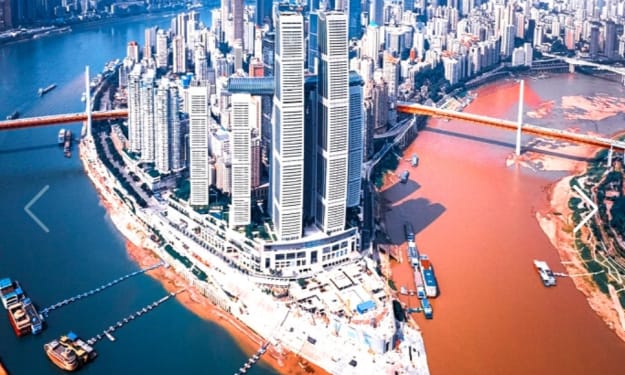
Quick Guide to Chongqing China Tourist Attractions. AI-Generated.
Chongqing is one of China’s most fascinating and misunderstood cities. Often overshadowed by Beijing and Shanghai, this sprawling metropolis in southwestern China offers a unique blend of dramatic landscapes, futuristic architecture, deep history, and bold cuisine. Known as the “Mountain City,” Chongqing rises vertically from the confluence of the Yangtze and Jialing Rivers, creating a cityscape unlike anywhere else in the world.
By Aarif Lashari24 days ago in The Swamp
The Spellbinding Trip to China That Taught Me How to Enjoy Being Single Again. AI-Generated.
For a long time, being single felt like a quiet defeat. Not a loud heartbreak, but a lingering sense that I had somehow fallen behind in life’s unspoken race. Friends paired off, timelines filled with engagements, and conversations slowly shifted from dreams to mortgages. By the time I booked my flight to China, I wasn’t looking for love—I was looking for relief from the idea that something was missing.
By Aarif Lashari24 days ago in The Swamp
Police Identify 16 More Victims of Swiss Bar Fire. AI-Generated.
Swiss authorities have confirmed the identification of 16 additional victims following the devastating bar fire that shook the country, deepening national grief and renewing urgent questions about safety, accountability, and prevention. As police continue their investigation, the tragedy has become more than a single catastrophic event—it is now a collective moment of mourning that has united communities across Switzerland.
By Aarif Lashari24 days ago in The Swamp
Maduro in Custody at New York Detention Centre as Trump Says US Will “Run” Venezuela. AI-Generated.
The political world has been shaken by reports that Venezuelan President Nicolás Maduro is now in custody at a New York detention centre, a development that—if confirmed—marks one of the most dramatic turns in modern Latin American geopolitics. The shock intensified when former U.S. President Donald Trump declared that the United States would “run” Venezuela, signaling an unprecedented assertion of power over a sovereign nation. For years, Venezuela has existed at the center of ideological conflict between Washington and Caracas. Yet this moment feels different. It is not merely rhetoric or sanctions—it is a symbolic rupture, raising profound questions about international law, sovereignty, and the future of Venezuela’s people. How Venezuela Reached This Breaking Point Venezuela’s crisis did not emerge overnight. Once one of Latin America’s wealthiest nations, the country has endured economic collapse, hyperinflation, mass migration, and political repression over the past decade. Maduro, successor to Hugo Chávez, has been accused by critics of dismantling democratic institutions, suppressing dissent, and clinging to power through controversial elections. The United States has long refused to recognize Maduro as Venezuela’s legitimate leader, instead backing opposition figures and imposing sweeping sanctions. These measures were framed as efforts to restore democracy, but critics argue they deepened civilian suffering while failing to dislodge the regime. Maduro’s reported detention in New York represents a dramatic escalation—moving from pressure to direct action. Trump’s Statement and Its Global Implications Trump’s assertion that the U.S. will “run” Venezuela has sparked fierce debate across diplomatic circles. Supporters interpret the remark as bold leadership, arguing that Venezuela requires firm external control to rebuild institutions and restore stability. In their view, international intervention could end corruption, revive oil production, and address the humanitarian crisis. Opponents, however, see the statement as a dangerous violation of national sovereignty. International law traditionally rejects the idea of one nation “running” another, particularly without multilateral consent. Critics warn that such language echoes colonial-era thinking and could destabilize the entire region. The global response has been swift. Several Latin American governments have urged restraint, while European leaders have called for transparency and adherence to due process. The United Nations has emphasized the importance of peaceful, lawful solutions. What Maduro’s Custody Could Mean If Maduro remains in U.S. custody, the consequences could be seismic. His detention may embolden opposition forces within Venezuela, potentially accelerating political transition. Yet it could also trigger backlash from loyalists within the military and government, raising the risk of internal conflict. For ordinary Venezuelans, the situation is deeply uncertain. Many citizens hope this moment could mark the beginning of meaningful change—an end to shortages, emigration, and fear. Others worry that external control could replace one form of domination with another, leaving the population caught between competing powers. The symbolism of a sitting—or recently sitting—head of state held in a New York detention centre cannot be overstated. It challenges assumptions about political immunity and signals that global power dynamics are shifting. Oil, Power, and Strategic Interests Beyond ideology, Venezuela’s vast oil reserves loom large in this unfolding drama. Control over one of the world’s largest proven oil supplies has long been a strategic goal for global powers. Trump’s comments inevitably revive suspicions that economic interests are driving political decisions. Supporters counter that reviving Venezuela’s oil sector could stabilize global energy markets and provide resources for rebuilding the country. Critics argue that such outcomes often benefit corporations and foreign governments more than local populations. History offers cautionary tales of interventions justified by promises of stability that failed to deliver lasting peace. A Defining Moment for International Order Maduro’s detention and Trump’s declaration represent more than a bilateral dispute—they test the limits of the current international system. Can powerful nations act unilaterally in the name of democracy? Who decides when sovereignty can be overridden? And what protections remain for smaller states? The answers will shape not only Venezuela’s future but also global norms for decades to come. Conclusion: Uncertainty, Hope, and the Road Ahead As the world watches, Venezuela stands at a crossroads. Maduro’s reported custody could signal the end of an era—or the beginning of deeper turmoil. Trump’s bold statement adds urgency but also controversy, highlighting the fragile balance between intervention and overreach. For millions of Venezuelans, the ultimate hope remains simple: dignity, stability, and the freedom to determine their own future. Whether this dramatic chapter leads to renewal or renewed conflict will depend on choices made in Washington, Caracas, and beyond. One thing is certain—this moment will be remembered as a turning point in the history of Venezuela and the evolving landscape of global power. If you’d like, I can: Rewrite this with a stronger biblical or moral perspective Adjust it for SEO optimization Make it more opinionated or more neutral Format it exactly to Vocal Media publishing standards
By Aarif Lashari24 days ago in The Swamp
Donald Trump’s Hemisphere Ambition: Power, Venezuela, and the Future of the Americas. AI-Generated.
In recent political discourse, a provocative idea has gained attention: that Donald Trump wants to “run Venezuela” and dominate the Western Hemisphere. While this phrasing is deliberately dramatic, it reflects broader concerns about Trump’s worldview, his foreign policy instincts, and how a second Trump presidency could reshape relations across North, Central, and South America. Whether literal or rhetorical, the idea points to a larger debate about power, influence, and the limits of U.S. leadership in a rapidly changing world. To understand this claim, it is important to separate political rhetoric from practical reality. Donald Trump has never formally proposed governing Venezuela. However, during his presidency and in subsequent speeches, he repeatedly framed Latin America—particularly Venezuela—as a region that should fall clearly under U.S. influence. This perspective aligns closely with an old geopolitical concept: the Monroe Doctrine, which asserted U.S. dominance in the Western Hemisphere and warned outside powers to stay out. Trump’s View of Venezuela Venezuela has long been a focal point of U.S. foreign policy, especially after its economic collapse, humanitarian crisis, and political turmoil under Nicolás Maduro. During Trump’s presidency, the U.S. recognized opposition leader Juan Guaidó as Venezuela’s legitimate president, imposed harsh sanctions, and openly discussed “all options,” including military pressure. Trump often described Venezuela as a socialist failure and a warning to Americans about left-wing politics. But beyond ideological messaging, Venezuela’s vast oil reserves made it strategically significant. Trump suggested that Venezuela could become “a great country again” under new leadership—language that critics interpreted as implying U.S.-guided control rather than genuine Venezuelan self-determination. This is where the idea of “running Venezuela” takes shape. It is less about formal annexation and more about installing a friendly government aligned with U.S. interests, economically and politically. For many in Latin America, this echoes a long history of U.S. intervention that has left deep scars. Dominating the Western Hemisphere Trump’s “America First” doctrine emphasized strength, leverage, and transactional relationships. In the Western Hemisphere, this translated into pressure rather than partnership. He threatened tariffs on Mexico, cut aid to Central America, tightened sanctions on Cuba, and demanded loyalty from regional allies. The idea of dominating the hemisphere fits into Trump’s zero-sum worldview: if the U.S. is not in charge, then rivals like China, Russia, or Iran will be. Venezuela, in particular, has strong ties with Moscow and Beijing. From Trump’s perspective, allowing those relationships to grow unchecked represented a direct challenge to U.S. power close to home. However, domination is not the same as leadership. Many experts argue that Trump’s confrontational style weakened U.S. influence by alienating allies and pushing countries toward alternative partnerships. China has significantly expanded its economic footprint in Latin America, often filling gaps left by U.S. disengagement. Legal and Ethical Limits Even if a U.S. president wanted to “run” another country, international law makes this nearly impossible without severe consequences. Sovereignty is a core principle of the global system. Direct control over Venezuela would require military occupation or regime enforcement—both highly controversial and likely to provoke international backlash. Ethically, such ambitions raise serious questions. Venezuela’s crisis is real, but solutions imposed from outside risk worsening instability rather than resolving it. Latin American nations have repeatedly emphasized that they want cooperation, not control. The memory of U.S.-backed coups and interventions still shapes regional distrust. Domestic Politics and Messaging Trump’s rhetoric about Venezuela and hemispheric dominance also serves a domestic purpose. By portraying himself as a strong leader willing to confront socialism abroad, he appeals to voters who fear similar policies at home. Venezuela becomes both a geopolitical target and a political symbol. This messaging simplifies complex realities into clear villains and heroes. While effective for campaigning, it risks distorting policy decisions. Governing a hemisphere is far more complicated than winning applause at rallies. What It Means for the Future If Donald Trump were to return to the White House, his approach to Venezuela and the Western Hemisphere would likely be more aggressive than cooperative. Sanctions could intensify, diplomatic pressure could increase, and regional relationships could become more transactional. Yet domination is not guaranteed, nor is it necessarily achievable. Latin America today is more politically diverse, economically connected, and globally engaged than in past decades. Countries have choices, and many are unwilling to accept a single power dictating their future. In the end, the idea that Donald Trump wants to run Venezuela and dominate the Western Hemisphere says more about fears, perceptions, and political narratives than about a realistic policy blueprint. It highlights an ongoing struggle between old models of control and newer visions of shared influence. The real question is not whether one leader can dominate an entire region, but whether the United States will choose partnership over pressure—and whether the nations of the Americas will define their own paths in an increasingly multipolar world.
By Muhammad Hassan24 days ago in The Swamp
South Korea’s Lee Begins China State Visit as North Korea Launches Missiles. AI-Generated.
South Korean Prime Minister Lee has begun a high-profile state visit to China at a moment of heightened regional tension, following North Korea’s latest missile launches. The timing of the trip underscores the fragile security environment in Northeast Asia and highlights the delicate diplomatic balancing act facing Seoul as it seeks cooperation with Beijing while confronting growing threats from Pyongyang. The visit, which includes meetings with senior Chinese leadership, is aimed at strengthening economic cooperation, restoring political trust, and coordinating responses to regional security challenges. However, the backdrop of North Korea firing missiles into surrounding waters has cast a long shadow over the diplomatic agenda, reminding all parties that peace on the Korean Peninsula remains uncertain. Missiles Raise Alarm Ahead of Diplomatic Talks Just hours before Lee’s arrival in China, North Korea launched multiple missiles, prompting condemnation from South Korea and its allies. While Pyongyang has conducted similar tests in the past, the launches are widely viewed as a strategic signal—both to Washington and to regional players like China and South Korea—that the North intends to maintain pressure amid stalled denuclearization talks. South Korea’s military confirmed that the missiles were detected and monitored, with no immediate damage reported. Nevertheless, the launches heightened concerns about miscalculation and escalation, particularly as the region grapples with overlapping security crises and intensifying great-power competition. For Seoul, the missile tests reinforce the urgency of diplomatic engagement. Officials have stressed that Lee’s visit is not only about bilateral ties but also about encouraging China to play a constructive role in restraining Pyongyang and supporting stability. Seoul–Beijing Relations at a Crossroads Relations between South Korea and China have experienced periods of strain in recent years, influenced by disputes over trade, technology, and security alignment. South Korea’s close partnership with the United States, including expanded military cooperation, has at times been viewed warily by Beijing. Lee’s visit is seen as an effort to reset relations and reduce friction. Economic cooperation is expected to be a central theme, with discussions on supply chains, investment, climate initiatives, and people-to-people exchanges. China remains South Korea’s largest trading partner, and both sides have strong incentives to stabilize ties amid global economic uncertainty. However, security concerns—particularly North Korea’s weapons program—are likely to dominate private discussions. Seoul has long urged Beijing to use its leverage over Pyongyang, arguing that China’s economic and political influence gives it a unique ability to shape North Korea’s behavior. China’s Balancing Act China, for its part, has consistently called for restraint and dialogue, opposing actions it views as provocative by any side. Beijing has criticized missile tests but has also expressed opposition to expanded U.S.–South Korea military exercises, which it says contribute to tensions. During Lee’s visit, Chinese leaders are expected to reiterate their support for stability while emphasizing diplomatic solutions over sanctions or military pressure. Analysts note that China faces its own balancing act: maintaining influence over North Korea without appearing to endorse its actions, while managing relations with South Korea and the United States. Domestic and Regional Implications At home, Lee’s China visit is being closely watched by South Korean lawmakers and the public. Supporters argue that engagement with Beijing is essential for managing North Korea and safeguarding economic interests. Critics, however, caution against relying too heavily on China, questioning whether Beijing is willing or able to curb Pyongyang’s missile ambitions. Regionally, the visit comes as Japan, the United States, and South Korea continue to strengthen trilateral security cooperation. North Korea’s missile launches are likely to reinforce this alignment, even as Seoul seeks to keep diplomatic channels with China open. A Test of Diplomacy Under Pressure The coincidence of Lee’s state visit and North Korea’s missile tests highlights the complex reality of diplomacy in Northeast Asia, where dialogue and deterrence often unfold simultaneously. While the trip offers an opportunity to deepen South Korea–China cooperation, it also serves as a reminder that progress on the Korean Peninsula remains fragile and contested. As Lee meets Chinese leaders in Beijing, the key question is whether diplomacy can keep pace with rising security threats. The outcome of the visit may not immediately change North Korea’s behavior, but it could shape the regional response—either reinforcing cooperation or exposing deeper divisions. In a region where symbolism matters, Lee’s presence in China during a moment of crisis sends a clear message: despite tensions and missile tests, diplomacy remains a crucial tool in the search for stability and peace
By Muhammad Hassan24 days ago in The Swamp
Brown God’s Child: Sadness and Rebirth, Darkness and Light, Come Together in Smitha Sehgal’s Poems. AI-Generated.
Smitha Sehgal’s poetry offers a compelling exploration of complex emotions, where sadness and rebirth, darkness and light, coalesce into a singularly powerful narrative. Through her words, readers encounter the profound journey of self-discovery, healing, and spiritual growth. Her unique perspective as a poet creates a rich tapestry where contrasting themes of joy and sorrow, suffering and resilience, are constantly at play. Sehgal's poetry transcends mere aesthetic beauty; it ventures into the heart of human existence, uncovering layers of emotional depth. She skillfully intertwines her personal experiences with universal themes, allowing her readers to connect with her work on a deeply intimate level. Through her delicate handling of language, Sehgal invites her audience into a space where personal battles and universal truths collide. She is a poet whose work carries the weight of life’s struggles while also shining a light on the path to salvation, healing, and redemption. The Painful Path to Rebirth One of the most striking features of Sehgal’s poetry is the recurring theme of personal suffering. Her poems often confront the anguish and trials faced in life, but rather than allowing these moments of pain to define her, she elevates them into something deeply meaningful. The pain in her work is not merely an obstacle but a stepping stone towards growth and transformation. In many ways, her writing echoes the idea that from the deepest pits of sorrow, new beginnings arise. Her poem, "The Brown God’s Child," becomes a metaphor for this process of renewal. "The brown god," symbolic of both the human spirit and the divine, offers guidance through the darkness and reminds us of our inherent capacity to rise above our struggles. For Sehgal, the child represents not just innocence, but the promise of redemption, a new birth from the ashes of suffering. Sehgal speaks of sorrow as something that must be acknowledged before healing can occur, a necessary step before rebirth. She holds up the idea that there is immense power in recognizing and embracing the difficult emotions that arise during times of hardship. For her, the struggle against despair is not an attempt to avoid or suppress pain but an invitation to delve into it, learn from it, and ultimately emerge stronger. A Dance Between Darkness and Light Another fascinating aspect of Sehgal’s work is the delicate balance she strikes between light and dark. Her poems capture the intricate interplay between these two opposing forces, emphasizing that neither can exist without the other. The darkness in her work is never complete; there is always a flicker of light, a spark of hope that keeps her moving forward. Likewise, the light she speaks of is never innocent and untainted; it is often hard-won, coming after difficult periods of shadow and struggle. This duality is evident in the way Sehgal explores the interconnectedness of emotions. For her, sadness does not exist without joy, and darkness cannot prevail without the illuminating presence of light. Her poetry creates an emotional landscape where all aspects of human experience — the mundane, the beautiful, the tragic, and the hopeful — coexist harmoniously. Sehgal’s ability to channel both light and darkness offers an authentic portrayal of human existence. She reminds her readers that life’s most profound moments often emerge from the most challenging periods. In her work, there is no idealized escape from hardship, but instead, a deeper understanding that pain and joy are two sides of the same coin. The Spiritual Dimension A deep spiritual undercurrent runs through much of Sehgal’s poetry, particularly in her treatment of the concept of rebirth. For her, spiritual awakening is an inevitable byproduct of embracing suffering and transmuting it into something transcendent. Rebirth in Sehgal’s universe is not simply a return to innocence, but a process of spiritual evolution. The "brown god" that Sehgal writes about is not simply a god of comfort, but one that demands growth and transformation, forcing her to face her deepest fears and desires in order to reach a higher level of self-awareness. In this way, Sehgal's work encourages readers to take a spiritual approach to their own suffering. She does not advocate for running from pain but for acknowledging it, accepting it, and using it as fuel for spiritual and personal growth. In "The Brown God’s Child," the journey of the soul is depicted not as a linear progression but as a cyclical pattern of growth, fall, and rise, where each experience leads to the next step on the path of enlightenment. The Role of Language Smitha Sehgal’s command over language is another hallmark of her poetry. Her use of metaphors, imagery, and rhythm weaves a profound emotional experience that invites readers to look deeper, beyond the surface of words. Her poetic voice is evocative, capable of shifting effortlessly between tenderness and rawness. This duality of language reflects her exploration of the complexities of human emotion — the light and the dark, the joy and the pain. Her work demonstrates how language can serve as both a mirror and a guide, helping us better understand the deeper layers of our inner worlds. In Sehgal's poems, the words act as beacons, illuminating our struggles, guiding us through our darkness, and leading us into the light of self-discovery. Conclusion Smitha Sehgal's poetry offers an insightful journey through the emotional landscape of life, from suffering and sorrow to healing and spiritual growth. By embracing both the light and the dark, Sehgal captures the human experience in all its complexity, reminding us that pain and joy, despair and hope, are not separate but intertwined forces that shape our existence. Through her writing, she shows us that rebirth is always possible, even in the darkest of times, and that the process of healing is a continuous journey rather than a destination. In her exploration of the "Brown God’s Child," Sehgal illuminates the cyclical nature of life and spiritual growth, reminding us that we, too, can find strength in our struggles. Her poetry invites us to embrace the light and the dark, and to find meaning in both, as we embark on our own journey of transformation.
By Fiaz Ahmed Brohi24 days ago in The Swamp
Pyongyang Fires Ballistic Missiles as South Korean President Lee Jae-Myung Makes State Visit to China: Rising Tensions in the Korean Peninsula. AI-Generated.
Tensions have been escalating in the Korean Peninsula as Pyongyang launched multiple ballistic missiles on the very day South Korean President Lee Jae-Myung made his highly anticipated state visit to China. This missile test, reportedly involving short-range ballistic missiles, has raised concerns over the stability of the region and the potential for further military provocations amid an already volatile political climate. South Korea's President Lee Jae-Myung, in the midst of his state visit to China, was expected to discuss matters of diplomacy, trade, and regional security with Chinese officials, especially regarding the delicate balance between the two neighboring giants, China and North Korea. However, the missile launches from North Korea have added a new layer of complexity to the talks and have further complicated diplomatic efforts in the region. A Show of Strength by Pyongyang The missile launches were seen as a clear demonstration of North Korea’s resolve to project power in the face of growing international pressure. The timing of the launches – coinciding with a high-profile diplomatic visit by the South Korean president – suggests that Pyongyang may have been attempting to send a message to both Seoul and Beijing. North Korea has historically used missile tests as a means of asserting its military capabilities, especially when diplomatic engagements are taking place. The South Korean and U.S. intelligence agencies have reported that the missiles were fired into the Sea of Japan (East Sea), but no immediate damage was reported. However, the missile tests came at a particularly sensitive time, as the region is grappling with a fragile peace process and North Korea’s persistent nuclear and missile programs. Despite North Korea's provocations, South Korea’s response to the missile launches was measured. President Lee, who took office just months ago, has made it clear that he is committed to diplomacy and dialogue with North Korea, though he has also emphasized that the security of South Korea will not be compromised. He has urged the international community to take a strong stand against North Korea's provocations while maintaining open channels for dialogue. The Significance of President Lee's Visit to China President Lee Jae-Myung’s state visit to China is seen as an important moment for bilateral relations between the two nations, particularly with respect to security and economic cooperation. Lee’s visit is aimed at fostering closer ties with China, which plays a key role in the region’s security dynamics, particularly concerning North Korea. China is North Korea’s primary ally and trade partner, and as such, its influence over Pyongyang remains significant. While in China, President Lee’s agenda included discussions on economic collaboration and strengthening trade relations, particularly in areas like technology and energy. Additionally, the South Korean president is expected to engage in talks about North Korea’s nuclear weapons program, with the goal of finding a path toward denuclearization and peace on the Korean Peninsula. However, the timing of the missile test has certainly complicated President Lee's mission. On one hand, South Korea is striving to maintain peaceful relations with North Korea, and on the other, the missile launches underscore the ongoing threat posed by Pyongyang’s military ambitions. The Growing Tensions in the Region The missile tests by North Korea are just the latest in a series of military provocations by Pyongyang over the past few years. North Korea has continued to expand and advance its missile and nuclear weapons programs, despite multiple rounds of sanctions and diplomatic efforts aimed at curbing its ambitions. The recent missile tests also come after a year of heightened military activity in the region, including joint military drills between South Korea and the United States, which North Korea views as provocative. In response, Pyongyang has tested a variety of missiles, including intercontinental ballistic missiles (ICBMs) capable of reaching the United States. These moves are part of a broader strategy to both bolster its military strength and send a message to the West. At the same time, South Korea’s response has remained focused on diplomatic engagement. President Lee Jae-Myung has expressed a desire for dialogue with North Korea, hoping to reduce tensions and promote stability on the peninsula. However, the missile tests make it increasingly difficult to maintain that stance, as they provoke fears of an arms race and further destabilization in the region. The timing of President Lee’s visit to China is also noteworthy. As China is the most significant diplomatic ally of North Korea, Beijing plays an essential role in any future negotiations with Pyongyang. The missile tests could complicate China’s position, especially if they escalate tensions with South Korea or Japan. While China has been a vocal supporter of dialogue with North Korea, it is also concerned about the growing military presence of the United States and its allies in the region. The Way Forward As the situation continues to unfold, it is clear that both South Korea and China have a significant stake in preventing further escalation in the region. South Korea will need to find ways to balance its desire for peaceful engagement with the undeniable threat posed by North Korea’s missile program. At the same time, China will need to carefully manage its relationship with both North Korea and South Korea, as it seeks to maintain its influence in the region. Ultimately, the trajectory of North Korea’s missile program and its relations with South Korea and China will have profound implications for regional stability. While diplomacy remains the preferred path for many nations, the growing frequency of missile tests from North Korea highlights the challenges of maintaining peace in the face of increasing military capabilities. The world watches closely as President Lee Jae-Myung’s state visit continues, hoping that it will lead to constructive dialogue in the pursuit of lasting peace on the Korean Peninsula.
By Fiaz Ahmed Brohi24 days ago in The Swamp