
UK and France Bomb Underground IS Arms Bunker in Syria
Joint Western Strike Targets Islamic State Supply Network Amid Rising Tensions in the Region

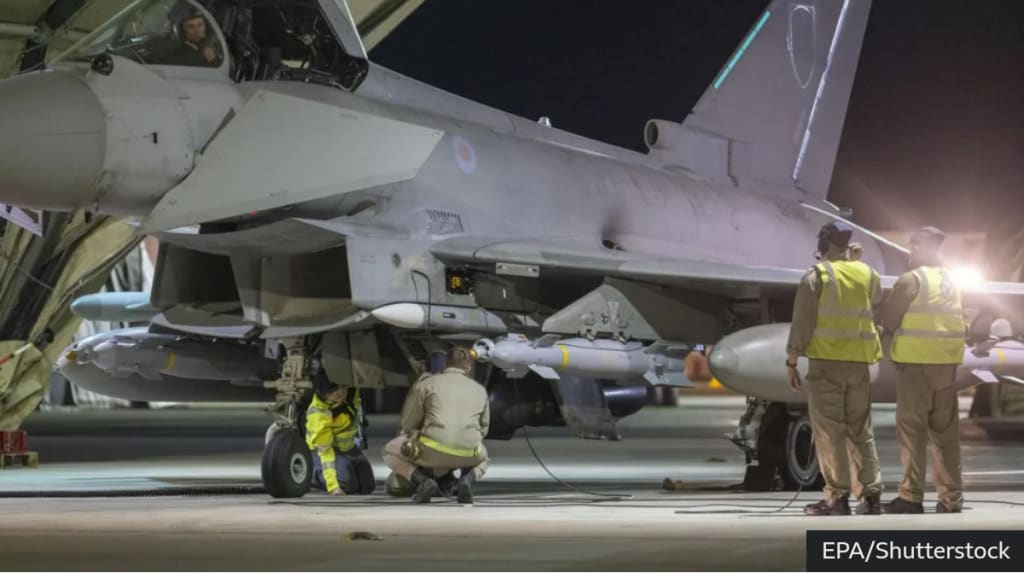
In a rare show of military cooperation, the United Kingdom and France launched coordinated airstrikes against a suspected Islamic State (IS) arms bunker in Syria this week. Officials have described the strike as a targeted operation aimed at disrupting the terrorist organization’s supply lines and preventing further attacks in the region. While the details of the operation remain classified, Western authorities emphasized that intelligence indicated the bunker housed large quantities of weapons, ammunition, and explosives intended for future IS operations.
Precision Strikes in a Volatile Region
According to military sources, the operation involved a combination of aerial surveillance and precision-guided munitions. The UK’s Royal Air Force and France’s Armée de l’Air carried out simultaneous strikes on the underground facility, located in eastern Syria, near the border regions that have been historically contested by IS fighters. “This action demonstrates our commitment to confronting terrorism wherever it threatens international security,” a spokesperson for the UK Ministry of Defence said.
The strikes were reportedly timed to minimize civilian casualties. Western officials claim that intelligence indicated the site was primarily used for storing weaponry and planning operations rather than housing civilians. However, independent verification on the ground remains challenging due to ongoing conflict in the region, making it difficult to confirm the full extent of the damage or casualties resulting from the airstrikes.
Disrupting Islamic State Operations
Islamic State, although weakened since its territorial peak in 2014, continues to operate as an insurgent network in parts of Syria and Iraq. Underground bunkers like the one targeted by the UK and France play a critical role in sustaining the group’s activities. Weapons caches, improvised explosive device (IED) components, and other supplies are often stored in these hidden facilities, allowing IS fighters to maintain mobility while evading detection by international forces.
“Operations like this disrupt their logistical networks and force them to spend more time hiding supplies rather than launching attacks,” said a Middle East security analyst. “While they no longer control large swaths of territory, their ability to strike unpredictably still poses a serious threat to regional stability.”
Regional Implications
The joint operation highlights growing Western concern over the persistence of extremist elements in Syria. Analysts suggest that the strike could also serve as a warning to other groups considering the reestablishment of IS strongholds. However, the operation may complicate relationships with regional powers, including Russia and Iran, who have a significant military presence in Syria. Both countries have historically opposed unilateral Western military interventions, arguing that such strikes risk further destabilization.
In addition to its tactical objectives, the operation may also carry political significance. The UK and France have both faced domestic pressure to show decisive action against terrorism. Recent threats from IS affiliates in Europe have reignited public debate over national security measures, making visible military actions an important aspect of political messaging.
Challenges of Fighting an Underground Threat
One of the main difficulties in targeting underground bunkers is the high risk of intelligence errors. Military planners rely on satellite imagery, drone reconnaissance, and human intelligence to locate and verify these facilities. Even a small miscalculation can result in unintended damage or missed targets.
Experts note that the design of underground facilities is often sophisticated. Bunkers may include reinforced concrete walls, ventilation systems, and multiple concealed entrances, making them difficult to neutralize completely. Precision-guided bombs and specialized munitions are therefore crucial tools for reducing collateral damage while achieving operational goals.
“Striking a target like this requires detailed intelligence and careful coordination between multiple military units,” said an independent defense consultant. “It’s not just about dropping bombs—it’s about disrupting an entire network without creating new security risks.”
Reactions and Consequences
The airstrikes have received mixed reactions internationally. Western allies, including the United States, praised the operation as a necessary step to prevent IS from reconstituting its capabilities. A spokesperson for the U.S. State Department stated, “This joint strike demonstrates our ongoing commitment to defeating terrorist organizations in the region and protecting civilians from future attacks.”
Conversely, some regional actors have criticized the operation, warning that it could inflame local tensions and provoke retaliatory attacks. Human rights organizations also emphasized the need for transparency and accountability in military operations, especially in areas where civilians may be at risk.
While it is too early to assess the long-term impact of the strike, analysts suggest that targeting critical supply hubs is a strategy likely to continue. Disrupting logistics not only weakens IS operational capacity but also forces the group to rely on riskier supply routes, making them more vulnerable to detection and interdiction.
The Broader Fight Against IS
The operation in Syria reflects a broader international strategy to combat the remnants of Islamic State. Over the past decade, coalition forces have pursued a combination of military, intelligence, and diplomatic measures aimed at dismantling IS networks. This approach has seen varying degrees of success, with territorial defeat achieved in key areas but insurgent activity persisting in pockets of Syria and Iraq.
Experts argue that ongoing vigilance is essential. “Even when the headlines suggest IS is defeated, their ideology and underground networks can persist,” said a counterterrorism researcher. “Operations like this, while not decisive on their own, contribute to a larger, coordinated effort to prevent resurgence.”
Looking Ahead
The UK and France’s operation in Syria signals a continued willingness among Western nations to conduct targeted strikes against terrorist infrastructure. While immediate effects may be limited to the destruction of weapons caches and disruption of logistical networks, the psychological and strategic impact could be significant. For IS and other extremist groups, the message is clear: their ability to operate with impunity in Syria is increasingly constrained.
As international observers monitor developments in the region, the broader challenge remains: ensuring long-term stability in Syria while addressing the persistent threat of extremist violence. The success of operations like this one may hinge not only on military precision but also on coordinated efforts to support political reconciliation and economic recovery in conflict-affected areas.
The joint UK-France strike on the underground IS arms bunker thus represents more than a tactical action; it is part of an ongoing, multifaceted struggle to curtail extremist influence in a volatile and strategically critical region.
About the Creator
Muhammad Hassan
Muhammad Hassan | Content writer with 2 years of experience crafting engaging articles on world news, current affairs, and trending topics. I simplify complex stories to keep readers informed and connected.
Keep reading
More stories from Muhammad Hassan and writers in The Swamp and other communities.
Donald Trump’s Hemisphere Ambition: Power, Venezuela, and the Future of the Americas
In recent political discourse, a provocative idea has gained attention: that Donald Trump wants to “run Venezuela” and dominate the Western Hemisphere. While this phrasing is deliberately dramatic, it reflects broader concerns about Trump’s worldview, his foreign policy instincts, and how a second Trump presidency could reshape relations across North, Central, and South America. Whether literal or rhetorical, the idea points to a larger debate about power, influence, and the limits of U.S. leadership in a rapidly changing world. To understand this claim, it is important to separate political rhetoric from practical reality. Donald Trump has never formally proposed governing Venezuela. However, during his presidency and in subsequent speeches, he repeatedly framed Latin America—particularly Venezuela—as a region that should fall clearly under U.S. influence. This perspective aligns closely with an old geopolitical concept: the Monroe Doctrine, which asserted U.S. dominance in the Western Hemisphere and warned outside powers to stay out. Trump’s View of Venezuela Venezuela has long been a focal point of U.S. foreign policy, especially after its economic collapse, humanitarian crisis, and political turmoil under Nicolás Maduro. During Trump’s presidency, the U.S. recognized opposition leader Juan Guaidó as Venezuela’s legitimate president, imposed harsh sanctions, and openly discussed “all options,” including military pressure. Trump often described Venezuela as a socialist failure and a warning to Americans about left-wing politics. But beyond ideological messaging, Venezuela’s vast oil reserves made it strategically significant. Trump suggested that Venezuela could become “a great country again” under new leadership—language that critics interpreted as implying U.S.-guided control rather than genuine Venezuelan self-determination. This is where the idea of “running Venezuela” takes shape. It is less about formal annexation and more about installing a friendly government aligned with U.S. interests, economically and politically. For many in Latin America, this echoes a long history of U.S. intervention that has left deep scars. Dominating the Western Hemisphere Trump’s “America First” doctrine emphasized strength, leverage, and transactional relationships. In the Western Hemisphere, this translated into pressure rather than partnership. He threatened tariffs on Mexico, cut aid to Central America, tightened sanctions on Cuba, and demanded loyalty from regional allies. The idea of dominating the hemisphere fits into Trump’s zero-sum worldview: if the U.S. is not in charge, then rivals like China, Russia, or Iran will be. Venezuela, in particular, has strong ties with Moscow and Beijing. From Trump’s perspective, allowing those relationships to grow unchecked represented a direct challenge to U.S. power close to home. However, domination is not the same as leadership. Many experts argue that Trump’s confrontational style weakened U.S. influence by alienating allies and pushing countries toward alternative partnerships. China has significantly expanded its economic footprint in Latin America, often filling gaps left by U.S. disengagement. Legal and Ethical Limits Even if a U.S. president wanted to “run” another country, international law makes this nearly impossible without severe consequences. Sovereignty is a core principle of the global system. Direct control over Venezuela would require military occupation or regime enforcement—both highly controversial and likely to provoke international backlash. Ethically, such ambitions raise serious questions. Venezuela’s crisis is real, but solutions imposed from outside risk worsening instability rather than resolving it. Latin American nations have repeatedly emphasized that they want cooperation, not control. The memory of U.S.-backed coups and interventions still shapes regional distrust. Domestic Politics and Messaging Trump’s rhetoric about Venezuela and hemispheric dominance also serves a domestic purpose. By portraying himself as a strong leader willing to confront socialism abroad, he appeals to voters who fear similar policies at home. Venezuela becomes both a geopolitical target and a political symbol. This messaging simplifies complex realities into clear villains and heroes. While effective for campaigning, it risks distorting policy decisions. Governing a hemisphere is far more complicated than winning applause at rallies. What It Means for the Future If Donald Trump were to return to the White House, his approach to Venezuela and the Western Hemisphere would likely be more aggressive than cooperative. Sanctions could intensify, diplomatic pressure could increase, and regional relationships could become more transactional. Yet domination is not guaranteed, nor is it necessarily achievable. Latin America today is more politically diverse, economically connected, and globally engaged than in past decades. Countries have choices, and many are unwilling to accept a single power dictating their future. In the end, the idea that Donald Trump wants to run Venezuela and dominate the Western Hemisphere says more about fears, perceptions, and political narratives than about a realistic policy blueprint. It highlights an ongoing struggle between old models of control and newer visions of shared influence. The real question is not whether one leader can dominate an entire region, but whether the United States will choose partnership over pressure—and whether the nations of the Americas will define their own paths in an increasingly multipolar world.
By Muhammad Hassan15 days ago in The Swamp
Trump Says ‘Help Is on Its Way’ as He Urges People in Iran to ‘Keep Protesting’ and ‘Take Over’ Their Institutions
Former US President Donald Trump has sparked fresh controversy after publicly urging people in Iran to “keep protesting” and to “take over” their institutions, while declaring that “help is on its way.” His remarks, delivered through public statements and amplified on social media, have immediately drawn global attention, raising questions about foreign interference, escalation, and the real-world consequences of such rhetoric.
By Aarif Lashari6 days ago in The Swamp


Comments
There are no comments for this story
Be the first to respond and start the conversation.