
South Korea’s Lee Begins China State Visit as North Korea Launches Missiles
Diplomatic outreach unfolds under rising regional tension, testing Seoul–Beijing ties and stability in Northeast Asia

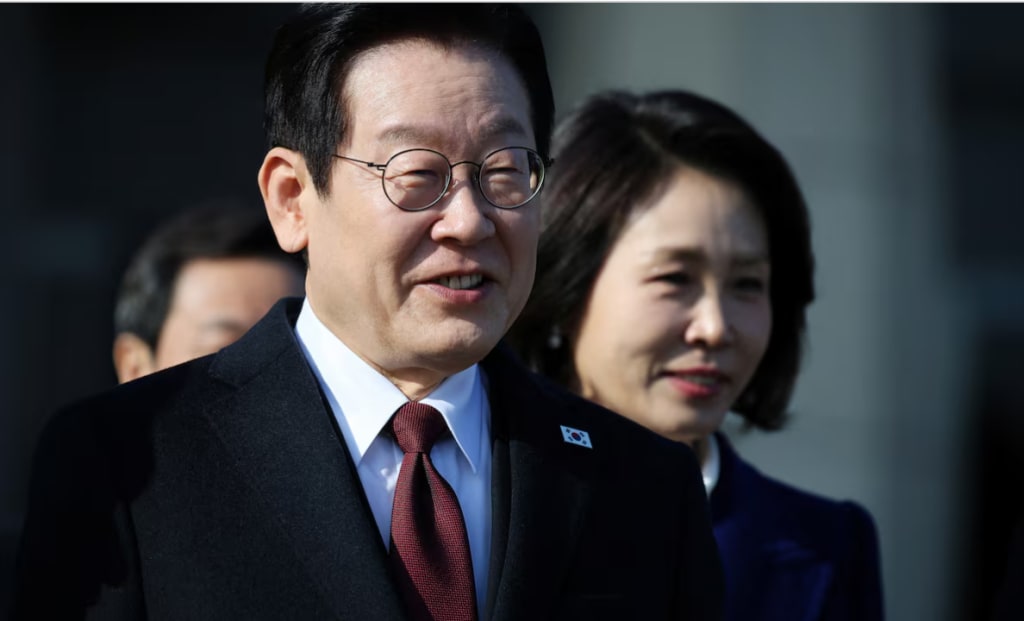
South Korean Prime Minister Lee has begun a high-profile state visit to China at a moment of heightened regional tension, following North Korea’s latest missile launches. The timing of the trip underscores the fragile security environment in Northeast Asia and highlights the delicate diplomatic balancing act facing Seoul as it seeks cooperation with Beijing while confronting growing threats from Pyongyang.
The visit, which includes meetings with senior Chinese leadership, is aimed at strengthening economic cooperation, restoring political trust, and coordinating responses to regional security challenges. However, the backdrop of North Korea firing missiles into surrounding waters has cast a long shadow over the diplomatic agenda, reminding all parties that peace on the Korean Peninsula remains uncertain.
Missiles Raise Alarm Ahead of Diplomatic Talks
Just hours before Lee’s arrival in China, North Korea launched multiple missiles, prompting condemnation from South Korea and its allies. While Pyongyang has conducted similar tests in the past, the launches are widely viewed as a strategic signal—both to Washington and to regional players like China and South Korea—that the North intends to maintain pressure amid stalled denuclearization talks.
South Korea’s military confirmed that the missiles were detected and monitored, with no immediate damage reported. Nevertheless, the launches heightened concerns about miscalculation and escalation, particularly as the region grapples with overlapping security crises and intensifying great-power competition.
For Seoul, the missile tests reinforce the urgency of diplomatic engagement. Officials have stressed that Lee’s visit is not only about bilateral ties but also about encouraging China to play a constructive role in restraining Pyongyang and supporting stability.
Seoul–Beijing Relations at a Crossroads
Relations between South Korea and China have experienced periods of strain in recent years, influenced by disputes over trade, technology, and security alignment. South Korea’s close partnership with the United States, including expanded military cooperation, has at times been viewed warily by Beijing.
Lee’s visit is seen as an effort to reset relations and reduce friction. Economic cooperation is expected to be a central theme, with discussions on supply chains, investment, climate initiatives, and people-to-people exchanges. China remains South Korea’s largest trading partner, and both sides have strong incentives to stabilize ties amid global economic uncertainty.
However, security concerns—particularly North Korea’s weapons program—are likely to dominate private discussions. Seoul has long urged Beijing to use its leverage over Pyongyang, arguing that China’s economic and political influence gives it a unique ability to shape North Korea’s behavior.
China’s Balancing Act
China, for its part, has consistently called for restraint and dialogue, opposing actions it views as provocative by any side. Beijing has criticized missile tests but has also expressed opposition to expanded U.S.–South Korea military exercises, which it says contribute to tensions.
During Lee’s visit, Chinese leaders are expected to reiterate their support for stability while emphasizing diplomatic solutions over sanctions or military pressure. Analysts note that China faces its own balancing act: maintaining influence over North Korea without appearing to endorse its actions, while managing relations with South Korea and the United States.
Domestic and Regional Implications
At home, Lee’s China visit is being closely watched by South Korean lawmakers and the public. Supporters argue that engagement with Beijing is essential for managing North Korea and safeguarding economic interests. Critics, however, caution against relying too heavily on China, questioning whether Beijing is willing or able to curb Pyongyang’s missile ambitions.
Regionally, the visit comes as Japan, the United States, and South Korea continue to strengthen trilateral security cooperation. North Korea’s missile launches are likely to reinforce this alignment, even as Seoul seeks to keep diplomatic channels with China open.
A Test of Diplomacy Under Pressure
The coincidence of Lee’s state visit and North Korea’s missile tests highlights the complex reality of diplomacy in Northeast Asia, where dialogue and deterrence often unfold simultaneously. While the trip offers an opportunity to deepen South Korea–China cooperation, it also serves as a reminder that progress on the Korean Peninsula remains fragile and contested.
As Lee meets Chinese leaders in Beijing, the key question is whether diplomacy can keep pace with rising security threats. The outcome of the visit may not immediately change North Korea’s behavior, but it could shape the regional response—either reinforcing cooperation or exposing deeper divisions.
In a region where symbolism matters, Lee’s presence in China during a moment of crisis sends a clear message: despite tensions and missile tests, diplomacy remains a crucial tool in the search for stability and peace
About the Creator
Muhammad Hassan
Muhammad Hassan | Content writer with 2 years of experience crafting engaging articles on world news, current affairs, and trending topics. I simplify complex stories to keep readers informed and connected.
Keep reading
More stories from Muhammad Hassan and writers in The Swamp and other communities.
GUN HORROR: Brit, 29, Shot Dead in Popular Spanish Holiday Hotspot
A British man has been shot dead in a popular Spanish holiday destination, sending shockwaves through both local communities and tourists. The victim, a 29-year-old UK national, was found lifeless near a resort area frequented by international visitors, prompting a major police investigation and renewed debate about security in Europe’s tourist hotspots. Spanish authorities confirmed that the man’s body was discovered in the early hours near a busy holiday zone known for its nightlife, beaches, and high volume of foreign visitors. Emergency services were called to the scene, but the victim was pronounced dead shortly after being found. Police have described the killing as a targeted shooting, though they have stressed that investigations are still at an early stage. What We Know So Far According to initial reports, the victim sustained multiple gunshot wounds. Officers secured the area and launched a forensic examination while detectives began interviewing potential witnesses, including hotel staff, local residents, and tourists who may have been nearby at the time of the incident. Spanish police have not yet released the victim’s name publicly, in line with local practice, but confirmed his British nationality and age. The UK Foreign Office has said it is providing support to the man’s family and is in contact with Spanish authorities to assist with the investigation. While no arrests have been announced, law enforcement officials are exploring several possible motives, including links to organized crime or personal disputes. Investigators have been careful not to speculate publicly, emphasizing that all lines of inquiry remain open. Shock in a Holiday Paradise The shooting has caused alarm in a location better known for sunshine, relaxation, and vibrant nightlife than violent crime. Popular Spanish resorts attract millions of British tourists each year, making incidents of this nature particularly unsettling. Local officials were quick to reassure the public that such crimes are rare and that the resort remains safe for visitors. Increased police patrols were reported in the area following the shooting, with authorities aiming to maintain calm and prevent misinformation from spreading. Tourism industry representatives also expressed concern, noting that isolated incidents can have an outsized impact on public perception. “This is a tragic event, but it is not reflective of everyday life here,” one local spokesperson said, urging visitors not to cancel trips based on a single, ongoing investigation. A Pattern of Targeted Violence? Although Spain is generally considered a safe country, there has been a noticeable rise in reports of targeted shootings in certain regions in recent years. These incidents are often linked to criminal networks rather than random acts of violence, and authorities stress that tourists are rarely the intended victims. Security analysts note that popular coastal areas can sometimes attract organized crime groups due to seasonal crowds and lucrative businesses. When violence does occur, it is usually between individuals known to each other, rather than posing a broader threat to the public. In this case, police are examining the victim’s background, travel history, and recent movements to determine whether he may have been targeted deliberately. Investigators are also reviewing CCTV footage from nearby hotels, bars, and streets to track the movements of any suspects. Response from the UK and Spain The UK Foreign Office confirmed it is assisting the family of the deceased and working closely with Spanish officials. British consular staff are expected to help with repatriation arrangements and provide guidance on local legal procedures. Spanish authorities, meanwhile, have emphasized their commitment to solving the case quickly. Senior police figures described the shooting as “a serious and isolated incident” and appealed to anyone with information to come forward. Local mayors and regional leaders also condemned the killing, expressing condolences to the victim’s family and pledging full cooperation with law enforcement efforts. Safety Concerns for Tourists News of the shooting has sparked discussion among British travelers about personal safety abroad. Travel experts advise that while such incidents are deeply tragic, they remain extremely rare compared to the millions of tourists who visit Spain safely each year. Authorities recommend standard precautions, such as staying aware of surroundings, avoiding confrontations, and following local guidance. They also stress the importance of registering travel details with family or friends and knowing how to contact local emergency services. Security professionals point out that sensational headlines can sometimes exaggerate perceived risk. Statistically, Spain continues to rank as one of Europe’s safer destinations, with violent crime rates lower than in many other countries. An Ongoing Investigation As the investigation continues, police are expected to release further details once key lines of inquiry are confirmed. Detectives are believed to be coordinating with international partners if evidence suggests cross-border criminal activity. For now, the focus remains on identifying those responsible and establishing the motive behind the killing. Authorities have urged patience and restraint, warning against speculation that could hinder the investigation or cause unnecessary fear. A Tragic Loss The death of the 29-year-old Brit has cast a shadow over a community built on tourism and hospitality. For his family and friends, the incident represents a devastating personal loss that has unfolded far from home. While questions remain unanswered, officials on both sides of the Channel have reiterated their determination to ensure justice is served. As Spain works to preserve its reputation as a safe and welcoming destination, this case serves as a stark reminder that even the most popular holiday spots are not entirely immune from serious crime. The coming days are likely to bring more clarity, but for now, the incident stands as a tragic and sobering event that has resonated well beyond the resort where it occurred.
By Muhammad Hassan15 days ago in The Swamp
Protests in Greenland and Denmark Against Trump Plans
In recent days, a powerful wave of protests has swept through Greenland and Denmark, uniting people from Nuuk to Copenhagen in opposition to U.S. President Donald Trump’s controversial plans regarding Greenland — an autonomous territory of the Kingdom of Denmark. These demonstrations, grounded in concerns about sovereignty, international law, and cultural identity, have underscored deep local unease over external pressure and potential geopolitical shifts in the Arctic. At the heart of the unrest is Trump’s repeated public push for the United States to assert control over Greenland, a vast island rich in mineral resources and strategically positioned at the gateway to the Arctic. Trump’s statements, which include hints at annexation and threats of tariffs on European nations that oppose his agenda, have struck a nerve across the North Atlantic region and beyond. Rising Tensions and Political Backdrop Greenland has long been a subject of international attention due to its expansive geography, natural wealth, and increasing importance in global strategic calculations amid climate change. While the territory enjoys significant self‑rule, defense and foreign policy are handled by Denmark. Trump’s renewed interest has challenged this status quo. He argues that U.S. control is vital for national security — particularly in countering perceived threats from Russia and China — and has even floated the idea of imposing tariffs on NATO allies that resist his plans. This stance has not only angered Danish and Greenlandic leaders but also prompted criticism from within the U.S. political establishment. A bipartisan delegation of U.S. lawmakers visiting Copenhagen made clear that many Americans do not support Trump’s push, emphasizing respect for Denmark’s sovereignty and Greenland’s self‑determination. Communities Mobilize: “Hands Off Greenland” Across Greenland and Denmark, grassroots movements have rallied under slogans like “Greenland is not for sale,” “Hands off Greenland,” and “Kalaallit Nunaat” — the indigenous name for Greenland. In Copenhagen, tens of thousands of protesters filled city squares and marched toward the U.S. embassy, waving Danish and Greenlandic flags and demanding respect for democratic principles and international law. In Nuuk, Greenland’s capital, a parallel demonstration — one of the largest in the island’s history — drew thousands, including Prime Minister Jens‑Frederik Nielsen, who spoke to the crowd about the importance of unity and self‑governance. Signs and chants reflected a resolute message: Greenland’s future should be charted by Greenlanders, not dictated by foreign capitals. Organizers of the “Hands off Greenland” demonstrations, including Greenlandic associations in Denmark and local advocacy groups, emphasized that their actions are about defending basic rights and preserving identity. They have called for broader recognition of Greenland’s autonomy and have urged international support for peaceful cooperation instead of coercion. Public Opinion and International Concern Polls show overwhelming local opposition to U.S. acquisition of Greenland, with a large majority of residents rejecting the idea of joining the United States. Many Greenlanders express deep attachment to their land, culture, and path toward eventual full independence — goals they see as jeopardized by external attempts to shift the island’s political status. The protests have also sparked wider international reactions. European leaders, from France to Germany, have condemned Trump’s tariff threats, arguing that they undermine not only Greenland’s status but also the cohesion of NATO — an alliance built on mutual respect and collective defense. Some officials have warned that heavy‑handed U.S. tactics could damage long‑standing partnerships and complicate broader security cooperation in the Arctic region. At the same time, critics of Trump’s approach argue that focusing on territorial claims detracts from pressing global issues, including climate change, which is rapidly transforming the Arctic. They highlight that Greenland’s melting ice is unlocking new shipping routes and ecological concerns, making international collaboration more necessary, not less. Voices from the Streets In both Greenland and Denmark, protesters have brought personal stories to the forefront. Participants carrying the Greenlandic flag described their homeland as more than a geopolitical asset — it is a home with history, communities, and traditions. Many have echoed a shared sentiment: foreign ambitions should not override the will of the people who live on the island. One Copenhagen demonstrator, echoing the broader mood, stated that respecting Greenland’s right to choose its future is a basic matter of human rights. Another marcher in Nuuk emphasized that the fight is about dignity and autonomy, not just political slogans. Looking Ahead As diplomatic exchanges continue, the Greenland‑Denmark‑U.S. tensions show no sign of immediate resolution. Although U.S. tariffs and aggressive rhetoric have raised the stakes, local opposition remains steadfast. Greenlandic and Danish officials have reiterated their preference for dialogue over conflict, stressing that cooperation on shared interests — such as Arctic security and environmental stewardship — is possible without compromising sovereignty. The protests in Greenland and Denmark reflect a broader global conversation about power, identity, and the rights of communities in an interconnected world. They serve as a reminder that even in an era of great‑power competition, the voices of local people and their right to self‑determination continue to resonate with force and clarity.
By Saboor Brohi about 9 hours ago in The Swamp




Comments
There are no comments for this story
Be the first to respond and start the conversation.