
Donald Trump’s Hemisphere Ambition: Power, Venezuela, and the Future of the Americas
Why claims of U.S. dominance and interest in Venezuela raise serious questions about sovereignty, strategy, and global order

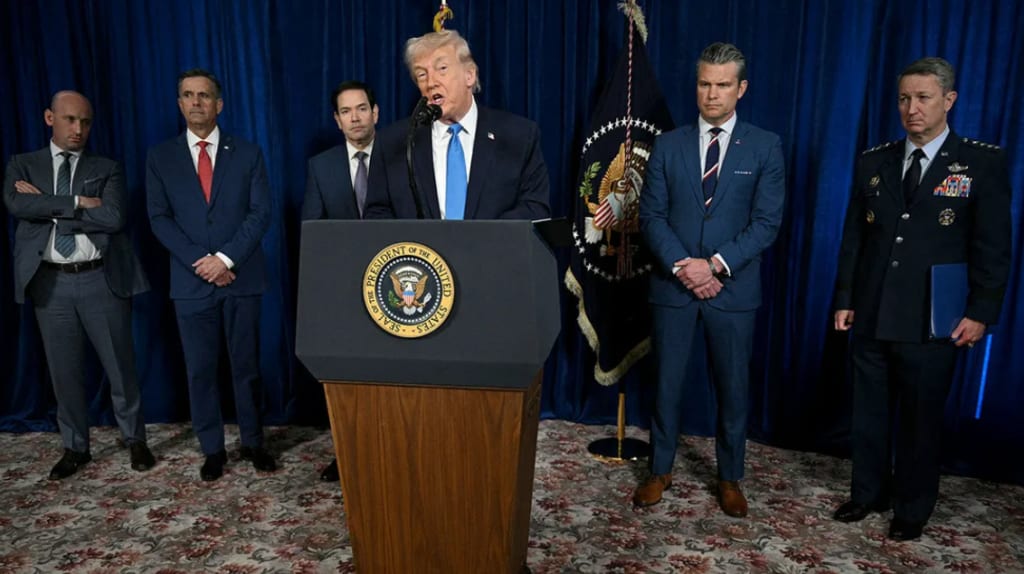
In recent political discourse, a provocative idea has gained attention: that Donald Trump wants to “run Venezuela” and dominate the Western Hemisphere. While this phrasing is deliberately dramatic, it reflects broader concerns about Trump’s worldview, his foreign policy instincts, and how a second Trump presidency could reshape relations across North, Central, and South America. Whether literal or rhetorical, the idea points to a larger debate about power, influence, and the limits of U.S. leadership in a rapidly changing world.
To understand this claim, it is important to separate political rhetoric from practical reality. Donald Trump has never formally proposed governing Venezuela. However, during his presidency and in subsequent speeches, he repeatedly framed Latin America—particularly Venezuela—as a region that should fall clearly under U.S. influence. This perspective aligns closely with an old geopolitical concept: the Monroe Doctrine, which asserted U.S. dominance in the Western Hemisphere and warned outside powers to stay out.
Trump’s View of Venezuela
Venezuela has long been a focal point of U.S. foreign policy, especially after its economic collapse, humanitarian crisis, and political turmoil under Nicolás Maduro. During Trump’s presidency, the U.S. recognized opposition leader Juan Guaidó as Venezuela’s legitimate president, imposed harsh sanctions, and openly discussed “all options,” including military pressure.
Trump often described Venezuela as a socialist failure and a warning to Americans about left-wing politics. But beyond ideological messaging, Venezuela’s vast oil reserves made it strategically significant. Trump suggested that Venezuela could become “a great country again” under new leadership—language that critics interpreted as implying U.S.-guided control rather than genuine Venezuelan self-determination.
This is where the idea of “running Venezuela” takes shape. It is less about formal annexation and more about installing a friendly government aligned with U.S. interests, economically and politically. For many in Latin America, this echoes a long history of U.S. intervention that has left deep scars.
Dominating the Western Hemisphere
Trump’s “America First” doctrine emphasized strength, leverage, and transactional relationships. In the Western Hemisphere, this translated into pressure rather than partnership. He threatened tariffs on Mexico, cut aid to Central America, tightened sanctions on Cuba, and demanded loyalty from regional allies.
The idea of dominating the hemisphere fits into Trump’s zero-sum worldview: if the U.S. is not in charge, then rivals like China, Russia, or Iran will be. Venezuela, in particular, has strong ties with Moscow and Beijing. From Trump’s perspective, allowing those relationships to grow unchecked represented a direct challenge to U.S. power close to home.
However, domination is not the same as leadership. Many experts argue that Trump’s confrontational style weakened U.S. influence by alienating allies and pushing countries toward alternative partnerships. China has significantly expanded its economic footprint in Latin America, often filling gaps left by U.S. disengagement.
Legal and Ethical Limits
Even if a U.S. president wanted to “run” another country, international law makes this nearly impossible without severe consequences. Sovereignty is a core principle of the global system. Direct control over Venezuela would require military occupation or regime enforcement—both highly controversial and likely to provoke international backlash.
Ethically, such ambitions raise serious questions. Venezuela’s crisis is real, but solutions imposed from outside risk worsening instability rather than resolving it. Latin American nations have repeatedly emphasized that they want cooperation, not control. The memory of U.S.-backed coups and interventions still shapes regional distrust.
Domestic Politics and Messaging
Trump’s rhetoric about Venezuela and hemispheric dominance also serves a domestic purpose. By portraying himself as a strong leader willing to confront socialism abroad, he appeals to voters who fear similar policies at home. Venezuela becomes both a geopolitical target and a political symbol.
This messaging simplifies complex realities into clear villains and heroes. While effective for campaigning, it risks distorting policy decisions. Governing a hemisphere is far more complicated than winning applause at rallies.
What It Means for the Future
If Donald Trump were to return to the White House, his approach to Venezuela and the Western Hemisphere would likely be more aggressive than cooperative. Sanctions could intensify, diplomatic pressure could increase, and regional relationships could become more transactional.
Yet domination is not guaranteed, nor is it necessarily achievable. Latin America today is more politically diverse, economically connected, and globally engaged than in past decades. Countries have choices, and many are unwilling to accept a single power dictating their future.
In the end, the idea that Donald Trump wants to run Venezuela and dominate the Western Hemisphere says more about fears, perceptions, and political narratives than about a realistic policy blueprint. It highlights an ongoing struggle between old models of control and newer visions of shared influence.
The real question is not whether one leader can dominate an entire region, but whether the United States will choose partnership over pressure—and whether the nations of the Americas will define their own paths in an increasingly multipolar world.
About the Creator
Muhammad Hassan
Muhammad Hassan | Content writer with 2 years of experience crafting engaging articles on world news, current affairs, and trending topics. I simplify complex stories to keep readers informed and connected.
Keep reading
More stories from Muhammad Hassan and writers in The Swamp and other communities.
South Korea’s Lee Begins China State Visit as North Korea Launches Missiles
South Korean Prime Minister Lee has begun a high-profile state visit to China at a moment of heightened regional tension, following North Korea’s latest missile launches. The timing of the trip underscores the fragile security environment in Northeast Asia and highlights the delicate diplomatic balancing act facing Seoul as it seeks cooperation with Beijing while confronting growing threats from Pyongyang. The visit, which includes meetings with senior Chinese leadership, is aimed at strengthening economic cooperation, restoring political trust, and coordinating responses to regional security challenges. However, the backdrop of North Korea firing missiles into surrounding waters has cast a long shadow over the diplomatic agenda, reminding all parties that peace on the Korean Peninsula remains uncertain. Missiles Raise Alarm Ahead of Diplomatic Talks Just hours before Lee’s arrival in China, North Korea launched multiple missiles, prompting condemnation from South Korea and its allies. While Pyongyang has conducted similar tests in the past, the launches are widely viewed as a strategic signal—both to Washington and to regional players like China and South Korea—that the North intends to maintain pressure amid stalled denuclearization talks. South Korea’s military confirmed that the missiles were detected and monitored, with no immediate damage reported. Nevertheless, the launches heightened concerns about miscalculation and escalation, particularly as the region grapples with overlapping security crises and intensifying great-power competition. For Seoul, the missile tests reinforce the urgency of diplomatic engagement. Officials have stressed that Lee’s visit is not only about bilateral ties but also about encouraging China to play a constructive role in restraining Pyongyang and supporting stability. Seoul–Beijing Relations at a Crossroads Relations between South Korea and China have experienced periods of strain in recent years, influenced by disputes over trade, technology, and security alignment. South Korea’s close partnership with the United States, including expanded military cooperation, has at times been viewed warily by Beijing. Lee’s visit is seen as an effort to reset relations and reduce friction. Economic cooperation is expected to be a central theme, with discussions on supply chains, investment, climate initiatives, and people-to-people exchanges. China remains South Korea’s largest trading partner, and both sides have strong incentives to stabilize ties amid global economic uncertainty. However, security concerns—particularly North Korea’s weapons program—are likely to dominate private discussions. Seoul has long urged Beijing to use its leverage over Pyongyang, arguing that China’s economic and political influence gives it a unique ability to shape North Korea’s behavior. China’s Balancing Act China, for its part, has consistently called for restraint and dialogue, opposing actions it views as provocative by any side. Beijing has criticized missile tests but has also expressed opposition to expanded U.S.–South Korea military exercises, which it says contribute to tensions. During Lee’s visit, Chinese leaders are expected to reiterate their support for stability while emphasizing diplomatic solutions over sanctions or military pressure. Analysts note that China faces its own balancing act: maintaining influence over North Korea without appearing to endorse its actions, while managing relations with South Korea and the United States. Domestic and Regional Implications At home, Lee’s China visit is being closely watched by South Korean lawmakers and the public. Supporters argue that engagement with Beijing is essential for managing North Korea and safeguarding economic interests. Critics, however, caution against relying too heavily on China, questioning whether Beijing is willing or able to curb Pyongyang’s missile ambitions. Regionally, the visit comes as Japan, the United States, and South Korea continue to strengthen trilateral security cooperation. North Korea’s missile launches are likely to reinforce this alignment, even as Seoul seeks to keep diplomatic channels with China open. A Test of Diplomacy Under Pressure The coincidence of Lee’s state visit and North Korea’s missile tests highlights the complex reality of diplomacy in Northeast Asia, where dialogue and deterrence often unfold simultaneously. While the trip offers an opportunity to deepen South Korea–China cooperation, it also serves as a reminder that progress on the Korean Peninsula remains fragile and contested. As Lee meets Chinese leaders in Beijing, the key question is whether diplomacy can keep pace with rising security threats. The outcome of the visit may not immediately change North Korea’s behavior, but it could shape the regional response—either reinforcing cooperation or exposing deeper divisions. In a region where symbolism matters, Lee’s presence in China during a moment of crisis sends a clear message: despite tensions and missile tests, diplomacy remains a crucial tool in the search for stability and peace
By Muhammad Hassan16 days ago in The Swamp


Comments
There are no comments for this story
Be the first to respond and start the conversation.