politics
Politics does not dictate our collective cultural mindset as much as it simply reflects it; We've got to look in the mirror sometimes, and we've got one.
Germany: Local Governments Face Financial Collapse. AI-Generated.
Germany, long seen as Europe’s economic anchor, is confronting a growing crisis at its municipal level: local governments are teetering on the brink of financial collapse. Once praised for their efficient public services, municipalities from small rural districts to large cities now face budget shortfalls so severe that they threaten the very fabric of local governance and public life.
By Fiaz Ahmed Brohi18 days ago in The Swamp
Trump Changes Tone, Invites Colombia’s Petro to the White House: A Shift in Hemispheric Diplomacy. AI-Generated.
In a surprising diplomatic turn, former U.S. President Donald Trump has softened his rhetoric toward Colombia and extended an invitation to Colombian President Gustavo Petro to visit the White House. The move has drawn attention across the Americas, signaling a possible recalibration of U.S.–Latin American relations after years of tension, sharp language, and ideological clashes. For observers of global politics, this moment raises an important question: is this a genuine strategic shift or a calculated political gesture? A Relationship Marked by Tension Relations between Washington and Bogotá have historically been close, particularly on security cooperation, trade, and counter-narcotics efforts. However, Gustavo Petro’s rise to power as Colombia’s first leftist president disrupted the traditional alignment. Petro has openly criticized U.S. drug policy, argued for a new approach to the war on drugs, and pushed for stronger environmental protections—often framing Washington as part of the problem rather than the solution. Trump, known for his blunt style, previously criticized Latin American leaders over migration and security issues. Colombia, despite being a long-standing U.S. ally, was not immune to that pressure. Against this backdrop, the invitation to Petro represents a notable change in tone. Why the Shift Now? Several strategic factors may explain Trump’s apparent pivot. First, Colombia remains a key geopolitical player in South America. It is a major U.S. trading partner, a regional security anchor, and an influential voice in discussions about Venezuela, migration, and climate change. Ignoring Bogotá risks leaving space for rival powers such as China and Russia to deepen their influence in the region. Second, migration remains a central political issue in the United States. Colombia plays a crucial role as both a transit country and a host for millions of Venezuelan migrants. Cooperation with Petro’s government could help Washington manage migration flows more effectively—something Trump has long emphasized in his political messaging. Third, energy and environmental policy may also be at play. Colombia is rich in resources, and Petro’s push for a green transition has global implications. Engaging directly allows Washington to influence these debates rather than watch them unfold from the sidelines. Petro’s Calculated Acceptance For President Petro, the invitation is equally strategic. Despite his criticism of U.S. policies, Petro has repeatedly stated that Colombia needs pragmatic engagement with Washington. A White House meeting offers Petro international legitimacy, a chance to advocate for drug policy reform, and an opportunity to push climate cooperation onto the global agenda. Petro has argued that decades of militarized anti-drug strategies have failed and that environmental destruction and social inequality are at the root of the problem. A direct dialogue with Trump gives him a global platform to present this vision—even if agreement is far from guaranteed. Symbolism Versus Substance While the invitation itself is symbolic, the real test lies in outcomes. Will this meeting lead to concrete policy changes, or will it remain a photo opportunity designed to signal openness without commitment? Skeptics point out that Trump’s political style often involves dramatic gestures followed by limited follow-through. Supporters, however, argue that his transactional approach to diplomacy could yield practical agreements, especially if both sides see clear benefits. Issues likely to dominate discussions include drug trafficking, migration, Venezuela’s political crisis, trade relations, and environmental cooperation. Any progress in these areas would mark a meaningful shift in hemispheric politics. Implications for the Region The invitation has broader implications beyond Colombia. Other Latin American leaders are watching closely. A more conciliatory U.S. stance could reduce ideological polarization in the region and encourage dialogue over confrontation. Conversely, if talks collapse or produce little substance, it may reinforce skepticism about Washington’s reliability as a partner. For Latin America, long accustomed to being treated as a secondary priority, even symbolic engagement can carry weight. It signals recognition—something regional leaders often argue has been lacking. A Moment of Diplomatic Uncertainty Trump’s invitation to Gustavo Petro underscores a core truth of modern diplomacy: relationships are fluid, and pragmatism often overrides ideology. Whether this marks a genuine reset or a temporary tactical move remains to be seen. What is clear is that both leaders have something to gain—and something to lose. As global challenges like migration, climate change, and security grow more complex, dialogue may prove more valuable than division. The world will be watching to see whether this changed tone leads to meaningful cooperation or fades into yet another missed opportunity in international politics.
By Fiaz Ahmed Brohi18 days ago in The Swamp
How US Forces Seized Two Ghost Fleet Tankers on Opposite Sides of the Atlantic. AI-Generated.
In a dramatic display of maritime enforcement, US forces seized two so-called “ghost fleet” oil tankers on opposite sides of the Atlantic, underscoring Washington’s increasingly aggressive efforts to crack down on sanctions evasion. The coordinated actions, carried out thousands of miles apart, reveal how the United States is expanding its reach to disrupt shadow shipping networks that have quietly kept sanctioned oil flowing across global markets.
By Aarif Lashari18 days ago in The Swamp
‘Splash & Grab’ and ‘UK Ready to Seize More of Putin’s Ships’. AI-Generated.
The UK government has signaled a significant escalation in its approach toward Russia, with officials indicating that Britain is ready to seize more vessels linked to President Vladimir Putin and the Russian state. Dubbed “splash and grab” by critics and commentators, the policy reflects a tougher enforcement of sanctions aimed at pressuring Moscow amid ongoing geopolitical tensions.
By Aarif Lashari18 days ago in The Swamp
‘Unrealistic’ €600m Louvre Redevelopment Plans Must Be Scrapped, Say Striking Workers. AI-Generated.
The Louvre Museum, one of the most visited and iconic cultural institutions in the world, is facing growing internal unrest. A proposed €600 million redevelopment plan, aimed at modernizing parts of the historic Paris landmark, has sparked strikes and strong opposition from museum workers, who describe the project as “unrealistic,” disconnected, and harmful to both staff and visitors. While French authorities and museum management frame the redevelopment as a necessary investment in the Louvre’s future, workers argue that the plan prioritizes prestige and tourism over basic working conditions, conservation needs, and public service. The dispute has now become a broader debate about how cultural institutions should balance ambition with sustainability. What Is the €600 Million Louvre Redevelopment Plan? The proposed redevelopment plan envisions a major transformation of the Louvre’s infrastructure. According to museum leadership, the project would focus on: Renovating aging galleries and visitor areas Improving crowd management and accessibility Expanding commercial and exhibition spaces Enhancing the museum’s global competitiveness Supporters of the plan argue that the Louvre, which welcomes millions of visitors each year, must evolve to meet modern expectations. With rising tourism and increasing pressure on historic buildings, investment is portrayed as unavoidable. However, for the people who keep the museum running every day, the plan looks far less inspiring. Why Louvre Workers Are Striking Museum employees — including gallery attendants, security staff, and conservation workers — say the redevelopment proposal is deeply disconnected from reality. Their main concerns include: 1. Chronic Staff Shortages Workers argue that the Louvre is already struggling to function properly due to understaffing. Galleries are often forced to close, visitor flow becomes chaotic, and staff face burnout — issues they say will only worsen during large-scale construction. From their perspective, spending hundreds of millions on redevelopment while basic staffing needs remain unmet is not just impractical, but irresponsible. 2. Daily Working Conditions Are Being Ignored Striking workers emphasize that many essential issues have gone unresolved for years: Overcrowded galleries Insufficient rest areas for staff Outdated safety infrastructure Increased stress from record visitor numbers They argue that before dreaming of ambitious architectural upgrades, management should focus on making the museum workable and safe on a daily basis. 3. Cultural Mission vs. Commercialization Another major point of tension is the fear that the redevelopment prioritizes commercial appeal over cultural preservation. Workers worry that expanding shops, ticketed exhibitions, and premium experiences will transform the Louvre into a brand-first attraction rather than a public museum. For many employees, the Louvre is not just a tourist destination — it is a public cultural institution with an educational and preservation mission that should come first. Why Workers Call the Plan ‘Unrealistic’ The word “unrealistic” has become central to the workers’ criticism. They argue that the plan underestimates the complexity of renovating a centuries-old building while keeping it open to the public. Large-scale construction could lead to: Frequent gallery closures Reduced visitor experience Increased pressure on remaining open spaces Higher security and safety risks Workers say that without proper staffing and consultation, the redevelopment could undermine the very experience it claims to improve. A Broader Cultural Policy Debate in France The Louvre dispute reflects a larger conversation in France about cultural funding and labor priorities. As public institutions face budget pressures, workers across the cultural sector have increasingly criticized what they see as top-down decision-making. Unions argue that cultural workers are often asked to support grand national projects while coping with stagnant wages, temporary contracts, and rising workloads. In this context, the Louvre strikes are not an isolated incident, but part of a wider resistance to symbolic mega-projects that overlook human costs. Management and Government Response Louvre management has defended the redevelopment plan, stating that long-term investment is essential to preserve the museum’s status and protect its collections. Officials argue that delaying modernization could lead to greater costs in the future. French authorities have also emphasized the Louvre’s role as a global cultural ambassador, suggesting that the redevelopment would strengthen France’s cultural influence. However, critics note that these responses have so far failed to directly address workers’ core demands: more staff, better working conditions, and meaningful consultation. The Risk to the Louvre’s Global Reputation Ironically, workers warn that pushing ahead with an unpopular redevelopment could damage the Louvre’s international image. Strikes, gallery closures, and negative headlines risk creating the impression of a museum in crisis. Visitors may face long lines, restricted access, and overcrowding — problems that no amount of architectural redesign can quickly fix. From the workers’ perspective, investing in people rather than prestige is the best way to protect the Louvre’s reputation. What Are Workers Demanding Instead? Rather than rejecting change entirely, striking staff are calling for a reordering of priorities. Their demands include: Immediate recruitment of additional staff Long-term investment in working conditions Gradual, realistic renovation plans Greater involvement of workers in decision-making They argue that meaningful reform should start from the ground up, not from expensive headline projects. Conclusion: A Museum at a Crossroads The clash over the €600 million redevelopment plan places the Louvre at a critical crossroads. On one side is a vision of modernization, global prestige, and architectural ambition. On the other is a workforce demanding realism, respect, and sustainability. Whether the redevelopment plan is scrapped, scaled back, or redesigned, one thing is clear: the future of the Louvre cannot be built without the people who make it function every day. As striking workers continue to make their voices heard, the debate raises a fundamental question for cultural institutions everywhere: Should museums chase grandeur — or first secure the foundations that allow culture to thrive?
By Muhammad Hassan18 days ago in The Swamp
The Last Russia-US Nuclear Treaty Is About to Expire: What Happens Next. AI-Generated.
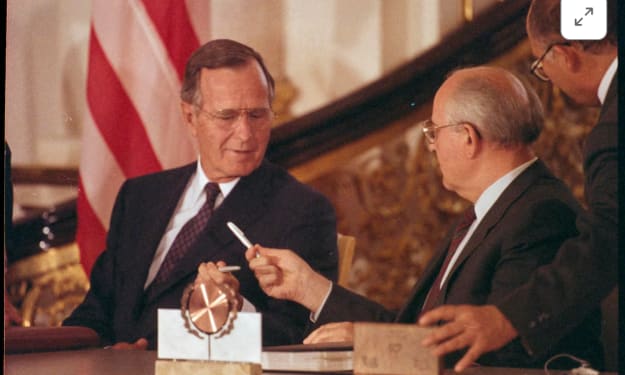
As the world moves closer to February 5, 2026, a major pillar of global security is quietly approaching its end. The New Strategic Arms Reduction Treaty (New START) — the last remaining nuclear arms control agreement between the United States and Russia — is set to expire. Its potential collapse marks a turning point not just for the two nuclear superpowers, but for the entire international system. For decades, nuclear treaties helped prevent unchecked arms races and reduced the risk of catastrophic conflict. With New START hanging by a thread, many are asking a critical question: what happens when the last safety net disappears? What Is New START and Why Does It Matter? New START was signed in 2010 and came into force in 2011. It placed legally binding limits on the strategic nuclear arsenals of the United States and Russia — the two countries that together possess nearly 90 percent of the world’s nuclear weapons. Under the treaty, each side agreed to limit itself to: 1,550 deployed nuclear warheads 700 deployed delivery systems, such as intercontinental ballistic missiles (ICBMs), submarine-launched ballistic missiles (SLBMs), and strategic bombers But New START was not just about numbers. Its real strength lay in transparency and verification. Regular data exchanges, on-site inspections, and notifications ensured both sides knew what the other was doing. This reduced suspicion, prevented misunderstandings, and lowered the risk of accidental escalation during times of tension. In an era marked by distrust, New START functioned as a stabilizing force. Why Is the Treaty in Trouble Now? The geopolitical environment that allowed New START to exist has drastically changed. Relations between Washington and Moscow are at one of their lowest points since the Cold War. Several factors have pushed arms control to the sidelines: The war in Ukraine has shattered diplomatic trust between Russia and the West. Russia suspended participation in treaty inspections, claiming security concerns and political pressure. The United States insists that meaningful arms control requires full compliance and verification. Broader disagreements over NATO, sanctions, and global influence have poisoned the negotiating atmosphere. Although both countries have occasionally signaled interest in restraint, no formal talks on a successor treaty have made meaningful progress. Why Hasn’t a New Treaty Been Negotiated? Arms control negotiations are complex even in good times. In today’s environment, they are especially difficult. Russia has argued that any future agreement must include other nuclear powers, particularly the United Kingdom and France. The U.S. rejects this, stating that it cannot negotiate limits on behalf of its allies. Meanwhile, China has refused to join trilateral talks, pointing out that its nuclear arsenal is far smaller than those of the U.S. and Russia. Beijing argues that expecting equal limits is unfair and strategically unrealistic. As a result, the world is facing a rare and dangerous moment: the possible end of all legally binding nuclear limits between the two largest nuclear powers. What Happens If New START Expires? If the treaty expires without extension or replacement, the immediate effects may not be visible — but the long-term consequences could be profound. 1. No Legal Constraints on Nuclear Weapons For the first time in over 50 years, there would be no binding limits on U.S. and Russian strategic nuclear arsenals. While neither side is expected to instantly build thousands of new warheads, the absence of rules opens the door to future expansion. This creates a strategic environment driven more by worst-case assumptions than mutual restraint. 2. Increased Risk of Miscalculation Without inspections and data sharing, uncertainty grows. When countries lack reliable information about each other’s capabilities, they tend to assume the worst. In times of crisis, this uncertainty can be deadly. History shows that misunderstandings — not intentions — often trigger conflict. 3. Damage to Global Non-Proliferation Efforts The collapse of New START would weaken the credibility of the Nuclear Non-Proliferation Treaty (NPT). Non-nuclear states may question why they should uphold their commitments if nuclear powers abandon restraint. This could encourage other countries to pursue nuclear capabilities, increasing global instability. 4. A New Arms Race Even without immediate buildup, the absence of limits could gradually lead to a new nuclear arms race — one driven by emerging technologies such as hypersonic missiles, advanced missile defenses, and space-based systems. Unlike the Cold War, this arms race would unfold in a multipolar world, making it even harder to control. Is There Any Hope for an Extension? There is still a narrow window for action. Russia has floated the idea of temporarily adhering to New START limits, provided the United States does the same. This would not be a full extension but could prevent immediate deterioration. Such a move would buy time — time for diplomacy, trust-building, and perhaps the groundwork for a future agreement. However, temporary measures are fragile and lack the enforceability of a formal treaty. What Comes After New START? If New START ends, the world enters uncharted nuclear territory. Future arms control may look very different from the treaties of the past. Instead of comprehensive agreements, we may see: Informal political commitments Partial or regional agreements Confidence-building measures without legal force While these alternatives are better than nothing, they lack the strength and reliability of binding treaties. A Defining Moment for Global Security The expiration of the last Russia-US nuclear treaty is more than a technical event. It is a symbol of a world moving away from cooperation and toward strategic rivalry. Whether this moment becomes the start of a dangerous new arms race — or a catalyst for reinventing arms control — depends on political will. History shows that dialogue is possible even in times of deep hostility. The question now is simple, yet urgent: Will the world choose restraint — or risk repeating the most dangerous mistakes of the past?
By Muhammad Hassan18 days ago in The Swamp
Man Jailed for Supplying Gangs With Thousands of Channel Small Boats. AI-Generated.
A major blow has been dealt to criminal networks operating across the English Channel after a man was jailed for supplying gangs with thousands of small boats used in dangerous migrant crossings. The case has highlighted the complex and often hidden supply chains that fuel people-smuggling operations and has renewed debate about border security, organized crime, and the humanitarian risks faced by migrants. The Hidden Backbone of Smuggling Networks While public attention often focuses on the boats intercepted at sea or the migrants arriving on British shores, this case has exposed a less visible but crucial link in the smuggling chain: suppliers. According to investigators, the jailed man was not steering boats or recruiting migrants. Instead, he acted as a key logistics provider, supplying inflatable vessels in bulk to organized gangs who then used them to transport people across one of the world’s busiest and most dangerous shipping lanes. Authorities revealed that thousands of small boats were distributed over several years, allowing smuggling networks to operate at scale. These vessels, often cheaply made and poorly equipped, were never designed for long sea journeys. Yet they became the primary tool for criminal gangs seeking to maximize profits while minimizing costs. Profits Over Human Life Investigators stressed that the boats supplied were frequently overloaded, lacking basic safety features such as reliable engines, life jackets, or navigation equipment. This disregard for safety has contributed directly to numerous incidents at sea, including capsized vessels, rescues in freezing waters, and tragic loss of life. Prosecutors argued that the supplier was fully aware of how the boats would be used. Financial records reportedly showed substantial profits generated through bulk sales, with little concern for the fate of those placed aboard the vessels. In court, the case was framed not just as a crime of illegal supply, but as an act that enabled life-threatening journeys. A Case With Wider Implications The sentencing has been described by officials as a warning to others operating behind the scenes of people-smuggling networks. Law enforcement agencies emphasized that tackling illegal crossings requires dismantling entire supply chains, not just intercepting boats at sea or arresting facilitators on the ground. By targeting suppliers, authorities hope to disrupt operations earlier and make it harder for gangs to replace equipment quickly. However, experts caution that smuggling networks are highly adaptive. Cutting off one supplier may raise costs temporarily, but demand for dangerous crossings often remains driven by conflict, poverty, and lack of legal migration routes. The Human Cost Behind the Crime Beyond the legal significance, the case has brought renewed attention to the human suffering linked to Channel crossings. Migrants who attempt the journey often flee war, persecution, or extreme hardship. Many are misled by smugglers who promise safe passage, only to place them in unseaworthy boats with little chance of rescue if something goes wrong. Human rights groups argue that while criminal suppliers must be held accountable, enforcement alone cannot solve the crisis. They warn that tougher crackdowns may push migrants toward even riskier routes, increasing the likelihood of tragedy. Government Response and Policy Debate The government has welcomed the conviction, describing it as proof that authorities are serious about dismantling organized crime linked to illegal migration. Officials reiterated commitments to stricter border enforcement, enhanced international cooperation, and stronger penalties for those involved in smuggling operations. At the same time, critics have questioned whether current policies sufficiently address the root causes of irregular migration. Some argue that without expanded legal pathways for asylum and labor migration, criminal gangs will continue to find customers willing to risk everything. A Signal to Criminal Networks The jail sentence sends a clear message that supplying equipment for illegal crossings is not a low-risk activity. Prosecutors emphasized that those who profit indirectly from human smuggling can face severe consequences, even if they never set foot on a boat. Security analysts suggest that future investigations may increasingly focus on manufacturers, distributors, and financial backers who enable smuggling operations from afar. This approach reflects a broader strategy used against other forms of organized crime, such as drug trafficking and arms smuggling. Conclusion The jailing of a man for supplying gangs with thousands of Channel small boats marks a significant moment in the fight against people smuggling. It exposes the industrial scale at which these operations function and underscores the deadly consequences of treating human lives as cargo. While the conviction represents progress for law enforcement, it also serves as a reminder that the Channel crisis is driven by a complex mix of criminal exploitation and human desperation. Ending the cycle will require not only tougher action against smugglers and suppliers, but also long-term solutions that offer safer, legal alternatives for those seeking refuge and opportunity.
By Fiaz Ahmed Brohi18 days ago in The Swamp
First Person Charged Under New Crossing Law: A Turning Point in Border Enforcement. AI-Generated.
The charging of the first individual under the newly introduced crossing law marks a significant moment in the government’s approach to border control and irregular migration. Designed to deter unauthorized crossings and strengthen enforcement, the new legislation represents a sharper legal response to a problem that has long dominated political debate, public concern, and humanitarian discourse. While officials describe the charge as a necessary step toward restoring control, critics warn it may signal deeper legal and moral challenges ahead. Understanding the New Crossing Law The new crossing law was introduced to address the growing number of people attempting to enter the country through irregular routes, particularly via dangerous sea crossings and unauthorized land entry. Under the legislation, individuals who knowingly enter the country without permission or assist others in doing so can face criminal charges, fines, or imprisonment. Supporters of the law argue that it closes loopholes in previous immigration frameworks that allowed repeat crossings with limited legal consequences. The government insists the law targets organized smuggling networks and discourages perilous journeys that have resulted in injuries, fatalities, and large-scale rescue operations. However, the wording of the law has raised questions about how broadly it can be applied—and who ultimately bears its consequences. The First Charge: What We Know So Far Authorities confirmed that the first person charged under the new crossing law was detained shortly after entering the country through an unauthorized route. Officials allege the individual knowingly violated immigration rules under the provisions set out in the legislation. Details of the case remain limited, but early reports suggest it will serve as a test case for how courts interpret the law. Legal experts expect the proceedings to set important precedents regarding intent, vulnerability, and the distinction between asylum seekers and deliberate lawbreakers. For the government, the charge demonstrates that the law is operational and enforceable. For critics, it raises concerns about whether the legislation risks criminalizing people fleeing war, persecution, or economic collapse. Political Significance and Government Messaging Politically, the timing of the charge is significant. Immigration remains one of the most divisive issues in modern politics, and the government has faced mounting pressure to show tangible action. Officials have framed the charge as evidence that enforcement mechanisms are finally matching political promises. Statements from senior ministers emphasize deterrence, claiming that visible consequences will discourage future unauthorized crossings and reduce pressure on border infrastructure. The government also maintains that safe and legal routes remain available for those genuinely in need of protection. Yet opposition figures argue that symbolism is driving policy, warning that headline-grabbing charges may do little to address the root causes of irregular migration. Human Rights and Legal Concerns Human rights organizations have reacted with alarm to the first charge. Advocacy groups argue that asylum seekers often have no choice but to use irregular routes due to limited legal entry options. Criminalizing their arrival, they say, risks violating international refugee protections. Legal analysts also point out potential conflicts with existing asylum laws, which protect the right to seek refuge regardless of the method of entry. The case may prompt judicial scrutiny over whether the new crossing law aligns with international obligations. There is also concern about selective enforcement. If the law is applied unevenly, critics fear it could disproportionately affect the most vulnerable while leaving organized criminal networks untouched. Public Reaction: Divided Opinions Public response to the charge has been sharply divided. Some citizens welcome stricter enforcement, arguing that border integrity is essential for national security and public trust in the immigration system. Others express discomfort at seeing individuals criminalized for actions driven by desperation rather than malice. Social media reactions reflect this split, with supporters praising decisive action and critics questioning whether punishment alone can solve a complex global issue. What This Means Going Forward The first charge under the new crossing law is likely just the beginning. If courts uphold the prosecution, authorities may pursue further cases, fundamentally reshaping how irregular migration is handled. Conversely, legal challenges could force revisions or clarifications to the legislation. Much will depend on how judges interpret intent, vulnerability, and proportionality. The case may also influence international perceptions of the country’s commitment to human rights and refugee protection. Conclusion The charging of the first individual under the new crossing law represents a pivotal moment in immigration enforcement. While the government views it as a long-awaited assertion of control, critics warn it may deepen humanitarian and legal tensions. As the case unfolds, it will test not only the strength of the law itself but also the balance between border security and compassion. In an era of global displacement and political polarization, how this law is enforced may shape the country’s immigration landscape—and moral standing—for years to come.
By Fiaz Ahmed Brohi18 days ago in The Swamp
Europe Draws a Red Line on Greenland After a Year of Trying to Pacify Trump. AI-Generated.
For more than a year, European leaders tried diplomacy, patience, and quiet negotiation to manage former U.S. President Donald Trump’s persistent interest in Greenland. What began as an eyebrow-raising idea gradually evolved into a serious geopolitical concern. Now, Europe appears to have reached its limit. With firm language and coordinated messaging, European officials have drawn a clear red line: Greenland is not for sale, negotiation, or pressure—no matter how powerful the suitor. From Curious Proposal to Strategic Anxiety Trump’s fixation on Greenland first surfaced as a controversial suggestion that the United States should purchase the vast Arctic island. While the idea was initially dismissed as symbolic or unserious, it soon became clear that it reflected deeper strategic thinking. Greenland’s location between North America and Europe, its proximity to Arctic shipping routes, and its untapped mineral and energy resources made it increasingly valuable in an era of great-power competition. European leaders, particularly in Denmark—of which Greenland is an autonomous territory—responded cautiously. Rather than confront Washington directly, they chose diplomacy. The goal was to reassure the United States of strong transatlantic ties while discouraging any notion that Greenland’s sovereignty was negotiable. A Year of Diplomatic Balancing Over the past year, Europe walked a careful line. Officials emphasized cooperation on Arctic security, climate research, and NATO defense priorities. Behind closed doors, European diplomats worked to calm tensions, hoping Trump’s attention would eventually shift elsewhere. This approach was rooted in pragmatism. Europe had little interest in escalating a public dispute with a key ally, especially at a time of global instability. However, as Trump continued to reference Greenland in speeches and interviews—sometimes framing it as a matter of U.S. national security—European patience wore thin. What had once seemed like political theater began to look like sustained pressure. Why Greenland Matters So Much Greenland’s importance has grown rapidly in recent years. Climate change is opening new Arctic shipping routes, reducing ice cover and increasing access to previously unreachable resources. Rare earth minerals, essential for renewable energy and advanced technologies, are believed to be abundant beneath Greenland’s surface. For Europe, Greenland is not just a remote island—it is a cornerstone of Arctic governance, indigenous rights, and regional stability. Allowing even the perception that its status could be bargained away risks setting a dangerous precedent, not only in the Arctic but globally. European leaders worry that yielding ground on Greenland could encourage similar claims elsewhere, undermining international norms of sovereignty. The Red Line Is Drawn Recently, Europe’s tone changed. Senior officials made unambiguous statements reaffirming Greenland’s status and rejecting any foreign claims or pressure. Denmark, backed by European Union partners, stressed that Greenland’s future is determined solely by its people—not by external powers. This shift marks a turning point. After months of quiet appeasement, Europe has chosen clarity over caution. The message is clear: cooperation is welcome, but coercion is not. Importantly, this stance is not anti-American. European leaders continue to emphasize shared values and strategic partnerships. However, they have made it equally clear that alliances do not grant permission to challenge territorial integrity. Greenland’s Own Voice Amid the geopolitical debate, Greenland’s leaders have been vocal about their autonomy and aspirations. While many Greenlanders support greater economic development and international cooperation, they reject being treated as a bargaining chip. Local officials have repeatedly emphasized that Greenland is not merely a strategic asset—it is home to communities with cultural, political, and environmental priorities. Europe’s firm stance has been welcomed by many in Greenland as recognition of their right to self-determination. Broader Implications for Global Politics Europe’s red line on Greenland signals a broader shift in global diplomacy. As major powers increasingly test boundaries, smaller regions and territories are becoming focal points of strategic competition. Europe’s response suggests that patience has limits—and that sovereignty remains non-negotiable. The episode also highlights changing dynamics in transatlantic relations. While Europe values its partnership with the United States, it is increasingly willing to assert its own interests, even when that means pushing back against powerful allies. Conclusion: A Defining Moment Europe’s decision to draw a red line on Greenland marks the end of a delicate diplomatic experiment. After a year of trying to pacify Trump through dialogue and restraint, European leaders have chosen firmness and unity. The message resonates beyond the Arctic: strategic ambition cannot override sovereignty, and alliances do not erase boundaries. In standing its ground, Europe has reaffirmed not just Greenland’s status—but its own role as a guardian of international norms in an increasingly uncertain world.
By Fiaz Ahmed Brohi18 days ago in The Swamp
Ultra-Orthodox Fury Over Military Enlistment Turns Deadly in Israel. AI-Generated.
Tensions surrounding military enlistment in Israel have erupted into deadly violence, exposing one of the country’s deepest and most persistent social divides. At the heart of the crisis lies a long-standing exemption that allows many ultra-Orthodox Jewish men, known as Haredim, to avoid compulsory military service in order to pursue full-time religious studies. As Israel faces prolonged security challenges and an overstretched army, efforts to enforce broader enlistment have ignited anger, protests, and, most recently, fatal clashes. A Longstanding Divide in Israeli Society Military service is a defining institution in Israel. For most Jewish citizens, compulsory enlistment is seen not only as a legal duty but as a moral obligation tied to national survival. However, since the country’s founding, ultra-Orthodox communities have largely been exempt, based on the belief that Torah study contributes spiritually to the defense of the state. Over time, this arrangement has become increasingly controversial. The ultra-Orthodox population has grown rapidly and now represents a significant portion of Israeli society. Many secular and religious-Zionist Israelis argue that the exemption places an unfair burden on those who serve, particularly during times of heightened conflict. Calls for equality in service have intensified as reserve soldiers are repeatedly mobilized and casualties mount. Renewed Push for Enlistment Recent court rulings and political pressure have pushed the government to reconsider blanket exemptions. Israel’s Supreme Court has ruled that prolonged unequal treatment in enlistment is unconstitutional, forcing lawmakers to draft new policies. As a result, authorities began issuing draft notices to ultra-Orthodox men who had previously been shielded from service. This shift was perceived by many Haredi leaders as an existential threat to their way of life. They argue that military service undermines religious devotion, exposes young men to secular influences, and weakens tightly knit religious communities. Influential rabbis urged followers to resist enlistment, framing the issue as a spiritual battle rather than a civic dispute. Protests Turn Violent What began as demonstrations quickly escalated. Large crowds of ultra-Orthodox protesters gathered in several cities, blocking roads, clashing with police, and setting fires. Tensions reached a breaking point when confrontations turned deadly, with reports of serious injuries and at least one fatality linked to the unrest. The violence shocked the nation. While protests against enlistment are not new, the deadly outcome marked a dramatic escalation. Security forces responded with riot control measures, arrests, and road closures, further inflaming tempers within already volatile communities. Political Fallout and Public Anger The deadly clashes have placed immense pressure on Israel’s political leadership. Coalition governments often rely on ultra-Orthodox parties for parliamentary support, making decisive action politically risky. Critics accuse leaders of prioritizing coalition survival over national unity and equality. Public anger has surged, particularly among families of soldiers currently serving. Many argue that continued exemptions erode social cohesion and undermine trust in state institutions. Social media and opinion columns are filled with calls for universal service, while others warn that forcing enlistment could tear the social fabric even further. The Ultra-Orthodox Perspective From within the Haredi community, the crisis is viewed very differently. Many see state enforcement as persecution of religious life. Community leaders insist that Torah study is a sacred duty equal to military defense, and they reject narratives portraying them as unwilling to contribute to society. Some ultra-Orthodox citizens do serve in specialized military units designed to accommodate religious practices, but these programs have not been widely embraced. Skepticism remains high, fueled by fears of cultural erosion and loss of autonomy. A Nation at a Crossroads The deadly turn in protests underscores how unresolved the enlistment issue remains. Israel is grappling with fundamental questions: How can it balance religious freedom with civic equality? Can a society under constant security threat afford exemptions for a growing population? And is compromise still possible after violence has entered the equation? Experts warn that without meaningful dialogue, the situation could worsen. Some propose alternative national service options for ultra-Orthodox men, while others advocate gradual integration rather than abrupt enforcement. Trust-building measures, they argue, are essential to prevent further bloodshed. Conclusion The deadly unrest over military enlistment is more than a policy dispute—it is a reflection of Israel’s struggle to reconcile tradition, security, and equality in a rapidly changing society. As the nation mourns the loss of life and confronts rising divisions, the challenge ahead is clear. Finding a solution that respects religious identity while ensuring shared responsibility may be one of Israel’s most critical tests yet. The outcome will shape not only the future of military service, but the cohesion and character of the country itself.
By Fiaz Ahmed Brohi18 days ago in The Swamp
Amber warning for 'worst snow in a decade'. AI-Generated.
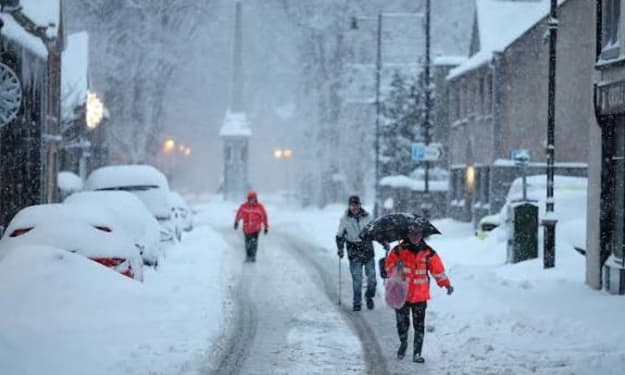
An amber weather warning has been issued as forecasters warn of what could be the worst snowfall in a decade, raising serious concerns about travel disruption, power outages, and public safety across large parts of the UK. Meteorologists say the combination of freezing temperatures, heavy snowfall, and strong winds could create hazardous conditions not seen since the early 2010s.
By Fiaz Ahmed Brohi18 days ago in The Swamp