
The Last Russia-US Nuclear Treaty Is About to Expire: What Happens Next
Why the End of New START Could Redefine Global Security and Nuclear Arms Control


As the world moves closer to February 5, 2026, a major pillar of global security is quietly approaching its end. The New Strategic Arms Reduction Treaty (New START) — the last remaining nuclear arms control agreement between the United States and Russia — is set to expire. Its potential collapse marks a turning point not just for the two nuclear superpowers, but for the entire international system.
For decades, nuclear treaties helped prevent unchecked arms races and reduced the risk of catastrophic conflict. With New START hanging by a thread, many are asking a critical question: what happens when the last safety net disappears?
What Is New START and Why Does It Matter?
New START was signed in 2010 and came into force in 2011. It placed legally binding limits on the strategic nuclear arsenals of the United States and Russia — the two countries that together possess nearly 90 percent of the world’s nuclear weapons.
Under the treaty, each side agreed to limit itself to:
1,550 deployed nuclear warheads
700 deployed delivery systems, such as intercontinental ballistic missiles (ICBMs), submarine-launched ballistic missiles (SLBMs), and strategic bombers
But New START was not just about numbers. Its real strength lay in transparency and verification. Regular data exchanges, on-site inspections, and notifications ensured both sides knew what the other was doing. This reduced suspicion, prevented misunderstandings, and lowered the risk of accidental escalation during times of tension.
In an era marked by distrust, New START functioned as a stabilizing force.
Why Is the Treaty in Trouble Now?
The geopolitical environment that allowed New START to exist has drastically changed. Relations between Washington and Moscow are at one of their lowest points since the Cold War.
Several factors have pushed arms control to the sidelines:
The war in Ukraine has shattered diplomatic trust between Russia and the West.
Russia suspended participation in treaty inspections, claiming security concerns and political pressure.
The United States insists that meaningful arms control requires full compliance and verification.
Broader disagreements over NATO, sanctions, and global influence have poisoned the negotiating atmosphere.
Although both countries have occasionally signaled interest in restraint, no formal talks on a successor treaty have made meaningful progress.
Why Hasn’t a New Treaty Been Negotiated?
Arms control negotiations are complex even in good times. In today’s environment, they are especially difficult.
Russia has argued that any future agreement must include other nuclear powers, particularly the United Kingdom and France. The U.S. rejects this, stating that it cannot negotiate limits on behalf of its allies.
Meanwhile, China has refused to join trilateral talks, pointing out that its nuclear arsenal is far smaller than those of the U.S. and Russia. Beijing argues that expecting equal limits is unfair and strategically unrealistic.
As a result, the world is facing a rare and dangerous moment: the possible end of all legally binding nuclear limits between the two largest nuclear powers.
What Happens If New START Expires?
If the treaty expires without extension or replacement, the immediate effects may not be visible — but the long-term consequences could be profound.
1. No Legal Constraints on Nuclear Weapons
For the first time in over 50 years, there would be no binding limits on U.S. and Russian strategic nuclear arsenals. While neither side is expected to instantly build thousands of new warheads, the absence of rules opens the door to future expansion.
This creates a strategic environment driven more by worst-case assumptions than mutual restraint.
2. Increased Risk of Miscalculation
Without inspections and data sharing, uncertainty grows. When countries lack reliable information about each other’s capabilities, they tend to assume the worst. In times of crisis, this uncertainty can be deadly.
History shows that misunderstandings — not intentions — often trigger conflict.
3. Damage to Global Non-Proliferation Efforts
The collapse of New START would weaken the credibility of the Nuclear Non-Proliferation Treaty (NPT). Non-nuclear states may question why they should uphold their commitments if nuclear powers abandon restraint.
This could encourage other countries to pursue nuclear capabilities, increasing global instability.
4. A New Arms Race
Even without immediate buildup, the absence of limits could gradually lead to a new nuclear arms race — one driven by emerging technologies such as hypersonic missiles, advanced missile defenses, and space-based systems.
Unlike the Cold War, this arms race would unfold in a multipolar world, making it even harder to control.
Is There Any Hope for an Extension?
There is still a narrow window for action.
Russia has floated the idea of temporarily adhering to New START limits, provided the United States does the same. This would not be a full extension but could prevent immediate deterioration.
Such a move would buy time — time for diplomacy, trust-building, and perhaps the groundwork for a future agreement. However, temporary measures are fragile and lack the enforceability of a formal treaty.
What Comes After New START?
If New START ends, the world enters uncharted nuclear territory. Future arms control may look very different from the treaties of the past. Instead of comprehensive agreements, we may see:
Informal political commitments
Partial or regional agreements
Confidence-building measures without legal force
While these alternatives are better than nothing, they lack the strength and reliability of binding treaties.
A Defining Moment for Global Security
The expiration of the last Russia-US nuclear treaty is more than a technical event. It is a symbol of a world moving away from cooperation and toward strategic rivalry.
Whether this moment becomes the start of a dangerous new arms race — or a catalyst for reinventing arms control — depends on political will. History shows that dialogue is possible even in times of deep hostility.
The question now is simple, yet urgent: Will the world choose restraint — or risk repeating the most dangerous mistakes of the past?
About the Creator
Muhammad Hassan
Muhammad Hassan | Content writer with 2 years of experience crafting engaging articles on world news, current affairs, and trending topics. I simplify complex stories to keep readers informed and connected.
Keep reading
More stories from Muhammad Hassan and writers in The Swamp and other communities.
China Sells the World on Its Duty-Free Island, Amid a $1 Trillion Trade Surplus
If you think of China as the world’s factory, you’re not wrong. In 2025, China’s trade surplus hit $1 trillion — a staggering figure that highlights the country’s dominance in global exports. But while most of the world focuses on China’s manufacturing power, there’s a new story unfolding in the far south: a tropical island turned duty-free paradise. That’s right, China is betting big on Hainan, transforming it into a global shopping and tourism hub. And this isn’t just about souvenirs or luxury bags. It’s a bold economic experiment with global implications. Let’s unpack it. Hainan: From Beach Resort to Shopping Mecca Hainan has always been known for its sunny beaches and tropical resorts. But in 2025, China stepped up its game. The government rolled out major customs reforms, effectively turning the entire island into a free trade port with a massive duty-free shopping regime. Here’s what changed: Zero-tariff coverage jumped from 21% to 74% of goods imported. The number of duty-free categories exploded from around 1,900 to nearly 6,600. The personal annual shopping limit went up to 100,000 yuan (~$14,000). Visa-free entry was expanded for visitors from multiple countries to boost tourism. The result? Hainan became a shopping magnet. In the first week alone after the new rules, duty-free sales hit 1.1 billion yuan ($156 million) — a 55% jump compared to last year. Shoppers are coming in droves, from luxury brand lovers to tech enthusiasts, all eager to take advantage of these perks. More Than Just Shopping At first glance, Hainan’s boom seems like a tourism strategy: get people on the island, let them spend, and watch the economy grow. But there’s more happening under the surface. 1. Global Brands Are Taking Notice Luxury and premium brands are racing to set up shop in Hainan. Big names like Dior and Moncler now have flagship stores, drawn by a mix of domestic demand and duty-free incentives. For international companies, Hainan is a golden opportunity to tap into China’s consumer market without traditional barriers. 2. A Hub for Trade and Supply Chains Hainan isn’t just for shopping. The island is being positioned as a strategic trade hub, allowing imported goods to be lightly processed locally and then shipped to mainland China at favorable tax rates. This could reshape supply chains in Asia, giving companies a new node for logistics, value addition, and access to the world’s second-largest economy. 3. Boosting Domestic Consumption China has long relied on exports to fuel growth. With a $1 trillion trade surplus, domestic consumption is a priority. Hainan’s duty-free revolution helps shift the focus inward, encouraging both local and international shoppers to spend on the island. It’s a clever way to balance export strength with domestic economic growth. Global Implications Hainan’s rise comes at a time of global trade tensions. Countries like the U.S. have criticized China’s trade surplus, while rising tariffs and geopolitical uncertainty make global supply chains more complex. By creating a world-class duty-free hub, China is sending a message: it’s not just an exporter; it’s a destination for global commerce and tourism. And it’s not just China benefiting. For international luxury brands, Hainan offers: Access to a vast consumer base Favorable tax and import policies A new location to showcase their products This challenges traditional shopping hubs like Dubai, Singapore, and Hong Kong, positioning Hainan as a serious competitor. Challenges Ahead Of course, Hainan isn’t without its risks. Duty-free sales are sensitive to: Tourism trends Currency fluctuations Global economic slowdowns For example, in 2024, Hainan saw a 29% drop in duty-free sales due to fewer tourists and weaker spending power. Additionally, turning the island into a sustainable economic powerhouse requires more than shopping: infrastructure, services, and regulatory stability are crucial to keeping both businesses and tourists happy. Why It Matters Hainan shows how creative economic policies can reshape global trade and consumption. It’s a test case for using duty-free regimes and open trade policies to attract global attention, investment, and spending — all while boosting domestic growth. China’s strategy sends a clear message: a $1 trillion trade surplus is impressive, but turning that surplus into a sustainable, consumption-driven economy requires innovation and global engagement. Hainan is more than a tropical getaway; it’s China’s bold experiment in economic evolution. The Takeaway Next time you hear about China’s trade numbers, remember Hainan. The island isn’t just sun and sand — it’s a duty-free experiment with global ambition. For shoppers, brands, and policymakers, it’s a glimpse into how countries can creatively use trade, tourism, and taxation to shape the economy of the future. Hainan proves that in today’s global economy, a tropical island can be as influential as a trillion-dollar trade surplus.Start writing...
By Muhammad Hassan2 months ago in The Swamp
Why Black History Matters in America?
The United States of America is celebrating their 250th anniversary in 2026. I'm proud to be an American and as someone who was born here, I wouldn't imagine myself living anywhere else. This is a country where opportunities are possible. Where anyone can be successful in anything they desire to do. Equality, community, and togetherness are the backbones of what America is and should be about. However, we have an administration who wants to erase and disregard those who have made positive, meaningful impacts in our country, specifically Black figures, such as Martin Luther King, Jr., Rosa Parks, and Maya Angelou. President Trump and his administration have been constantly complaining and fighting against what they call the "Woke agenda". They use this excuse as a distraction from other issues they refuse to address, such as the high cost of living, climate change, and inflation. That equality is dividing America, when in reality, it's bringing us together. Being woke is not tied to a specific political party. No matter where you stand on the political spectrum, you can still care about other people and their plights. Compassion and empathy for others isn't tied to a political party, either. We were taught as children to treat others the way we want to be treated and not judge others because they're different from us. Caring about others isn't a personal attack on your beliefs. It doesn't make you any less of a person. People who are easily offended over African American figures, past or present, or anything related to it, are grasping at straws. Current and future generations need to know who people like Harriet Tubman and Shirley Chisholm were, especially in the classroom. Black History is part of American History. It should be recognized, not hidden or forgotten. Besides, you can't shield children from everything, just because your feelings are easily hurt.
By Mark Wesley Pritchard 27 days ago in The Swamp
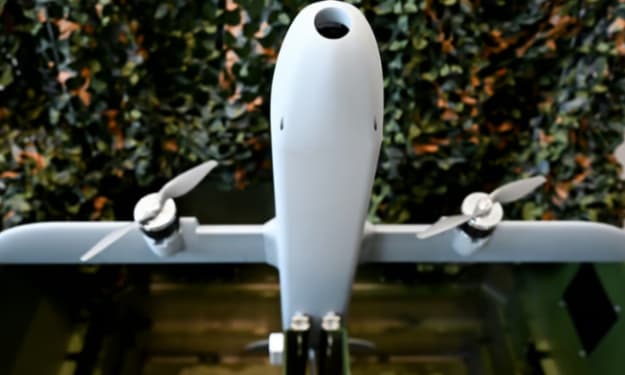
5 NATO Allies Agree to Produce Low-Cost Drones
In a move that underscores how warfare and defense strategy are rapidly evolving, five member nations of the North Atlantic Treaty Organization have agreed to jointly develop and produce low-cost military drones. The announcement highlights a growing recognition that future conflicts will rely not only on advanced fighter jets and missile systems but also on scalable, affordable unmanned aerial vehicles that can be produced in large numbers.
By Sajida Sikandar7 days ago in The Swamp
Staying sane in the insane world.
”It is no measure of health to be well adjusted to a profoundly sick society.” Jiddu Krishnamurti This quote has been one of my favourites since the moment I first laid my eyes on it. To me, it cuts right through the fog of the illusion of normality that permeates our lives. And since I am someone who has never felt (well) adjusted to this society, Krishnamurti’s words gifted me with the realisation that there isn’t anything inherently wrong with me.
By Eva Smittea day ago in Humans



Comments
There are no comments for this story
Be the first to respond and start the conversation.