
‘Splash & Grab’ and ‘UK Ready to Seize More of Putin’s Ships’
Britain Signals a Harder Line on Russian Assets
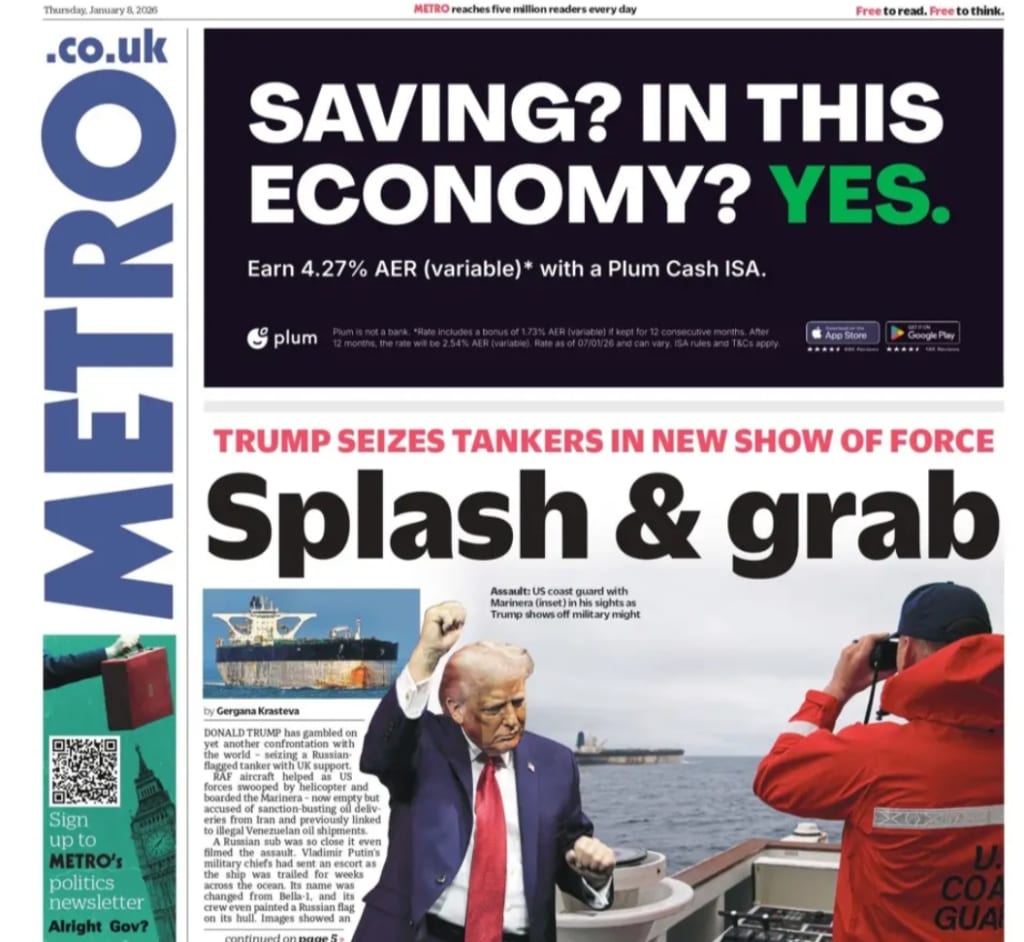
The UK government has signaled a significant escalation in its approach toward Russia, with officials indicating that Britain is ready to seize more vessels linked to President Vladimir Putin and the Russian state. Dubbed “splash and grab” by critics and commentators, the policy reflects a tougher enforcement of sanctions aimed at pressuring Moscow amid ongoing geopolitical tensions.
While supporters argue the measures are lawful and necessary, others warn they risk blurring the line between sanctions enforcement and outright asset confiscation—raising serious legal, economic, and diplomatic questions.
What Does ‘Splash & Grab’ Mean?
The phrase “splash and grab” has emerged to describe the rapid seizure of Russian-linked ships when they enter UK waters or dock at British-controlled ports. These vessels are often suspected of being owned, operated, or indirectly controlled by sanctioned Russian individuals or state-affiliated companies.
Under expanded sanctions powers, UK authorities can detain ships, freeze their operations, and in some cases confiscate them if ownership ties to sanctioned entities are established.
Officials insist these actions are conducted within international law. However, critics argue that the speed and aggressiveness of enforcement risks mistakes and escalation.
Why Ships Are a Key Target
Maritime assets are particularly vulnerable to sanctions. Ships must dock, refuel, insure, and interact with international ports—making them easier to intercept than hidden financial assets.
Russia’s commercial and energy shipping fleets play a crucial role in exporting oil, gas, and commodities. By targeting vessels, the UK aims to disrupt revenue streams that could support Russia’s war effort and broader geopolitical ambitions.
Seizing ships also sends a visible message: sanctions are not just symbolic—they are enforceable.
Legal Authority and International Law
The UK government has expanded its legal framework to allow broader asset seizures connected to sanctioned individuals. Officials argue that vessels linked to sanctioned Russian interests are legitimate targets under domestic law and aligned with international sanctions regimes.
However, maritime law experts caution that ship ownership structures are often complex, involving shell companies, foreign registries, and layered insurance arrangements. Proving direct links to sanctioned entities can be legally challenging.
There are also concerns that aggressive seizures could face legal challenges in international courts or arbitration panels, potentially costing taxpayers millions.
Moscow’s Reaction and Rising Tensions
Unsurprisingly, Russia has condemned the UK’s actions, accusing London of “piracy” and unlawful asset theft. Russian officials warn that such measures could invite retaliation against British assets or interests abroad.
The risk of tit-for-tat escalation looms large. If seizures become more frequent, commercial shipping lanes could become increasingly politicized, undermining global maritime stability.
Some analysts fear that normalizing vessel seizures could weaken trust in international shipping norms that underpin global trade.
Impact on Global Trade and Insurance
Beyond geopolitics, the policy has practical consequences for global trade. Shipping insurers are increasingly cautious about covering vessels with even indirect Russian connections, driving up costs and uncertainty.
Ports, shipping firms, and logistics companies now face heightened compliance burdens, needing to verify ownership structures more thoroughly than ever.
Smaller operators worry they could be caught in enforcement actions despite having no political intent—simply because of opaque ownership histories.
Supporters Say Pressure Must Increase
Supporters of the UK’s approach argue that traditional sanctions have not been sufficient to deter Russia. They see ship seizures as a necessary escalation that targets tangible assets rather than abstract financial flows.
Human rights advocates backing the policy say cutting off revenue streams is essential to limiting Russia’s ability to sustain military operations.
For them, the discomfort caused to global shipping is outweighed by the moral imperative to act decisively.
Critics Warn of Dangerous Precedent
Critics, however, warn that “splash and grab” tactics could set a troubling precedent. If powerful nations normalize aggressive asset seizures, others may follow suit—potentially against weaker states or political rivals.
There is also concern about due process. Seizing assets before ownership disputes are fully resolved risks undermining the rule of law that sanctions are meant to uphold.
Some British legal experts argue that sanctions should remain a pressure tool—not evolve into quasi-confiscation without clear international consensus.
Domestic Debate in the UK
Within the UK, the policy has sparked debate. Some lawmakers are pushing for even stronger enforcement, arguing Britain should lead by example in holding Russia accountable.
Others urge caution, warning that overreach could expose the UK to legal liability and damage its reputation as a defender of international law.
Public opinion remains divided—supportive of tough action against Russia, but wary of unintended consequences.
A Broader Shift in Sanctions Strategy
The readiness to seize more ships reflects a broader shift in how sanctions are used globally. Governments are moving from symbolic freezes toward physical enforcement—seizing yachts, planes, properties, and now ships.
This evolution marks a turning point in economic warfare, where assets are no longer just frozen but actively removed from circulation.
The long-term implications of this shift remain uncertain.
What Comes Next
As the UK signals readiness to seize additional vessels, shipping companies linked to Russia will likely reroute, reflag, or restructure ownership to avoid exposure.
Legal challenges are expected, and international scrutiny will intensify. Whether “splash and grab” becomes a lasting feature of sanctions enforcement—or a temporary escalation—will depend on how far governments are willing to go.
Conclusion: Enforcement or Escalation?
The UK’s readiness to seize more of Putin’s ships underscores a growing willingness to enforce sanctions with real-world consequences. Supporters see it as overdue accountability; critics see a risky escalation.
As global tensions remain high, the line between lawful enforcement and destabilizing precedent grows thinner. What is clear is that the world of sanctions—and maritime law—is entering far more turbulent waters
About the Creator
Keep reading
More stories from Aarif Lashari and writers in The Swamp and other communities.
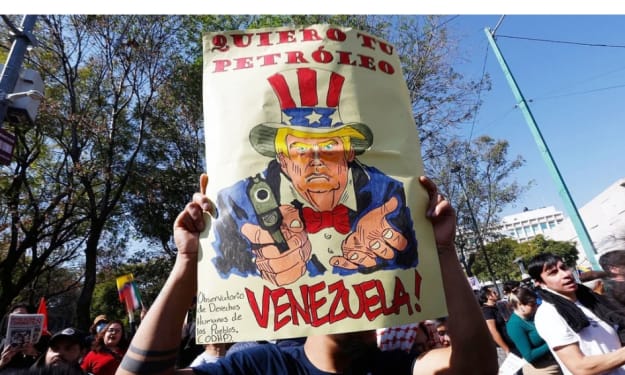
Latin America Fears What Comes Next After the Venezuela Raid
Across Latin America, governments and citizens alike are grappling with deep unease following the U.S. raid on Venezuela that led to the capture of President Nicolás Maduro. While Washington has framed the operation as a decisive blow against authoritarian rule, much of the region is focused on a different question: what happens next?
By Aarif Lashari12 days ago in The Swamp
China Turns Fragile Reefs into Concrete Fortresses and the World Lets It Happen
In the South China Sea, a region fraught with geopolitical tensions and strategic importance, China has embarked on an unprecedented campaign of transformation. Over the past decade, the country has turned fragile coral reefs and low-lying atolls into massive, fortified islands, complete with runways, military facilities, and concrete structures that would seem more at home in a bustling metropolis than in an ecologically sensitive marine ecosystem. While this ambitious engineering feat has drawn widespread attention, the world has largely allowed it to unfold with minimal intervention. The transformation of these reefs into concrete fortresses is a testament to China’s capabilities in large-scale land reclamation. Using a combination of dredging, sand dumping, and heavy construction, China has expanded the surface area of natural formations, creating islands capable of supporting military installations, airstrips, and harbors. Satellite imagery over the years has revealed a stark contrast between the natural reefs and the artificial islands now dominating the waters, highlighting the scope and scale of the operation. One of the most remarkable aspects of this process is the sheer speed at which it has occurred. Some reefs that were mere specks above sea level a decade ago now host multi-story buildings, radar facilities, and missile sites. These developments have given China a strategic advantage, allowing it to extend its reach across the South China Sea and control vital shipping lanes, which carry a significant portion of the world’s trade. The artificial islands also serve as a deterrent, projecting power and influencing the behavior of neighboring countries. Yet, this strategic triumph comes at a severe environmental cost. Coral reefs, long considered the “rainforests of the sea,” are delicate ecosystems that support thousands of marine species. The dredging and construction processes have destroyed vast areas of reef, disrupted fish populations, and altered water currents. Marine biologists warn that the ecological damage is likely irreversible, with implications not just for biodiversity but also for the livelihoods of coastal communities that depend on fishing and tourism. The international response has been muted, despite widespread condemnation from environmental groups and concerned nations. Part of the challenge lies in the legal framework governing the South China Sea. While the United Nations Convention on the Law of the Sea (UNCLOS) sets out rules for territorial waters and exclusive economic zones, enforcement is weak, and China’s actions often exploit legal ambiguities. Attempts by other countries to challenge the reclamation and militarization of these islands have largely failed, leaving the status quo intact. Geopolitically, the world’s reluctance to intervene reflects a combination of caution and pragmatism. China is a global economic powerhouse, and many nations are hesitant to risk confrontation over a maritime dispute. Diplomatic efforts have mostly focused on negotiations and freedom-of-navigation patrols rather than direct interference. Meanwhile, the artificial islands have become symbols of China’s growing assertiveness, testing the resolve of neighboring countries like the Philippines, Vietnam, and Malaysia, who also claim parts of the contested waters. The militarization of these reclaimed islands adds another layer of concern. Some installations are equipped with radar systems capable of monitoring air and maritime traffic across the region. Others host missile batteries that can target ships and aircraft hundreds of kilometers away. These fortresses not only enhance China’s defensive posture but also complicate the strategic calculus for the United States and its allies, who conduct naval operations and patrols in the South China Sea. Despite the warnings, China shows no signs of slowing down. Plans are reportedly underway to expand existing islands and even construct new ones, solidifying its hold on the region. This situation presents a broader question for the international community: how should the world respond when engineering marvels clash with environmental preservation and global security norms? Environmentalists argue that immediate action is necessary to protect remaining reefs, enforce stricter regulations on land reclamation, and hold countries accountable for ecological destruction. Policymakers, on the other hand, are caught between the imperatives of maintaining peace, upholding international law, and addressing environmental crises. The South China Sea, therefore, has become a microcosm of global challenges—where ambition, national interest, and ecological responsibility collide. China’s creation of concrete fortresses from fragile reefs represents a bold combination of ingenuity and assertiveness. But the world’s muted response raises questions about the balance between strategic interests and environmental stewardship. Unless the international community develops new mechanisms to address such transformations, the South China Sea may serve as a warning of what happens when ambition overshadows accountability. The reefs that once teemed with life now stand as stark monuments to human determination, but also as cautionary tales. The consequences of these actions extend far beyond territorial control—they touch on global environmental health, regional stability, and the rules that govern shared spaces in an interconnected world.
By Fiaz Ahmed Brohiabout 8 hours ago in The Swamp



Comments
There are no comments for this story
Be the first to respond and start the conversation.