
Ultra-Orthodox Fury Over Military Enlistment Turns Deadly in Israel
A long-standing clash between faith and national duty escalates into violence, exposing deep social and political fractures in Israeli society.
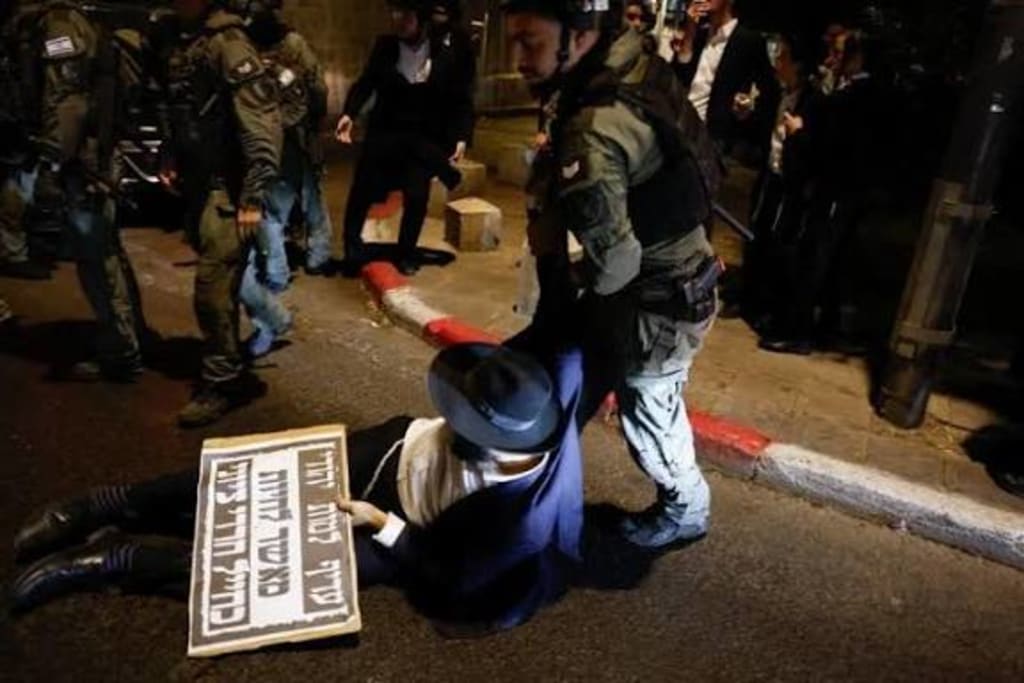
Tensions surrounding military enlistment in Israel have erupted into deadly violence, exposing one of the country’s deepest and most persistent social divides. At the heart of the crisis lies a long-standing exemption that allows many ultra-Orthodox Jewish men, known as Haredim, to avoid compulsory military service in order to pursue full-time religious studies. As Israel faces prolonged security challenges and an overstretched army, efforts to enforce broader enlistment have ignited anger, protests, and, most recently, fatal clashes.
A Longstanding Divide in Israeli Society
Military service is a defining institution in Israel. For most Jewish citizens, compulsory enlistment is seen not only as a legal duty but as a moral obligation tied to national survival. However, since the country’s founding, ultra-Orthodox communities have largely been exempt, based on the belief that Torah study contributes spiritually to the defense of the state.
Over time, this arrangement has become increasingly controversial. The ultra-Orthodox population has grown rapidly and now represents a significant portion of Israeli society. Many secular and religious-Zionist Israelis argue that the exemption places an unfair burden on those who serve, particularly during times of heightened conflict. Calls for equality in service have intensified as reserve soldiers are repeatedly mobilized and casualties mount.
Renewed Push for Enlistment
Recent court rulings and political pressure have pushed the government to reconsider blanket exemptions. Israel’s Supreme Court has ruled that prolonged unequal treatment in enlistment is unconstitutional, forcing lawmakers to draft new policies. As a result, authorities began issuing draft notices to ultra-Orthodox men who had previously been shielded from service.
This shift was perceived by many Haredi leaders as an existential threat to their way of life. They argue that military service undermines religious devotion, exposes young men to secular influences, and weakens tightly knit religious communities. Influential rabbis urged followers to resist enlistment, framing the issue as a spiritual battle rather than a civic dispute.
Protests Turn Violent
What began as demonstrations quickly escalated. Large crowds of ultra-Orthodox protesters gathered in several cities, blocking roads, clashing with police, and setting fires. Tensions reached a breaking point when confrontations turned deadly, with reports of serious injuries and at least one fatality linked to the unrest.
The violence shocked the nation. While protests against enlistment are not new, the deadly outcome marked a dramatic escalation. Security forces responded with riot control measures, arrests, and road closures, further inflaming tempers within already volatile communities.
Political Fallout and Public Anger
The deadly clashes have placed immense pressure on Israel’s political leadership. Coalition governments often rely on ultra-Orthodox parties for parliamentary support, making decisive action politically risky. Critics accuse leaders of prioritizing coalition survival over national unity and equality.
Public anger has surged, particularly among families of soldiers currently serving. Many argue that continued exemptions erode social cohesion and undermine trust in state institutions. Social media and opinion columns are filled with calls for universal service, while others warn that forcing enlistment could tear the social fabric even further.
The Ultra-Orthodox Perspective
From within the Haredi community, the crisis is viewed very differently. Many see state enforcement as persecution of religious life. Community leaders insist that Torah study is a sacred duty equal to military defense, and they reject narratives portraying them as unwilling to contribute to society.
Some ultra-Orthodox citizens do serve in specialized military units designed to accommodate religious practices, but these programs have not been widely embraced. Skepticism remains high, fueled by fears of cultural erosion and loss of autonomy.
A Nation at a Crossroads
The deadly turn in protests underscores how unresolved the enlistment issue remains. Israel is grappling with fundamental questions: How can it balance religious freedom with civic equality? Can a society under constant security threat afford exemptions for a growing population? And is compromise still possible after violence has entered the equation?
Experts warn that without meaningful dialogue, the situation could worsen. Some propose alternative national service options for ultra-Orthodox men, while others advocate gradual integration rather than abrupt enforcement. Trust-building measures, they argue, are essential to prevent further bloodshed.
Conclusion
The deadly unrest over military enlistment is more than a policy dispute—it is a reflection of Israel’s struggle to reconcile tradition, security, and equality in a rapidly changing society. As the nation mourns the loss of life and confronts rising divisions, the challenge ahead is clear. Finding a solution that respects religious identity while ensuring shared responsibility may be one of Israel’s most critical tests yet. The outcome will shape not only the future of military service, but the cohesion and character of the country itself.
About the Creator
Keep reading
More stories from Fiazahmedbrohi and writers in The Swamp and other communities.
Amber warning for 'worst snow in a decade'
An amber weather warning has been issued as forecasters warn of what could be the worst snowfall in a decade, raising serious concerns about travel disruption, power outages, and public safety across large parts of the UK. Meteorologists say the combination of freezing temperatures, heavy snowfall, and strong winds could create hazardous conditions not seen since the early 2010s.
By Fiazahmedbrohi 4 days ago in The Swamp


Comments
There are no comments for this story
Be the first to respond and start the conversation.