
Trump Changes Tone, Invites Colombia’s Petro to the White House: A Shift in Hemispheric Diplomacy
A surprising diplomatic pivot raises questions about strategy, ideology, and the future of U.S.–Latin American relations
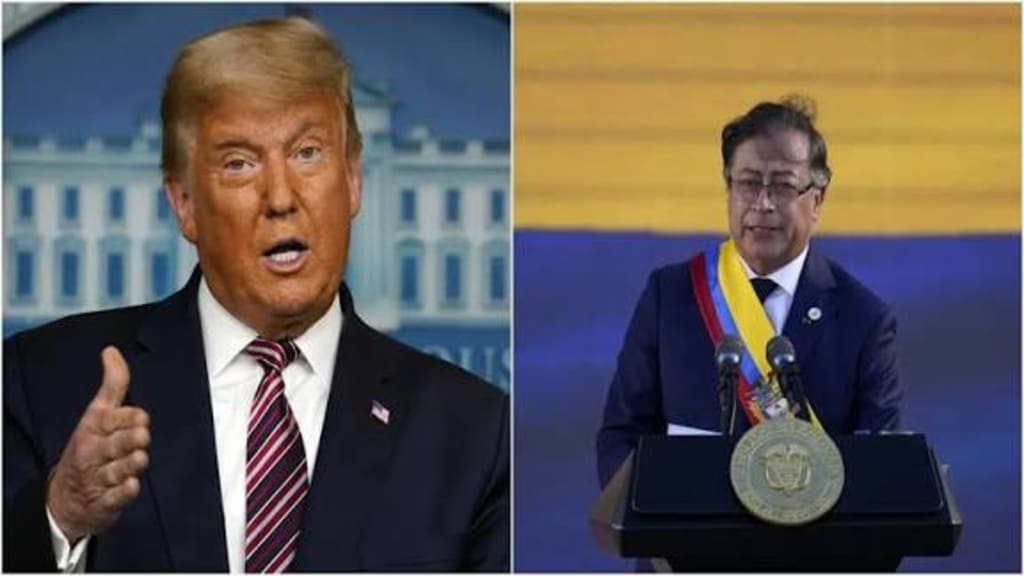
In a surprising diplomatic turn, former U.S. President Donald Trump has softened his rhetoric toward Colombia and extended an invitation to Colombian President Gustavo Petro to visit the White House. The move has drawn attention across the Americas, signaling a possible recalibration of U.S.–Latin American relations after years of tension, sharp language, and ideological clashes. For observers of global politics, this moment raises an important question: is this a genuine strategic shift or a calculated political gesture?
A Relationship Marked by Tension
Relations between Washington and Bogotá have historically been close, particularly on security cooperation, trade, and counter-narcotics efforts. However, Gustavo Petro’s rise to power as Colombia’s first leftist president disrupted the traditional alignment. Petro has openly criticized U.S. drug policy, argued for a new approach to the war on drugs, and pushed for stronger environmental protections—often framing Washington as part of the problem rather than the solution.
Trump, known for his blunt style, previously criticized Latin American leaders over migration and security issues. Colombia, despite being a long-standing U.S. ally, was not immune to that pressure. Against this backdrop, the invitation to Petro represents a notable change in tone.
Why the Shift Now?
Several strategic factors may explain Trump’s apparent pivot. First, Colombia remains a key geopolitical player in South America. It is a major U.S. trading partner, a regional security anchor, and an influential voice in discussions about Venezuela, migration, and climate change. Ignoring Bogotá risks leaving space for rival powers such as China and Russia to deepen their influence in the region.
Second, migration remains a central political issue in the United States. Colombia plays a crucial role as both a transit country and a host for millions of Venezuelan migrants. Cooperation with Petro’s government could help Washington manage migration flows more effectively—something Trump has long emphasized in his political messaging.
Third, energy and environmental policy may also be at play. Colombia is rich in resources, and Petro’s push for a green transition has global implications. Engaging directly allows Washington to influence these debates rather than watch them unfold from the sidelines.
Petro’s Calculated Acceptance
For President Petro, the invitation is equally strategic. Despite his criticism of U.S. policies, Petro has repeatedly stated that Colombia needs pragmatic engagement with Washington. A White House meeting offers Petro international legitimacy, a chance to advocate for drug policy reform, and an opportunity to push climate cooperation onto the global agenda.
Petro has argued that decades of militarized anti-drug strategies have failed and that environmental destruction and social inequality are at the root of the problem. A direct dialogue with Trump gives him a global platform to present this vision—even if agreement is far from guaranteed.
Symbolism Versus Substance
While the invitation itself is symbolic, the real test lies in outcomes. Will this meeting lead to concrete policy changes, or will it remain a photo opportunity designed to signal openness without commitment?
Skeptics point out that Trump’s political style often involves dramatic gestures followed by limited follow-through. Supporters, however, argue that his transactional approach to diplomacy could yield practical agreements, especially if both sides see clear benefits.
Issues likely to dominate discussions include drug trafficking, migration, Venezuela’s political crisis, trade relations, and environmental cooperation. Any progress in these areas would mark a meaningful shift in hemispheric politics.
Implications for the Region
The invitation has broader implications beyond Colombia. Other Latin American leaders are watching closely. A more conciliatory U.S. stance could reduce ideological polarization in the region and encourage dialogue over confrontation. Conversely, if talks collapse or produce little substance, it may reinforce skepticism about Washington’s reliability as a partner.
For Latin America, long accustomed to being treated as a secondary priority, even symbolic engagement can carry weight. It signals recognition—something regional leaders often argue has been lacking.
A Moment of Diplomatic Uncertainty
Trump’s invitation to Gustavo Petro underscores a core truth of modern diplomacy: relationships are fluid, and pragmatism often overrides ideology. Whether this marks a genuine reset or a temporary tactical move remains to be seen.
What is clear is that both leaders have something to gain—and something to lose. As global challenges like migration, climate change, and security grow more complex, dialogue may prove more valuable than division. The world will be watching to see whether this changed tone leads to meaningful cooperation or fades into yet another missed opportunity in international politics.
About the Creator
Keep reading
More stories from Fiazahmedbrohi and writers in The Swamp and other communities.
Man Jailed for Supplying Gangs With Thousands of Channel Small Boats
A major blow has been dealt to criminal networks operating across the English Channel after a man was jailed for supplying gangs with thousands of small boats used in dangerous migrant crossings. The case has highlighted the complex and often hidden supply chains that fuel people-smuggling operations and has renewed debate about border security, organized crime, and the humanitarian risks faced by migrants. The Hidden Backbone of Smuggling Networks While public attention often focuses on the boats intercepted at sea or the migrants arriving on British shores, this case has exposed a less visible but crucial link in the smuggling chain: suppliers. According to investigators, the jailed man was not steering boats or recruiting migrants. Instead, he acted as a key logistics provider, supplying inflatable vessels in bulk to organized gangs who then used them to transport people across one of the world’s busiest and most dangerous shipping lanes. Authorities revealed that thousands of small boats were distributed over several years, allowing smuggling networks to operate at scale. These vessels, often cheaply made and poorly equipped, were never designed for long sea journeys. Yet they became the primary tool for criminal gangs seeking to maximize profits while minimizing costs. Profits Over Human Life Investigators stressed that the boats supplied were frequently overloaded, lacking basic safety features such as reliable engines, life jackets, or navigation equipment. This disregard for safety has contributed directly to numerous incidents at sea, including capsized vessels, rescues in freezing waters, and tragic loss of life. Prosecutors argued that the supplier was fully aware of how the boats would be used. Financial records reportedly showed substantial profits generated through bulk sales, with little concern for the fate of those placed aboard the vessels. In court, the case was framed not just as a crime of illegal supply, but as an act that enabled life-threatening journeys. A Case With Wider Implications The sentencing has been described by officials as a warning to others operating behind the scenes of people-smuggling networks. Law enforcement agencies emphasized that tackling illegal crossings requires dismantling entire supply chains, not just intercepting boats at sea or arresting facilitators on the ground. By targeting suppliers, authorities hope to disrupt operations earlier and make it harder for gangs to replace equipment quickly. However, experts caution that smuggling networks are highly adaptive. Cutting off one supplier may raise costs temporarily, but demand for dangerous crossings often remains driven by conflict, poverty, and lack of legal migration routes. The Human Cost Behind the Crime Beyond the legal significance, the case has brought renewed attention to the human suffering linked to Channel crossings. Migrants who attempt the journey often flee war, persecution, or extreme hardship. Many are misled by smugglers who promise safe passage, only to place them in unseaworthy boats with little chance of rescue if something goes wrong. Human rights groups argue that while criminal suppliers must be held accountable, enforcement alone cannot solve the crisis. They warn that tougher crackdowns may push migrants toward even riskier routes, increasing the likelihood of tragedy. Government Response and Policy Debate The government has welcomed the conviction, describing it as proof that authorities are serious about dismantling organized crime linked to illegal migration. Officials reiterated commitments to stricter border enforcement, enhanced international cooperation, and stronger penalties for those involved in smuggling operations. At the same time, critics have questioned whether current policies sufficiently address the root causes of irregular migration. Some argue that without expanded legal pathways for asylum and labor migration, criminal gangs will continue to find customers willing to risk everything. A Signal to Criminal Networks The jail sentence sends a clear message that supplying equipment for illegal crossings is not a low-risk activity. Prosecutors emphasized that those who profit indirectly from human smuggling can face severe consequences, even if they never set foot on a boat. Security analysts suggest that future investigations may increasingly focus on manufacturers, distributors, and financial backers who enable smuggling operations from afar. This approach reflects a broader strategy used against other forms of organized crime, such as drug trafficking and arms smuggling. Conclusion The jailing of a man for supplying gangs with thousands of Channel small boats marks a significant moment in the fight against people smuggling. It exposes the industrial scale at which these operations function and underscores the deadly consequences of treating human lives as cargo. While the conviction represents progress for law enforcement, it also serves as a reminder that the Channel crisis is driven by a complex mix of criminal exploitation and human desperation. Ending the cycle will require not only tougher action against smugglers and suppliers, but also long-term solutions that offer safer, legal alternatives for those seeking refuge and opportunity.
By Fiazahmedbrohi 4 days ago in The Swamp



Comments
There are no comments for this story
Be the first to respond and start the conversation.