
Taiwan’s President Pledges to Defend Island’s Sovereignty After China’s Military Drills
Taiwan Stands Firm: President Tsai Reaffirms Sovereignty Amid Rising Chinese Military Pressure"

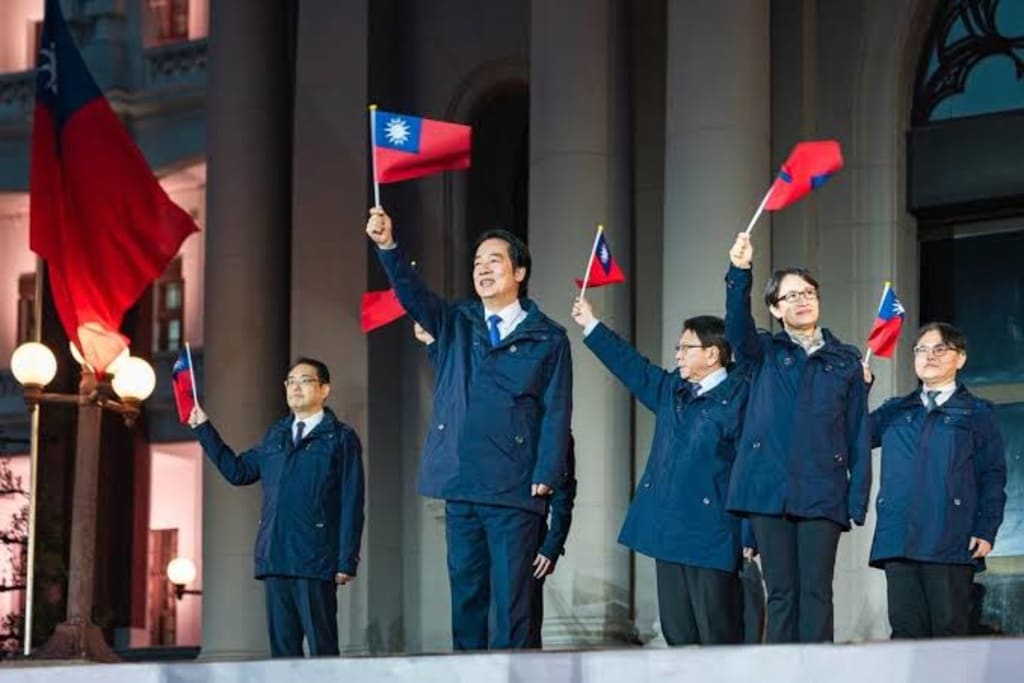
Taiwan finds itself at the center of global attention once again as President Tsai Ing-wen reaffirmed her commitment to defending the island’s sovereignty in the wake of extensive Chinese military drills in surrounding waters. The maneuvers, which involved dozens of warships, fighter jets, and missile tests, were framed by Beijing as “routine exercises,” but Taiwan and international observers see them as a direct demonstration of China’s intent and growing military pressure.
For Tsai Ing-wen, the drills are not merely a regional concern—they represent a challenge to Taiwan’s very identity and autonomy. In a televised statement, she emphasized that Taiwan will “never yield to intimidation” and vowed to “protect our democratic way of life at all costs.” Her words resonated with both domestic and international audiences, highlighting the island’s determination to resist external coercion.
The recent drills come amid rising tensions in the Taiwan Strait. Over the past few years, China has increasingly demonstrated its capacity to project military power near Taiwan, conducting air incursions and naval patrols that have unsettled the region. Analysts warn that these exercises are not isolated incidents but part of a broader strategy to pressure Taiwan politically and militarily, testing both the island’s defenses and the international community’s resolve.
Taiwan, though smaller in size compared to its neighbor, has invested heavily in defense technology and strategic planning. Its military emphasizes rapid response, asymmetric warfare capabilities, and the ability to defend key locations despite numerical disadvantages. The island’s air defense systems, coastal missile batteries, and naval forces are all geared toward deterring aggression and ensuring that any potential attack would come at a significant cost to an aggressor.
President Tsai’s recent pledge underscores the importance of national morale during these periods of heightened tension. She noted that the people of Taiwan have “demonstrated resilience and unity” in the face of past threats, and she called on citizens to remain vigilant without succumbing to fear. In practical terms, the administration has accelerated military readiness exercises, coordinated with international partners, and maintained clear communication lines for crisis management.
Internationally, reactions have been mixed but largely supportive of Taiwan’s position. The United States, Japan, and several European nations have expressed concern over China’s aggressive military posturing, affirming support for a peaceful resolution and respect for Taiwan’s de facto autonomy. Washington, in particular, continues to provide defensive equipment and intelligence support, signaling that any attack on Taiwan could have broader geopolitical repercussions.
China, for its part, maintains that Taiwan is an inseparable part of its territory and views foreign support for the island as interference in its internal affairs. Chinese officials insist that military exercises are “defensive” in nature, intended to simulate scenarios that could arise from external threats or separatist movements. Yet, analysts argue that these drills are as much political signaling as they are military training, sending a message to both Taiwan and international stakeholders about Beijing’s strategic priorities.
Taiwanese society, meanwhile, balances apprehension with determination. Citizens are aware of the geopolitical stakes, but there is a prevailing sense of resilience, often described as the “Taiwanese spirit.” Schools, businesses, and local governments have prepared contingency measures for emergencies, while public awareness campaigns educate residents on safety and preparedness without causing panic.
The significance of President Tsai’s pledge extends beyond immediate military concerns. It is a reaffirmation of Taiwan’s democratic principles in contrast to the authoritarian governance model of mainland China. For many in Taiwan, sovereignty is intertwined not just with national defense but with the preservation of freedoms, rule of law, and civil liberties that define daily life on the island.
As tensions persist, experts suggest that the coming months will be critical. Diplomatic efforts, international pressure, and strategic deterrence will all play a role in shaping the region’s stability. Taiwan’s approach—firm yet measured, resilient yet diplomatic—illustrates the delicate balance of asserting sovereignty while avoiding unnecessary escalation.
In conclusion, Taiwan faces a precarious geopolitical environment as Chinese military drills test both its defensive capabilities and its international support. President Tsai Ing-wen’s declaration to defend the island’s sovereignty is more than a political statement—it is a signal to the world that Taiwan remains committed to its democratic identity and its right to self-determination. While the threat of conflict lingers, Taiwan’s leadership and citizens alike demonstrate a resolve that may ultimately define the island’s future in the global order.
About the Creator
Fiaz Ahmed Brohi
I am a passionate writer with a love for exploring and creating content on trending topics. Always curious, always sharing stories that engage and inspire.
Keep reading
More stories from Fiaz Ahmed Brohi and writers in The Swamp and other communities.
Singapore Airlines’ New Business Class Could Debut on This Flagship Route in 2026
Singapore Airlines, long regarded as a benchmark for luxury and service in the aviation industry, is poised to revolutionize the business travel experience once again. Reports indicate that the airline’s new business class cabin—featuring cutting-edge design, advanced comfort, and personalized service—could debut on its flagship route in 2026, marking a significant step in premium air travel.
By Fiaz Ahmed Brohi18 days ago in The Swamp




Comments
There are no comments for this story
Be the first to respond and start the conversation.