Latest Stories
Most recently published stories in The Swamp.
Genome Editing Market Size and Forecast 2025–2033. AI-Generated.
Introduction: A New Era of Genetic Precision The global biotechnology landscape is undergoing one of the most transformative shifts in modern science, driven by rapid advances in genome editing technologies. Once confined to academic laboratories and experimental research, gene-editing tools have now become central to innovation in healthcare, agriculture, and industrial biotechnology. From treating genetic disorders at their molecular roots to engineering climate-resilient crops and improving industrial bio-manufacturing, genome editing is redefining what is scientifically and commercially possible.
By Renub Research3 days ago in The Swamp
Philippines: Rubbish Landfill Collapse Death Toll Rises to 13. AI-Generated.
A tragic landfill collapse in the Philippines has once again exposed the deadly consequences of poor waste management, rapid urbanization, and climate-related risks. Authorities confirmed that the death toll has risen to 13 people, with fears that more victims may still be buried under tons of garbage and debris. The incident has shocked the nation and reignited urgent debates about public safety, environmental governance, and the lives of vulnerable communities living on society’s margins. What Happened at the Landfill? The disaster occurred at a large rubbish landfill site located near a densely populated area. According to officials, a massive section of the landfill gave way following days of heavy rainfall, causing a towering mound of waste to collapse onto nearby homes and informal shelters. Residents reported hearing a loud rumble before waves of garbage, mud, and foul-smelling sludge swept through the community in seconds. Emergency responders described the scene as chaotic and heartbreaking. Entire families were caught off guard, many of them asleep when the collapse happened. Rescue teams worked tirelessly, digging through unstable waste piles using both heavy machinery and bare hands in hopes of finding survivors. Rising Death Toll and Rescue Challenges As of the latest updates, 13 deaths have been officially confirmed, including women and children. Several others were injured, some critically, while multiple residents remain unaccounted for. Search-and-rescue operations have been complicated by ongoing rain, unstable landfill slopes, and the risk of further collapses. Authorities admitted that time is working against rescuers. Decomposing waste produces toxic gases and creates dangerous working conditions, making prolonged rescue efforts increasingly risky. Despite these challenges, teams continue their efforts, driven by the possibility that someone may still be alive beneath the debris. The Human Cost: Communities Living on the Edge One of the most painful aspects of this tragedy is that many victims were informal settlers and waste pickers—people who rely on landfills for survival. In many parts of the Philippines, impoverished families live dangerously close to dumping sites, scavenging recyclable materials to earn a living. For these communities, landfills are not just dumping grounds but economic lifelines. However, this dependence comes at a devastating cost. Activists argue that the deaths highlight deep-rooted inequality, where the poorest citizens are forced to live in hazardous environments while lacking access to safe housing and basic services. Was the Disaster Preventable? Environmental experts say the warning signs were there. Landfills are particularly vulnerable during heavy rainfall, as water weakens waste structures and increases pressure within garbage piles. Improper waste compaction, lack of drainage systems, and poor monitoring further raise the risk of collapse. Critics claim that local authorities failed to enforce safety regulations and ignored previous warnings from residents. Some community members had reportedly raised concerns about cracks, foul-smelling leaks, and minor waste slides weeks before the disaster. These warnings, they say, were not taken seriously. Government Response and Accountability In response to the tragedy, government officials have launched an investigation into the landfill’s management and safety compliance. Local authorities promised immediate assistance to affected families, including temporary shelters, food aid, and medical support. National leaders also called for a review of waste disposal policies across the country. The Philippines generates millions of tons of waste annually, much of it ending up in poorly managed landfills. Environmental groups argue that without systemic reform, such tragedies will continue to occur. Environmental and Health Risks Beyond the Collapse Beyond the immediate loss of life, the collapse poses serious environmental and health risks. Toxic runoff from the landfill may contaminate nearby water sources, increasing the risk of disease outbreaks. Air pollution from decomposing waste and burning debris also threatens surrounding communities. Public health officials have warned residents to avoid contact with floodwaters and contaminated soil. Long-term exposure to landfill pollutants has been linked to respiratory illnesses, skin diseases, and other chronic health problems. A Wake-Up Call for Sustainable Waste Management This deadly incident serves as a stark reminder that waste management is not just an environmental issue—it is a matter of human safety and dignity. Experts are urging the Philippines to accelerate investments in recycling, waste reduction, and modern landfill engineering, while also addressing housing insecurity for informal settlers. Calls are growing for stronger enforcement of environmental laws, transparent oversight of landfill operations, and community-based early warning systems. Without these changes, critics warn, the country risks repeating the same deadly mistakes. Conclusion The rising death toll from the landfill collapse is more than a statistic—it represents lives lost to neglect, inequality, and systemic failure. As families mourn and rescuers continue their grim search, the tragedy stands as a powerful indictment of unsafe waste practices and social injustice. Whether this disaster leads to real reform or fades into yet another forgotten headline will depend on how seriously authorities act now. For the victims and their families, justice and change cannot come soon enough.
By Fiazahmedbrohi 3 days ago in The Swamp
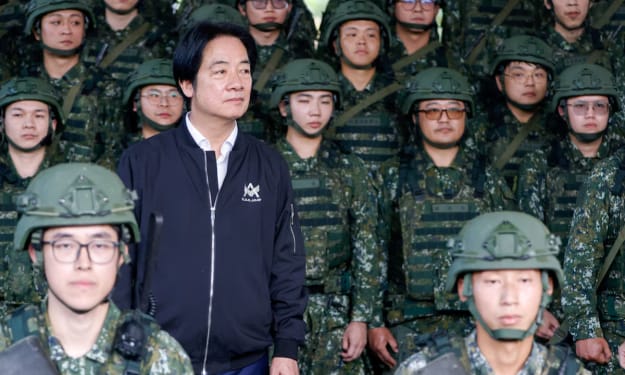
Taiwan Thanks Canada for Its Support Ahead of Prime Minister’s China Trip. AI-Generated.
In the often tense and closely watched world of global diplomacy, even a simple statement of thanks can carry enormous political weight. This week, Taiwan publicly expressed gratitude to Canada for its continued support, just days before the Canadian prime minister is set to travel to China. While the words may sound polite and routine, the timing tells a much deeper story—one about strategic alliances, democratic values, and the delicate balancing act Canada must perform on the world stage. This moment highlights not only Taiwan’s growing concern about its international standing, but also Canada’s evolving role in Indo-Pacific geopolitics. As Ottawa prepares to engage directly with Beijing, Taiwan’s message serves as both appreciation and a reminder of what is at stake. Why Taiwan’s Thank-You Matters Taiwan exists in a uniquely complicated diplomatic position. Claimed by China as part of its territory, the self-governed island is recognized by only a small number of countries as a sovereign state. Most nations, including Canada, officially adhere to a “One China” policy—acknowledging Beijing as the sole legal government of China—while maintaining unofficial but meaningful ties with Taipei. Against this backdrop, Canada’s vocal support for peace and stability in the Taiwan Strait has not gone unnoticed. Taiwanese officials have repeatedly welcomed Canada’s stance on democracy, human rights, and the rule of law—values that Taiwan sees as central to its identity. By thanking Canada ahead of the prime minister’s China visit, Taiwan is sending a subtle but powerful signal: its relationship with Ottawa matters, even if it exists outside formal diplomatic recognition. Canada’s Indo-Pacific Strategy and Taiwan Canada has increasingly framed its foreign policy around the Indo-Pacific, a region it views as economically vital and strategically sensitive. Taiwan plays an important role in this vision—not only as a democracy, but also as a global technology powerhouse, particularly in semiconductor manufacturing. In recent years, Canada has: Strengthened trade and investment ties with Taiwan Supported Taiwan’s meaningful participation in international organizations Joined allies in calling for peaceful resolution of cross-strait tensions While Canada stops short of recognizing Taiwan as an independent state, these actions signal a growing willingness to engage more openly with Taipei. For Taiwan, this kind of engagement provides international breathing room amid rising pressure from Beijing. The Timing: Ahead of a High-Stakes China Trip The upcoming visit of Canada’s prime minister to China adds another layer of complexity. Relations between Ottawa and Beijing have been strained in recent years over issues such as trade disputes, cybersecurity concerns, and the detention of Canadian citizens in China. China is extremely sensitive to any foreign interaction with Taiwan, often viewing it as interference in its internal affairs. Taiwan’s public show of appreciation, just before the trip, places Canada in a delicate position—caught between reaffirming its values and managing its relationship with the world’s second-largest economy. For Canada, the challenge will be to: Re-engage China diplomatically without appearing to retreat from democratic principles Maintain support for Taiwan without provoking unnecessary escalation Balance economic interests with national security and human rights concerns Taiwan’s Diplomatic Strategy: Gratitude as Soft Power Taiwan has become increasingly adept at using soft power diplomacy. Public statements of thanks, humanitarian aid, technology partnerships, and cultural exchanges are all part of Taipei’s effort to strengthen informal alliances. By thanking Canada openly, Taiwan accomplishes several goals at once: Reinforces its image as a responsible and appreciative international partner Encourages continued support from like-minded democracies Signals resilience in the face of diplomatic isolation This approach doesn’t confront China directly, but it subtly expands Taiwan’s international presence—something Beijing works hard to limit. What This Means for China-Canada Relations China will undoubtedly be watching closely. Any perceived strengthening of Canada-Taiwan ties could become a sensitive topic during diplomatic talks. However, Canada is not alone. Many Western democracies now walk the same line: recognizing China diplomatically while deepening unofficial engagement with Taiwan. For Beijing, this trend is concerning. For Ottawa, it is increasingly unavoidable. Canada’s message to China is likely to be one of engagement without endorsement—cooperation where possible, disagreement where necessary. Taiwan’s gratitude underscores that Canada’s actions resonate far beyond bilateral talks. A Broader Democratic Signal Beyond diplomacy, this episode reflects a broader global conversation about democracy and authoritarianism. Taiwan often positions itself as proof that Chinese culture and democracy are compatible—a narrative that challenges Beijing’s political model. By supporting Taiwan’s participation in global affairs, countries like Canada reinforce that message. Taiwan’s thank-you, therefore, is not just about bilateral relations—it’s about shared values and the kind of international order democracies want to uphold. Conclusion: Words That Carry Weight In international politics, timing is everything. Taiwan’s decision to thank Canada ahead of the prime minister’s China trip is no coincidence. It highlights the fragile but meaningful ties between Ottawa and Taipei, while reminding the world that Taiwan remains an active and engaged player despite diplomatic constraints. For Canada, the coming days will test its ability to balance pragmatism with principle. For Taiwan, the message is clear: every expression of support matters. And for global observers, this moment offers a glimpse into how modern diplomacy often works—not through treaties and embassies, but through carefully chosen words, strategic timing, and shared values expressed in public view.
By Muhammad Hassan3 days ago in The Swamp
How the U.S. Supreme Court Case on Trans Athletes Could Unravel LGBTQ+ Rights. AI-Generated.
At first glance, the U.S. Supreme Court case involving transgender athletes appears narrowly focused on sports. Supporters frame it as a debate about fairness in women’s competitions, while opponents see it as an issue of inclusion and dignity. But beneath the surface, this case carries implications that reach far beyond school gyms and athletic fields. Legal experts and civil rights advocates warn that how the Court rules could redefine the scope of LGBTQ+ protections in the United States—potentially unraveling decades of progress. What the Case Is Really About The case centers on whether states can bar transgender athletes from participating in sports teams that align with their gender identity, particularly in school and college athletics. Several states have passed laws restricting participation, arguing that biological differences undermine fair competition. Challengers argue that these bans violate constitutional guarantees of equal protection and federal civil rights laws, including Title IX, which prohibits sex-based discrimination in education. While the immediate question is about sports eligibility, the legal reasoning the Court adopts could set a precedent affecting employment, healthcare, education, and public accommodations. Why the Supreme Court’s Involvement Matters The Supreme Court does not simply settle individual disputes—it sets national legal standards. When it chooses to hear a case, it signals that broader constitutional questions are at stake. In recent years, the Court has taken a more conservative turn. That shift has already reshaped abortion rights and voting laws. LGBTQ+ advocates fear that a restrictive ruling in the trans athlete case could open the door to rolling back protections that were once considered settled. In other words, this is not just about sports policy—it is about how the law defines sex, gender, and equality. The Ripple Effect on LGBTQ+ Rights If the Court rules that states may exclude trans athletes based on biological sex, the logic could extend far beyond athletics. Legal scholars warn of a potential domino effect. Such a ruling could be used to justify: Restrictions on gender-affirming healthcare Limitations on bathroom and facility access Rollbacks in workplace and school protections Narrow interpretations of anti-discrimination laws By drawing hard legal lines around biological sex, the Court may weaken arguments that protect transgender people under existing civil rights frameworks. Title IX and the Question of Sex Title IX has long been a cornerstone of gender equality in education. Traditionally, it was used to expand opportunities for women and girls. More recently, courts and federal agencies have interpreted it to include protections for transgender students. This case challenges that interpretation. If the Supreme Court rules that Title IX does not protect trans athletes, it could signal a broader retreat from recognizing gender identity under federal law. That shift would not only affect athletes—it could reshape how schools handle discrimination claims involving LGBTQ+ students nationwide. Supporters Say It’s About Fairness Supporters of restrictions on trans athletes argue that the issue is being mischaracterized. They claim the case is not about discrimination but about preserving fairness and safety in women’s sports. From this perspective, allowing transgender women to compete is seen as undermining decades of progress made by female athletes. These arguments resonate with some parents, coaches, and athletes, making the issue politically powerful. However, critics counter that fairness concerns are often exaggerated and that policies can be crafted without excluding an entire group from participation. A Political Climate Shaping the Courtroom The legal fight does not exist in a vacuum. Across the United States, transgender rights have become a central political battleground. State legislatures have introduced hundreds of bills targeting LGBTQ+ issues, particularly trans youth. This broader climate influences how cases are framed, argued, and received. The Supreme Court’s decision will likely be interpreted as either an endorsement or rejection of this legislative trend. For LGBTQ+ Americans, the ruling may feel less like a legal judgment and more like a statement about belonging. Why This Case Could Redefine Equality At its core, the case forces the Court to answer a fundamental question: Who is protected under civil rights law? If protections hinge narrowly on biological definitions, many existing safeguards could erode. If, instead, the Court affirms a broader understanding of gender and equality, it could reinforce protections not just for trans athletes but for LGBTQ+ people more broadly. This makes the case a potential turning point—one that could shape civil rights jurisprudence for a generation. What Comes Next Whatever the outcome, the ruling will not end the debate. A restrictive decision could trigger new legal challenges and legislative efforts at the federal level. A more inclusive ruling could provoke backlash from states seeking to push back against federal authority. Either way, the decision will become a reference point in future cases involving gender identity, discrimination, and equal protection. Final Thoughts The Supreme Court case on transgender athletes is about much more than sports. It sits at the intersection of law, politics, and identity—testing how far the United States is willing to go in defining equality in the 21st century. For LGBTQ+ communities, the stakes could not be higher. A ruling that narrows protections risks unraveling hard-won rights, while an inclusive decision could affirm that civil rights evolve alongside society itself. The outcome will echo far beyond the courtroom—into schools, workplaces, and the daily lives of millions of Americans.
By Muhammad Hassan3 days ago in The Swamp
The "Frankenstein" Problem: Why Your Random AI Tools Are Killing Productivity in 2026
In early 2024, the mandate for every CEO was simple: “Get us some AI.” It didn’t matter what it was, a GPT-4 wrapper for the marketing team, an automated transcription tool for the sales reps, or a mid-tier chatbot for customer service. If it had "AI" in the name, we bought it.
By ViitorCloud Technologies3 days ago in The Swamp
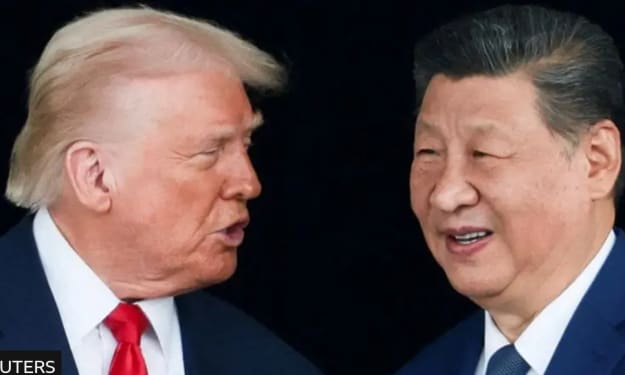
China to ‘Take All Necessary Measures’ Against Trump’s 25% Tariff
Trade tensions between the world’s two largest economies are once again threatening to boil over. After Donald Trump signaled support for a 25% tariff on Chinese goods, Beijing responded sharply, warning it would “take all necessary measures” to defend its economic interests. The statement, brief but forceful, has reignited global concerns about a return to full-scale trade confrontation. For markets, governments, and consumers alike, the message is clear: the fragile balance in U.S.-China trade relations could soon be tested again. What Trump’s 25% Tariff Means Donald Trump has long championed tariffs as a tool to rebalance trade and protect American industries. During his presidency, tariffs became a central pillar of his economic strategy, particularly against China, which he frequently accused of unfair trade practices. A proposed 25% tariff would significantly raise the cost of Chinese imports entering the U.S. market. From electronics and machinery to consumer goods, the impact would ripple through supply chains that remain deeply interconnected despite years of decoupling efforts. Trump’s framing is simple: tariffs pressure China to change its behavior. Beijing, however, sees them as economic coercion. China’s Strong Response: More Than Just Words When Chinese officials say they will “take all necessary measures,” the phrase carries weight. Historically, such language has preceded retaliatory tariffs, regulatory pressure on foreign firms, or targeted trade restrictions. China has several options at its disposal: Imposing tariffs on U.S. agricultural and industrial exports Restricting access to key raw materials or supply chains Increasing regulatory scrutiny of American companies operating in China Beijing’s warning signals that it does not intend to absorb economic pressure quietly—especially from a leader known for aggressive trade tactics. Why Beijing Is Drawing a Red Line China’s economy is navigating a complex moment. Slower growth, property sector challenges, and cautious consumer spending have already put pressure on policymakers. In this context, external shocks—like new U.S. tariffs—are viewed as direct threats to stability. More importantly, China sees trade policy as inseparable from national sovereignty. Accepting punitive tariffs without response could be perceived domestically as weakness, something the Chinese leadership is determined to avoid. By responding forcefully, Beijing reassures its public and global partners that it will defend its interests, even if that means escalating tensions. The Global Impact of Renewed Trade Conflict A renewed U.S.-China trade war would not be confined to Washington and Beijing. The global economy remains deeply exposed to the relationship between these two powers. Higher tariffs could: Increase prices for consumers worldwide Disrupt global manufacturing and logistics Slow economic growth in export-dependent economies Markets tend to react swiftly to such developments, with uncertainty often triggering volatility in stocks, currencies, and commodities. For developing countries tied into global supply chains, the consequences could be especially severe. Lessons From the Last Trade War The first U.S.-China trade war offered clear lessons. While tariffs generated political headlines, they also produced mixed economic results. American consumers absorbed higher prices, farmers required government subsidies, and global supply chains became less efficient. China, meanwhile, accelerated efforts to diversify trade partnerships and boost domestic innovation. Rather than weakening Beijing’s resolve, tariffs arguably hardened it. This history shapes how China is responding now: prepared, cautious, but unyielding. Politics Behind the Policy Trump’s tariff rhetoric also serves a domestic political purpose. Tough talk on China resonates with voters concerned about manufacturing jobs, national security, and economic independence. In this sense, tariffs are as much a campaign tool as an economic one. China understands this dynamic. Its response is crafted not only for U.S. policymakers but also for global audiences, signaling that it will not be used as a political punching bag in American elections. The result is a standoff where politics and economics collide. Is Diplomacy Still Possible? Despite the sharp language, diplomacy remains possible. Past trade confrontations have often included intense rhetoric followed by behind-the-scenes negotiations. Both sides understand the costs of prolonged escalation. However, compromise becomes harder when tariffs are framed as matters of principle rather than policy. Trump’s transactional style and China’s emphasis on sovereignty leave limited room for face-saving solutions. Whether cooler heads prevail will depend on political calculations in both capitals. What Comes Next If the tariff threat moves from rhetoric to reality, China’s response will likely be swift and strategic rather than impulsive. Beijing tends to calibrate retaliation carefully, aiming to apply pressure while minimizing self-inflicted damage. For the world, the situation serves as a reminder: U.S.-China relations remain one of the most consequential fault lines in global politics. Even a single policy announcement can send shockwaves across economies. Final Thoughts China’s warning to “take all necessary measures” against Trump’s proposed 25% tariff reflects more than economic disagreement—it highlights a deeper struggle over power, influence, and the rules of global trade. As both sides prepare for potential escalation, the stakes extend far beyond tariffs and trade balances. Whether this moment becomes another chapter in a long-running trade war—or a catalyst for renewed negotiation—will shape the global economic landscape for years to come.
By Muhammad Hassan3 days ago in The Swamp
Xi Stresses the Need to Win the Fight Against Corruption in China. AI-Generated.
Corruption has long been one of the most dangerous internal threats facing modern China. From bribery and abuse of power to deep-rooted patronage networks within the Communist Party, corruption has undermined public trust and threatened political stability. That is why Chinese President Xi Jinping’s repeated insistence on “winning the fight against corruption” is not just rhetoric—it is a cornerstone of his leadership and governance strategy. As China navigates economic slowdown, geopolitical pressure, and domestic uncertainty, Xi’s message is clear: the battle against corruption is far from over, and failure is not an option. Why Corruption Is a Critical Issue for China Corruption in China is not merely a legal or moral problem; it is a political one. For a one-party system that derives legitimacy from performance and discipline, corruption directly challenges the authority of the Communist Party. Before Xi came to power in 2012, public anger over corrupt officials had reached worrying levels. Lavish lifestyles, misuse of public funds, and unchecked local power created a growing gap between party elites and ordinary citizens. This environment posed a long-term risk to social stability—something the Chinese leadership views as an existential concern. Xi’s solution was decisive: a sweeping anti-corruption campaign that would target both high-ranking leaders and low-level officials alike. “Tigers and Flies”: Xi’s Signature Campaign One of the most famous phrases associated with Xi’s leadership is his pledge to go after both “tigers and flies”—a metaphor for powerful senior officials and minor bureaucrats. Over the past decade, the campaign has led to: The investigation and punishment of hundreds of thousands of officials The downfall of senior party figures once considered untouchable A culture of fear and discipline within government institutions By stressing the need to “win” this fight, Xi signals that corruption is not a temporary challenge but a permanent threat that must be continuously controlled. Power, Discipline, and Party Survival Critics outside China often argue that the anti-corruption drive doubles as a political purge, eliminating rivals and consolidating Xi’s power. While this interpretation is widely debated, it misses a crucial point: discipline is central to the Communist Party’s survival strategy. For Xi, corruption weakens loyalty, undermines governance, and erodes ideological unity. In a system without electoral competition, internal discipline replaces democratic accountability. The anti-corruption campaign serves as a mechanism to enforce obedience and ensure that officials align with central leadership. In this sense, Xi’s emphasis on corruption is not only about clean governance—it is about control. Public Support and Popular Appeal Despite concerns from international observers, the campaign has enjoyed significant domestic support. Many ordinary Chinese citizens view it as long overdue, especially after decades of rapid growth that enriched elites while leaving inequalities unresolved. Highly publicized investigations send a powerful message: no official is above the law. This narrative strengthens Xi’s image as a leader willing to confront entrenched interests for the sake of national integrity. Public trust, in turn, becomes a political asset—one that Xi carefully cultivates through strong language and visible enforcement. Economic Consequences of Anti-Corruption The anti-corruption drive has also had economic side effects. In some sectors, officials have become overly cautious, delaying decisions out of fear of investigation. This phenomenon—often described as “policy paralysis”—has slowed local governance and investment approvals. Yet Xi appears willing to accept these short-term costs. From his perspective, unchecked corruption poses a far greater long-term risk to economic sustainability and investor confidence. By institutionalizing anti-corruption mechanisms, Beijing aims to create a more predictable and disciplined administrative environment—even if it takes time to adjust. A Message to the Party—and the World Xi’s renewed emphasis on fighting corruption also sends a message beyond China’s borders. At a time when Western democracies grapple with political scandals and institutional mistrust, Beijing presents its model as one of order, discipline, and centralized accountability. Whether or not this model appeals globally, it reinforces China’s narrative of governance efficiency and internal strength. Corruption, in Xi’s framing, is not a flaw of the system but a challenge the system is capable of correcting. Why Xi Says the Fight Must Be “Won” Language matters in Chinese political culture. By framing corruption as a “fight” that must be “won,” Xi elevates the issue to the level of national survival. This framing justifies extraordinary measures, continuous oversight, and permanent vigilance. It also ensures that the campaign does not end with a single victory. Winning, in this context, means maintaining pressure indefinitely—turning anti-corruption into a defining feature of governance rather than a temporary policy. What Comes Next for China As Xi continues to consolidate authority, the anti-corruption campaign is likely to become more institutionalized rather than less intense. New regulations, internal party inspections, and digital oversight tools suggest the fight will evolve, not fade. For Chinese officials, the message is unmistakable: loyalty, discipline, and obedience are non-negotiable. For citizens, the campaign offers reassurance that abuses of power will not go unchecked—at least in principle. Final Thoughts Xi Jinping’s insistence on winning the fight against corruption reflects more than a desire for clean governance. It reveals how power, legitimacy, and discipline intersect in modern China. In a system built on centralized authority, corruption is not just misconduct—it is a threat to the political order itself. Whether viewed as reform, control, or both, the anti-corruption campaign remains one of the most defining elements of Xi’s leadership—and a key lens through which to understand China’s future.
By Muhammad Hassan3 days ago in The Swamp
Zinc Methionine Chelates Market Size and Forecast 2025–2033. AI-Generated.
Introduction As global agriculture enters a new era of efficiency, sustainability, and precision nutrition, the role of advanced feed additives is becoming more critical than ever. Among these, Zinc Methionine Chelates are gaining notable attention for their superior bioavailability, environmental benefits, and impact on animal productivity. Once considered a niche solution, chelated trace minerals are now reshaping livestock nutrition strategies across developed and emerging economies alike.
By jaiklin Fanandish3 days ago in The Swamp
Global Electronic Warfare Market Size & Forecast 2025–2033. AI-Generated.
Introduction In today’s digital battlefield, dominance is no longer achieved solely through physical firepower—it is increasingly defined by control of the electromagnetic spectrum. Electronic Warfare (EW), once a niche tactical capability, has evolved into a strategic cornerstone of modern defense planning. Governments worldwide are now prioritizing the ability to detect, disrupt, deceive, and protect electronic signals across land, air, sea, and space domains.
By jaiklin Fanandish3 days ago in The Swamp