
How the U.S. Supreme Court Case on Trans Athletes Could Unravel LGBTQ+ Rights
A legal battle over sports participation may reshape civil rights protections far beyond the playing field


At first glance, the U.S. Supreme Court case involving transgender athletes appears narrowly focused on sports. Supporters frame it as a debate about fairness in women’s competitions, while opponents see it as an issue of inclusion and dignity. But beneath the surface, this case carries implications that reach far beyond school gyms and athletic fields.
Legal experts and civil rights advocates warn that how the Court rules could redefine the scope of LGBTQ+ protections in the United States—potentially unraveling decades of progress.
What the Case Is Really About
The case centers on whether states can bar transgender athletes from participating in sports teams that align with their gender identity, particularly in school and college athletics. Several states have passed laws restricting participation, arguing that biological differences undermine fair competition.
Challengers argue that these bans violate constitutional guarantees of equal protection and federal civil rights laws, including Title IX, which prohibits sex-based discrimination in education.
While the immediate question is about sports eligibility, the legal reasoning the Court adopts could set a precedent affecting employment, healthcare, education, and public accommodations.
Why the Supreme Court’s Involvement Matters
The Supreme Court does not simply settle individual disputes—it sets national legal standards. When it chooses to hear a case, it signals that broader constitutional questions are at stake.
In recent years, the Court has taken a more conservative turn. That shift has already reshaped abortion rights and voting laws. LGBTQ+ advocates fear that a restrictive ruling in the trans athlete case could open the door to rolling back protections that were once considered settled.
In other words, this is not just about sports policy—it is about how the law defines sex, gender, and equality.
The Ripple Effect on LGBTQ+ Rights
If the Court rules that states may exclude trans athletes based on biological sex, the logic could extend far beyond athletics. Legal scholars warn of a potential domino effect.
Such a ruling could be used to justify:
Restrictions on gender-affirming healthcare
Limitations on bathroom and facility access
Rollbacks in workplace and school protections
Narrow interpretations of anti-discrimination laws
By drawing hard legal lines around biological sex, the Court may weaken arguments that protect transgender people under existing civil rights frameworks.
Title IX and the Question of Sex
Title IX has long been a cornerstone of gender equality in education. Traditionally, it was used to expand opportunities for women and girls. More recently, courts and federal agencies have interpreted it to include protections for transgender students.
This case challenges that interpretation. If the Supreme Court rules that Title IX does not protect trans athletes, it could signal a broader retreat from recognizing gender identity under federal law.
That shift would not only affect athletes—it could reshape how schools handle discrimination claims involving LGBTQ+ students nationwide.
Supporters Say It’s About Fairness
Supporters of restrictions on trans athletes argue that the issue is being mischaracterized. They claim the case is not about discrimination but about preserving fairness and safety in women’s sports.
From this perspective, allowing transgender women to compete is seen as undermining decades of progress made by female athletes. These arguments resonate with some parents, coaches, and athletes, making the issue politically powerful.
However, critics counter that fairness concerns are often exaggerated and that policies can be crafted without excluding an entire group from participation.
A Political Climate Shaping the Courtroom
The legal fight does not exist in a vacuum. Across the United States, transgender rights have become a central political battleground. State legislatures have introduced hundreds of bills targeting LGBTQ+ issues, particularly trans youth.
This broader climate influences how cases are framed, argued, and received. The Supreme Court’s decision will likely be interpreted as either an endorsement or rejection of this legislative trend.
For LGBTQ+ Americans, the ruling may feel less like a legal judgment and more like a statement about belonging.
Why This Case Could Redefine Equality
At its core, the case forces the Court to answer a fundamental question: Who is protected under civil rights law?
If protections hinge narrowly on biological definitions, many existing safeguards could erode. If, instead, the Court affirms a broader understanding of gender and equality, it could reinforce protections not just for trans athletes but for LGBTQ+ people more broadly.
This makes the case a potential turning point—one that could shape civil rights jurisprudence for a generation.
What Comes Next
Whatever the outcome, the ruling will not end the debate. A restrictive decision could trigger new legal challenges and legislative efforts at the federal level. A more inclusive ruling could provoke backlash from states seeking to push back against federal authority.
Either way, the decision will become a reference point in future cases involving gender identity, discrimination, and equal protection.
Final Thoughts
The Supreme Court case on transgender athletes is about much more than sports. It sits at the intersection of law, politics, and identity—testing how far the United States is willing to go in defining equality in the 21st century.
For LGBTQ+ communities, the stakes could not be higher. A ruling that narrows protections risks unraveling hard-won rights, while an inclusive decision could affirm that civil rights evolve alongside society itself.
The outcome will echo far beyond the courtroom—into schools, workplaces, and the daily lives of millions of Americans.
About the Creator
Muhammad Hassan
Muhammad Hassan | Content writer with 2 years of experience crafting engaging articles on world news, current affairs, and trending topics. I simplify complex stories to keep readers informed and connected.
Keep reading
More stories from Muhammad Hassan and writers in The Swamp and other communities.
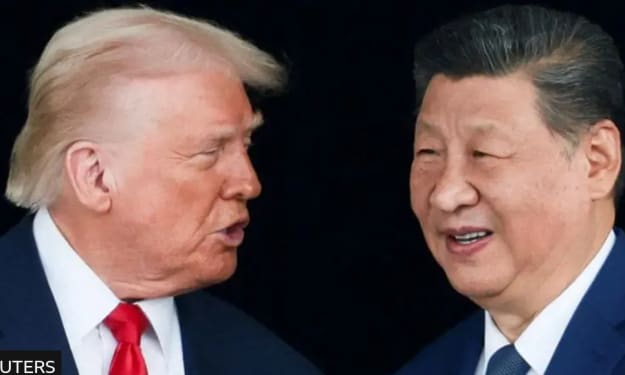
China to ‘Take All Necessary Measures’ Against Trump’s 25% Tariff
Trade tensions between the world’s two largest economies are once again threatening to boil over. After Donald Trump signaled support for a 25% tariff on Chinese goods, Beijing responded sharply, warning it would “take all necessary measures” to defend its economic interests. The statement, brief but forceful, has reignited global concerns about a return to full-scale trade confrontation. For markets, governments, and consumers alike, the message is clear: the fragile balance in U.S.-China trade relations could soon be tested again. What Trump’s 25% Tariff Means Donald Trump has long championed tariffs as a tool to rebalance trade and protect American industries. During his presidency, tariffs became a central pillar of his economic strategy, particularly against China, which he frequently accused of unfair trade practices. A proposed 25% tariff would significantly raise the cost of Chinese imports entering the U.S. market. From electronics and machinery to consumer goods, the impact would ripple through supply chains that remain deeply interconnected despite years of decoupling efforts. Trump’s framing is simple: tariffs pressure China to change its behavior. Beijing, however, sees them as economic coercion. China’s Strong Response: More Than Just Words When Chinese officials say they will “take all necessary measures,” the phrase carries weight. Historically, such language has preceded retaliatory tariffs, regulatory pressure on foreign firms, or targeted trade restrictions. China has several options at its disposal: Imposing tariffs on U.S. agricultural and industrial exports Restricting access to key raw materials or supply chains Increasing regulatory scrutiny of American companies operating in China Beijing’s warning signals that it does not intend to absorb economic pressure quietly—especially from a leader known for aggressive trade tactics. Why Beijing Is Drawing a Red Line China’s economy is navigating a complex moment. Slower growth, property sector challenges, and cautious consumer spending have already put pressure on policymakers. In this context, external shocks—like new U.S. tariffs—are viewed as direct threats to stability. More importantly, China sees trade policy as inseparable from national sovereignty. Accepting punitive tariffs without response could be perceived domestically as weakness, something the Chinese leadership is determined to avoid. By responding forcefully, Beijing reassures its public and global partners that it will defend its interests, even if that means escalating tensions. The Global Impact of Renewed Trade Conflict A renewed U.S.-China trade war would not be confined to Washington and Beijing. The global economy remains deeply exposed to the relationship between these two powers. Higher tariffs could: Increase prices for consumers worldwide Disrupt global manufacturing and logistics Slow economic growth in export-dependent economies Markets tend to react swiftly to such developments, with uncertainty often triggering volatility in stocks, currencies, and commodities. For developing countries tied into global supply chains, the consequences could be especially severe. Lessons From the Last Trade War The first U.S.-China trade war offered clear lessons. While tariffs generated political headlines, they also produced mixed economic results. American consumers absorbed higher prices, farmers required government subsidies, and global supply chains became less efficient. China, meanwhile, accelerated efforts to diversify trade partnerships and boost domestic innovation. Rather than weakening Beijing’s resolve, tariffs arguably hardened it. This history shapes how China is responding now: prepared, cautious, but unyielding. Politics Behind the Policy Trump’s tariff rhetoric also serves a domestic political purpose. Tough talk on China resonates with voters concerned about manufacturing jobs, national security, and economic independence. In this sense, tariffs are as much a campaign tool as an economic one. China understands this dynamic. Its response is crafted not only for U.S. policymakers but also for global audiences, signaling that it will not be used as a political punching bag in American elections. The result is a standoff where politics and economics collide. Is Diplomacy Still Possible? Despite the sharp language, diplomacy remains possible. Past trade confrontations have often included intense rhetoric followed by behind-the-scenes negotiations. Both sides understand the costs of prolonged escalation. However, compromise becomes harder when tariffs are framed as matters of principle rather than policy. Trump’s transactional style and China’s emphasis on sovereignty leave limited room for face-saving solutions. Whether cooler heads prevail will depend on political calculations in both capitals. What Comes Next If the tariff threat moves from rhetoric to reality, China’s response will likely be swift and strategic rather than impulsive. Beijing tends to calibrate retaliation carefully, aiming to apply pressure while minimizing self-inflicted damage. For the world, the situation serves as a reminder: U.S.-China relations remain one of the most consequential fault lines in global politics. Even a single policy announcement can send shockwaves across economies. Final Thoughts China’s warning to “take all necessary measures” against Trump’s proposed 25% tariff reflects more than economic disagreement—it highlights a deeper struggle over power, influence, and the rules of global trade. As both sides prepare for potential escalation, the stakes extend far beyond tariffs and trade balances. Whether this moment becomes another chapter in a long-running trade war—or a catalyst for renewed negotiation—will shape the global economic landscape for years to come.
By Muhammad Hassan6 days ago in The Swamp


Comments
There are no comments for this story
Be the first to respond and start the conversation.