
Pakistan and UAE's New Agreement: What is 'Pre-Immigration Clearance'?
breakdown of the new travel deal and its practical impact for passengers.

,
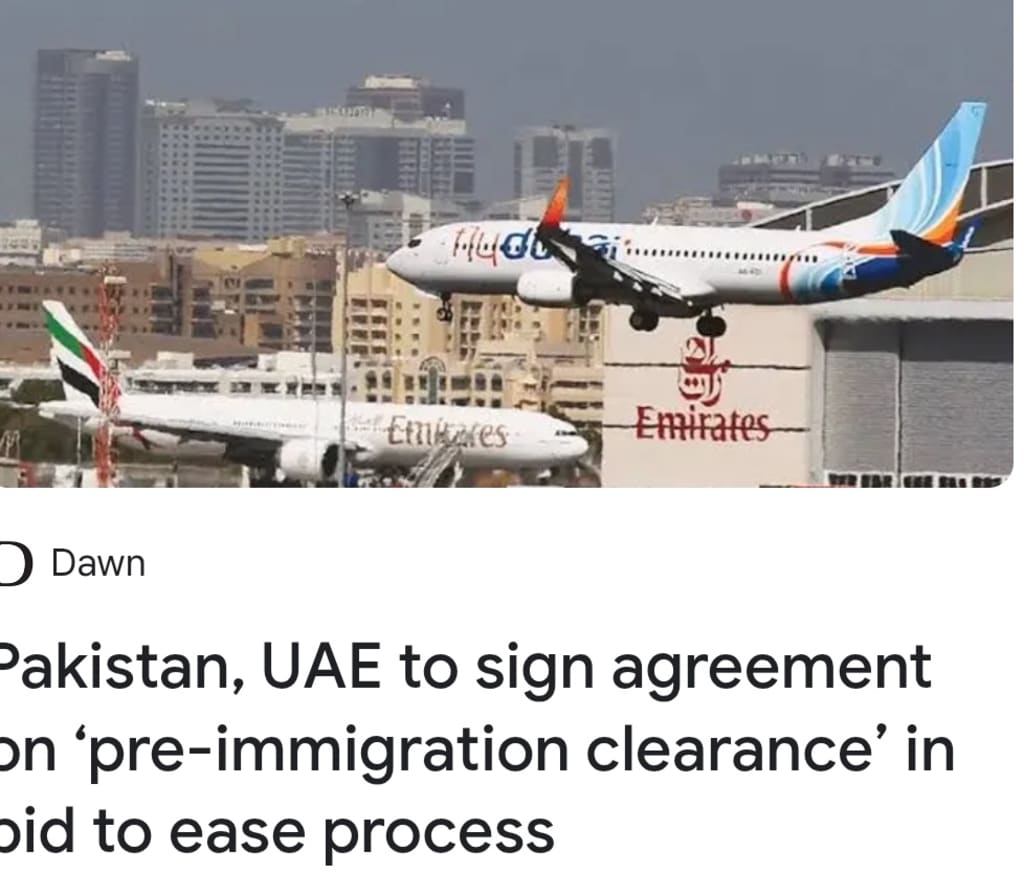
Pakistan and the United Arab Emirates are set to sign a formal agreement on "pre-immigration clearance." This arrangement is designed to simplify the travel process for certain passengers flying between the two countries. The move aims to reduce congestion at UAE airports and streamline procedures for frequent travelers, particularly businesspeople and skilled professionals. This article explains what this agreement means, who it will affect, and how the process is likely to work.
What is Pre-Immigration Clearance?
Pre-immigration clearance is a process where travelers complete all immigration formalities for their destination country before they board their flight. Instead of landing in the UAE and then queuing at passport control, passengers would go through the UAE's immigration checks at the airport in Pakistan. Once cleared, they are treated as domestic arrivals upon landing in Dubai or Abu Dhabi, walking straight to the baggage claim and exit. This system is not new globally. The United States operates pre-clearance facilities in several countries, including Canada and Ireland. For the UAE, this is a strategic step to enhance its status as a global aviation hub.
The Scope of the Pakistan-UAE Deal
Reports indicate that the agreement will be implemented in phases. Initially, it is expected to be available for passengers flying with Emirates airline from major Pakistani airports, likely Islamabad and Karachi. The service will be aimed at specific traveler categories. The primary beneficiaries will be UAE residents holding valid residency visas (iqamas) returning to the Emirates, and potentially certain classes of business travelers and tourists. It is crucial to understand that this is not a visa-on-arrival scheme for all Pakistani passport holders. The pre-clearance simply moves the existing visa or residency verification process to the departure point.
The Driving Factors Behind the Agreement
This initiative serves key interests for both nations. For the UAE, managing passenger flow at its mega-hubs like Dubai International (DXB) is a constant challenge. Pre-clearing a segment of passengers in Pakistan reduces direct pressure on immigration halls, leading to faster processing for all arriving passengers and an improved travel experience. It enhances operational efficiency for airlines and airports alike. For Pakistan, the agreement is a diplomatic and economic positive. It signals stronger bilateral ties and makes travel to a key destination for its diaspora and business community more efficient, potentially encouraging increased travel and investment flow.
How Will the Process Work for Travelers?
For an eligible traveler, the process would change noticeably. At the airport in Pakistan, instead of proceeding directly to security and the departure gate, they would check in as normal and then be directed to a dedicated UAE immigration zone. UAE immigration officers, or Pakistani officers operating under UAE protocols, would verify the traveler's documents, biometrics, and visa status. Once approved, the passenger's passport would be stamped with the UAE entry stamp. They would then continue to their flight. Upon arrival in the UAE, they would bypass the immigration queues entirely, heading directly to collect their luggage.
Impact on Labor Migration and "Talent"
The agreement is part of a broader UAE framework often referred to as attracting "D Talent" or desired talent. The UAE's economic vision focuses on attracting skilled professionals, investors, and entrepreneurs. Streamlining entry for this group is a priority. While the pre-clearance will benefit many returning resident workers, its alignment with "talent" strategies points to a focus on smoother access for highly skilled Pakistani professionals in sectors like finance, tech, medicine, and engineering. This can be seen as a move to formalize and ease the process for this demographic, distinguishing it from general labor migration flows.
Current Challenges and Limitations
It is important to temper expectations. The agreement's initial phase will have clear limitations. Not all passengers will qualify. Tourists applying for a new visit visa may still need to go through standard processes. The infrastructure in Pakistani airports needs to be established to host the UAE's immigration controls, requiring investment and security protocols. There are also significant data-sharing and legal sovereignty considerations that the agreement must meticulously address. Full implementation across all airports and for all passenger types will take considerable time.
Security and Data Sharing Considerations
A pre-clearance system hinges on high-level security cooperation. The UAE will need to trust the integrity of the process at the Pakistani airport. This involves secure data links to verify documents and biometrics against UAE databases in real-time. Pakistan will be ceding a degree of operational control within its own airport to a foreign entity. The agreement will, therefore, include detailed protocols on jurisdiction, the role of officers, and adherence to the UAE's security standards. This level of collaboration is a significant mark of trust between the two governments.
Benefits for the Aviation Industry
Airlines, particularly Emirates, stand to gain operational benefits. Pre-cleared passengers have a smoother transit experience, making the airline's product more attractive. It can also reduce the risk of passengers being denied entry upon arrival, which is a cost and logistical issue for carriers. Furthermore, it can help optimize aircraft turnaround times at the UAE end if fewer passengers require extensive processing after disembarkation. This efficiency is valuable for hubs operating at high capacity.
Public Reaction and Perceptions in Pakistan
In Pakistan, the news has been received with cautious optimism. For the large Pakistani diaspora in the UAE, which sends billions in remittances annually, any measure easing travel is welcome. However, there is a public desire for the agreement to be expanded over time. Many hope it could be a step toward broader visa facilitation, though officials have not suggested this. The perception is that it primarily benefits the UAE's efficiency goals, but Pakistan can leverage this for better terms for its citizens in the long run.
The Bigger Picture in UAE-Pakistan Relations
This agreement is a concrete manifestation of deepening UAE-Pakistan relations. The UAE is a major investor in Pakistan and a critical economic partner. By working on such a technical, logistical issue, both governments demonstrate a move beyond high-level diplomacy to practical cooperation that impacts daily life. It sets a precedent for similar agreements with other countries with high-volume travel to the UAE, potentially making the UAE's immigration model a global benchmark.
What Travelers Should Do Next
For now, travelers should monitor official channels. The agreement is signed, but its implementation date will be announced later by the UAE's General Directorate of Residency and Foreign Affairs (GDRFA) and Pakistani authorities. Passengers should not assume the process is active until explicit announcements are made by airlines and airports. When launched, eligibility criteria will be published. Travelers should always ensure their documents (passport, visa, iqama) are valid well before their travel date, as pre-clearance will still depend on this.
The UAE-Pakistan pre-immigration clearance agreement is a significant development in international travel logistics. Its core aim is to use technology and bilateral cooperation to turn a routine, often congested process into a smoother experience for approved travelers. While its initial impact will be limited in scope, it represents a forward-thinking approach to managing global mobility. For eligible passengers, it will mean less time in lines and a quicker start to their time in the UAE. For both nations, it is a project that underscores a modern, efficiency-driven partnership.
About the Creator
Saad
I’m Saad. I’m a passionate writer who loves exploring trending news topics, sharing insights, and keeping readers updated on what’s happening around the world.
Trump Threatens Tariffs on Nations That ‘Don’t Go Along’ With Greenland Plans
When former President Donald Trump speaks about global politics, controversy often follows. His latest remarks are no exception. Trump has once again reignited international debate by threatening economic tariffs against countries that refuse to support his plans involving Greenland, a territory that has unexpectedly become a focal point in global geopolitics.
By Aqib Hussain2 days ago in The Swamp


Comments
There are no comments for this story
Be the first to respond and start the conversation.