
China to ‘Take All Necessary Measures’ Against Trump’s 25% Tariff
As trade tensions resurface, Beijing signals it is ready to retaliate—raising fears of a renewed U.S.-China trade war

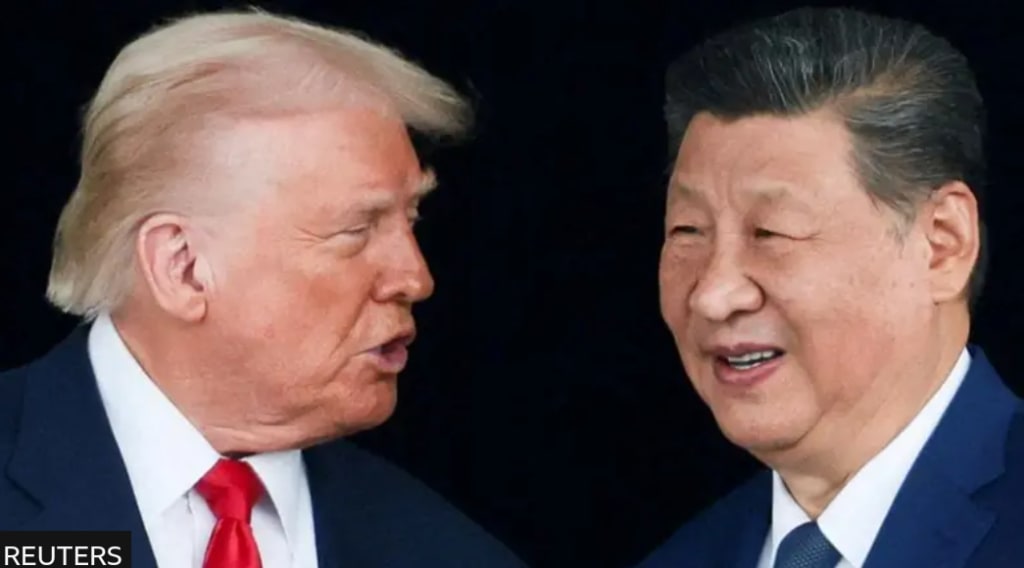
Trade tensions between the world’s two largest economies are once again threatening to boil over. After Donald Trump signaled support for a 25% tariff on Chinese goods, Beijing responded sharply, warning it would “take all necessary measures” to defend its economic interests. The statement, brief but forceful, has reignited global concerns about a return to full-scale trade confrontation.
For markets, governments, and consumers alike, the message is clear: the fragile balance in U.S.-China trade relations could soon be tested again.
What Trump’s 25% Tariff Means
Donald Trump has long championed tariffs as a tool to rebalance trade and protect American industries. During his presidency, tariffs became a central pillar of his economic strategy, particularly against China, which he frequently accused of unfair trade practices.
A proposed 25% tariff would significantly raise the cost of Chinese imports entering the U.S. market. From electronics and machinery to consumer goods, the impact would ripple through supply chains that remain deeply interconnected despite years of decoupling efforts.
Trump’s framing is simple: tariffs pressure China to change its behavior. Beijing, however, sees them as economic coercion.
China’s Strong Response: More Than Just Words
When Chinese officials say they will “take all necessary measures,” the phrase carries weight. Historically, such language has preceded retaliatory tariffs, regulatory pressure on foreign firms, or targeted trade restrictions.
China has several options at its disposal:
Imposing tariffs on U.S. agricultural and industrial exports
Restricting access to key raw materials or supply chains
Increasing regulatory scrutiny of American companies operating in China
Beijing’s warning signals that it does not intend to absorb economic pressure quietly—especially from a leader known for aggressive trade tactics.
Why Beijing Is Drawing a Red Line
China’s economy is navigating a complex moment. Slower growth, property sector challenges, and cautious consumer spending have already put pressure on policymakers. In this context, external shocks—like new U.S. tariffs—are viewed as direct threats to stability.
More importantly, China sees trade policy as inseparable from national sovereignty. Accepting punitive tariffs without response could be perceived domestically as weakness, something the Chinese leadership is determined to avoid.
By responding forcefully, Beijing reassures its public and global partners that it will defend its interests, even if that means escalating tensions.
The Global Impact of Renewed Trade Conflict
A renewed U.S.-China trade war would not be confined to Washington and Beijing. The global economy remains deeply exposed to the relationship between these two powers.
Higher tariffs could:
Increase prices for consumers worldwide
Disrupt global manufacturing and logistics
Slow economic growth in export-dependent economies
Markets tend to react swiftly to such developments, with uncertainty often triggering volatility in stocks, currencies, and commodities. For developing countries tied into global supply chains, the consequences could be especially severe.
Lessons From the Last Trade War
The first U.S.-China trade war offered clear lessons. While tariffs generated political headlines, they also produced mixed economic results. American consumers absorbed higher prices, farmers required government subsidies, and global supply chains became less efficient.
China, meanwhile, accelerated efforts to diversify trade partnerships and boost domestic innovation. Rather than weakening Beijing’s resolve, tariffs arguably hardened it.
This history shapes how China is responding now: prepared, cautious, but unyielding.
Politics Behind the Policy
Trump’s tariff rhetoric also serves a domestic political purpose. Tough talk on China resonates with voters concerned about manufacturing jobs, national security, and economic independence. In this sense, tariffs are as much a campaign tool as an economic one.
China understands this dynamic. Its response is crafted not only for U.S. policymakers but also for global audiences, signaling that it will not be used as a political punching bag in American elections.
The result is a standoff where politics and economics collide.
Is Diplomacy Still Possible?
Despite the sharp language, diplomacy remains possible. Past trade confrontations have often included intense rhetoric followed by behind-the-scenes negotiations. Both sides understand the costs of prolonged escalation.
However, compromise becomes harder when tariffs are framed as matters of principle rather than policy. Trump’s transactional style and China’s emphasis on sovereignty leave limited room for face-saving solutions.
Whether cooler heads prevail will depend on political calculations in both capitals.
What Comes Next
If the tariff threat moves from rhetoric to reality, China’s response will likely be swift and strategic rather than impulsive. Beijing tends to calibrate retaliation carefully, aiming to apply pressure while minimizing self-inflicted damage.
For the world, the situation serves as a reminder: U.S.-China relations remain one of the most consequential fault lines in global politics. Even a single policy announcement can send shockwaves across economies.
Final Thoughts
China’s warning to “take all necessary measures” against Trump’s proposed 25% tariff reflects more than economic disagreement—it highlights a deeper struggle over power, influence, and the rules of global trade. As both sides prepare for potential escalation, the stakes extend far beyond tariffs and trade balances.
Whether this moment becomes another chapter in a long-running trade war—or a catalyst for renewed negotiation—will shape the global economic landscape for years to come.
About the Creator
Muhammad Hassan
Muhammad Hassan | Content writer with 2 years of experience crafting engaging articles on world news, current affairs, and trending topics. I simplify complex stories to keep readers informed and connected.
Keep reading
More stories from Muhammad Hassan and writers in The Swamp and other communities.
Xi Stresses the Need to Win the Fight Against Corruption in China
Corruption has long been one of the most dangerous internal threats facing modern China. From bribery and abuse of power to deep-rooted patronage networks within the Communist Party, corruption has undermined public trust and threatened political stability. That is why Chinese President Xi Jinping’s repeated insistence on “winning the fight against corruption” is not just rhetoric—it is a cornerstone of his leadership and governance strategy. As China navigates economic slowdown, geopolitical pressure, and domestic uncertainty, Xi’s message is clear: the battle against corruption is far from over, and failure is not an option. Why Corruption Is a Critical Issue for China Corruption in China is not merely a legal or moral problem; it is a political one. For a one-party system that derives legitimacy from performance and discipline, corruption directly challenges the authority of the Communist Party. Before Xi came to power in 2012, public anger over corrupt officials had reached worrying levels. Lavish lifestyles, misuse of public funds, and unchecked local power created a growing gap between party elites and ordinary citizens. This environment posed a long-term risk to social stability—something the Chinese leadership views as an existential concern. Xi’s solution was decisive: a sweeping anti-corruption campaign that would target both high-ranking leaders and low-level officials alike. “Tigers and Flies”: Xi’s Signature Campaign One of the most famous phrases associated with Xi’s leadership is his pledge to go after both “tigers and flies”—a metaphor for powerful senior officials and minor bureaucrats. Over the past decade, the campaign has led to: The investigation and punishment of hundreds of thousands of officials The downfall of senior party figures once considered untouchable A culture of fear and discipline within government institutions By stressing the need to “win” this fight, Xi signals that corruption is not a temporary challenge but a permanent threat that must be continuously controlled. Power, Discipline, and Party Survival Critics outside China often argue that the anti-corruption drive doubles as a political purge, eliminating rivals and consolidating Xi’s power. While this interpretation is widely debated, it misses a crucial point: discipline is central to the Communist Party’s survival strategy. For Xi, corruption weakens loyalty, undermines governance, and erodes ideological unity. In a system without electoral competition, internal discipline replaces democratic accountability. The anti-corruption campaign serves as a mechanism to enforce obedience and ensure that officials align with central leadership. In this sense, Xi’s emphasis on corruption is not only about clean governance—it is about control. Public Support and Popular Appeal Despite concerns from international observers, the campaign has enjoyed significant domestic support. Many ordinary Chinese citizens view it as long overdue, especially after decades of rapid growth that enriched elites while leaving inequalities unresolved. Highly publicized investigations send a powerful message: no official is above the law. This narrative strengthens Xi’s image as a leader willing to confront entrenched interests for the sake of national integrity. Public trust, in turn, becomes a political asset—one that Xi carefully cultivates through strong language and visible enforcement. Economic Consequences of Anti-Corruption The anti-corruption drive has also had economic side effects. In some sectors, officials have become overly cautious, delaying decisions out of fear of investigation. This phenomenon—often described as “policy paralysis”—has slowed local governance and investment approvals. Yet Xi appears willing to accept these short-term costs. From his perspective, unchecked corruption poses a far greater long-term risk to economic sustainability and investor confidence. By institutionalizing anti-corruption mechanisms, Beijing aims to create a more predictable and disciplined administrative environment—even if it takes time to adjust. A Message to the Party—and the World Xi’s renewed emphasis on fighting corruption also sends a message beyond China’s borders. At a time when Western democracies grapple with political scandals and institutional mistrust, Beijing presents its model as one of order, discipline, and centralized accountability. Whether or not this model appeals globally, it reinforces China’s narrative of governance efficiency and internal strength. Corruption, in Xi’s framing, is not a flaw of the system but a challenge the system is capable of correcting. Why Xi Says the Fight Must Be “Won” Language matters in Chinese political culture. By framing corruption as a “fight” that must be “won,” Xi elevates the issue to the level of national survival. This framing justifies extraordinary measures, continuous oversight, and permanent vigilance. It also ensures that the campaign does not end with a single victory. Winning, in this context, means maintaining pressure indefinitely—turning anti-corruption into a defining feature of governance rather than a temporary policy. What Comes Next for China As Xi continues to consolidate authority, the anti-corruption campaign is likely to become more institutionalized rather than less intense. New regulations, internal party inspections, and digital oversight tools suggest the fight will evolve, not fade. For Chinese officials, the message is unmistakable: loyalty, discipline, and obedience are non-negotiable. For citizens, the campaign offers reassurance that abuses of power will not go unchecked—at least in principle. Final Thoughts Xi Jinping’s insistence on winning the fight against corruption reflects more than a desire for clean governance. It reveals how power, legitimacy, and discipline intersect in modern China. In a system built on centralized authority, corruption is not just misconduct—it is a threat to the political order itself. Whether viewed as reform, control, or both, the anti-corruption campaign remains one of the most defining elements of Xi’s leadership—and a key lens through which to understand China’s future.
By Muhammad Hassan5 days ago in The Swamp
USS Zumwalt to Put to Sea in 2026 Without Main Gun Systems: A Turning Point for Naval Warfare
When the USS Zumwalt (DDG-1000) was first unveiled, it was hailed as the future of naval warfare—a stealthy, technologically advanced destroyer designed to dominate coastal combat zones. Yet, as the U.S. Navy prepares to send the ship back to sea in 2026, it will do so without one of its most defining features: its main gun systems. This decision marks not a failure, but a strategic pivot that reflects how modern warfare at sea is rapidly evolving.
By Fiaz Ahmed Brohi2 days ago in The Swamp
Center Stage with Paul Stewart
*** I'm keen to republish the interviews I did for my series with Vocal creators. It's been a few years and I thought it might be nice to revisit these wonderful conversations. I'll be releasing them one at a time for a few weeks/months.
By Heather Hubler2 days ago in Interview



Comments
There are no comments for this story
Be the first to respond and start the conversation.