stigma
People with mental illness represent one of the most deeply stigmatized groups in our culture. Learn more about it here.
Chapter III: The Painter’s Paradox — Creation as Annihilation
There is a man whose artwork is not composed with a brush dipped in paint, but rather dipped in existence itself. The bristles of his paint brush, dipped in a white so bright it worships the very idea of painting, are believed to be the extract of the very marrow of the soul itself. Each stroke is not just light on canvas, but light imagined; he contains the power to release light into the fathomless void lurking around the periphery of life. He is a painter of the endless dark, a witness to a subjectless mute whose silence speaks louder than any tangible utterance. Language fails here; any word on the edge of the subject's tongue is siphoned away, absorbed, dissolved, and regurgitated onto the dried slick of basanit slate as pigment. What else could it be called but a sacrament? His brush as chalice; his white, the dictated libation of a soul grasping at meaning in its own frailty.But as the light escapes his brush, the shadow is also introduced.
By LUCCIAN LAYTH10 months ago in Psyche
Two Lies and a Truth
I once invited a new friend over to play board games with a small group of friends over the upcoming weekend. He was reaching out regularly to hang out and I figured it would be a good way to get to know him better and introduce him to others so that they could get to know him as well. He accepted the invite and I gave him the details for what, when, and where.
By Amos Glade10 months ago in Psyche
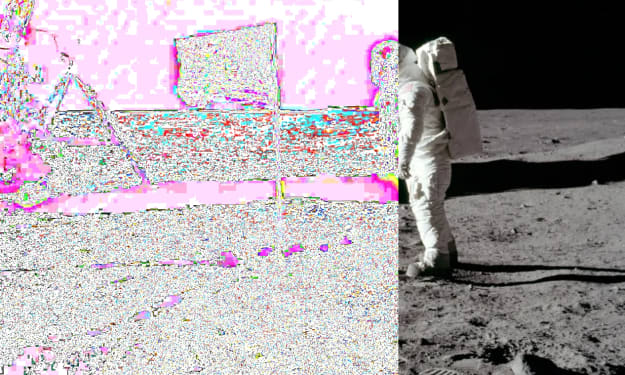
Apollo 11: A Forensic Approach to Photographic Consistency
Note: This process began in 2021 and is now concluding There is a quiet, unrelenting pain in recognizing that the truth—the hard, unvarnished truth—often holds no power in the face of perception. I have spent years deliberately training myself to acknowledge my own errors, embracing the discomfort of self-examination. And yet, the more I correct myself, the more the world accuses me of an inability to concede. The irony is a bitter one.
By Andrew Lehti10 months ago in Psyche
Change is a Part of Life
In the Sonapur village, the old mango tree was casting a shadow as the sun set. The slender dirt road where Rohan used to play was bathed in golden light. Now, years later, he was returning after a long time, a stranger to the place he once called home.
By Niranjon Chandra Roy10 months ago in Psyche
Girls with Autism and Why Society Missed Them
Years ago I had a theory about why there is so much violence among men and boys. Informed by my education in cultural anthropology and my own imagination, I theorized that the male human was still being affected by their evolutionary need to fight to protect the “tribe.” As such, in spite of humanity coming to a place where we should be able to “all get along,” boys and men found meaning in being part of a cohesive group of some kind, including gangs. The violence of gangs, MMA fighters, boxers, and other groups against one another was a release of this inherent need to fight; anger built up because there is no other type of release available other than these.
By Suzy Jacobson Cherry11 months ago in Psyche
The “Disability Effect”
I saw this video the other day in a Facebook group I belong to. The group, Cultural Autism Studies at Yale, (CASY) a semi-private Facebook group for CASY/ Cultural Autism Studies at Yale, founded by Roger J. Jou MD, MPH, PhD is a psychiatrist and researcher at Yale University specializing in autism. One of the administrators is Dawn Prince-Hughes, author of Songs of the Gorilla Nation: My Journey through Autism. This book was instrumental in helping me as I learned about the “disorder” my son had recently been diagnosed with over twenty years ago. As I read it, little bells rung in the back of my mind regarding my own experiences, but I paid no attention because her life was so very different from mine.
By Suzy Jacobson Cherry11 months ago in Psyche