
Girls with Autism and Why Society Missed Them
My absolutely unscientific and totally anecdotally supported theory

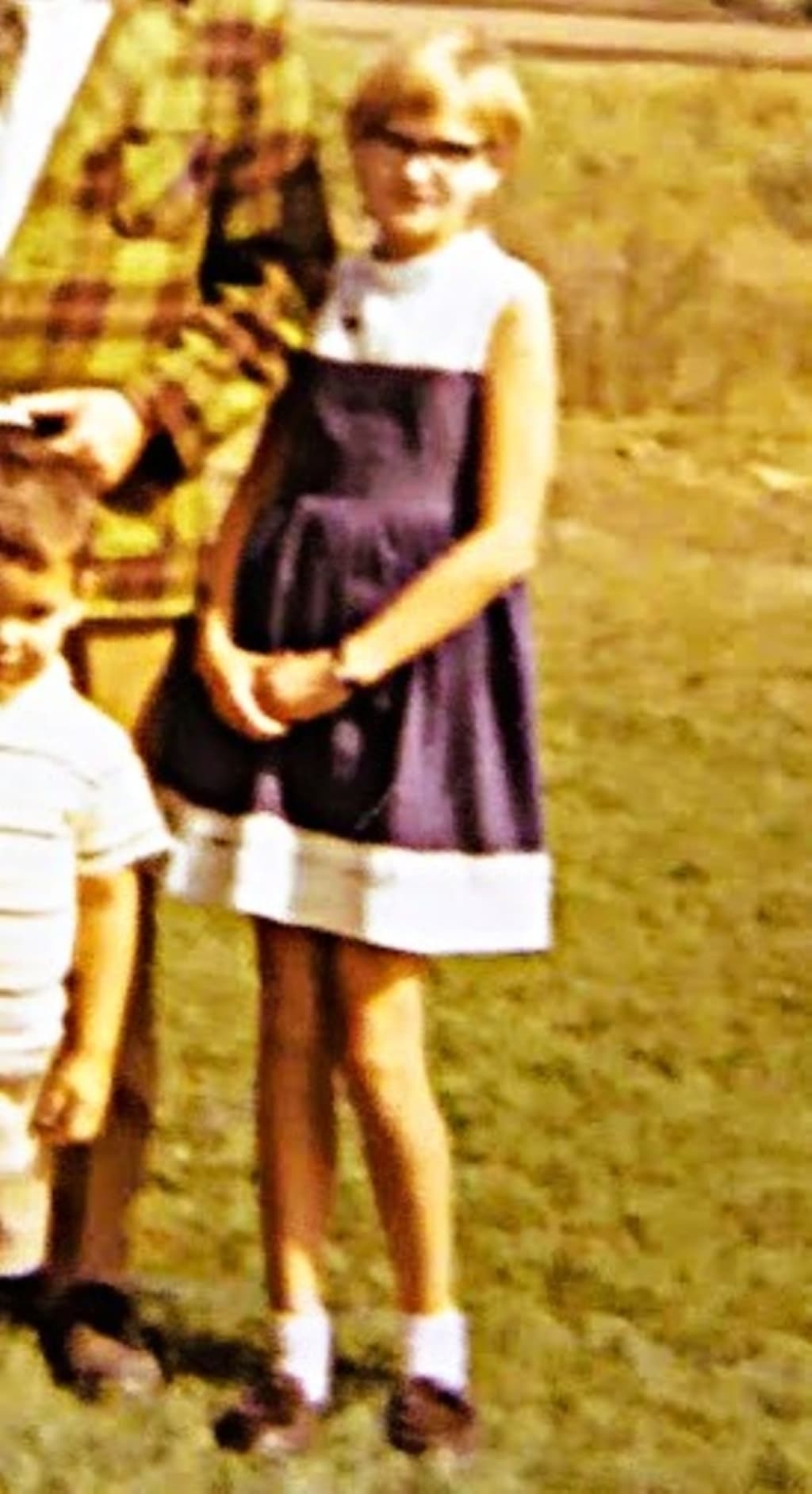
Years ago I had a theory about why there is so much violence among men and boys. Informed by my education in cultural anthropology and my own imagination, I theorized that the male human was still being affected by their evolutionary need to fight to protect the “tribe.” As such, in spite of humanity coming to a place where we should be able to “all get along,” boys and men found meaning in being part of a cohesive group of some kind, including gangs. The violence of gangs, MMA fighters, boxers, and other groups against one another was a release of this inherent need to fight; anger built up because there is no other type of release available other than these.
I have a similarly unscientific theory about why autism in girls and women has been missed until quite recently. I say that it’s unscientific, but I also claim that it is somewhat educated, based on both my actual anthropological studies, my extensive reading, and my research into autism as I learned to advocate for my son when he was young and for my students today.
My theory
For thousands of years now, women have been relegated to secondary or even tertiary status in the family and societal structures. This happened when humans began to settle down into agricultural communities, about 10,000 to 12,000 years ago.
An imaginative response to this brings me a realization that when humans were nomadic hunter-gatherers, women and children were in charge of the gathering while adult men went off hunting. For the better part of the year, they lived apart, coming together when the hunt was done to celebrate and enjoy the success of the hunt and the bounty of the harvest.
Each gender group had their own ways and took charge of their lives apart. Together, during the times of celebration, I can imagine them meeting with one another on equal grounds, with equal power.
Chalk it up to the patriarchy
Then came agriculture and settled civilizations. Then came the patriarchy. The Population Media Center describes the patriarchy thusly:
Patriarchy is a social system that has historically bestowed primary power and privilege upon men in various aspects of society, including politics, economics, and culture. Patriarchy’s influence extends across many aspects of modern life, contributing to disparities in education, employment opportunities, and income between genders.
I believe that the patriarchy is responsible for society’s inability to identify the majority of girls with autism until very recently.
Here’s why:
Since the shift to patriarchy and the development of western civilization, for the most part girls and women were expected to keep quiet, care for the family, and do what they were told. In most societies, men have held all the power, and women who sought to break free of that power and claim there own have either been punished for it or had to be extremely creative in how they grabbed hold of it.
Girls are expected to be shy and quiet. Sweet. Think of the nursery rhyme: “What are little girls made of? Sugar and spice and everything nice.”
When girls don’t speak much, cast their eyes down rather than make eye contact, or eschew physical touch, they are thought to simply be shy. Depending upon the observer, they may be considered “good girls” or “wall flowers.”
When girls become focused on things, “info-dump,” or speak loudly, incessantly, or seemingly without thought, they are relegated to “weird girl” status. Even worse, they might be “bad girls” or (goodness forbid!) maybe even “witches.”
All along, many girls of both types have been autistic girls. This is how they are missed.
If a girl wasn’t like Temple Grandin, a brilliant woman with unique tastes and a monotone voice, there was no reason to think she might be autistic.
In the past, many boys were missed as well, because everyone thought autism was a strange condition that caused them to shutdown, turn-off their attention to the outside world, and stop talking (or never talk at all).
Maybe it wasn’t so bad being missed
In some ways, it was better to be missed. Autism and autistics have been seen through the medical lens for so long, everybody missed the cultural aspect of autism completely. There are many things I wish I had known about growing up and in my younger years, but I can retrospectively say that being my weird self with all my insecurities may have been better than having a team of allistic medical and mental health personnel tell me how to be human.
Living behind multiple layers of masks helped me navigate the world. It didn’t keep me from struggling with my identity or take away the fears I had about things that apparently others can do without writing an entire script in their heads ahead of time.
It didn’t keep me safe from trauma as a young adult. The reality, though, is that having a diagnosis and therapies during the time I was a kid would not have kept me safer.
Autism has always been here
Before the diagnosis, autism existed. There have been times throughout history where people with autism were considered special, and I don’t mean like “special education.” I know I’ve seen many articles and memes conjecturing the possibilities of various historical people (mostly men) having been autistic. I suspect many of them would have been considered to be so today.
However, I also conjecture that many autistic people served in their communities throughout history as wise women and men, healers, storytellers, and artists. They may have been considered unique, eccentric, or gifted by the gods.
Or, they may have simply been considered part of the community.
That’s the way it’s supposed to be.
About the Creator
Suzy Jacobson Cherry
Writer. Artist. Educator. Interspiritual Priestess. I write poetry, fiction, nonfiction, and thoughts on stuff I love.
Keep reading
More stories from Suzy Jacobson Cherry and writers in Psyche and other communities.
The “Disability Effect”
I saw this video the other day in a Facebook group I belong to. The group, Cultural Autism Studies at Yale, (CASY) a semi-private Facebook group for CASY/ Cultural Autism Studies at Yale, founded by Roger J. Jou MD, MPH, PhD is a psychiatrist and researcher at Yale University specializing in autism. One of the administrators is Dawn Prince-Hughes, author of Songs of the Gorilla Nation: My Journey through Autism. This book was instrumental in helping me as I learned about the “disorder” my son had recently been diagnosed with over twenty years ago. As I read it, little bells rung in the back of my mind regarding my own experiences, but I paid no attention because her life was so very different from mine.
By Suzy Jacobson Cherryabout a year ago in Psyche
Top tipple tricks
Been thinking a lot about drinking, lately. Not least because of a recent episode of over-indulgence and the inevitable after effects. Some readers may recall the earlier articles I wrote about beating the booze. Here I set out an experiment in techniques for cutting down on my alcohol intake. The experiment was successful, the techniques worked, and I have armed myself with an arsenal of weapons in the war against the demon drink. I have yet to fire the first round however. It's all a question of timing (perhaps procrastination).
By Raymond G. Taylor7 days ago in Psyche
Tarot Addiction in Contemporary Digital Markets: A Behavioral Analysis of Spending Escalation Patterns
Abstract The emergence of online tarot consultation platforms in Spain's largely unregulated esoteric services sector has created conditions for behavioral addiction without corresponding consumer protections. This analysis examines three measurable variables—consultation frequency, expenditure escalation, and emotional dependency—to define tarot addiction within contemporary digital commerce. Data derived from market observation (FACUA 2023) and platform transparency reports indicate that spending escalation occurs incrementally across a 4-6 month baseline, driven by price-point strategies that normalize consumption without regulatory thresholds. This paper argues that current commercial categorization ("economic" vs. "premium" services) obscures addiction risk rather than clarifying consumer choice.
By Enrique Martinez3 days ago in Psyche



Comments (3)
I've suggested this for a Top Story in Raise Your Voice Here https://shopping-feedback.today/resources/raise-your-voice-thread-03-13-2025%3C/span%3E%3C/span%3E%3C/span%3E%3C/a%3E%3C/p%3E%3C/div%3E%3C/div%3E%3C/div%3E%3Cstyle data-emotion-css="w4qknv-Replies">.css-w4qknv-Replies{display:grid;gap:1.5rem;}
Excellent observations, great article worthy of a Top Story. I have published two pieces that address autism (I'm not autistic myself but I do have certain traits that may be on the spectrum)
This piece is nicely penned