Andrew Lehti
Bio
Andrew Lehti, a researcher, delves into human cognition through cognitive psychology, science (maths,) and linguistics, interwoven with their histories and philosophies—his 30,000+ hours of dedicated study stand in place of entertainment.
Stories (12)
Filter by community
Investigative Report: Bring Back the Old Internet.
The internet was once a space of boundless expression, where content thrived on human engagement rather than algorithmic manipulation. A simple, amusing video could amass millions of views—not because it adhered to a predetermined formula, but because it resonated with people. Creativity was vast, unfiltered, and diverse. Today, that spontaneity has been eroded, streamlined into a system that suppresses non-conforming content under the guise of community guidelines and corporate incentives. Platforms now prioritize palatability over authenticity, favoring predictability over ingenuity.
By Andrew Lehti2 months ago in Geeks
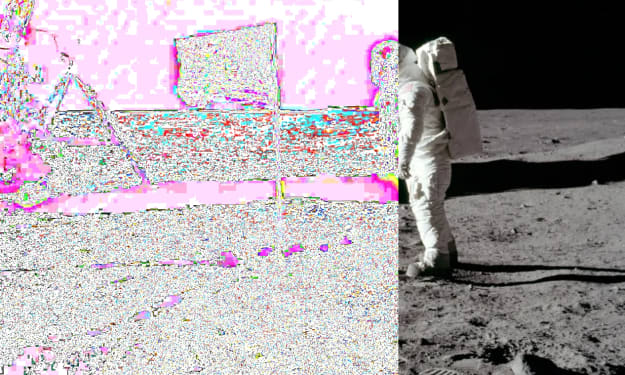
Apollo 11: A Forensic Approach to Photographic Consistency
Note: This process began in 2021 and is now concluding There is a quiet, unrelenting pain in recognizing that the truth—the hard, unvarnished truth—often holds no power in the face of perception. I have spent years deliberately training myself to acknowledge my own errors, embracing the discomfort of self-examination. And yet, the more I correct myself, the more the world accuses me of an inability to concede. The irony is a bitter one.
By Andrew Lehti12 months ago in Psyche
Why We Fear Being Wrong: The Psychology of Rigid Thinking
Introduction: The Illusion of Learning Education is often framed as the pathway to knowledge, critical thinking, and personal growth. Yet, if that were true, why do so many individuals leave school with rigid thinking patterns, an inability to question authority, and a deep fear of being wrong? Why does intellectual stagnation persist despite increasing access to information?
By Andrew Lehti12 months ago in Journal
The Algorithm’s Illusion: How Facebook and Big Tech Distort Reality
Think about the sheer amount of data Facebook generates. It’s overwhelming. Every post you scroll past, every search, every profile you visit, and every action you take is recorded. That’s just what you can see. Now, imagine what you don’t have access to—every hover, every moment spent looking at a post, every pause, every message typed and deleted, every exit. The level of behavioral tracking is staggering.
By Andrew Lehti12 months ago in Journal
The Limits of Understanding: A Critical Exploration of Human Thought and Resistance to Change
So, you've found my research papers. Maybe they're a groundbreaking revelation, or maybe they're an overcomplicated mess. Either way, my research has always been driven by the pursuit of truth—understanding humans and why they think the way they do. It’s not about recognition or profit, but about guiding society toward something better—a society governed by us, not by a party.
By Andrew Lehtiabout a year ago in Futurism
The Art of Breaking Rules: Why Conformity is the Death of Creativity
There’s a quiet kind of suffocation happening all around us, and most people don’t even notice it. It’s the slow, creeping death of originality—the way rules, traditions, and expectations wrap around the mind like ivy, draining the life from anything that dares to grow outside the lines.
By Andrew Lehtiabout a year ago in Motivation
My Inspiration for Life
When I set out to understand human cognition and why humans were the way they were, I first applied this understanding to a very small slice shaped by my own biased perception. Over more than a decade of investigation, introspection, meta-cognition, and behavioral analyses, I found myself not on the opposite aisle, but on an empty overpass overlooking two massive chasms mislabeled as such. Between these two aisles, an infinitely smaller fenced-in area which bore the sign that read “Individuality.”
By Andrew Lehtiabout a year ago in Motivation
Seeds of Implausibility: A Study of Narcissistic and Borderline Manipulation. Content Warning.
In the study of narcissistic behavior, they undoubtedly muddy the waters. However, that would be considered an absolute. Narcissistic behavior resists being uncovered, preferring to remain hidden. They conflate uncertainty and promote it valiantly. They insist it is more complex than it truly is—when it is not. They claim your message is contradictory or lacking nuance, even when the meaning should be self-evident, all to undermine your words. This, perhaps, because they sense you are onto them—even if only indirectly.
By Andrew Lehtiabout a year ago in FYI
Have you ever wondered why we sometimes laugh when someone we care about dies?
In the theater of the human mind, humor unfolds as an intricate interplay between expectation and reality. Imagine the stage: the setup is constructed with care, drawing on familiar patterns and the comforting predictability of our cognitive biases. These biases act as stagehands, arranging the scenery of our thoughts, shaping how we anticipate the world to behave. They craft assumptions, preparing us for what we believe is to come.
By Andrew Lehtiabout a year ago in Critique